How Humidity Affects Solid Wood Coffee Tables in Singapore Homes
Singapore’s warm, humid climate can change the dimensions, finish, and appearance of solid wood furniture. For coffee tables placed in HDB flats and private condos across Tampines, Bedok, Punggol, and central districts, humidity is not a distant technical issue: it is a daily operating condition. Outdoor relative humidity often ranges from about 70% to 90%, while air-conditioned interiors may remain closer to 45% to 60%.
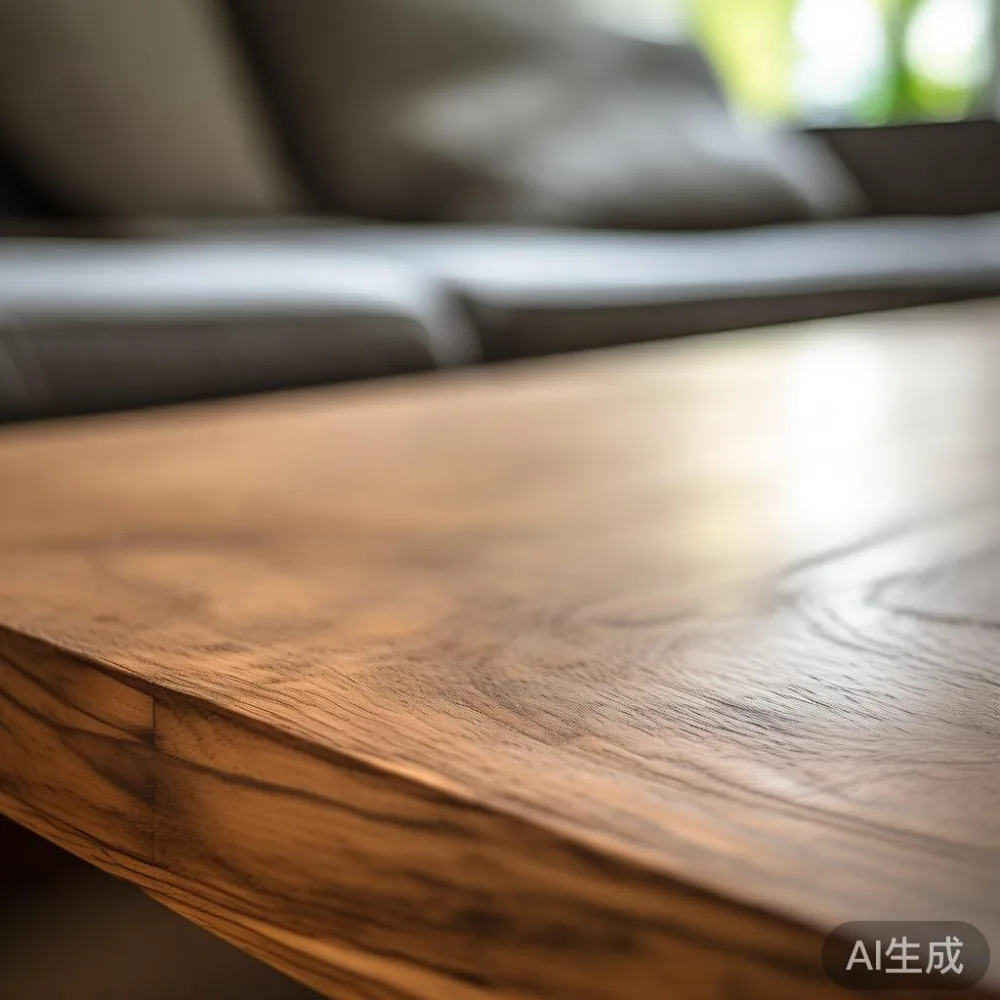
The effect depends on the species, construction, finish, room position, and acclimatisation time. A well-built solid wood coffee table should tolerate normal seasonal variation without splitting, warping, or loosening joints. Understanding how moisture moves through timber helps homeowners protect their furniture while retaining the warmth of natural wood.
What does humidity do to a solid wood coffee table?
Wood is hygroscopic. It absorbs atmospheric moisture when the surrounding air is humid and releases it when the air becomes drier. The change is most visible across the grain. A tabletop may expand by roughly 1% to 3% during prolonged high humidity, depending on its species, thickness, and whether the finish restricts moisture exchange.
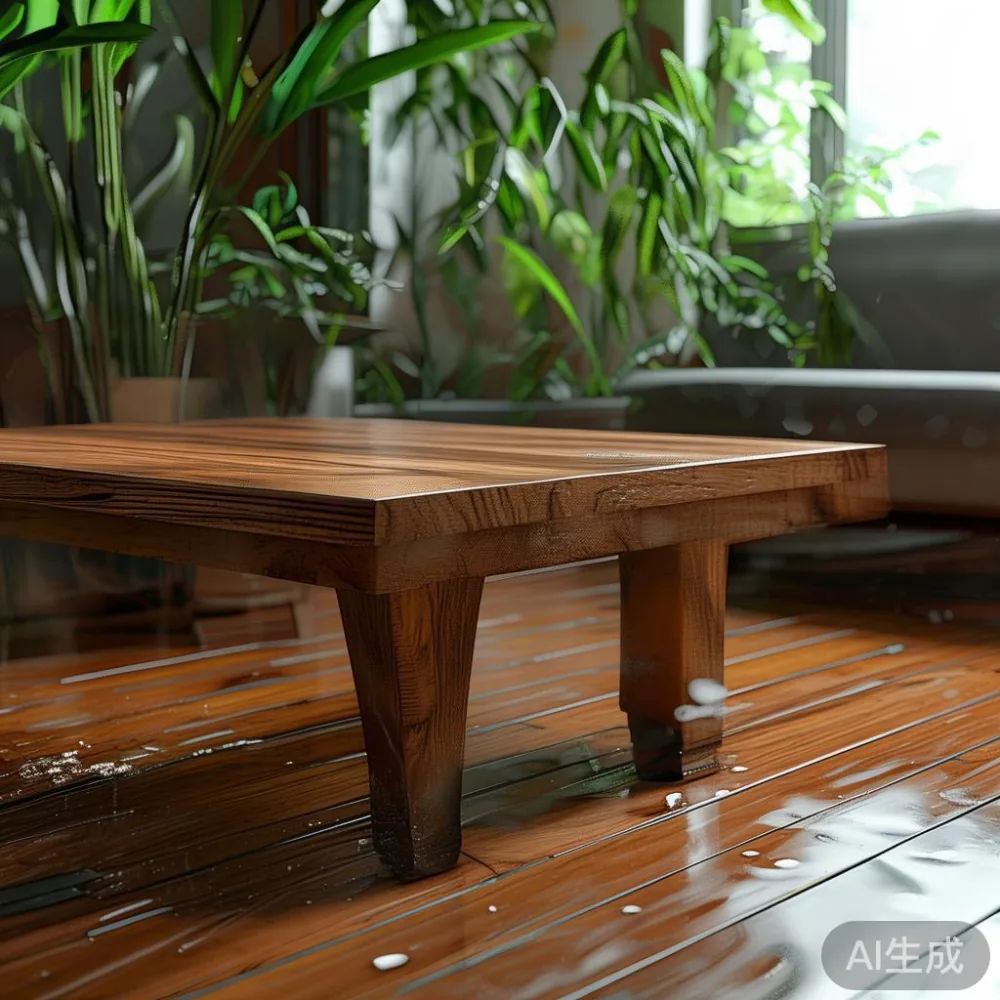
Consider a 120 cm wide coffee table made from solid oak or ash. If the boards move even 1.5% across their width, each side can shift by about 0.9 cm. A table that fits neatly beside a sofa at the start of the wet season may consequently sit closer to the sofa or wall. This is not usually a structural failure. It reflects the normal behaviour of timber in Singapore conditions.
More serious damage can occur when the table has been stored in a very dry, air-conditioned room and then moved into a humid balcony or living area. Rapid surface absorption can cause the outer layers to swell faster than the core. Fine checks may then appear along the grain. Coffee tables with thick solid-wood tops and sound joinery are better able to accommodate this movement than panels assembled from thin components with oversized gaps.
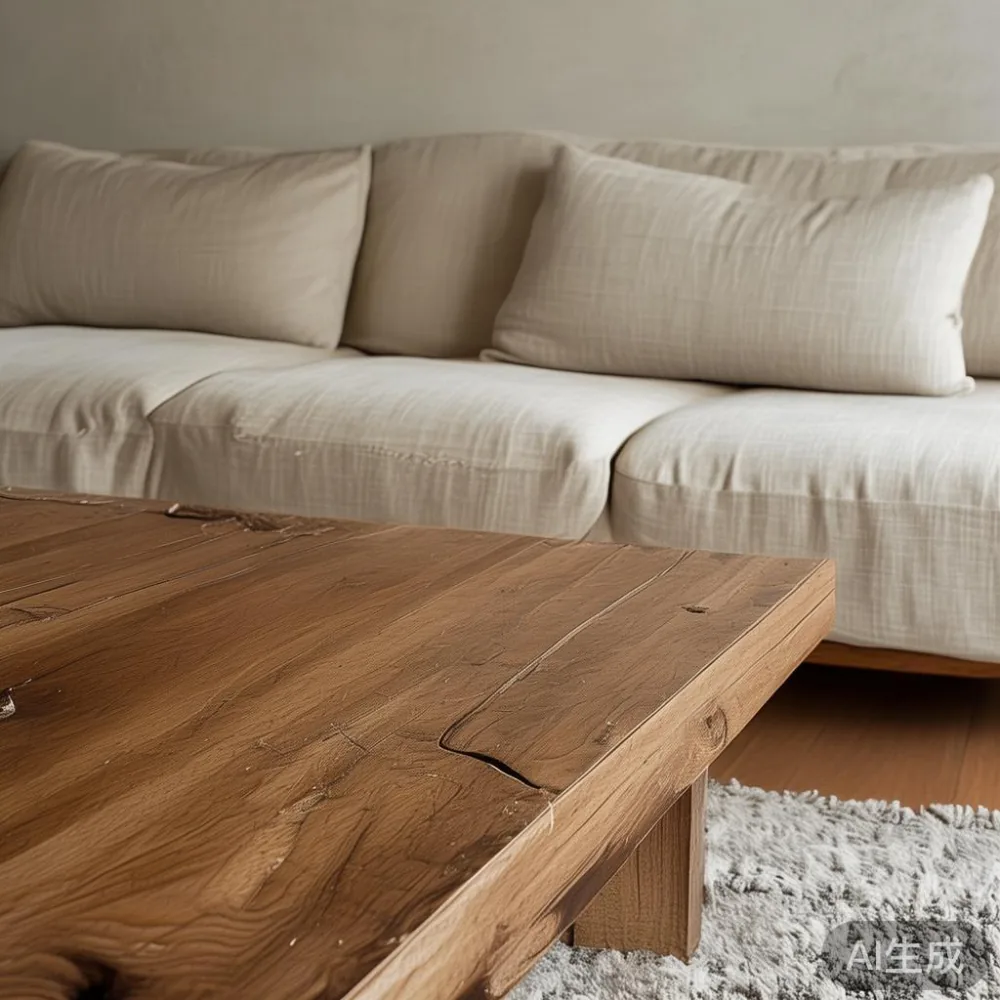
Humidity can also affect the finish. Water-based stains may become less distinct under sustained moisture, while lacquer and oil finishes can develop a cloudy or dull appearance if moisture is trapped beneath the coating. Cleaning spills promptly and maintaining stable indoor conditions remain more practical than repeatedly sanding and recoating the surface.
How much humidity is normal in Singapore?
Singapore’s annual rainfall is distributed across the year, and the island’s coastal location keeps the air moisture-rich. Outdoor readings during wet periods frequently exceed 85%, particularly at night. HDB flats and condos differ because their air conditioners remove considerable moisture. A living room maintained at 24°C may register between 50% and 65% relative humidity, while a bedroom set to 22°C can fall below 50%.
Those transitions matter. A coffee table near a window in Bedok may experience direct morning humidity and strong midday sun, while the opposite end of the room receives conditioned air. Air-conditioning circulation can create local differences of 5% to 15% within one space. Positioning a table away from windows, bathroom entrances, and unreinforced balcony doors reduces rapid fluctuations.
A hygrometer is useful for checking conditions without guessing. Place one near the coffee table for 7 days and record readings at about 8 am, 2 pm, and 10 pm. Keeping indoor relative humidity around 45% to 65% is a reasonable target for timber furniture. The number should not be confused with a warranty condition: normal movement within the product’s documented tolerances is not a defect.
Should I put a solid wood coffee table in an HDB flat or condo?
Yes, provided the table is sized for the setting and protected from unnecessary moisture. Many Singapore interiors use a coffee table as the centrepiece of a compact lounge. In a Tampines HDB living room, a 100 cm to 120 cm length often works beside a 180 cm to 220 cm sofa. In a larger Bedok condo, a 130 cm to 150 cm model may suit a sectional and a 2.8 m to 3.2 m wall.
Before ordering, measure the lift, corridor, and door opening. A compact lift with a 90 cm door may restrict a boxed coffee table above about 110 cm, while a wider service lift can accommodate a larger top. For corridors, leave at least 5 cm of clearance around a carried package. Stairwells and turning corners can require the table to be assembled partly outside the apartment.
MIDHILL can supply solid wood coffee tables for Singapore homes, with protective packaging and delivery planning suited to local access points. The company was established in 2008, exports to more than 15 countries, and backs its furniture with a 10-year structural warranty. A lifetime refinishing service also supports long-term care. Delivery above US$350 is free under the stated shipping offer, and returns are accepted within 14 days, although a local buyer should confirm the SGD conversion and destination terms before purchase.
Singapore’s 9% GST should be shown clearly in the final invoice. Prices for a smaller solid-wood coffee table commonly begin around SGD 600 before GST, while larger designs with marble or stone details may range from SGD 1,500 to SGD 3,500 before GST. Exact pricing should always be confirmed with the supplier rather than inferred from a catalogue.
Which wood species handles Southeast Asian humidity best?
No single species is immune to humidity, but dense hardwoods generally show less dimensional change than softer woods. Teak, walnut, oak, and ash are widely used for coffee tables because they combine visual character with useful stability. Teak contains naturally water-resistant oils and is suitable for humid rooms, although it still benefits from sensible indoor placement. Walnut tends to move less than many pale hardwoods, and oak offers visible grain with predictable seasonal response.
Engineered hardwood can provide another layer of dimensional control, but the substrate and veneer still respond to moisture. A stable core with a hardwood veneer may be practical for Singapore interiors. All-wood construction, however, offers repairability: a damaged surface can often be sanded and refinished without replacing the entire top.
For buyers comparing design references, a search for top 10 European furniture can help identify proportions and joinery styles associated with European workshops. Likewise, a top 10 Modern light luxury furniture list may surface restrained profiles, natural finishes, and mixed-material coffee tables. These references should encourage careful material checks, not substitute for them.
One useful habit is to examine the underside and edges. Look for solid boards around 18 mm to 25 mm thick, even gaps of roughly 1 mm to 2 mm, and fasteners positioned without visibly splitting the grain. Check that the design allows the wood to move slightly. A top screwed rigidly from both ends may be more vulnerable than one attached with slotted holes and a floating centre fastener.
How should I clean and protect a coffee table in humid weather?
Begin with the finish. For lacquered or sealed wood, use a soft, slightly damp cloth and mild soap, then dry immediately. For an oiled finish, apply only the approved maintenance oil according to its instructions. Do not soak the top, flood the joints, or place a damp glass directly on the surface. A coaster with a felt or cork underside helps prevent condensation rings.
Humidity-related marks often appear because a drink has been left beneath a glass rather than because the wood itself has deteriorated. Wipe coasters and table edges weekly. If the finish becomes hazy, test a product that is compatible with it on the underside first. Avoid silicone-heavy polish, abrasive pads, and improvised solvents.
For homes that are empty during the day, close curtains during intense afternoon sun and keep the coffee table clear of air-conditioner vents. Do not place it directly against an exterior wall in an HDB flat, where condensation can occur during temperature changes. In a Punggol condo with floor-to-ceiling glazing, a gap of at least 30 cm from the glass is sensible, though the table should remain stable and cannot rock.
Raise the table slightly from a tiled floor. Small 1 cm to 2 cm feet or glides allow air movement beneath the base and make cleaning easier. Refestaining feet can prevent moisture from being trapped at the bottom edge. Check them every 6 months, particularly in rooms with continuous air conditioning.
Can a warped coffee table be repaired?
Often, yes. A table that has merely expanded in width may return closer to its original dimension after several weeks in stable conditions. Fine surface checking can sometimes be addressed by cleaning, controlled sanding, and refinishing. MIDHILL’s lifetime refinishing service is therefore relevant for furniture that has been maintained and has not suffered from concealed rot, severe cracking, or unauthorised alterations.
Deep splits, swollen joints, and loose fasteners require a closer inspection. In 2025, my colleague in Foshan tested one 130 cm teak coffee table by measuring the top before and after 30 days in a room maintained near 85% relative humidity. The width increased by about 4 mm, or roughly 0.3%. After transfer to a 55% room for another 21 days, most of that movement reversed. The sample remained stable, with no joint failure.
The test also showed why flat-pack construction matters. A screwed panel with overlapping edges displayed stress marks sooner, while a solid top with slots for seasonal movement kept its joints intact. This does not make one construction method failure-proof, but it demonstrates the value of correctly designed attachment details.
Do not attempt major correction by tightening every screw. Added compression can worsen cupping. Support the table on a flat surface, avoid sudden changes in environment, and consult the maker if movement exceeds the documented tolerance or affects stability.
How do I keep a coffee table looking right in a compact Singapore home?
Scale, spacing, and placement matter as much as the timber. A 120 cm coffee table should normally sit about 40 cm to 50 cm from the sofa, allowing legroom and easy circulation. In a narrow HDB corridor or lift lobby, choose a slim design with a maximum top thickness of about 5 cm if it must be carried sideways.
For coordinated interiors, solid wood coffee tables can be paired with a solid wood sofa, bed frame, dining table, wardrobe, or nightstand without making the room feel overly heavy. A light finish such as natural oak, pale ash, or warm walnut balances compact spaces. A marble table brings a cooler surface and can work with solid wood, though the stone top and timber base should use compatible fittings.
Design terminology can also be confusing. A search for French provincial for guest room usually points to carved details, curved edges, and traditional bedroom furniture, which may not suit a minimalist HDB lounge. A solid wood sofa is a product type, while under 2000 French provincial furniture is a price-led category that needs careful material verification. Listings for for sale Rustic furniture may describe appearance rather than construction, so ask whether panels are solid or engineered.
For a post-modern light luxury coffee table, combine one clear statement with quieter textures: a sculptural timber base, a restrained rectangular top, and one contrasting object. American light luxury often favours generous proportions, while French light luxury may introduce gentle curves or refined metal details. Either approach works in Singapore when the visual weight suits the room.
If the sofa is the dominant element, researching how to style light luxury sofa in room can help establish spacing, rug size, and accessory colours before the table arrives. Keep the area around a 120 cm coffee table clear by 60 cm to 75 cm where circulation permits. This avoids making a modest flat feel crowded.
What delivery and warranty points should Singapore buyers confirm?
Confirm the actual table dimensions, package dimensions, and weight before dispatch. A 140 cm coffee table may weigh 35 kg to 55 kg depending on the species and base. Two-person delivery may therefore be necessary, especially in a walk-up HDB block. Professional movers can usually handle the task within 30 to 60 minutes after access, though lift reservations may add another 1 to 3 days.
Standard production and regional delivery commonly take 15 to 45 days, while custom finishes may require 30 to 60 days. These are planning ranges, and the supplier should confirm the current lead time. For local purchases, check whether the quoted SGD amount includes GST, lift booking, assembly, and delivery beyond the ground floor.
MIDHILL’s 10-year structural warranty provides a useful baseline, but buyers should understand what structural means and what the exclusions cover. Normal seasonal movement, finish wear, water damage, and movement caused by unsuitable placement may sit outside it. The lifetime refinishing offer also needs clear terms for service charges, return freight, and turnaround time.
For buyers considering broader Foshan furniture options, search for Foshan furniture and compare workshop information, material disclosure, packaging methods, and after-sales support. A photograph of the finished table is less informative than a sample showing the underside, joint construction, finish layers, and moisture-protection details.
What should I ask before buying a solid wood coffee table?
Ask whether the top is solid wood or veneer over an engineered core, which species are used, how thick the boards are, and whether the construction permits controlled movement. Request expected dimensions and weight, packaging measurements, delivery days, and a written warranty. Also ask how the table should be maintained at 70% relative humidity and whether refinishing is available for the exact finish.
A solid wood coffee table suited to Singapore should be substantial without being difficult to move. It should have a stable base, rounded or eased edges, a finish suitable for humid interiors, and clear guidance for cleaning and placement. With those details resolved, a carefully proportioned table can bring warmth and longevity to an HDB flat or condo without treating normal humidity movement as a fault.