Humidity and Your Coffee Table: What Every Singapore Homeowner Needs to Know
I keep a small digital hygrometer on my workbench, and on most afternoons in Tampines the needle drifts between 72% and 82% relative humidity. Last month I visited a friend's resale HDB flat in Bedok to help him unpack a new solid wood coffee table he had bought from a Foshan supplier. The carton had been opened less than an hour earlier, and you could already see the smallest amount of cupping along one edge of the tabletop. Three weeks later, after he ran the air-con for a few hours each evening and placed a dehumidifier set to 55% in the living room, the cupping relaxed to within 0.5 mm of flat. That single weekend is a useful starting point for everything I want to share about how humidity in Southeast Asia affects wood furniture, especially the piece that anchors most of our living rooms: the coffee table.
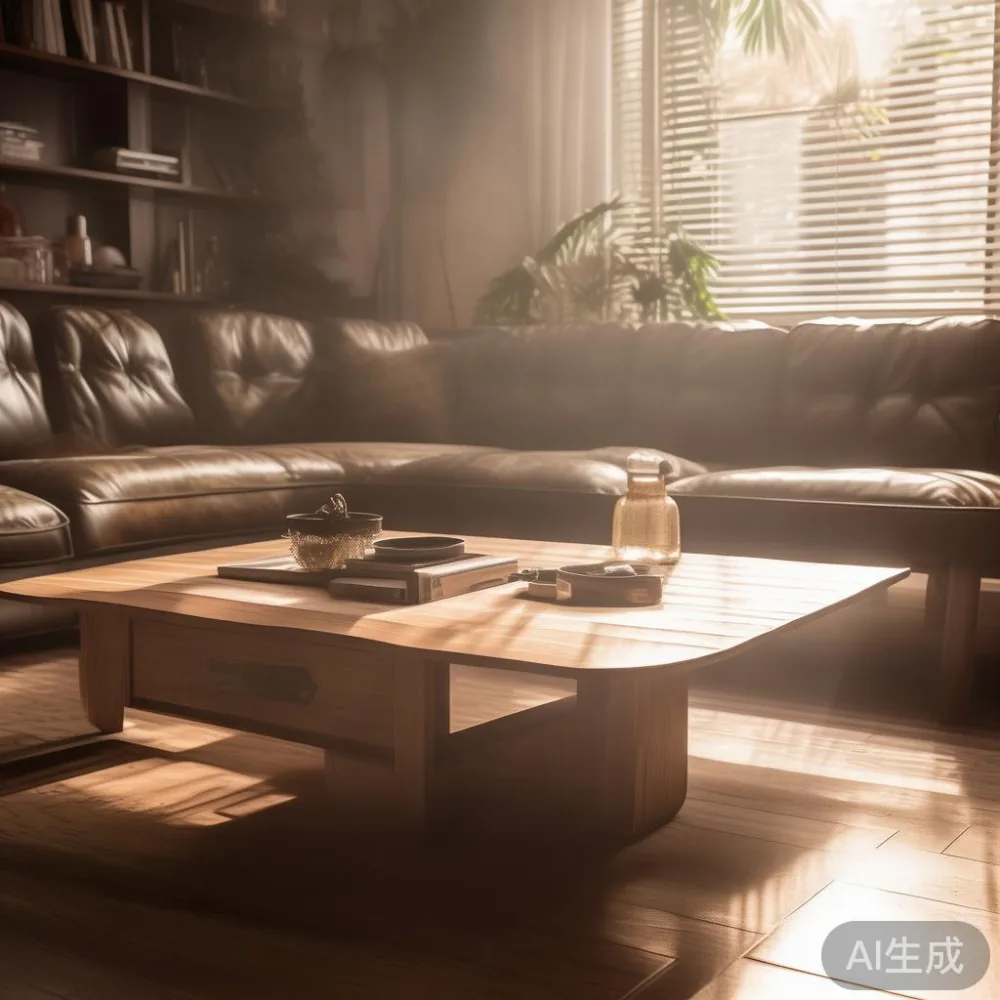
Why does Singapore's humidity change the shape of a solid wood coffee table?
Wood moves. It swells when it absorbs moisture from the air, and it shrinks when it releases moisture. In Singapore, outdoor relative humidity sits between 70% and 85% for at least nine months of the year, and indoor humidity in air-conditioned flats usually settles between 55% and 65% once the compressor has run for a while. That gap, often 15 to 25 percentage points, is what causes a 120 cm by 60 cm oak or walnut coffee table to gain or lose 2 to 4 mm across its width over the course of a season. The movement is not a defect; it is the natural behaviour of a hygroscopic material. Understanding this lets you read small changes on your coffee table without panic, and it shapes every decision you make about placement, finish, and maintenance.
The denser the wood, the smaller the movement in absolute terms, but the more forceful the stress at the joints. A solid wood coffee table made from ash or rubberwood in Foshan will typically show larger swings than one built from Burmese teak, but a poorly designed teak piece can crack faster than a well-designed ash one because the internal stresses concentrate at the glue lines. This is why Chinese factories with more than fifteen years of export experience, like MIDHILL, often use mortise-and-tenon or dowel joinery rather than just screws on load-bearing rails: mechanical joints give the wood a little room to slide without splitting.
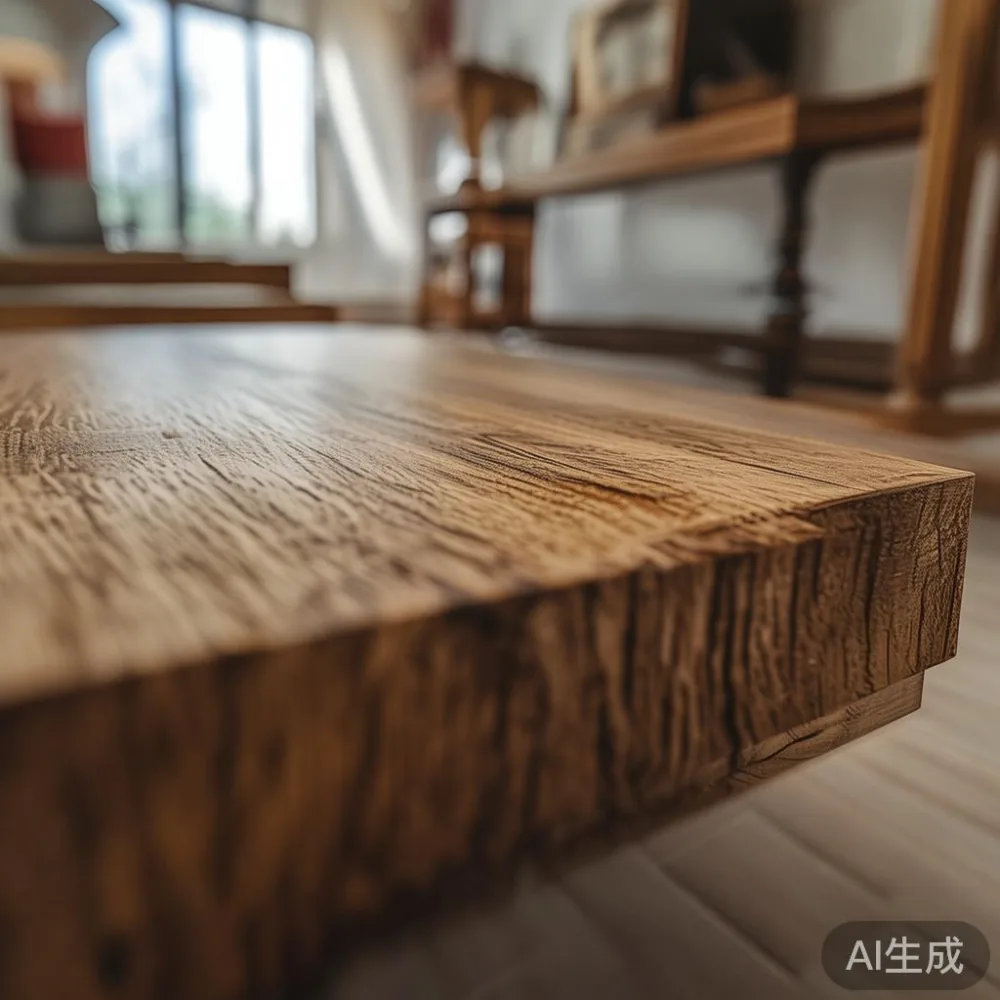
What humidity level should I keep my HDB flat at to protect solid wood furniture?
Target 55% relative humidity with a swing of no more than 10 percentage points across the day. Most domestic dehumidifiers sold in Singapore for around SGD 180 to SGD 320 can hold a 25 to 35 sqm living-dining area at that level when paired with two to three hours of air-conditioning in the evening. If you run the air-con all night at 23 degrees Celsius and leave the dehumidifier off, your coffee table can drop to 45% by 4 a.m., then climb back to 70% by lunchtime when the unit cycles off. That 25-point swing is what causes hairline checks on tabletops and small splits along the grain. A hygrometer costs about SGD 25 at any neighbourhood HomeFix or Courts, and it is the single most useful tool you can buy.
A practical routine my colleague uses in her Punggol condo: she closes the bedroom doors by 8 p.m., sets the living room air-con to 24 degrees, and runs a MeacoDry Arete Two in the hallway. Her 140 cm by 70 cm solid wood coffee table, finished with a hard wax oil, has stayed flat within 1 mm across two monsoons. The setup adds about SGD 18 to her monthly electricity bill, which she considers cheap insurance for a piece she paid SGD 1,450 for.
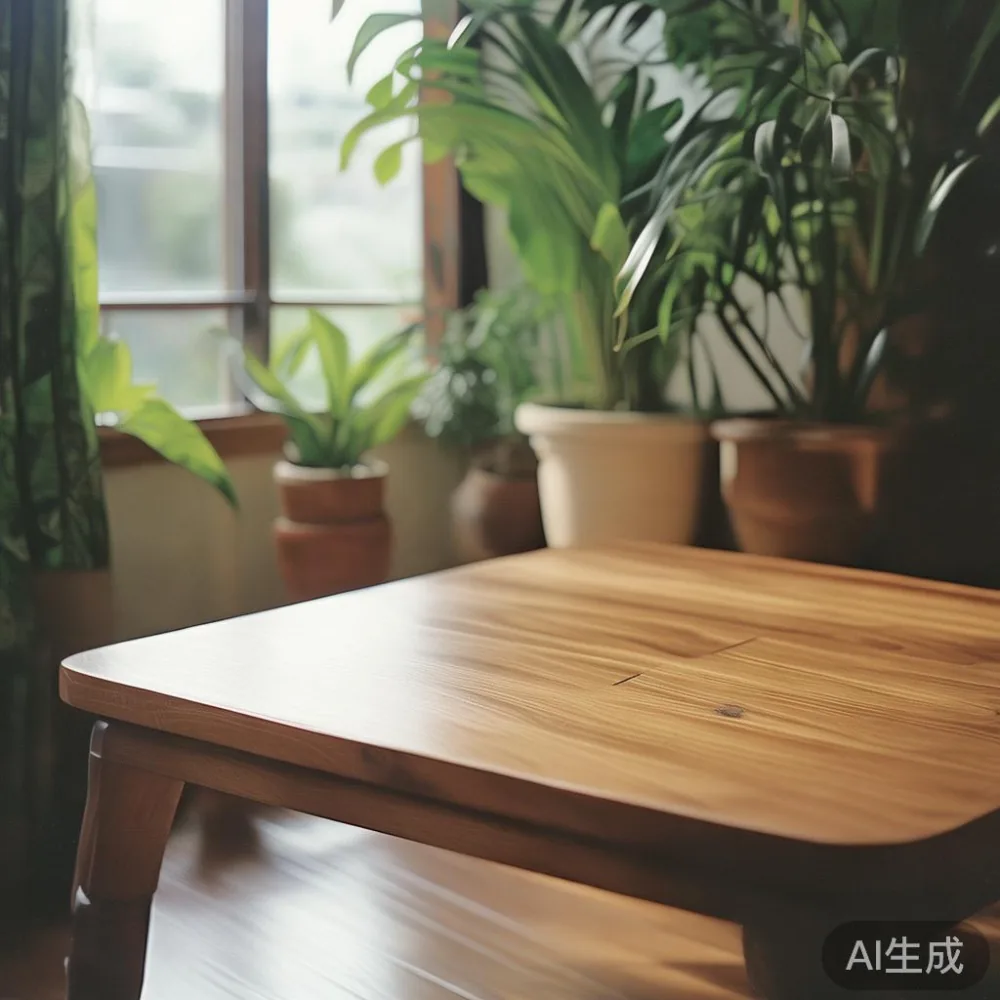
Is French light luxury the right style for humid Singapore homes?
Yes, with a few practical caveats. French light luxury furniture, the style often called French light luxury or French provincial in local catalogues, tends to use pale oak, beech, or ash frames with curved cabriole legs, soft linen upholstery, and thin marble or sintered stone tops on occasional tables. The pale finishes show water marks less obviously than dark walnut, and the breathable linen covers on matching sofas let trapped moisture escape instead of condensing against the frame. A French light luxury coffee table around 110 cm by 60 cm pairs well with a 2.4 m French provincial sectional sofa in a typical 90 sqm condo living room, leaving about 70 cm of walking space behind the table and roughly 40 cm between the table edge and the sofa seat.
The caveat is marble. A polished Carrara marble top on a coffee table is beautiful, but it sweats in air-conditioned rooms and can leave ring marks on coasters. Sintered stone in a 12 mm thickness gives the same pale veined look without the calcium carbonate reaction, and it costs about SGD 280 to SGD 420 extra over a marble option. If your heart is set on real marble, ask the supplier for a pre-sealed top with a penetrating stone sealer rated for ten years of food-contact use, and wipe up acidic spills within five minutes.
How do I style a French provincial sectional sofa in a small apartment?
Keep the silhouette low, keep the palette cream and warm oak, and keep the visual weight on the floor rather than on the walls. A French provincial sectional sofa in a 3.2 m by 2.8 m living room should sit on short 8 to 10 cm legs so the room reads taller, and you should anchor it with a rectangular coffee table in light oak at roughly two-thirds the length of the sofa seat. In a 90 sqm HDB flat in Bedok or Tampines, this means a coffee table around 130 cm long and 60 cm deep, with a clearance of 35 to 45 cm to the sofa seat for comfortable leg movement.
Add one accent piece in post-modern light luxury, for example a marble table or a small sculptural lamp in brushed brass, to break the period feel and stop the room from looking like a country cottage. Keep wall art to one or two pieces above the sofa, hang them 18 to 22 cm above the backrest, and resist the urge to push the sofa against the wall; a 12 to 15 cm gap behind the backrest lets air circulate and prevents the kind of trapped damp that causes mildew on the back panel. This single rule, by the way, is also the answer to anyone asking how to choose a nursery furniture set for a humid Singapore nursery: keep pieces slightly off the walls, keep finishes breathable, and keep humidity stable.
Which woods and finishes survive Southeast Asia best?
Burmese teak, white oak with a kiln-drying record above 8% moisture content, and rubberwood from FSC-certified Malaysian plantations all perform well, provided the joinery is sound. Walnut is workable but darker, so it shows dust and water spots more easily. Mango wood, popular in mid-range Indian imports, moves aggressively and needs a very stable indoor climate. For finishes, hard wax oil such as Osmo Polyx-Oil or Rubio Monocoat 2C lets the wood breathe and is easy to spot-repair; polyurethane builds up a film that looks shiny at first but then turns cloudy when moisture gets underneath and is hard to refinish later.
If you are buying a complete set, ask whether the supplier kiln-dries to 8 to 10% moisture content for tropical destinations and whether they wrap pieces in moisture-barrier film with silica gel inside the carton. MIDHILL, for instance, ships from Foshan with edge protectors, 50 g silica gel packets, and a foam-lined inner box, and their ten-year structural warranty covers joinery failure even when humidity-related surface checks are excluded. That level of packaging detail usually means the factory has dealt with Singapore, Kuala Lumpur, and Jakarta buyers before and has refined their crating over many shipments.
How long does delivery take from Foshan to a Singapore HDB or condo?
For a single coffee table under 30 kg, air freight from Guangzhou Baiyun to Changi takes about 5 to 7 working days door to door, plus 2 to 4 days for customs clearance and last-mile delivery, so plan on 9 to 12 days total. Sea freight on a consolidated LCL shipment takes 18 to 26 days, but the per-piece cost drops from around SGD 280 by air to about SGD 90 by sea. For a full container of a solid wood sofa, bed frame, dining table, wardrobe, and nightstand, sea freight is the only sensible option: transit is 14 to 18 days, customs and GST add another 5 to 7 days, and a 20-foot container from Foshan to Singapore currently runs about SGD 2,800 to SGD 3,600 depending on the route.
Last-mile delivery is where HDB specifics matter. A standard 4-room HDB corridor is about 1.2 m wide, and lift openings in blocks built after 2010 are usually 0.9 m wide by 2.1 m tall. A 140 cm by 80 cm solid wood coffee table will not fit through the lift in one piece, so ask the supplier in advance whether the table ships knocked-down with the legs detached. Reassembly should take two adults about 15 minutes with the included Allen key.
What does a realistic Singapore budget look like for a solid wood coffee table?
For a 120 cm by 60 cm solid oak coffee table with a hard wax oil finish and a discreet lower shelf, expect SGD 850 to SGD 1,400 CIF Singapore, including 9% GST on the CIF value. A French provincial version with a sintered stone top and cabriole legs runs SGD 1,600 to SGD 2,400. A walnut coffee table with a marble top from a smaller Foshan workshop can climb past SGD 3,200 once you add soft-close drawers and a hand-rubbed lacquer. Add SGD 90 to SGD 160 for doorstep delivery on a second-floor walk-up without a lift, or nothing extra if your block has a service lift and the order is above the supplier's free-shipping threshold, which is common above SGD 350 or SGD 450.
Think in terms of a room, not a single piece. A coordinated set, such as a solid wood sofa frame at SGD 3,800, a matching coffee table at SGD 1,250, a sideboard at SGD 2,100, and a dining table for six at SGD 2,900, often qualifies for consolidated sea freight that brings per-piece shipping down to about SGD 60 each. The total of around SGD 10,000 before GST is a realistic middle-market budget for a four-piece light luxury living and dining set delivered to a Punggol or Tampines address.
How should I care for my coffee table during the December and January monsoon?
Wipe the top with a barely damp microfibre cloth once a week, never a wet one, and follow with a dry cloth. Keep coasters under every cup; a cold glass of iced tea can condense on the outside and leave a ring within 20 minutes on a poorly sealed surface. Rotate any decorative objects once a month so the wood ages evenly instead of developing a permanent tan line. If you notice a faint musty smell in the room, run the dehumidifier for four hours before bed and check the hygrometer in the morning; a reading above 65% means the air is still too damp for stable wood.
For long-term care, ask your supplier whether they offer lifetime refinishing, a service that a handful of Foshan factories, including MIDHILL, provide to overseas customers on a pay-for-shipping basis. You pay about SGD 220 to SGD 320 to ship the piece back to the factory, and they strip the old finish, sand to bare wood, repair any small checks with filler matched to the grain, and reapply three coats of hard wax oil. Turnaround is usually 35 to 50 days. Over a fifteen-year ownership, two or three refinishing cycles will keep a quality coffee table looking new for a fraction of the replacement cost.
What should I check in the first 30 days after delivery?
Unpack the coffee table within 48 hours of arrival so the wood can acclimatise to your indoor humidity. Leave the legs off and the tabletop flat on the carton foam for the first 24 hours if you can spare the space; this lets the top settle without uneven stress from the legs. On day two, attach the legs and place the table in its final position, away from direct sunlight and at least 30 cm from any standing fan or air-con vent. Use felt pads under each leg to allow a small amount of air movement and to prevent moisture from wicking up through the floor.
Measure the tabletop width with a steel tape on day one and again on day thirty. A change of more than 3 mm on a 120 cm wide top means your indoor humidity is swinging more than the wood can absorb, and you should adjust your air-con and dehumidifier routine. Anything inside that range is normal seasonal movement. Photograph any concerns and email them to the supplier; a reputable Foshan exporter will respond within two working days with practical advice, and most will ship replacement panels or hardware free of charge if the issue is genuinely a manufacturing defect rather than humidity response.
Are there any placement rules that protect a coffee table in a Singapore condo?
Three rules cover most situations. First, keep the table out of direct afternoon sun; UV breaks down lignin and fades the finish within six to twelve months even through tinted glass. Second, leave 20 to 30 cm of clearance on all sides so air can move around the piece and so you are not constantly brushing against the edges with damp clothing after a shower. Third, avoid placing the table directly under a ceiling air-con supply vent; the cold downdraft creates a localised dry zone that can crack the top while the rest of the room stays humid.
For HDB flats on higher floors, the indoor humidity is usually 3 to 5 percentage points lower than on lower floors because of better wind exposure, which is good news for wood but bad news for static. For ground-floor units near a void deck or a swimming pool, indoor humidity can run 5 to 8 points higher, and you may need to run a dehumidifier for two extra hours each evening. These small adjustments are what separate a coffee table that still looks sharp at year ten from one that has warped, checked, or peeled by year three.