What Actually Drives the Price of Solid Wood Furniture
Walk through any Tampines or Punggol HDB flat on a Saturday afternoon and you'll hear the same question floating out of showrooms: why does one coffee table cost S$280 and another S$2,800 when both look brown? I've spent the last decade helping buyers in Singapore pull apart those price tags, and the honest answer is rarely about the wood itself. It's about a stack of decisions — some invisible, some very much in your face — that compound into the final number on the invoice. This article walks through every one of them so you know exactly where your money is going.
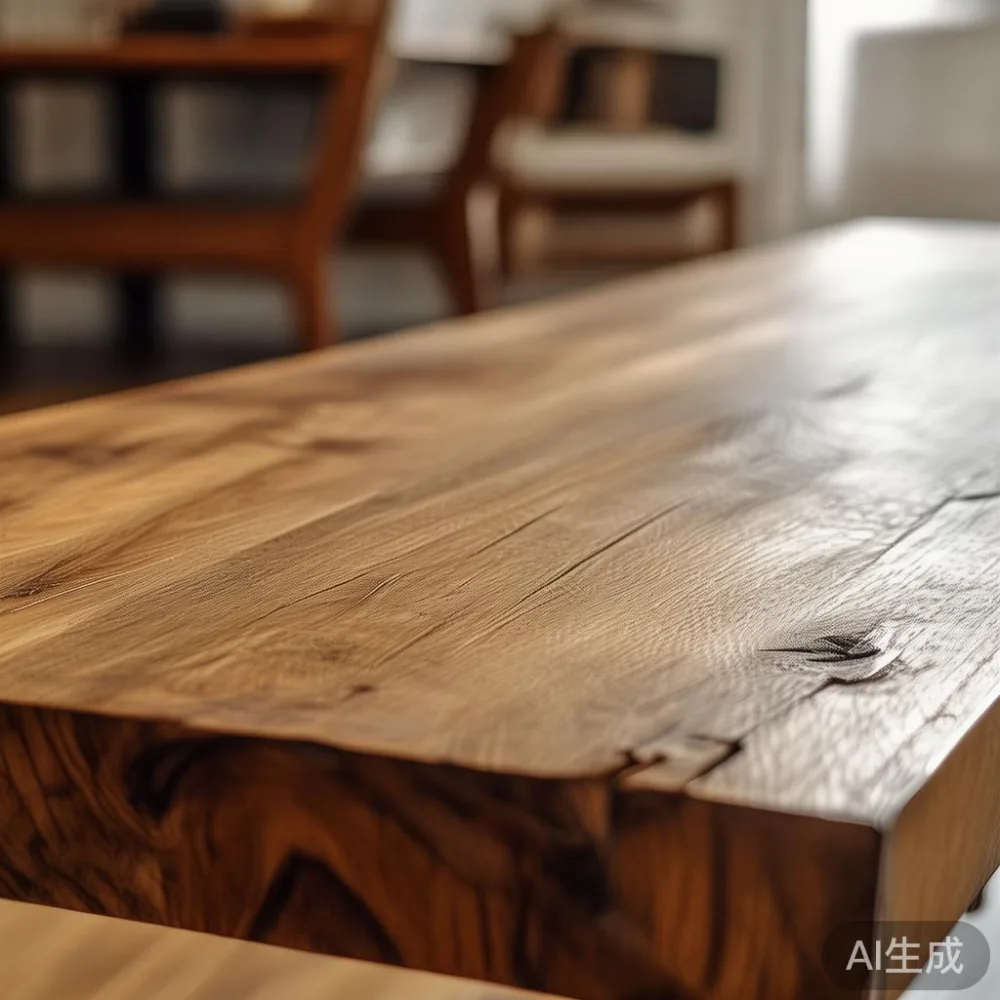
1. Timber Species and Grade: Where the S$ Starts
The single biggest swing in price comes from the species. A coffee table built from rubberwood (hevea) — common in Malaysia and southern Thailand — can land in Singapore for S$280 to S$650 because the timber grows fast and is widely available in 5cm–8cm stock. Move up to white oak, ash, or American walnut and the same coffee table shape jumps to S$1,400–S$3,200. At the top end, Burmese teak from old-growth forest can push a single 120cm x 60cm coffee table past S$4,500 before shipping.
Grade matters as much as species. FAS (First and Seconds) boards have tight knots and long, clear runs of grain — perfect for a dining table or a bed frame where you want wide, uninterrupted faces. A coffee table made from FAS ash will price roughly 35–50% above the same design in "Common" grade, which packs more knots and shorter clear sections. Over a flat surface like a 130cm x 70cm coffee table top, lower-grade timber shows its character — small knots reading like grain features rather than flaws — so plenty of buyers happily accept Common to save money.
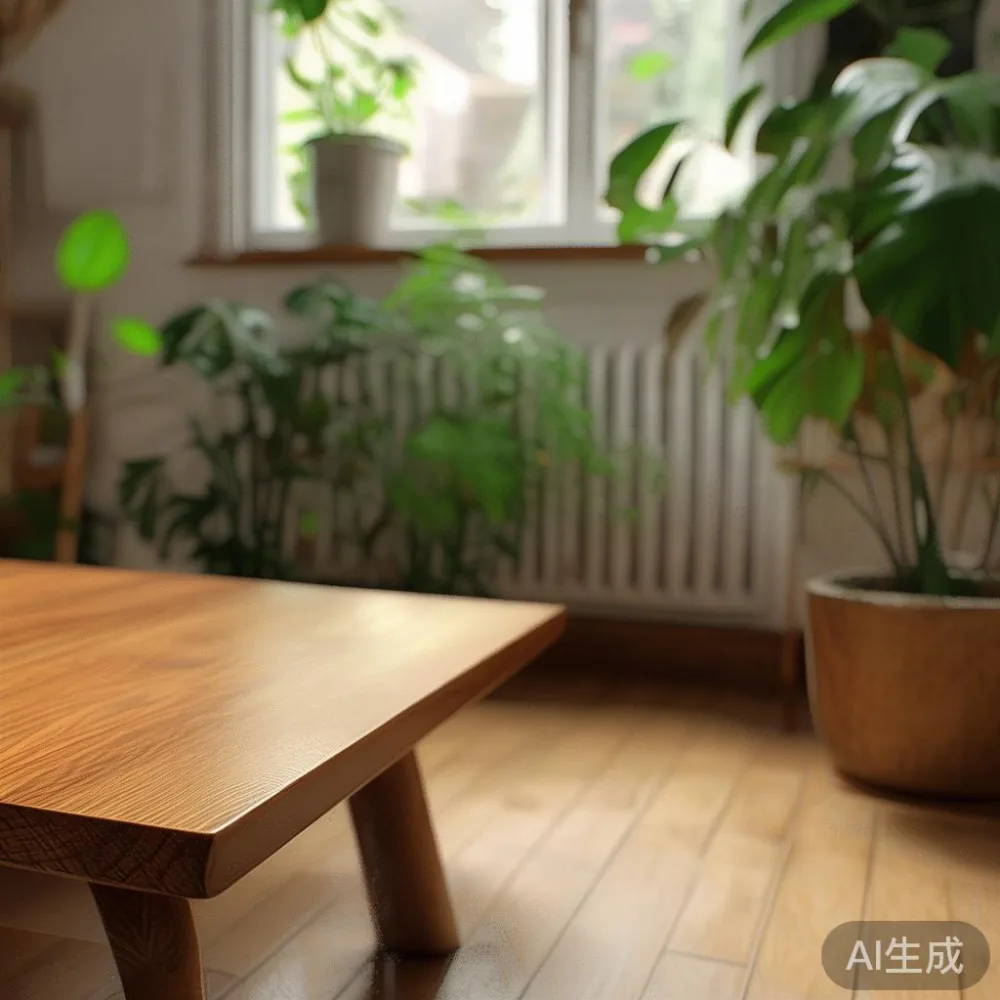
Moisture content is the hidden multiplier. Kiln-dried to 8–10% MC, hardwood is stable inside an air-conditioned Singapore condo. Manufacturers who skip proper drying sell cheaper, but the top will cup or split within one humid season. I've seen a Bedok customer's "bargain" coffee table bow 4mm across the centre inside five months — a repair that costs S$180–S$260 if it can be saved at all.
2. Construction Method vs. Veneer and MDF Shortcuts
Here's the trick that catches out first-time buyers. A piece labelled "wood coffee table" may contain zero structural solid wood — it may be MDF with a 0.6mm oak veneer wrapped around an engineered core. Furniture made this way sells for S$220–S$550 because production is fast and forgiving, and it photographs beautifully for online listings. Open a service complaint, however, and the inside tells a different story.
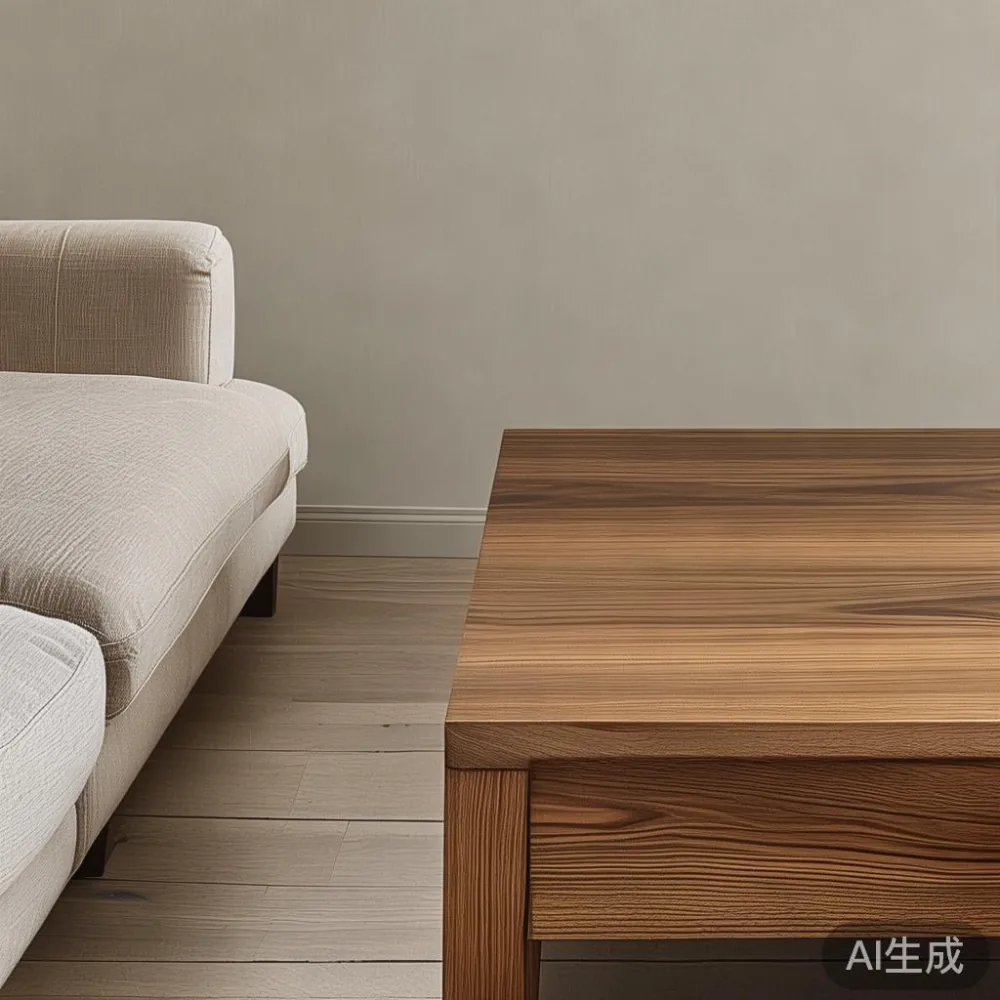
True solid wood construction uses full boards for legs, aprons, and tops. Joints are the tell: mortise-and-tenon, dowel-and-glue, or dovetail on drawers. A solid wood coffee table from a Foshan workshop tends to run S$1,000–S$2,400 depending on the design and leg turning, because each joint takes 15–35 minutes of skilled handwork. Pneumatic press lines can knock that down to 90 seconds per joint — that's how particle-board alternatives drop into the S$300 bracket.
Drawer boxes are a fair indicator. Plywood drawer boxes with metal runners push a nightstand up by roughly S$180 over a stapled MDF version. Solid wood drawer boxes with dovetail joints push it further by another S$260–S$420. A wardrobe with full solid wood shelving and back panels sits in another price tier entirely from one with thin laminate backs — the difference is often S$600–S$1,200 on a 6-door unit.
3. Size, Volume, and the Singapore Lift Problem
Most flats here have a 1.0m–1.2m wide lift door and corridors just wide enough to wheel a hand-trolley through. Anything wider than 90cm on its longest dimension usually won't fit. So a 120cm x 70cm coffee table sounds compact on paper, but in a Punggol HDB with a tight turning radius, you're often paying extra for clever knock-down construction or for the workshop to ship it fully assembled with white-glove delivery.
Heavier pieces also trigger higher delivery fees. A solid marble coffee table weighing 65kg costs roughly S$180–S$280 to deliver upstairs in a condo without a service lift, versus S$60–S$90 for a 22kg solid wood equivalent. When brands quote "free shipping over S$480" or similar thresholds, the weight math is doing quiet work behind that number.
Knock-down design — pieces that bolt together on-site — has become standard for Singapore-bound furniture. The engineering adds about S$80–S$220 to the build cost (metal corner braces, threaded inserts, alignment dowels) but saves S$200–S$400 on logistics. Buy a solid wood dining table that won't fit through a Tampines lift and you'll pay for that error twice: once in the failed delivery, then again in a rework.
4. Finish, Hardware, and the Quiet 30%
Finish is where suppliers hide enormous cost differences. A basic NC (nitrocellulose) lacquer sprayed in two coats adds roughly S$40–S$90 of cost to a coffee table. A seven-coat hand-rubbed oil finish on walnut — sanding between coats, soft-burnishing the final layer — adds S$260–S$520. The hand-rubbed finish also takes 4 extra days in the workshop.
Hardware signals more intent. A solid wood bed frame with brass or stainless steel hardware and wood-to-wood slat holders sits in a different category from one with black powder-coated steel clips. Drawer runners tell the same story — soft-close undermount runners cost S$38–S$72 per drawer set, basic side-mount versions run S$8–S$14. A four-drawer wardrobe with soft-close on every drawer is carrying S$150–S$290 of hardware cost alone.
Stone work — a marble table top on a solid wood base — opens another bracket. A 110cm travertine top adds roughly S$800–S$1,800 over an oak equivalent because of material waste (around 35% of a slab is cut away) and fabrication time. Last month I visited a workshop where a single marble table took three men 11 hours to finish, edge-polish, and mount on a hand-carved base. That labour alone justifies a S$3,200 price tag.
2. So Is Light Luxury Sofa Worth It When You're Buying Wood Too?
This question comes up constantly from condo owners trying to mix a light luxury sofa with a solid wood coffee table without clashing aesthetics. The simple answer: yes, when the category is defined properly. Light luxury — whether French light luxury, American light luxury, or post-modern light luxury — refers to a price and material tier between mass-market and bespoke, not a single design style.
A MIDHILL European light luxury sofa, for example, pairs cleanly with a white oak coffee table in a 1,000 sq ft Punggol condo because both pieces share restrained lines, neutral tones, and a focus on material quality over ornament. The categories complement each other. Where buyers misstep is treating "light luxury" as a marketing label and grabbing any sofa labelled that way without checking the frame.
If you're weighing is light luxury sofa worth it, check these three things on the spec sheet: kiln-dried solid wood frame (not plywood in the critical load paths), 8-way hand-tied or sinuous spring suspension, and a warranty written in years rather than months. Most Singapore retailers offering light luxury solid wood sofa, bed frame, dining table, wardrobe, and nightstand ranges quote 5–10 year structural cover. Anything shorter and the manufacturing quality is being hidden.
3. How Do Style Lifts Affect Price So Much?
Yes. A French provincial for office setup reads completely differently from a French provincial for bedroom fitout, even when the wood is identical. Provincial furniture is defined by cabriole or turned legs, hand-carved aprons, and often a slightly distressed painted finish on oak or beech. The carving alone can add S$320–S$780 per piece to a coffee table or nightstand.
Buyers searching how to style French provincial bed in apartment quickly learn that the look needs room — even a modest queen-size provincial bed frame wants 1.8m x 2.1m of footprint, which still works inside a standard HDB master bedroom at 3.2m x 3.6m. The challenge is keeping the rest of the room light: linen curtains, a slim marble table as bedside surface, and solid wood flooring in a pale tone. The provincial bed anchor should not compete with heavy wardrobes behind it.
Some homeowners mix a French provincial headboard with a more restrained solid wood dining table and a clean-line wardrobe to keep balance. If that combination reads as too country for your taste, is Mid-century modern bed worth it as an alternative — absolutely, with its tapered legs and horizontal lines working comfortably in a 4-room Punggol flat. Each style carries its own S$ premium: Provincial often adds 25–40% over equivalent minimalist builds, Mid-century around 15–25%, and pure light luxury modular pieces 10–20%.
4. Where Does Your Money End Up? A Real Cost Breakdown
Using a common Singapore favourite — a 120cm x 60cm white oak coffee table retailing around S$1,580 — here's roughly where the money goes, based on typical Foshan workshop figures we work with:
Material: S$280–S$360 (kiln-dried FAS oak boards, glue, metal brackets). Labour: S$220–S$320 (joinery, sanding, assembly). Finish: S$90–S$180 (six coats of hardwax oil, fine sanding between coats). Hardware: S$40–S$80 (levelers, corner brackets, optional soft-close drawer). Packaging: S$60–S$90 (foam corners, wooden crate, moisture barrier). Inland freight to Singapore port: S$140–S$210. Last-mile delivery, lift-up to 4th floor: S$80–S$160. Warranty reserve and after-sales: S$60–S$100. Margin for the Singapore retailer: S$200–S$380.
Those numbers add up to roughly S$1,170–S$1,880 — entirely consistent with what you see on the market. Drop to engineered wood and the material line shrinks to S$80–S$140 while everything below the margin stays similar, which is why cheap coffee tables bottom out around S$280–S$420.
5. What Should You Actually Compare When Two Pieces Look Identical?
Ignore the staged room photography. Open the spec sheet and check: timber species and grade, board thickness for the top and legs (28mm–38mm is solid wood territory, anything thinner often hides an MDF core), joinery type, finish type and number of coats, hardware brand, and warranty terms. Ask for the assembly weight — a 65kg solid wood coffee table doesn't lie about what it's made from.
Check corridor and lift access before you order. A MIDHILL dining table at 160cm x 80cm, for instance, ships in a knockdown frame for exactly this reason — the workshop engineers pieces to clear typical HDB lift doors and 90-degree corridor turns. If the retailer can't tell you the assembled dimensions and the package dimensions separately, walk away.
Finally, weigh the long-term services. A 10-year structural warranty plus lifetime refinishing and a 14-day return window quietly raises the price by maybe S$120–S$260, but the resale value and peace of mind easily justify it. Furniture is a 10–15 year decision in this climate; treating it like one saves money every year after.