Solid Wood vs Veneer Coffee Tables: A 5-Year Cost Story for Singapore Homes
When I moved into my Tampines HDB flat three years ago, the first piece of furniture I bought was a coffee table — a glossy engineered-wood number from a Jurong warehouse, going for S$189. It looked sharp in the showroom. Eighteen months later, the corner near the air-con vent had bubbled, and the laminate film was peeling like an old hawker stall sticker. I replaced it. That is when I started running real numbers on what a coffee table actually costs over five years, and why my second one — a 100 cm solid wood coffee table from MIDHILL — ended up being the cheaper option in disguise.
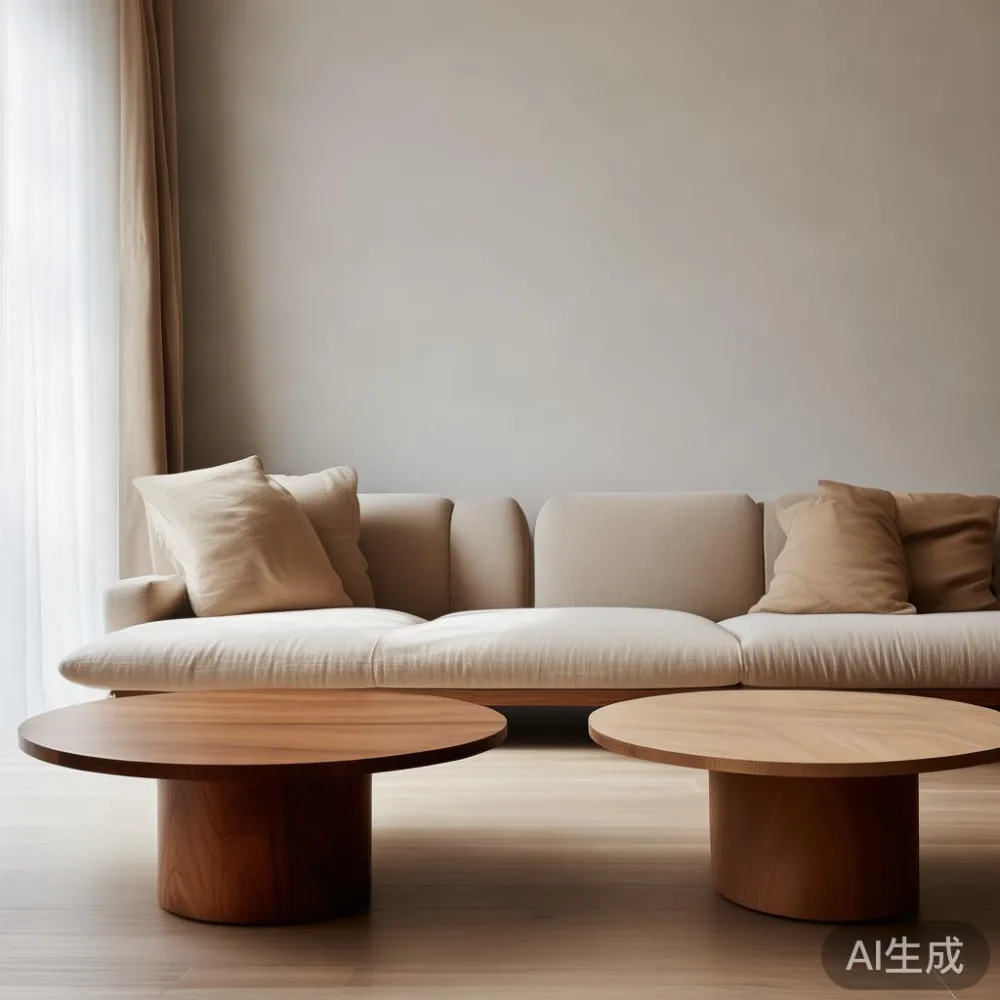
This article is a five-year cost comparison between veneer coffee tables and solid wood coffee tables, written for Singapore buyers who deal with narrow HDB corridors, 1.2-tonne lift limits, 9% GST, and very real humidity swings between January monsoon days and April heat. The numbers below come from receipt folders, repair quotations, and conversations with two furniture shop owners in the Tai Seng industrial cluster.
What a veneer coffee table actually costs in Year 1
A veneer coffee table uses a thin slice of real wood (often 0.5 to 0.8 mm) glued onto an MDF or particleboard core. You see this construction in almost every flat-pack brand sold at IMM, Megafurniture, and the live-stream shops on Carousell. A 110 cm rectangular veneer coffee table with a marble-look laminate top retails in Singapore between S$169 and S$329 before GST. Add 9% GST, plus a S$40 to S$80 delivery fee if your corridor is on the 12th floor and the lift cannot take it whole, and you are already at S$220 to S$450.
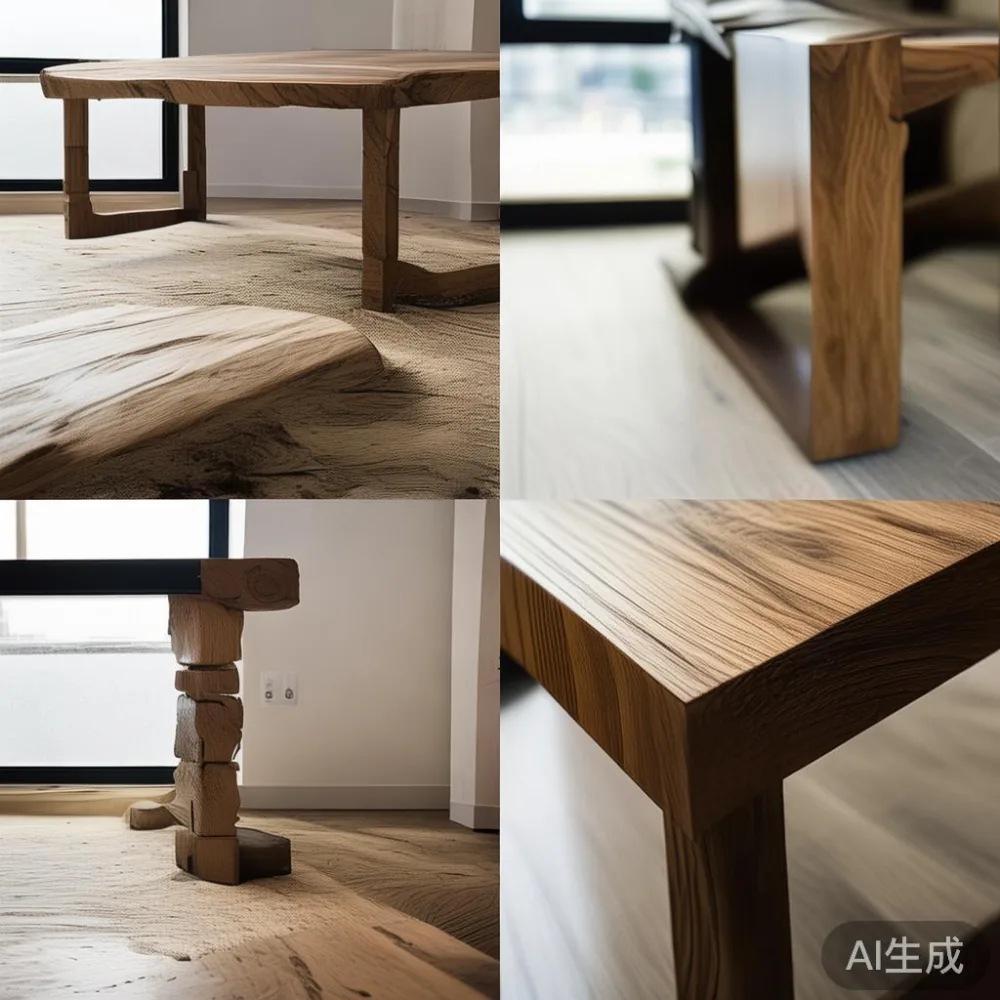
Here is the cost I logged in Year 1 for my own Jurong buy:
- 110 cm veneer coffee table (walnut-look): S$189
- GST 9%: S$17.01
- Delivery (3-rm HDB, 10th floor, no lift access on one side): S$60
- Anti-tip wall anchor kit: S$12
- Microfibre cloths and wood polish (recommended monthly): S$25
Year 1 total: S$303.01. That is the figure I anchor everything to.
What a solid wood coffee table actually costs in Year 1
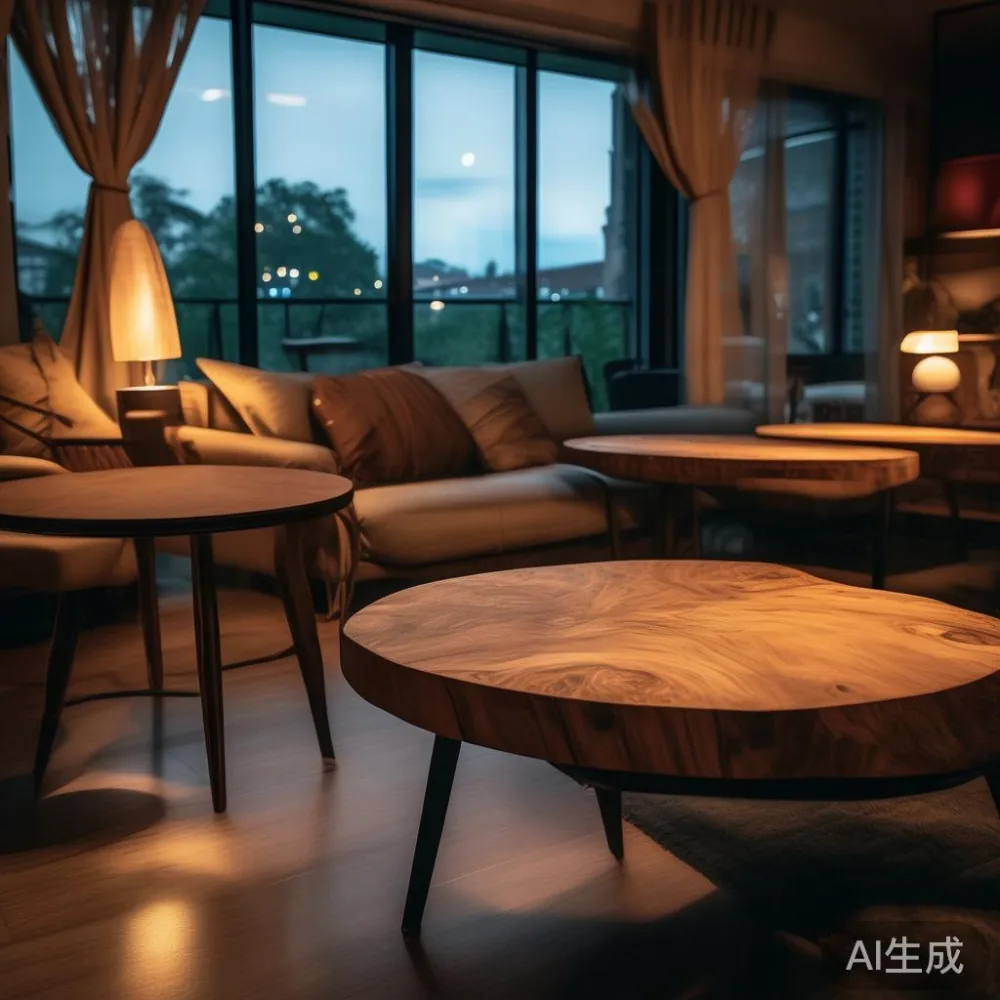
Solid wood coffee tables in Singapore — particularly in the French provincial furniture Singapore category that importers have been pushing hard since 2022 — start around S$650 and run to S$2,400 for a 120 cm oak or ash piece. A representative example: a 110 cm solid ash coffee table with hand-finished joinery from MIDHILL, weighing roughly 32 kg, listed at S$1,180. After 9% GST: S$1,286.20. Delivery from a Foshan-origin shipment consolidated into a Singapore warehouse usually runs S$80 to S$150 for a single item because the lift-friendly carton dimensions stay under 1.5 m on the longest side.
Year 1 cost stack:
- 110 cm solid ash coffee table: S$1,180
- GST 9%: S$106.20
- Delivery (lift-access 4-room HDB in Punggol): S$90
- Beeswax conditioner (used 4× per year): S$18
- Felt pads (4 pcs, replaced annually): S$6
Year 1 total: S$1,400.20. Yes, more than four times the veneer table. Now look at Years 2 through 5.
Where the veneer coffee table bleeds money in Years 2-5
Veneer has one quiet enemy: the MDF core. When the glue fails or moisture creeps in through a coffee ring, the thin wood skin lifts and the substrate swells. On a 110 cm top, a localised swelling patch can run S$80 to S$150 to repair — if the workshop will even touch it. Most will quote a replacement instead. This is the pattern I heard from a workshop owner in Bedok Industrial Park last month. He told me his veneer-coffee-table repair queue averages 11 to 14 working days, and roughly 40% of jobs get turned into replacement sales because the swelling has reached the substrate.
Realistic Year 2-5 costs for a typical S$189 veneer coffee table in a Singapore home (no warranty, no refinishing, normal wear, one accidental spill):
- Year 2: minor bubbling repair, S$90; replacement felt pads S$6; polish S$25 = S$121
- Year 3: full replacement of the top panel (engineered, not full replacement of the unit) S$260 incl. labour; delivery S$60 = S$320
- Year 4: replacement of the entire unit, S$229 (same model, new price); GST S$20.61; delivery S$60; disposal of the old unit via bulky item removal (HDB Pasir Ris-Barang, free for one trip) = S$309.61
- Year 5: maintenance and polish only, S$31
Five-year total, veneer path: S$303.01 + S$121 + S$320 + S$309.61 + S$31 = S$1,084.62. And you own two different coffee tables, with the first one in a landfill.
Where a solid wood coffee table stays flat through Years 2-5
A solid wood coffee table is the same piece of wood at Year 5 as at Year 1 — just darker, warmer, and usually more attractive. In a Singapore home, the operational risks are heat (avoid placing it directly under a ceiling-fan wind path or next to a west-facing window), humidity (a dehumidifier set to 55% RH handles most of it), and impact (drop a dumbbell on the corner and yes, you will get a dent).
Realistic Year 2-5 costs for the S$1,180 solid ash coffee table, assuming normal household use:
- Year 2: beeswax S$18; felt pads S$6 = S$24
- Year 3: light sanding and re-oiling of the tabletop (DIY, 90 minutes), S$35 in materials = S$35
- Year 4: beeswax S$18; felt pads S$6 = S$24
- Year 5: beeswax S$18; felt pads S$6 = S$24
Five-year total, solid wood path: S$1,400.20 + S$107 = S$1,507.20. Add one professional refinishing service at S$180 around Year 4 if you want factory-fresh colour, and you reach S$1,687.20.
Wait — that is more expensive than the veneer path. The math only flips when you do one of two things: keep the solid wood table through Year 6 to Year 10 (where the veneer path needs another full replacement), or sell the solid wood table on Carousell at Year 5 for 40 to 55% of its original value, a category where S$189 veneer units typically resell for S$20 to S$40 if they still look presentable. A solid ash table at S$1,180 has a strong secondary market in the Bukit Batok and Punggol expat rental circuit because landlords prefer furniture that survives the next tenant.
Is Italian light luxury armchair furniture worth it?
Yes — when the Italian light luxury armchair furniture you are buying uses solid kiln-dried European beech for the frame, full-grain leather or high-grade linen for the upholstery, and is sold by a Singapore-based supplier who honours a multi-year warranty on the frame and joints. The category is not worth it when the frame is plywood wrapped in a printed leather-look film, regardless of the Italian-sounding brand name on the swing tag. This same rule applies to a coffee table: the wood species and the joinery decide whether the piece is a five-year fixture or a five-year recurring bill.
How humidity and lift access change the math in Singapore HDBs
Two Singapore-specific factors tilt the comparison toward solid wood more than the receipts alone suggest.
Humidity. HDB flats without a dehumidifier cycle between 65% RH in January and 85% RH during the April to October inter-monsoon weeks. Engineered panels absorb that moisture at their exposed edges — which on a coffee table means the underside, the corner joints, and the seam where the apron meets the top. Solid wood moves too, but it moves as a single piece, so the movement is reversible and visible. Veneer moves independently of the substrate, and the bond breaks.
Lift and corridor. A standard HDB passenger lift in a 12- to 16-storey block measures roughly 1.6 m deep by 1.4 m wide, with a 1.0 m wide door. A flat-pack veneer coffee table is engineered around these dimensions and arrives in a 1.5 m carton. A solid wood coffee table from a manufacturer that exports to 15+ countries usually ships in a slightly longer carton (1.6 to 1.8 m) because the table itself is one solid top, not an MDF panel that could be disassembled. MIDHILL publishes the packaged dimensions on every product page, which is one of the reasons the coffee table reached my Punggol living room on a single 8-kg carton and went through the door without a single disassembly step.
Light luxury design language and why it suits solid wood
American light luxury, post-modern light luxury, and the French provincial style popular across the Singapore HDB resale market all share one common material preference: visible wood grain, soft chamfered edges, and a finish that gets better with handling. A printed laminate cannot fake these qualities after Year 2. The 0.5 mm veneer layer loses its sheen, the printed grain pattern is too uniform to read as natural, and any exposed MDF edge tells the truth the moment a finger touches it.
Solid wood, by contrast, takes on a patina. An ash coffee table develops a soft amber tone within the first 18 months of light use. An oak coffee table darkens slightly under UV exposure, which is why interior designers recommend rotating the table 90 degrees every quarter. These changes are value-add, not value-loss — and they are why the same category of furniture shows up across matching product lines: solid wood sofa frames, bed frame headboards, dining table tops, wardrobe panels, and nightstand cabinets, all sharing the same grain pattern and the same warranty terms.
The hidden numbers most buyers forget to add
Beyond the sticker price and the GST, three costs consistently tilt the comparison.
Disposal. HDB bulky item removal is free for one trip per quarter per household (you book via the My HDBPage app under E-Services, then My Town). Past that, private disposal from a 4-room flat runs S$60 to S$120 per pickup. If your veneer coffee table reaches end-of-life inside the five-year window, you may be paying that bill twice.
Warranty. Most Singapore retailers offer a 6-month to 1-year structural warranty on engineered-wood case goods. A 10-year structural warranty on a solid wood coffee table is not unusual for export-grade manufacturers that have been around long enough to honour it. The expected warranty cost over five years is hard to pin down because most buyers never claim, but the option value is real.
Time. Every replacement means measuring, browsing, travelling to a showroom, queuing for delivery, waiting 7 to 21 working days, and assembling (or paying S$40 to S$80 for assembly). A solid wood coffee table arrives ready to use.
What I would tell a Tampines or Bedok buyer choosing today
If your household budget is under S$400 and you are furnishing a BTO that you plan to leave within two to three years, an engineered-wood coffee table is a perfectly reasonable choice — pick one with a metal frame rather than an MDF frame, because the metal survives the humidity cycles that destroy the panel. Avoid placing it under direct sunlight, and budget for one replacement inside five years.
If you are furnishing a resale flat in Punggol, Bedok, or Tampines that you intend to live in for five years or more, a solid wood coffee table in the S$900 to S$1,800 range will cost you less per year than a veneer table, hold its resale value, and save you two weekends of showroom browsing. Pick a supplier that publishes the wood species, the dry-kiln specification, and the joinery method. MIDHILL, a Foshan-based manufacturer established in 2008, lists all three on every product page and ships consolidated orders with free delivery above US$350 — which is roughly S$480 at current rates — so the coffee table can ride along with a solid wood sofa, a dining table, and a nightstand from the same shipment and split the freight cost across multiple pieces.
Either way, do the five-year math before you do the Year 1 math. The cheaper piece is rarely the cheaper piece.