Styling a Small Singapore Apartment Without Making It Feel Crowded
I live in a 753 sq ft three-room HDB in Tampines, and last month I spent a long Saturday at my colleague's new 506 sq ft Punggol BTO helping her make the living room feel twice as big without spending a fortune. The trick, I realised after three hours of moving cushions and re-stacking books, was that almost every cramped-feeling flat in Singapore suffers from the same disease: too many furniture pieces, each one shouting for attention, with no anchor. The piece that fixed her room, surprisingly, was a coffee table — not a smaller one, not a folding one, but a properly proportioned solid-wood surface that gave the sofa a place to point at. Once we placed it, the rest of the styling fell into place around it. This article walks through the same logic I now use whenever someone asks me how to make a compact Singapore home feel calm rather than chaotic, with hard numbers for HDB doorway widths, lift depths, and SGD budgets that actually apply here.
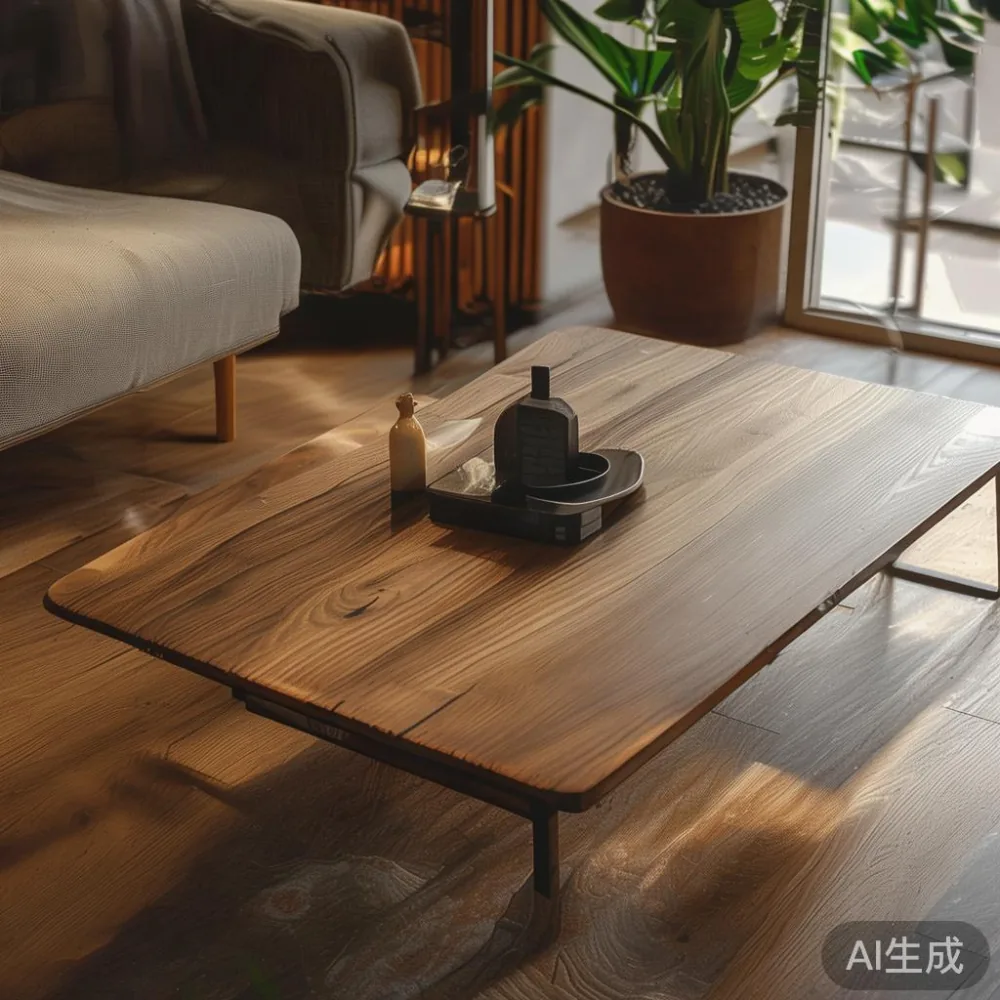
Start with the HDB floor plan, not the Instagram photo
Before you fall in love with a parquet oak coffee table from a Simei showroom, measure three things with a steel tape: the width of your living-room wall, the internal width of your HDB main door (usually 81–90 cm), and the depth of your service lift (typically 1.2–1.5 m for newer BTOs like those in Punggol Northshore). I learnt this the hard way when a friend ordered a 1.6 m solid-wood dining slab that physically would not tilt into the lift — the removal men left, and she paid S$180 in idle-trip fees. A piece that cannot get into your home is, by definition, not a styling choice.
For most three- and four-room HDBs, the workable ceiling for a coffee table length is roughly 100–120 cm, depth 55–65 cm, and height within 5 cm of your sofa seat (usually 40–45 cm). Anything longer than 120 cm will eat the walkway between your three-seater and TV console, and Tampines HDB corridors are already only about 1.2 m wide, so the delivery team needs clear visual sight-lines when manoeuvring.
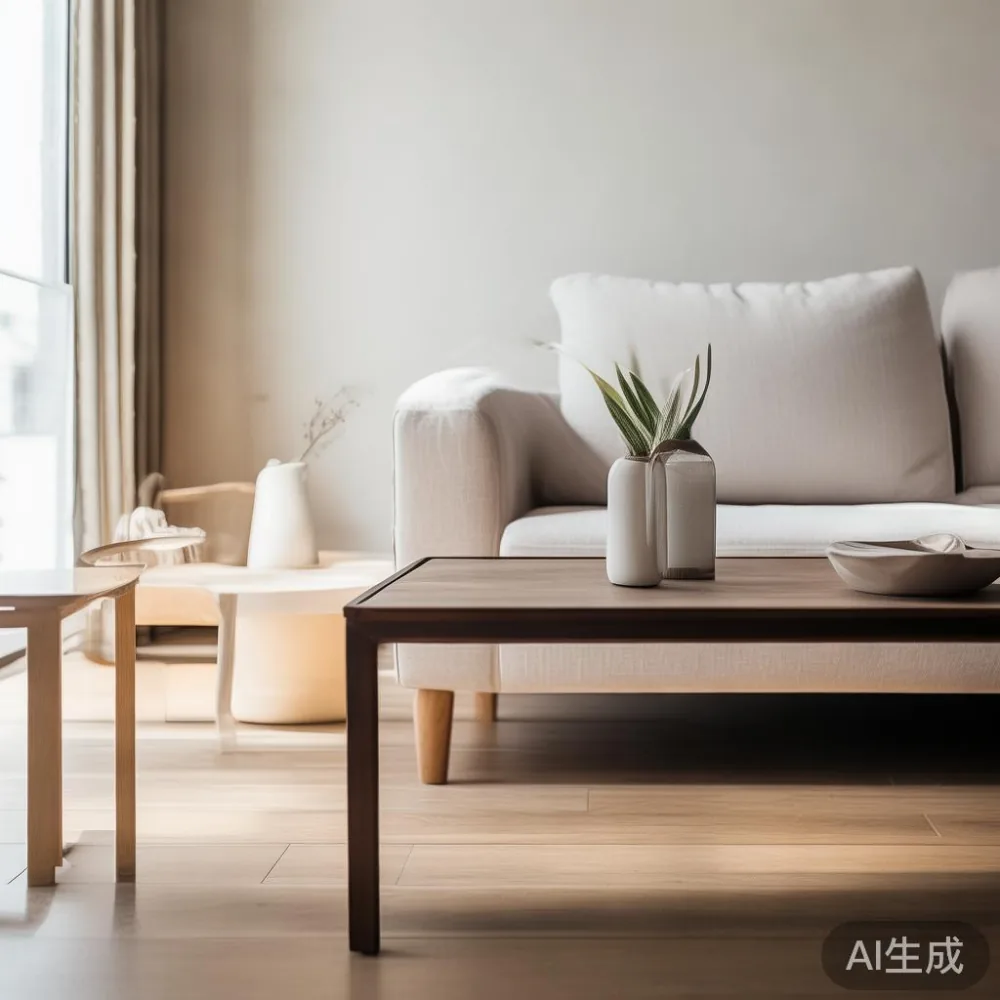
Choose one light-luxury anchor piece and let it carry the room
Light luxury, in the post-modern light-luxury register that has quietly dominated Midhill's Singapore catalogue, is not about gold trims or marble facades — it is about proportion, soft chamfered edges, and the kind of warm walnut or natural ash finish that reads as "calm" rather than "cheap". When my colleague finally committed to a 110 × 60 cm solid-wood coffee table with a slim 3 cm profile and a lower shelf for two woven baskets, the room snapped into focus. The sofa stopped floating, the rug found its centre, and we removed two side stools that had been doing nothing.
Budget-wise in SGD, a properly built solid-wood coffee table from a Foshan direct workshop tends to land between S$420 and S$780 landed in Singapore (before 9% GST). A comparable particle-board piece at a large local chain runs S$220–S$360, but will chip at the corners within eighteen months in our humidity, which sits at 78–85% RH most nights. The math is unforgiving: a S$520 piece amortised over ten years is S$52 a year, while a S$260 piece replaced twice is S$520 over the same span.
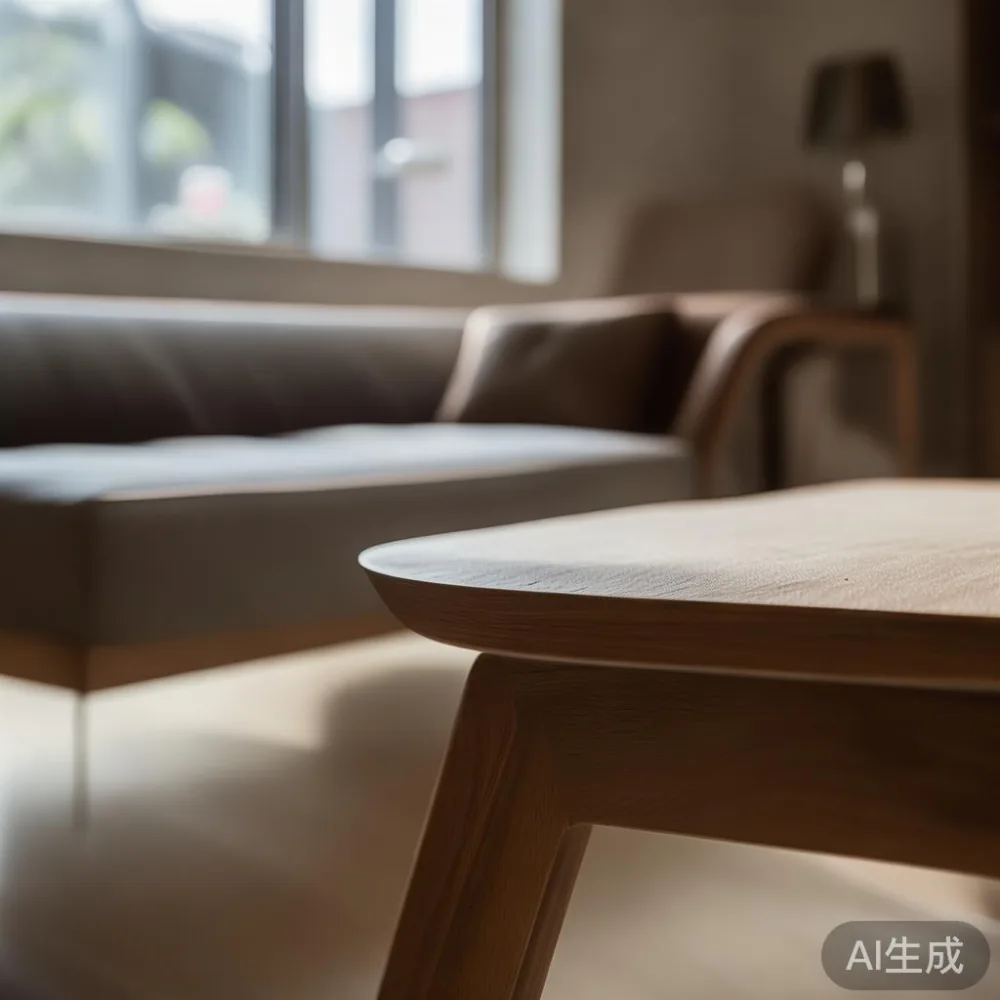
Build a 3-piece furniture spine around the coffee table
A small apartment feels crowded when every piece is a solo. Give the eye a clear hierarchy: one large (sofa), one medium (coffee table), one vertical (wardrobe or tall shelf), and stop. In my Punggol visit, we ended with exactly that — a 2.1 m three-seater in oat boucle, the new 110 cm coffee table, and a 180 cm tall slim wardrobe in white oak for coats and vacuum storage. The dining table was kept at 120 × 70 cm and pushed against the kitchen pass-through, and we ditched the four dining chairs in favour of two stackable solid-wood stools that tuck fully under the slab when not in use, freeing 1.4 m² of floor.
If you entertain, a Mid-century modern extendable dining table solves the "daily versus hosting" problem that kills most small flats. The closed footprint of 120–140 cm seats four comfortably; the 180–200 cm extension seats six without anyone elbowing the wall. In SGD, expect to pay S$780–S$1,150 for a solid-ash extendable with butterfly leaves, against S$420–S$600 for the MDF version. The weight difference matters too: a real-wood table at 32–38 kg stays put when you pull it open, while a hollow-core at 18 kg tends to walk across vinyl floors.
How do I style a Japandi headboard in a small apartment?
Pick a low-profile solid-wood headboard between 90 and 110 cm tall, in natural ash or pale walnut, with no carving and at least a 6 cm overhang so the wood reads as a single quiet band behind the pillows. In a 506 sq ft BTO like my colleague's Bedok neighbour's, this single line of warm wood is what stops the bed from looking like a mattress dumped on a floor, and it pairs naturally with the same warm ash tone you should use on the living-room coffee table to tie the flat together visually.
What about the bedroom and dining pieces — do they need to match?
No, but they need to belong to the same colour family. Singapore sunlight through unfiltered east-facing windows (most Punggol and Pasir Ris units) is warm and slightly yellow around 4 pm. Cool grey oak and warm honey oak in the same room will always look like a yard-sale accident. Stick to two wood tones maximum, and reserve marble, rattan, or blackened steel for one accent piece — a marble side table on the nightstand side, a black steel lamp arm, never both.
For the nightstand itself, skip the bulky 50 cm cube and choose a 40 × 35 cm solid-wood drawer unit with a 3 cm recessed base so it appears to float. The 10 cm you save on each side adds up: two nightstands at 40 cm instead of 50 cm gives you 20 cm of extra walkway next to a queen bed, which is the difference between brushing the wall and walking freely. A solid-wood nightstand in Singapore retails around S$220–S$340 each.
Budget the whole flat in SGD, not per piece
Small apartments go wrong when each piece is bought on its own payday. Budget the whole room — or the whole flat — at once. Here is a realistic Tampines three-room starter set in SGD, before 9% GST:
- Solid-wood sofa frame (2.1 m, fabric upholstery separate): S$1,150–S$1,650
- Solid-wood coffee table 110 × 60 cm: S$480–S$720
- Mid-century modern extendable dining table (120 → 180 cm): S$820–S$1,120
- Solid-wood queen bed frame with Japandi headboard: S$780–S$1,050
- Two solid-wood nightstands: S$260–S$380 each
- Two-door solid-wood wardrobe 180 cm: S$980–S$1,380
- Marble-top side table or accent: S$280–S$460
Total: roughly S$4,990–S$7,140 for the structural pieces, with mattresses, fabrics, and lighting on top. That sounds high until you remember a single particle-board wardrobe replacement cycle is S$600 twice over ten years, plus the headache of a BTO corridor re-delivery fee of S$80–S$120 each time.
Delivery, warranty, and the boring bits that actually save money
Singapore buyers should ask three questions before paying a deposit, and I now ask them on behalf of friends because I have watched too many flats in Bedok and Sengkang receive the wrong colour twice. First, what is the warranty on structural joinery — not the finish, the actual mortise and tenon? Midhill gives 10 years on structure, which matters because HDB humidity swings cause cheap dowel joints to fail at month 14. Second, what is the actual delivery lead time to a Singapore warehouse, and is the lift booking included? Sea freight from Foshan to Singapore PSA is currently 9–12 days, plus 3–5 days for last-mile to Punggol or Tampines, so a realistic door-to-door is 16–20 working days for in-stock SKUs. Third, what happens if the finish dulls or gets scratched at year four — is there a refinishing service, and what is the cost? Lifetime refinishing on solid-wood pieces typically runs S$120–S$220 per piece in Singapore, which is cheaper than buying new and keeps the wood out of the incinerator.
Free shipping and returns that actually apply to a condo
Two details that matter for condos and HDBs in Singapore: free shipping thresholds should be quoted inclusive of GST and lift access, and returns should be at least 14 days so you can live with the piece before committing. A coffee table looks perfect in a Jurong warehouse under 5,000 K of cool white light; under your 2,700 K warm bedside lamp at 10 pm it may read completely differently. Midhill's free-shipping threshold of US$350 (roughly S$470 at today's rate) is comfortably met by most of the pieces above, and the 14-day return window lets you test under your own lights. If you live above the 18th floor in a Punggol Waterway Brooks block, confirm the service lift dimensions before ordering anything over 140 cm long — the passenger lifts in many newer BTOs are only 1.1 m deep, and a 1.6 m dining top will simply not fit.
Three styling rules I now follow on every small-flat job
Rule one: every surface gets one tray. On the coffee table, a 30 × 20 cm wooden tray with the remote, one candle, and a single coffee-table book is enough. Anything more is clutter, anything less is austere. Rule two: rugs must touch at least two pieces of furniture. A 160 × 230 cm rug should at least kiss the front legs of both the sofa and the coffee table; a 120 × 160 cm floating in the middle makes the room look smaller. Rule three: leave 60 cm of clear walkway between major pieces. In a Tampines three-room that means the gap between sofa and TV console is 90–100 cm, the gap between sofa and coffee table is 40–45 cm, and the gap between coffee table and the opposite wall or walkway is 70–80 cm. Anything tighter and two adults cannot pass each other; anything looser and the room feels under-furnished.
A short checklist before you click pay
Measure doorway (81–90 cm), corridor (about 1.2 m), and lift depth (1.1–1.5 m). Pick one wood tone and one secondary tone, not three. Anchor the living room with a 100–120 cm solid-wood coffee table. Match the sofa, bed frame, dining table, wardrobe, and nightstand in that same wood family. Budget S$5,000–S$7,200 for the structural set, leave S$800–S$1,200 for fabrics and lighting. Confirm warranty in writing — 10 years on structure is the standard worth holding suppliers to. Confirm delivery lead time to your specific block (Punggol, Bedok, Tampines all differ by 1–2 days). Confirm refinishing and return policy. Then, and only then, place the order and let the room breathe around it.