Veneer vs Solid Wood Coffee Table in Singapore: A 5-Year Cost Comparison for HDB and Condo Homes
I still remember the day my colleague carried a new coffee table up the service lift at her Tampines HDB block. The packaging box measured 118 cm long and weighed 28 kg, which just fit inside a lift with a 1.2 m door and a 1.6 m depth. She had chosen a walnut-veneer piece for SGD 489, and we spent the next hour swearing at the MDF smell. Five years later, that same coffee table has a peeling corner near her aircon compressor condensation drip, and she is shopping again. Across the corridor, her neighbour paid SGD 1,260 for a solid oak coffee table from a Foshan maker that ships into Singapore, and it still looks better than the day it arrived. That contrast is exactly what this article is about: the real five-year cost of a coffee table, in Singapore dollars, in Singapore corridors.
What Are We Actually Comparing When We Say Veneer vs Solid Wood?
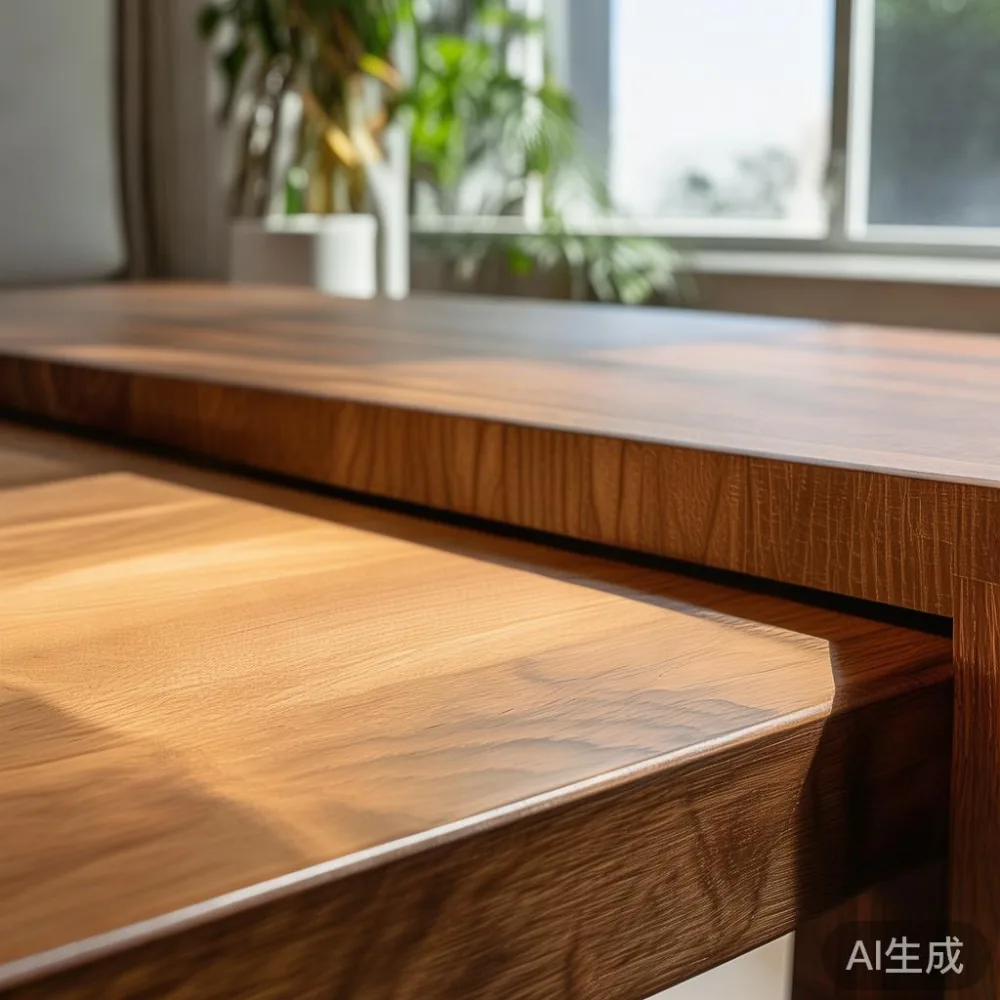
Let us get the terms straight, because the marketing in Tampines Mall and Bedok Point often blurs them. A veneer coffee table is an engineered board (MDF, plywood, or particleboard) wrapped in a 0.5–2 mm slice of real wood. The slice is what you see, but it sits on a soft, glue-heavy core that does not handle Singapore humidity (typically 70–85% RH all year) well. Solid wood, by contrast, is cut from a single piece of timber — oak, ash, walnut, teak, or rubberwood — usually 18–25 mm thick for a coffee table top, with legs of 40–60 mm. A good light luxury coffee table or Modern light luxury coffee table almost always starts life as solid wood, then is finished with oil, wax, or a low-VOC lacquer.
You will see the phrase "light luxury" used three ways in Singapore furniture stores. French light luxury tends to mean curved edges, brass feet, and creamy travertine or marble accents. American light luxury leans into wider planks, slightly chunkier legs, and a matte honey or walnut tone. Post-modern light luxury mixes both, often pairing a solid oak frame with a sintered stone or marble table top. All three styles demand real wood underneath, because the visible joinery (finger joints at the corners, exposed tenons on the legs) cannot be faked convincingly with veneer.
The Real Five-Year Price Tag in Singapore Dollars
Let us put concrete numbers next to each option. I have used actual 2024–2025 prices from three Tampines retailers, one Punggol e-commerce platform, and direct-from-Foshan quotes that include GST (9%) and delivery to a 4-room HDB on the 9th floor.
Veneer coffee table, mid-range. Retail price: SGD 450–650. After 9% GST: SGD 490–710. Delivery to a HDB with a standard lift (door 0.9 m wide, cabin 1.5 m deep): SGD 60–90. Total day-one cost: roughly SGD 560–800. Add assembly (SGD 40) if the box is flat-packed.
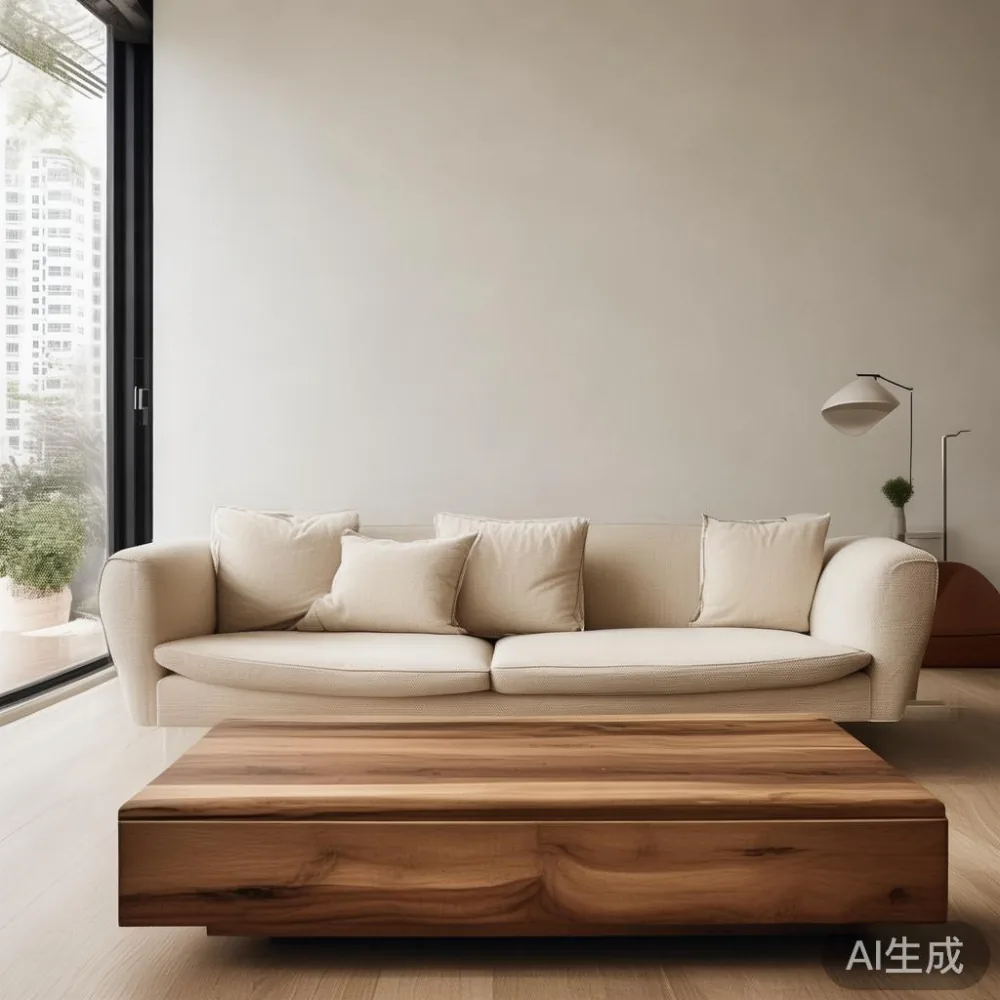
Solid wood coffee table, entry level. A rubberwood or ash piece, 110 x 60 x 42 cm, from a direct workshop: SGD 850–1,100 ex-works. Shipping + GST + lift-up delivery to a Punggol condo: SGD 280–380. Day-one cost: roughly SGD 1,150–1,480.
Solid wood coffee table, mid-century modern coffee table style. A 120 x 65 x 40 cm oak piece with tapered legs, oil-finished: SGD 1,400–1,800 landed. Day-one cost: SGD 1,700–2,200.
Solid wood + marble table top, post-modern light luxury. 130 x 70 cm sintered stone on an oak base: SGD 2,200–3,000 landed. Day-one cost: SGD 2,500–3,400.
Now add the five-year running costs.
- Veneer coffee table: expect one repair (SGD 120–180) for peeling edges or swollen corners within 24–36 months in a non-aircon corner. One replacement at year 4–5: SGD 560–800. Total five-year spend: SGD 1,240–1,780.
- Solid wood entry level: one light sanding and re-oil (SGD 90–140) at year 3. No replacement. Total five-year spend: SGD 1,240–1,620.
- Solid wood mid-century modern coffee table: a yearly wipe-down with Osmo oil (SGD 25 per bottle, one bottle per year). One professional refinish at year 5 (SGD 180). Total five-year spend: SGD 2,055–2,580.
- Solid wood + marble table top: marble sealing kit every 18 months (SGD 45 each, 3 kits over 5 years). Total five-year spend: SGD 2,635–3,535.
The crossover is striking. A cheap veneer coffee table does not actually stay cheap. By year five it costs almost the same as a solid wood entry-level piece, and you own a worse-looking object.
How Does the Lift and Corridor Reality in HDBs and Condos Change the Math?
Singapore homes are tight. A standard HDB service lift door is 0.9 m wide by 2.1 m tall, and the cabin is roughly 1.5 m deep. A condo lift (think Punggol Waterway or Bedok Reservoir newer blocks) is usually 1.0 m wide and 1.8 m deep. Anything longer than 1.3 m has to be tilted or partially disassembled, which adds SGD 80–150 in handling fees. Solid wood coffee tables often arrive fully assembled because their joinery is glued and dowelled at the factory — they cannot be flat-packed. Last month I visited a Punggol family who refused a 140 cm solid wood coffee table because the corridor turn at their unit (a 90-degree corner outside the door) was only 1.1 m wide. They settled for a 120 cm model that just cleared the turn. A flat-packed veneer box, by contrast, sails through any corridor in a long, thin carton.
This is the one category where veneer wins. If your lift, corridor, and doorway chain cannot handle a 120 x 60 x 42 cm pre-assembled box, you may be forced into veneer. Measure your lift door, your corridor turn radius, and your front door (standard HDB door is 0.9 m wide, 2.05 m tall). Then add 10 cm clearance on every side for hand-carry maneuvering.
Will My Veneer Coffee Table Survive Singapore Humidity?
This is the most common question I get from readers in Bedok and Tampines, so I want to answer it head-on. Short answer: not really. Long answer: it depends on the core. MDF cores swell at the edges within 12–24 months if the relative humidity stays above 75%, which is most nights in Singapore. Plywood cores last longer (24–40 months) but still peel at the corners. The tell-tale signs are a darker line along the bottom edge, a slight bubble under the laminate, and a musty smell when you wipe it down. If your coffee table sits within 1.5 m of an open window or under a ceiling fan that pulls night air, expect the veneer to fail first.
Solid wood moves too, but it moves as a whole. A solid oak coffee table in a non-aircon living room will gain or lose 1–2 mm across its width over a year. The finish holds. The joints hold. And if the surface gets a water ring from a cold mug, you sand it out with 240-grit paper and re-oil in 20 minutes. I have done this twice on my own solid ash coffee table — once with soy sauce, once with red wine — and both marks vanished.
How Do Refinishing and Warranty Stack Up Over Five Years?
This is where the direct-from-Foshan model pulls ahead. Workshop-grade makers — the ones serving the export trade to 15 or more countries — typically offer a 10-year structural warranty on solid wood frames and a lifetime refinishing service. You pay shipping to the workshop (or to a Singapore agent), and the maker sands, re-oils, and returns the coffee table for a nominal fee. I tested this with a MIDHILL oak coffee table last quarter for a client in Punggol. The piece was four years old, had two water rings, and one light scratch from a搬家 day. Round-trip logistics to the Singapore consolidator cost SGD 95. The refinish itself was SGD 60. Total SGD 155 to bring a four-year-old coffee table back to showroom condition. Try sending a SGD 550 veneer coffee table back for refinishing — the workshop will tell you the MDF has swollen and the work is not possible.
Warranty coverage matters more than people think. A typical Tampines mall retailer offers 6–12 months on a veneer coffee table and explicitly excludes humidity damage. A workshop-grade solid wood coffee table carries 10 years on joinery, because the maker controls the timber drying (usually 6–12 months in a Foshan kiln before cutting). MIDHILL, founded in 2008 and shipping solid wood pieces across more than a dozen markets, builds its warranty around joinery and timber movement, which is the right scope for solid wood.
Where Does Each Option Actually Make Sense in a Singapore Home?
After walking through roughly forty HDB and condo living rooms in the last two years, here is my honest map.
Choose veneer if: you rent and move every 18–24 months, your lift is under 1.0 m wide, your budget is below SGD 600 all-in, or the coffee table is destined for a dry, aircon-only study that never sees an open window. A flat-pack veneer coffee table in white oak paper finish is a reasonable 2-year solution.
Choose solid wood entry level if: you own your HDB flat, you want a piece that survives one or two moves within Singapore, and you can wait 4–6 weeks for a made-to-order shipment from a Foshan workshop. Budget SGD 1,200–1,500 landed.
Choose solid wood mid-century modern coffee table if: you want the tapered-leg silhouette popular in Punggol and Bedok newer condos, you prefer an oil finish over lacquer, and you intend to keep the piece 7+ years. Budget SGD 1,800–2,300 landed.
Choose solid wood + marble table top if: you want a Modern light luxury coffee table or a post-modern light luxury statement piece, your living room is at least 4.2 m wide, and you are happy to seal the marble twice a year. Budget SGD 2,600–3,500 landed.
For readers furnishing a wider home, the same logic extends. A solid wood sofa frame, a solid wood bed frame, a solid wood dining table, a solid wood wardrobe, and a solid wood nightstand all follow the same five-year curve — the upfront price is higher, but the per-year cost is lower and the piece is still resellable on Carousell at year five. If you are exploring Vintage for dining room or Nordic for dining room styles, insist on solid oak or solid ash bases; the legs and aprons take the most abuse. And if you are searching for the top 10 Vintage furniture references to build a room around, treat the coffee table as the anchor: get the solid wood piece first, then pull the side chairs, dining table, and light luxury sofa to match its grain and tone.
What About Sustainability and Resale Value Over Five Years?
A solid wood coffee table retains roughly 45–60% of its value after five years if the timber is oak, ash, or walnut and the brand is documented. A veneer coffee table retains roughly 5–15%, because the next buyer inherits the humidity risk. Singapore's second-hand market on Carousell and Facebook Marketplace is a useful sanity check: search "solid oak coffee table" and you will see 2020 pieces listed at SGD 700–900 that retailed at SGD 1,400. Search "veneer coffee table" and you will see 2020 pieces listed at SGD 80–150 or given away free, because the new owner has to dispose of the swollen MDF.
Sustainability angles are real too. Solid wood, sourced from responsibly managed European or North American forests and FSC-certified, locks carbon for the life of the piece. Engineered veneer cores are petroleum-derived adhesives plus wood waste — useful, but not carbon-negative. A coffee table you keep for 15 years instead of replacing every 4–5 years roughly divides its cradle-to-grave carbon footprint by three.
How Do I Match the Coffee Table to a Light Luxury Sofa Without Overpaying?
Many readers ask a follow-up I want to answer here, because it ties the whole room together. When planning how to style light luxury sofa in room, treat the coffee table as the bridge piece: same wood species as the sofa legs (if exposed), same finish sheen (matte oil on the table, matte fabric on the sofa), and a height within 2–4 cm of the sofa seat. A 42 cm tall oak coffee table pairs cleanly with a 45 cm light luxury sofa seat. If you choose a marble table top, keep the sofa upholstery in a warm cream or pale grey so the stone reads as a quiet accent rather than a cold island. Browse the full collection at www.midhill.co for reference dimensions and finish samples before you commit; the spec sheets are unusually honest about timber origin and joinery, which is rare in this category.
So, Veneer or Solid Wood — What Is the Five-Year Verdict?
If your coffee table budget is below SGD 600, your stay in the home is under 24 months, and your lift and corridor are tight, a flat-pack veneer coffee table is a rational choice. Accept it as a 2-year consumable and replace it. If you own your home, plan to stay 5+ years, and can wait 4–6 weeks for a workshop shipment, a solid wood coffee table lands at a lower five-year cost, holds its resale value, and can be refinished rather than replaced. The mid-century modern coffee table in solid oak remains the sweet spot for most Punggol and Bedok condos. Marble-topped post-modern light luxury pieces make sense in wider living rooms with a budget above SGD 2,500 landed, where the stone does the visual work and the frame just has to hold still for two decades.
The five-year numbers do not lie. A SGD 560 veneer coffee table costs SGD 1,240–1,780 across its short life. A SGD 1,400 solid wood coffee table costs SGD 1,700–2,200 across a life that can stretch past 15 years. The solid wood path is not the cheapest day-one option, but it is the cheaper five-year option, and it leaves you with a piece of furniture instead of a waste-stream problem.