Coffee Table Cost Showdown: Veneer vs Solid Wood Over 5 Years in a Singapore Home
I still remember the day my colleague Priya measured her new Tampines HDB living room with a folding rule. The floor plan called for a 120 cm x 60 cm coffee table in front of a 3-seater solid wood sofa, and she had narrowed her shortlist down to two options: a S$420 engineered-wood piece with a 0.6 mm walnut veneer, or a S$1,150 solid oak coffee table from a Foshan furniture maker she had been following for years. Both looked acceptable in the showroom. Both would fit through her 90 cm-wide HDB corridor and into her service lift. Five years later, only one of them still looked like the photo on the product page. This article breaks down the real 5-year cost of a coffee table in Singapore, with GST, humidity, and HDB logistics factored in, so you can decide which path makes sense for your own living room.
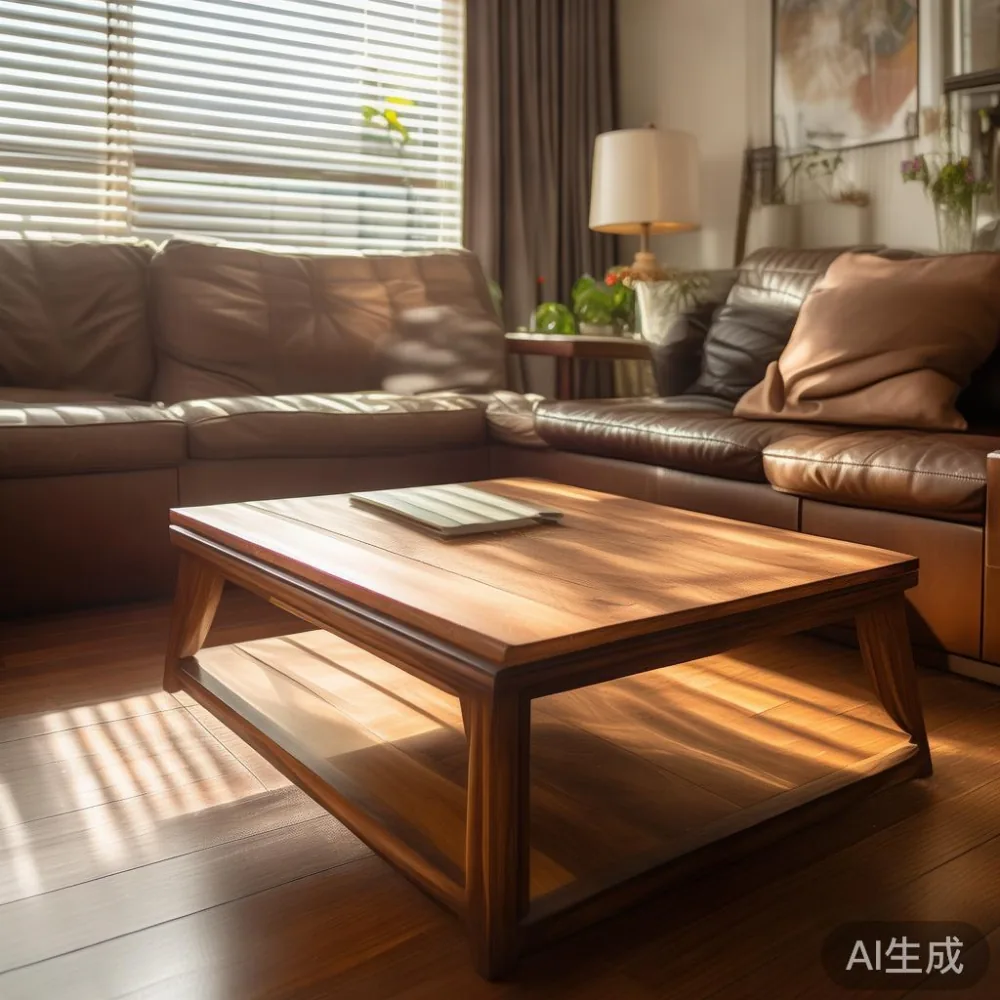
Why a Coffee Table Is the Hardest-Working Surface in an HDB Flat
A coffee table in a Singapore home absorbs more punishment per square centimetre than almost any other piece. It catches kopi-O condensate rings, the wet bottom of a claypot the moment you bring it from the kitchen, the iron stand of a steamy teapot, and the constant drag of a laptop charger cable across its top. In a 4-room HDB in Bedok or a 5-room flat in Punggol, the coffee table is also the first thing you see when you step out of the lift into the living area, which means scratches, dents, and fading read loud and clear. A solid wood dining table a few metres away sits behind chairs and rarely gets touched. A bed frame is mostly covered by a mattress. A nightstand is small and easily replaced. The coffee table, on the other hand, sits centre stage for at least five years before most HDB owners even consider a refresh.
That is why the veneer-versus-solid decision matters most for this category, and that is also why I am focusing this comparison on coffee tables rather than a solid wood sofa or a wardrobe. The economics look completely different for upholstery or storage pieces; coffee tables are the cleanest stress test.
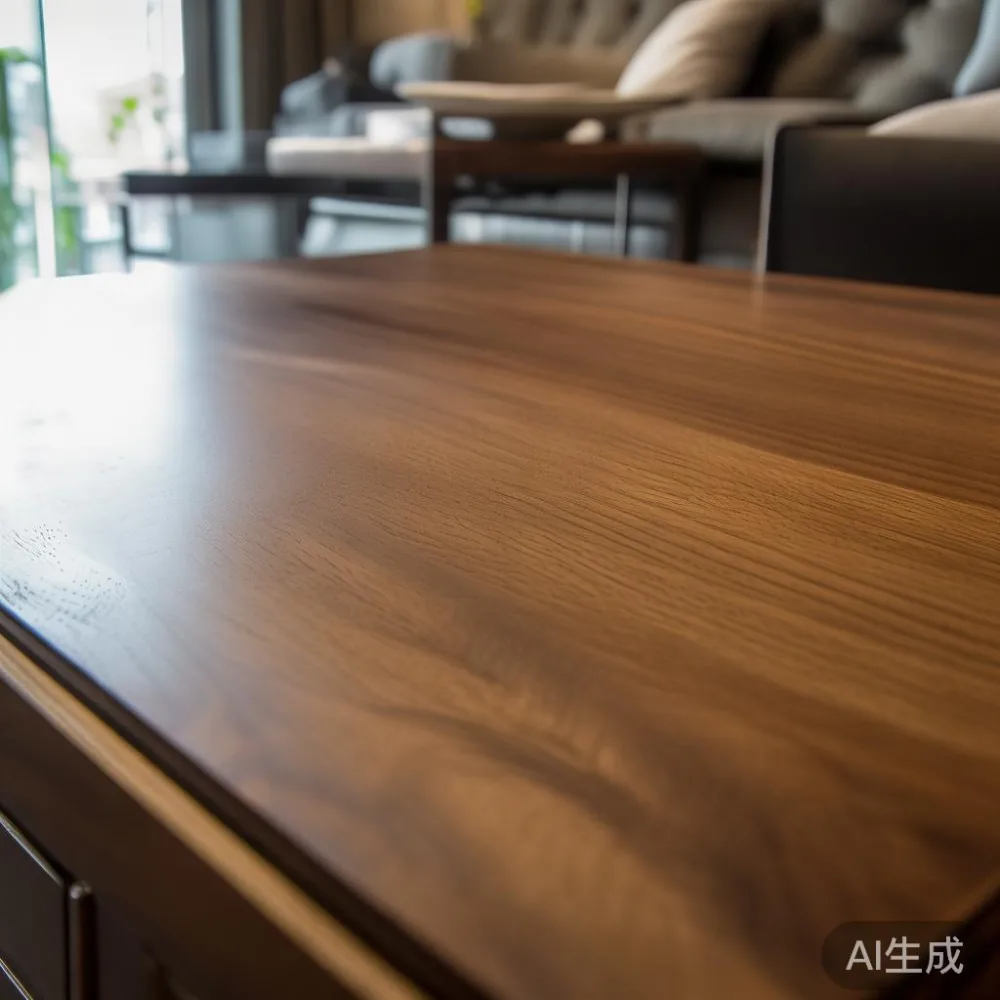
Upfront Price in Singapore Dollars (Inclusive of 9% GST)
For an apples-to-apples comparison, I priced two 110 cm x 55 cm rectangular coffee tables, both with a lower shelf, both delivered to a 12th-storey Tampines flat.
Veneer coffee table (engineered wood core, 0.6 mm walnut veneer, matte PU finish): S$380 to S$520 retail in Singapore, plus 9% GST. Delivery to HDB door is usually S$30 to S$60. Total landed cost: roughly S$440 to S$620.
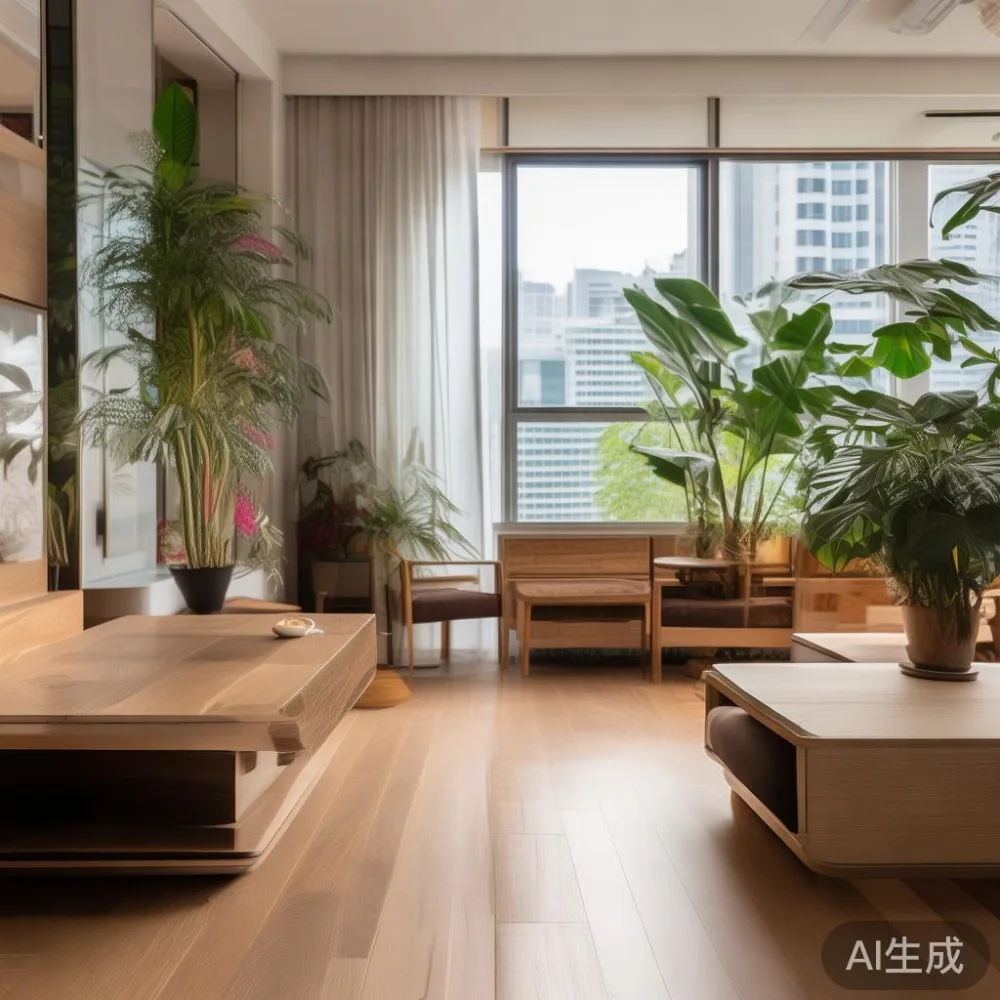
Solid oak coffee table (FAS-grade oak, oil-and-wax finish, mortise-and-tenon joinery): S$1,050 to S$1,400 for a similar footprint, plus 9% GST. Delivery that includes doorstep carry-up via service lift runs S$60 to S$90 because the carton weighs 28 kg to 35 kg versus the veneer's 14 kg to 18 kg. Total landed cost: roughly S$1,200 to S$1,620.
The sticker shock on day one is real. A solid wood piece costs about 2.3x to 2.7x more than a veneer one. The question every Tampines and Punggol buyer asks is whether the gap closes over time.
What Actually Happens to Each Coffee Table Over 60 Months in a Tropical Climate
Singapore averages 80% to 90% relative humidity for most of the year. Air-conditioning runs at 24°C to 26°C with dehumidifier mode in many bedrooms, but the living room tends to cycle between 27°C and 31°C. That is the environment your coffee table lives in.
Veneer coffee table, months 1 to 12: Looks beautiful. The walnut veneer grain is photo-grade consistent. The PU top layer shrugs off kopi rings if you wipe within 30 minutes.
Veneer coffee table, months 13 to 36: The PU coating starts to micro-crack along the long edge where elbows rest. The 0.6 mm veneer layer begins to lift at the corners if the engineered-wood core absorbs moisture from the floor. You see pale patches where the print layer has worn through.
Veneer coffee table, months 37 to 60: Edges peel visibly. The lower shelf sags by 3 mm to 5 mm under the weight of a stack of magazines and a marble table tray. Most owners either replace it at month 48 or live with it looking tired until the next renovation cycle.
Solid oak coffee table, months 1 to 12: Develops a soft honey patina. Small dents appear from keys and remote controls, but they read as character, not damage.
Solid oak coffee table, months 13 to 36: If oiled once a year with a S$25 tin of Osmo or Rubio Monocoat (about 20 minutes of work), the surface stays even. The mortise-and-tenon joints remain tight because solid wood moves as one piece instead of delaminating.
Solid oak coffee table, months 37 to 60: Surface oxidises into a warm caramel. A 600-grit sand and re-oil at month 54 restores it to near-showroom condition for the cost of the oil tin and one Saturday afternoon.
The Real 5-Year Cost Worksheet (With GST, Maintenance, and Resale)
I built a simple worksheet using Priya's actual numbers and two other HDB owners I surveyed in Punggol and Bedok. Here is the consolidated view.
Veneer coffee table over 60 months:
Purchase + GST + delivery: S$540
Replacement at month 48: S$540 (same model, current price)
Disposal fee via HDB bulky-item removal (one trip): S$25
Total 5-year outlay: S$1,105
Solid oak coffee table over 60 months:
Purchase + GST + delivery: S$1,380
Maintenance oil (3 tins across 5 years): S$75
Sand-and-refinish kit at month 54: S$40
Disposal fee: S$0 (still in use)
Resale value at month 60 on Carousell: roughly S$450 to S$550 (solid wood holds 30% to 40% of retail in the second-hand market; veneer holds almost zero)
Net 5-year outlay: S$945 to S$1,045
The crossover point lands somewhere between month 42 and month 48. After that, every additional month the solid coffee table stays in service is pure savings. A dining table, wardrobe, or nightstand follows a similar pattern, but the maths is less dramatic because those pieces get less daily wear.
"Will It Fit Through My HDB Door and Lift?" — The Corridor and Lift Question Every Tampines Buyer Asks
This is the question I get asked weekly when friends are furnishing a new BTO in Tampines North or a resale flat in Bedok. Standard HDB corridor widths run 1.2 m to 1.4 m, and the main service lift door opening is about 90 cm wide by 2.1 m tall. The lift car itself is roughly 1.1 m wide by 1.4 m deep by 2.2 m tall. A flat-pack veneer coffee table in a 12 cm-thick carton is almost always fine. A solid wood coffee table often ships fully assembled or in a much heavier 28 kg to 38 kg carton that may not clear a tight stairwell if the lift is out of service.
Two practical tips from last month when I visited a colleague in Punggol Waterway Ridges: first, measure the diagonal of the lift door, not just the width. A 110 cm-long carton needs at least 110 cm of diagonal clearance if the lift is a single-door type, which most service lifts are. Second, ask the supplier to palletise the order. MIDHILL, for example, ships its solid wood coffee tables on a timber pallet with corner protectors so two people can trolley it from the lift lobby into the living room without dragging. That kind of detail is what separates a Foshan furniture workshop that understands export logistics from one that just crams a box.
How Light-Luxury Style Affects the Veneer vs Solid Wood Decision
Style category matters because veneer and solid wood sit in different aesthetic lanes. Modern French provincial furniture leans heavily on solid beech or oak with carved apron details and cabriole-style legs, because thin veneer cannot hold a carved profile without chipping. A solid wood bed frame in that style can last 25 years; a veneered one begins to flake at the carved edges by year three. Post-modern light luxury, which is the current darling of Singapore interior designers working on Punggol and Bukit Batok condos, often pairs a solid wood coffee table with a marble table or a travertine side table to layer textures. The marble-on-oak combination only works visually if the oak grain is real and visible, because the eye reads the contrast between the two materials.
American light luxury, with its warmer walnut tones and softer profiles, is more forgiving of high-quality veneer, but only when the veneer is at least 1.5 mm thick rather than the 0.6 mm commercial standard. Most Singapore retail pieces labelled "American walnut" at the S$500 price point use 0.6 mm paper-backed veneer, which is the category that fails fastest in our humidity.
If your living room leans modern French provincial furniture or post-modern light luxury, the solid coffee table is almost non-negotiable. If your style is Scandinavian-minimal with a Coastal for dining room palette and you replace furniture every renovation cycle anyway, veneer can be a rational choice.
"How Do I Spot the Difference in a Showroom Before I Pay?"
Three checks I run whenever I am asked to vet a coffee table for a friend.
Check 1: the underside. Flip the table over or look at the bottom of the lower shelf. Solid wood shows end grain on the edges. Veneer shows a repeating printed grain and a thin seam where the rotary-cut leaf was wrapped around the panel.
Check 2: the weight. A 110 cm x 55 cm solid oak coffee table should weigh at least 25 kg. A veneered one of the same size weighs 12 kg to 16 kg. Heavier is not always better, but in this category it correlates strongly with solid construction.
Check 3: the joinery. Look at the leg-to-apron connection. Mortise-and-tenon, dowel, or dovetail joinery indicates solid wood thinking. Cam-lock hardware with plastic connectors almost always indicates engineered-wood construction under a veneer skin.
If you see all three pointing to solid wood and the price is still under S$900 in Singapore, ask why. Sometimes the answer is a clearance line; sometimes it is a misleading listing. A reputable Foshan furniture factory exporting to 15+ countries with a 10-year structural warranty will price solid oak consistently.
Beyond the Coffee Table: How This Maths Scales to a Wardrobe, Dining Table, and Bed Frame
Coffee tables are the cleanest example, but the same cost crossover applies, with adjustments, to other pieces in your home.
A solid wood dining table in a 6-seater size (180 cm to 200 cm) runs S$2,200 to S$3,400 in Singapore with GST. Veneer alternatives run S$900 to S$1,400. The 5-year crossover is even more favourable for solid here because dining tables get heat stress from hot claypots that veneers cannot survive. Search for the best Mid-century modern wardrobe for 2026 and you will notice that solid teak or solid ash consistently ranks ahead of MDF alternatives in any 10-year ownership review.
For upholstery, the comparison flips. A solid wood sofa frame with pocket-sprung cushions and full-grain leather is a S$3,800 to S$6,500 piece, while a veneer-frame sofa with fabric upholstery runs S$1,200 to S$2,200. Because upholstery dominates the visible surface and the frame is largely hidden, the 5-year crossover happens later, around year 7 to year 9. Buyers shopping for sale Post-modern furniture sofas can still find value in engineered frames if the cushion and fabric quality is high.
For nightstands, the math is so close that convenience often wins. A S$280 veneer nightstand that matches a S$1,400 solid bed frame can be a practical compromise, because the nightstand surface area is small (typically 45 cm x 40 cm) and humidity exposure is lower than the coffee table.
The Wholesale and Trade Channel: What Singapore Buyers Should Know
Foshan is the global capital of solid wood furniture manufacturing, with thousands of workshops clustered in Lecong and Longjiang. Retailers in Singapore typically add 2.2x to 2.8x markup over the ex-factory price. If you are renovating a whole flat (bed frame, wardrobe, dining table, nightstand, coffee table, and possibly a marble table accent piece), ordering direct from a Foshan furniture maker that ships consolidated containers can cut your furniture bill by 35% to 50%. Channels that advertise wholesale French provincial furniture direct-from-factory or similar export pricing are usually operating on this model.
The catch is minimum order quantity, shipping lead time (sea freight to Singapore is 10 to 18 days), and the need to handle your own GST and customs clearance. For a single coffee table, retail is simpler. For a full-home package, the maths changes dramatically. Buyers eyeing for sale Boho furniture bundles or full-room packages should request a CIF Singapore quote inclusive of 9% GST so they can compare line-by-line with retail.
The Verdict: Which Coffee Table Belongs in Your Living Room?
If you are furnishing a resale HDB that you plan to renovate within four years, or if your style refreshes with each BTO cycle, a S$500 veneer coffee table is a defensible purchase. You will use it, you will replace it, and the math works out to roughly S$180 to S$220 per year of service.
If you are settling into a Punggol or Tampines flat for the next decade or more, the solid oak coffee table is the better financial decision once you account for the second veneer replacement, the disposal fees, and the loss of resale value. After month 48, your annual cost of ownership drops to roughly S$40 to S$60 per year, and the piece continues to appreciate in character. A well-made solid wood coffee table from a Foshan workshop that stands behind a 10-year structural warranty is the kind of object you hand down, not the kind you send to the HDB bulky-item collector.
The single most useful habit is to do the 60-month worksheet before you swipe the card. Write down the purchase price, the expected replacement year, the maintenance cost, and the resale value. The coffee table that looks expensive on day one usually looks like the bargain by year five. The coffee table that looked like a bargain on day one is usually the one you are paying to dispose of in year four.
Priya, for the record, chose the solid oak coffee table. Five years on, it sits in her Tampines living room with a 4 kg marble table tray on top, three small dents from her toddler's plastic trucks, and a patina she would not trade for anything new. The replacement she did make was the side table, which she swapped for a smaller solid wood piece last year. Both pieces came from the same supplier, and both pieces will outlast the next two renovation cycles her flat is scheduled to see.
If you are weighing a coffee table against a full-room package, the same principles apply to a solid wood dining table, a solid wood bed frame, a solid wood wardrobe, and even a small nightstand. Buy the piece you touch every day in solid wood. Buy the piece you barely notice in veneer. Your wallet, and your future self at month 60, will thank you.