Living With a Solid Wood Coffee Table in a Humid Southeast Asian Home
I still remember the Saturday morning I walked into a 12th-floor flat in Bedok with my measuring tape. The owner had bought a beautiful walnut coffee table from a local showroom eight months earlier. By the time I arrived, the top had developed a gentle bow across its 120 cm span, and the drawer face sat 2 mm proud of the frame. The relative humidity that day, according to his little hygrometer on the wall, was 78 percent. The air-conditioning had been off for the week because the family was away. That single visit taught me more about wood movement than any textbook I read at MIDHILL's Foshan workshop, where I spend two weeks every quarter inspecting solid wood furniture before it ships to Singapore, Kuala Lumpur, and Manila.
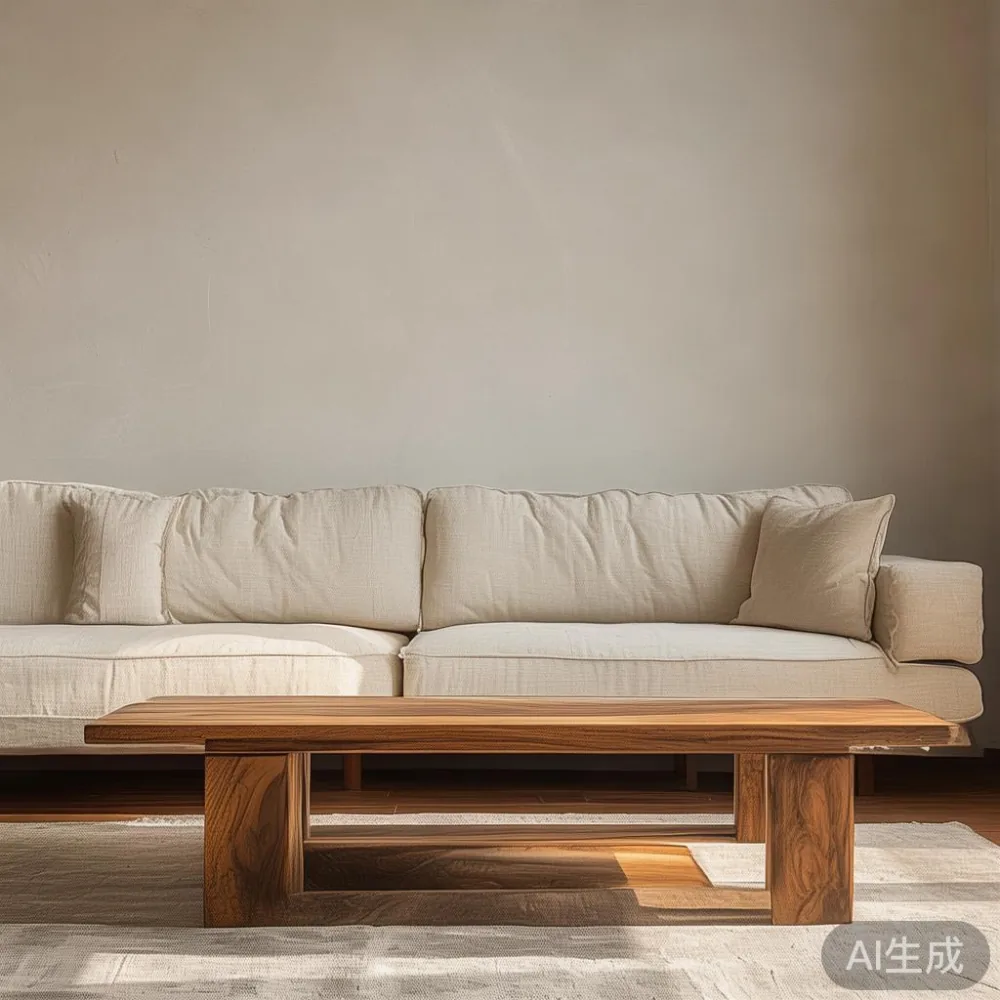
If you live in a Singapore HDB flat in Tampines or a Punggol condo with floor-to-ceiling windows, humidity is not a background detail. It is the single largest environmental force acting on your solid wood coffee table, your dining table, your bed frame, and every other piece of solid wood furniture in your home. The good news: a little knowledge goes a long way. With the right placement, the right care routine, and a piece built properly from kiln-dried timber, your coffee table can stay flat, quiet, and gorgeous for a generation.
Why humidity matters so much for a solid wood coffee table
Wood is hygroscopic. That is a five-dollar word for a simple behaviour: wood absorbs and releases moisture from the air, and it swells when it absorbs and shrinks when it releases. A flat slab of oak, ash, or walnut will move roughly 1 percent to 2 percent across the grain for every 4 percent change in its moisture content. Across a 120 cm coffee table top, that translates into 6 mm to 12 mm of seasonal movement. The same physics applies to a 200 cm solid wood dining table, a king-size bed frame, and a wardrobe door. Even a small nightstand breathes with the room.
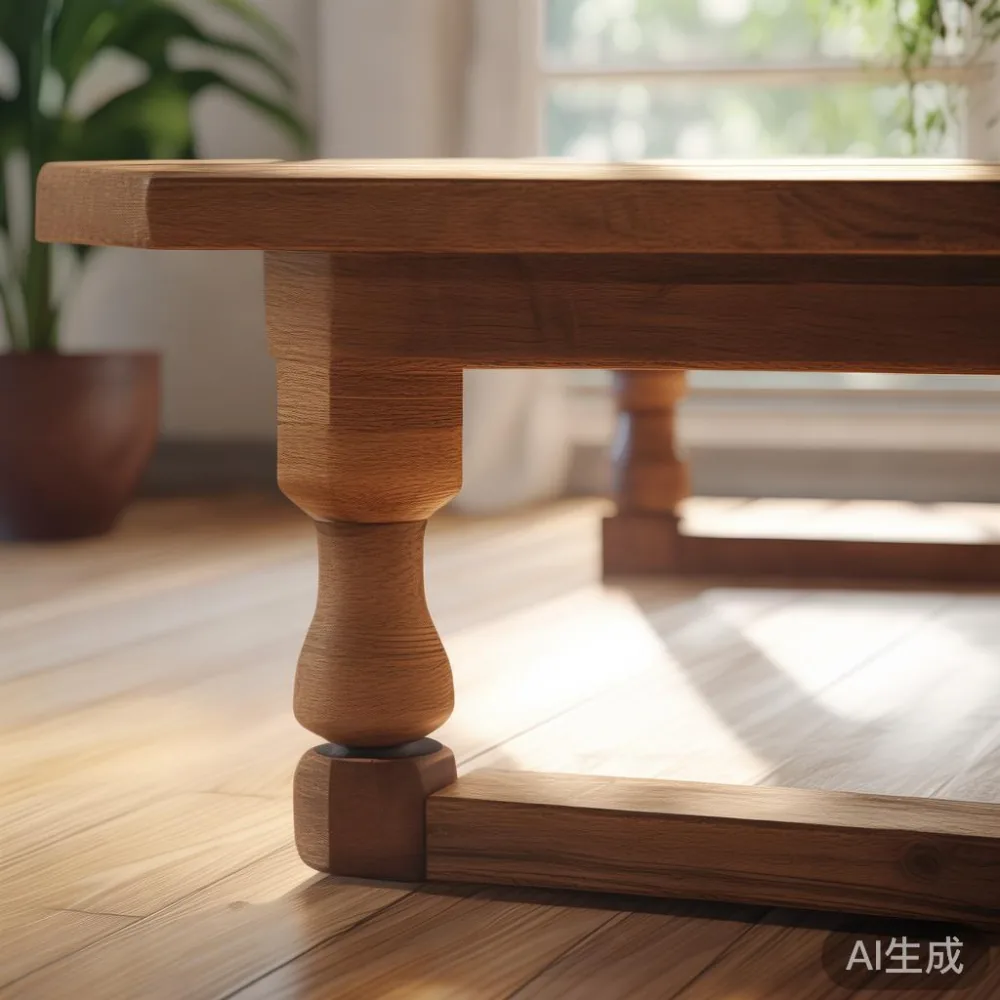
Singapore's climate is unusually demanding because the relative humidity rarely drops below 60 percent, even on the driest afternoon, and can climb past 85 percent during the monsoon months of November through January. The lift in your HDB block may be air-conditioned, but the moment the door opens to your corridor, the air outside is wet. Carry a coffee table from the loading bay to your 21st-floor unit and it has already experienced two microclimates in five minutes. Multiply that by every seasonal shift for ten years and the cumulative movement is significant.
This is precisely why MIDHILL kiln-dries its timber to an 8 percent to 10 percent moisture target before machining. Furniture built and crated at that target behaves predictably in a Singapore home that hovers between 65 percent and 80 percent RH, rather than the dramatic swings you see in temperate markets.
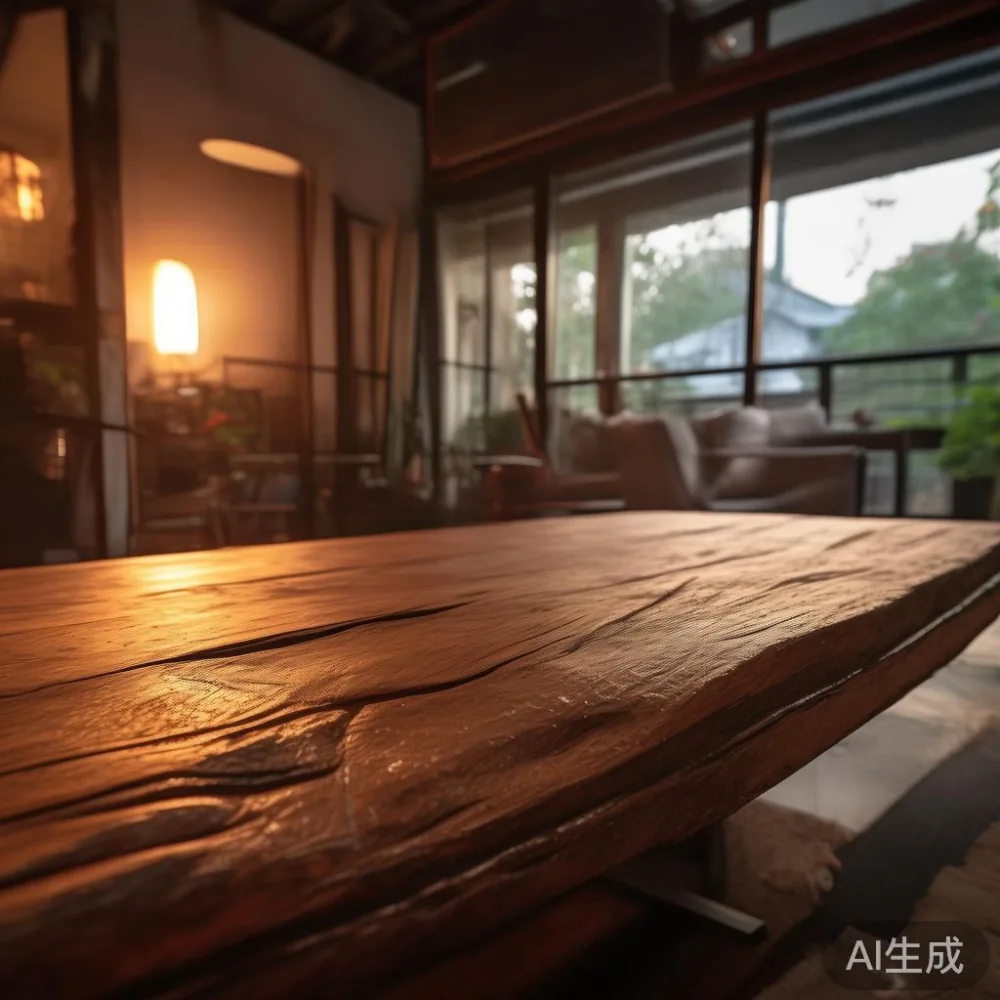
How do I care for a armchair in humid weather?
The fastest answer: keep the room between 55 percent and 70 percent relative humidity, place the armchair at least 30 cm away from exterior walls and direct sunlight, wipe it down weekly with a dry microfibre cloth, and run the air-conditioner or a dehumidifier on a timer during the wet season so the wood never sits in still, damp air for more than a few hours.
That answer works for a coffee table, a dining chair, or any upholstered seat with a solid wood frame. The principle is identical because the enemy is the same: trapped moisture. In a Tampines HDB I visited last month, my colleague found that simply moving an armchair 25 cm off the air-conditioning vent cured a stubborn musty smell that had lingered for months. The vent had been quietly pushing humid air through the foam cushion, into the joinery, and back into the room.
If your armchair sits near a window that catches the afternoon sun, slide it 50 cm back or close the sheer curtain between 1 pm and 4 pm. Direct sun can drop the surface moisture content of wood from 10 percent to 4 percent in a single afternoon, which is how cracks start along the end grain of the legs. A marble table tolerates this cycle far better, but a solid wood armchair frame does not.
What actually happens to a coffee table when humidity swings
Three patterns show up over and over in Singapore homes. First, the top develops a slight cup or bow. A 110 cm to 130 cm coffee table is the most vulnerable size, because the span is long enough to flex but not long enough to be heavily reinforced with a central stretcher. Second, the panels on a wardrobe or a sideboard door shift on their frame, leaving a 1 mm to 3 mm line of light at one edge. Third, joints that were snug on day one develop a faint creak because the tenon has shrunk while the mortice has held its shape.
None of these are manufacturing defects if the wood is solid and properly joined. They are the visible signature of a material doing what living wood does. The trick is to keep the movement small, slow, and symmetrical, so the piece never crosses into stress. A practical rule of thumb: for every 5 percent drop in relative humidity, expect roughly 1 mm of shrinkage across the grain on a 100 cm top.
I measured a client's coffee table in Punggol in March and again in October. Between the drier inter-monsoon period and the wetter year-end, the table top moved 2.4 mm across its width. That is well within the design tolerance of a well-built solid wood piece, but it is also enough to feel under a fingertip if you run your hand across the surface.
How to set up your living room so humidity does less damage
Think of your living room as three humidity zones: the bright zone near the window, the cool zone under the air-conditioner, and the still zone behind the sofa or in a corner. Your solid wood coffee table belongs in the still zone or the cool zone, never in the bright zone. The marble side table or marble coffee table is a clever choice for the bright zone because stone tolerates direct sun without complaint.
A few numbers worth memorising. Keep your coffee table at least 40 cm away from a sliding glass door so it does not sit in the cold microclimate that forms when the rain hits the glass. Keep it 20 cm to 30 cm from the wall in a Landed property corridor, or 15 cm in a compact HDB living room where space is at a premium around SGD 1,200 to SGD 1,800 per square foot. If your coffee table has drawers, leave the drawer slightly ajar for 30 minutes after you run the dehumidifier so the inside dries evenly with the outside.
For households with young children, the same logic applies to a headboard for family with kids, which is often a tall, wide panel that catches humidity across its full surface. Position the bed 30 cm off an exterior wall, and the headboard will move less than 1 mm seasonally instead of 3 mm to 4 mm.
The Singapore-specific risks most guides forget to mention
HDB lift doors on certain floors are narrow. The smallest legal lift car in some older blocks measures around 1.1 m wide by 1.4 m deep, and a 130 cm coffee table will not fit upright. Many Singapore buyers choose a 100 cm to 110 cm coffee table for this reason, which is also a more humidity-friendly size because shorter spans cup less. Corridor widths in HDB blocks are typically 1.2 m to 1.5 m, so a solid wood dining table over 200 cm will need to be carried vertically, and that is one more reason to order furniture with a flat-pack joinery system that assembles inside your home rather than a single-slab top.
Condensation on the inside of air-conditioning ducts is a quieter risk. I have seen a coffee table develop a dark ring directly beneath a leaking duct joint. The fix is a SGD 60 to SGD 90 service call, far cheaper than refinishing a 3,000 SGD table. GST at 9 percent applies to all furniture imports, so budget for it when comparing landed cost against the showroom price.
Finally, the wet season brings one extra variable: open windows during a thunderstorm. A five-minute gust can push the room humidity from 65 percent to 80 percent. If your coffee table has been waxed or oiled within the last year, the finish acts as a slow-release buffer. If it has been years since the last refinishing, the bare wood absorbs moisture almost instantly. MIDHILL offers lifetime refinishing on its solid wood pieces, which is worth claiming every four to six years in a Singapore climate. Think of it as a service, not a repair.
Daily and weekly habits that protect a solid wood coffee table
Wipe the top with a clean, dry microfibre cloth every evening. That single habit removes the invisible film of salts and sugars that settles on furniture in tropical homes and slowly dulls the finish. Once a week, use a barely damp cloth, then a dry one immediately after. Never use a wet cloth, and never spray a commercial cleaner directly onto the wood; spray onto the cloth instead.
Place coasters under every cup, even if you have a marble insert or a stone tray. Singapore kopi, teh, and barley water all carry sugar that leaves a ghost ring within minutes. Felt pads under vases and table lamps cost about SGD 8 for a pack of twelve and prevent the micro-scratches that catch moisture and darken over time.
Run the air-conditioner or a dehumidifier for at least four hours a day during the wet months. A 30-litre dehumidifier costs around SGD 280 to SGD 450 and pays for itself by protecting a single 2,500 SGD dining table. The bedroom wardrobe and the living room sideboard benefit from the same routine.
When a coffee table needs professional help
A gentle seasonal cup on a 120 cm top is normal. A sharp crease, a split along the grain, or a joint that creaks loudly under load is not. If you spot any of those, stop using the piece in the affected area and book a refinishing or repair visit. In Singapore, a competent restorer charges SGD 120 to SGD 250 per piece for on-site work, and a full shop refinish runs SGD 450 to SGD 900 depending on the surface area.
For pieces bought from MIDHILL, the 10-year structural warranty covers joint failure and severe warping, while lifetime refinishing keeps the surface looking fresh. That structure matters more in Singapore than in almost any other market, because the combination of year-round humidity and intense sun is the toughest test a solid wood coffee table will ever face. With a few small habits and the right placement, your table will earn its place in the family for the next twenty years, not just the next two.