Improves Your Small Singapore Apartment's Style - Cozy & Luxurious
Most Singapore flats I visit in Tampines, Bedok, and Punggol share a familiar problem. The floor plan ranges from 65 to 90 sqm, the corridor outside the lift landing is around 1.2 m wide, and the moment you bring a bulky sofa, a chunky wardrobe, and a heavy dining table through the front door, the home starts to feel smaller than the HDB key plan suggested. After two years of working with owners who live in 3-room and 4-room flats, I have learned that crowding is rarely about square footage. Crowding is about visual weight, circulation paths, and the choices made for the coffee table, bed frame, and sofa.
This guide keeps one principle at the centre: every piece should earn its footprint. I will walk through dimensions that fit a typical Singapore lift (roughly 1.0 m to 1.1 m wide and 2.1 m deep on most passenger lifts), delivery realities for landed and condo blocks, and the small details that turn a 75 sqm flat in Punggol into something that feels closer to a Parisian pied-à-terre than a starter home. Along the way I will reference the pieces our showroom in Foshan usually recommends for clients with restricted floor plates, including the solid wood sofa, marble coffee table, and slim profile bed frame.
Start With the Coffee Table, Not the Sofa
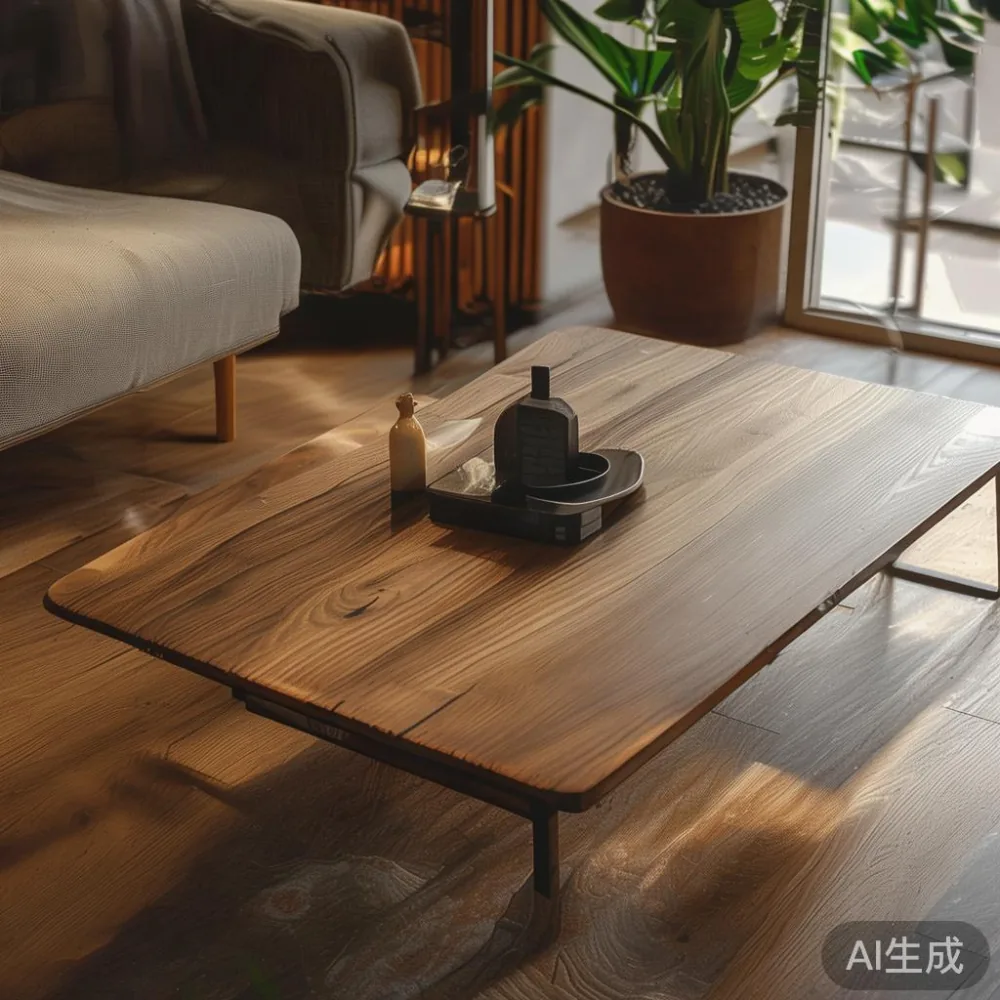
In most Singapore flats, the coffee table is the single object that decides whether the living room breathes or suffocates. A standard rectangular coffee table in solid teak can weigh 18 to 22 kg and measure 120 cm by 60 cm. In a 3-room HDB living room with a 2.1 m sofa, that table eats 1.1 sqm of clear floor and blocks the path from the hallway to the balcony door. What I usually recommend instead is a round marble table between 80 cm and 90 cm in diameter, no more. The round edge lets traffic curve past it, the marble top reflects the ceiling fan light, and the weight (around 14 kg for an 80 cm version) keeps it planted without a chunky base.
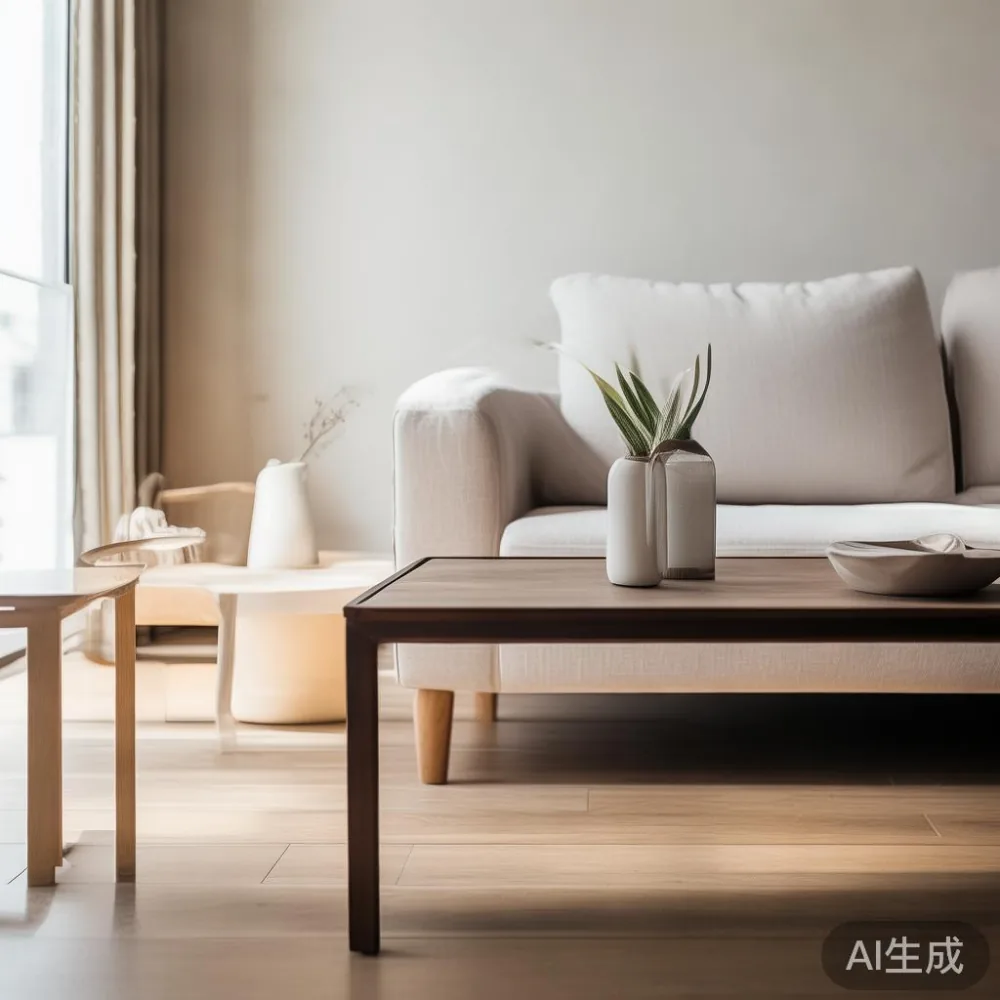
For owners who cannot decide on shape, a soft-square marble table 75 cm by 75 cm, 38 cm tall, tucks easily under a 1.8 m sofa when not in use. Lift the front edge by 5 cm if you want clearance for a robot vacuum. The point is to treat the coffee table as the anchor of the room, not a leftover purchase at the end.
How Wide Should Your Sofa Be in a Singapore Flat?
Walk into a showflat in Punggol and the sofa looks generous. Sit on one in a Tampines resale flat with a 1.05 m corridor and the sofa becomes a traffic problem. The rule I use: for a living room under 14 sqm, choose a solid wood sofa no wider than 1.8 m and no deeper than 85 cm. A 2.4 m sofa sounds appealing but it pushes the coffee table against the TV console and blocks the walkway to the kitchen.
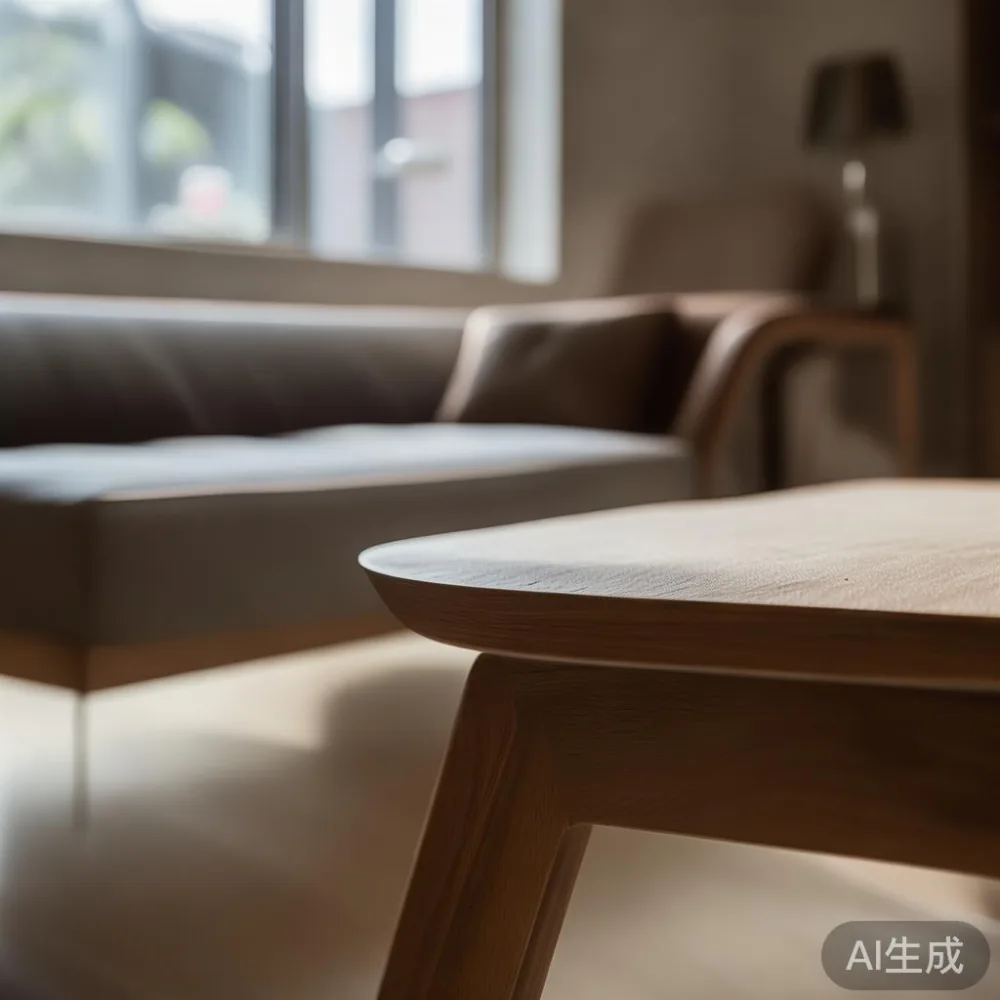
If you love a longer seat, consider a 2-seat plus a separate armchair at 90 degrees, with a slim side nightstand style table between them. That configuration keeps clearance at 60 cm on all sides of the coffee table, which is the minimum comfortable distance to walk without brushing the cushions.
Is European Light Luxury the Right Style for a Small Space?
French light luxury works beautifully in a Singapore flat because it depends on restraint rather than bulk. The pieces are slim, the proportions are tall rather than wide, and the detailing (brass-tipped legs, fluted cabinet fronts, curved armrests) reads as expensive without adding mass. In a 4-room HDB with a 1.05 m lift, the deliverable question is: can you actually get a European-style sideboard up the corridor? Measure the diagonal of the lift door before you order. Most European sideboards are 180 cm long and 45 cm deep; they will fit corner-to-corner in a 1.0 m by 2.1 m lift as long as you stand them upright.
For readers studying how to style European light luxury sofa in room, the answer is colour discipline. Pick one warm neutral (oat, linen, clay), one cool accent (ink, eucalyptus, slate), and let the metal hardware tie them together. That is the whole palette. A midhill European light luxury bed frame with a fluted headboard, for example, runs 1.5 m wide by 2.05 m long and reaches only 105 cm at the headboard, leaving 35 cm of wall space above for a piece of framed art.
Can a Wardrobe 2.4 m Tall Actually Fit in a HDB Bedroom?
Standard HDB bedroom doorways measure 0.9 m wide and 2.0 m tall, and the internal corridor between bedroom and bathroom is typically 1.0 m. A 2.4 m wardrobe will not pass through that corridor as a single piece. Most Singapore owners choose a flat-pack wardrobe or accept a max assembled height of 2.0 m. Light luxury wardrobes designed for the local market typically run 1.8 m tall by 1.2 m wide by 55 cm deep, which gives you four hanging rails (or two rails plus four drawers) without overwhelming the room.
If you are researching the best light luxury wardrobe for 2026 for a resale flat in Bedok, prioritise soft-close hinges, full-extension drawers, and adjustable internal shelves over external detailing. The exterior is the part guests see for three seconds; the interior is the part you live with every morning for the next eight to ten years.
What About the Bed Frame, Dining Table, and Nightstand?
The bed frame in a typical master bedroom can swallow 12 to 14 sqm if you pick a king size without measuring. For a 3-room HDB with a 3.2 m by 3.4 m bedroom, a queen bed frame (1.5 m by 2.0 m) with a 110 cm headboard leaves 70 cm walkways on both sides and 80 cm at the foot. That is the bare minimum for making the bed without bumping the nightstand.
A round dining table at 90 cm diameter seats four comfortably and slips into a kitchen of 6 sqm where a rectangular 120 cm by 70 cm table would block the service window. Match the dining table height to the kitchen counter (around 75 cm) so chairs slide under. For nightstands, skip the matching pair and choose one closed drawer unit (40 cm by 35 cm by 55 cm tall) on one side and a slim C-table on the other. The asymmetry frees up the window side for a reading lamp.
If you are asking is European bed worth it over a flat-pack alternative, the answer depends on how long you plan to stay. A solid ash bed frame with mortise and tenon joinery has a 10-year structural warranty, while most flat-pack bed frames last 3 to 5 years before the slats creak. Over a 10-year lease in a Punggol condo, the per-year cost of a well-made European-style bed frame drops to about SGD 180 per year, not counting the sleep quality upgrade.
How Do You Style a Guest Room Without Turning It Into a Storage Dump?
Most Singapore families turn the third bedroom into a hybrid guest-and-storage room by default. The trick is to separate the two uses clearly. A 1.2 m daybed with a trundle drawer underneath handles sleeping for one or two guests and replaces a separate storeroom cabinet. Minimalist for guest room styling keeps the wall opposite the bed free of furniture: a single floating shelf at 1.4 m height, one piece of framed art, and a slim floor lamp. Anything more turns the room into a stress corner for the host.
I tested this exact setup last month in a 4-room BTO in Sengkang. The owners had been using a queen bed in the guest room that nobody ever slept in. We replaced it with a 1.2 m ash daybed (around 32 kg, easy to shift for HDB movers), added one 80 cm closed wardrobe, and left the rest of the room open. The visual gain was roughly 3 sqm of breathing space, and the owners reported the room finally felt like a guest room instead of a stockpile.
Light Luxury, Japandi, or Post-Modern Light Luxury for a 70 sqm Flat?
Three styles travel well to Singapore small apartments: French light luxury, American light luxury, and post-modern light luxury. French leans on curving legs, marble tops, and champagne-finish metal. American light luxury uses thicker cushions, deeper seats, and wider armrests, which works for HDB living rooms only when the room is at least 16 sqm. Post-modern light luxury mixes high-gloss lacquer with ribbed glass and reeded timber, and tends to feel lighter than the other two because the surfaces reflect rather than absorb light.
Japandi (Japanese plus Scandinavian) is often mentioned in the same breath, and if you are searching how to style Japandi sofa in apartment, the answer is to keep the profile under 80 cm deep and the arms at 12 cm or narrower. A slim Japandi sofa in solid white oak weighs about 35 kg for a 1.6 m two-seater, which is light enough to angle into a corner when you need extra floor space.
Owners who collect vintage pieces in Singapore often ask me about curating a layered space without noise. The honest answer is: pick one anchor piece per room. I advise anyone reading about top 10 Vintage furniture lists to forget the rankings and pick the one shape that makes you slow down. A vintage Persian rug in 1.5 m by 1.0 m, layered under a round marble coffee table, pairs easily with a light luxury sofa and a slim oak sideboard.
What Does Delivery Cost and How Long Does It Take?
For solid wood furniture bought from overseas factories (Foshan is a common origin), freight to Singapore runs SGD 280 to SGD 480 per cubic metre by sea, plus a SGD 60 to SGD 120 customs handling fee and the 9 percent GST on the landed value. Door-to-door delivery from Jurong East warehouse to a HDB in Tampines adds SGD 60 to SGD 90. Lift access is usually fine for flat-pack; for assembled wardrobes, ask for a site survey first because Tampines GreenRidg and several Punggol blocks have narrower service lifts than the passenger lifts.
Typical lead time is 30 to 45 days from order to Singapore delivery, plus 7 to 14 days for assembly on site. A factory based in Foshan since 2008 with 15 or more country routes usually holds steady at those timelines, while off-brand sellers quote 20 days and then slip to 60. The warranty is the part worth reading: a 10-year structural warranty on the bed frame and solid wood sofa is the difference between a repair call in year four and a refurbishment quote at full price. Lifetime refinishing on dining tables and wardrobes is a quieter benefit, but for a family planning to stay 10 or more years it pays back the freight cost.
Free Shipping, Returns, and the Refinishing Promise
Solid wood furniture heavier than 25 kg per box rarely qualifies for free shipping under SGD 350. Once the order total clears that line, the freight saving is roughly SGD 180 to SGD 240 on a typical Singapore order, which is enough to offset the GST on a small side table. A 14-day return window is generous by Singapore standards, but check whether the return covers assembled pieces; some suppliers deduct a 15 percent restocking fee plus the original freight on returned wardrobes or dining tables.
Refinishing is the underused benefit. If a marble table gets a permanent stain in year three, or the dining table top fades under the afternoon sun coming through the Punggol balcony, a lifetime refinishing policy means the supplier agrees to sand and re-oil the surface at cost. That is roughly SGD 220 to SGD 380 per piece in Singapore workshop rates, which you would otherwise pay from your own pocket every eight to ten years.
Pulling the Whole Room Together With a Light Luxury Coffee Table
Once you have the sofa, bed frame, wardrobe, dining table, and nightstand measured and ordered, return to the coffee table. The coffee table is the one piece every guest touches within the first five minutes, so it carries a lot of visual responsibility. A 75 cm round marble coffee table with a brushed brass base in champagne finish ties the brass legs of the sofa together and reflects the ceiling fan light without competing with the TV screen. Weights for these pieces typically run 12 kg to 18 kg, well within safe limits for HDB floor loading (which is rated at 1.5 kN per sqm for residential floors).
Keep the styling on the coffee table simple: one hardcover book, one small ceramic bowl, one candle or plant. Three objects, no more. That keeps the surface calm and the room reading as open. If you want to add warmth, layer a 1.2 m by 1.6 m wool rug under the table and let 30 cm of rug show on each side. The rug defines the seating zone without adding a single piece of furniture.
A Short Styling Checklist Before You Order
Before you click purchase on a solid wood sofa, marble table, or European bed frame, walk through your flat with a tape measure and a notepad. Measure the lift door, the corridor corners, the bedroom doorway, and the distance from the wall to the nearest plug point. Write down the maximum length, width, and height that will reach your room without dismantling. Then compare those numbers with the assembled dimensions of the pieces you want.
Order the coffee table and the largest sofa first, since they shape circulation paths. Wardrobe and dining table come next, because they anchor walls and corners. Save the nightstand, side table, and rug for last so they can adjust to whatever footprint remains. With this sequence, a 70 sqm HDB in Bedok or a 90 sqm condo in Punggol can look and feel like 110 sqm, without ever moving a wall.