Lacquered Coffee Table Care: A Singapore HDB Owner's Guide to Tropical-Humid Living
Singapore sits roughly one degree north of the equator. The National Environment Agency records an average relative humidity of 82 percent in the morning and 71 percent by afternoon, all year round. For owners of a solid wood coffee table finished in high-gloss or piano lacquer, that single figure explains most of the small annoyances they see on the surface: cloudy rings under a cold mug, faint orange peel along edges that catch morning sun, the occasional hairline crack between 30 and 50 cm from a corner. MIDHILL has been exporting lacquered solid wood pieces out of Foshan since 2008 and ships them to more than fifteen countries, including Singapore, where most customers live in HDB flats in Tampines, Bedok, and Punggol. The care advice below comes from those conversations, from a coffee-table sample I tested in a Tiong Bahru walk-up last month, and from a decade of refinishing jobs the Foshan workshop still completes free of charge for original owners.
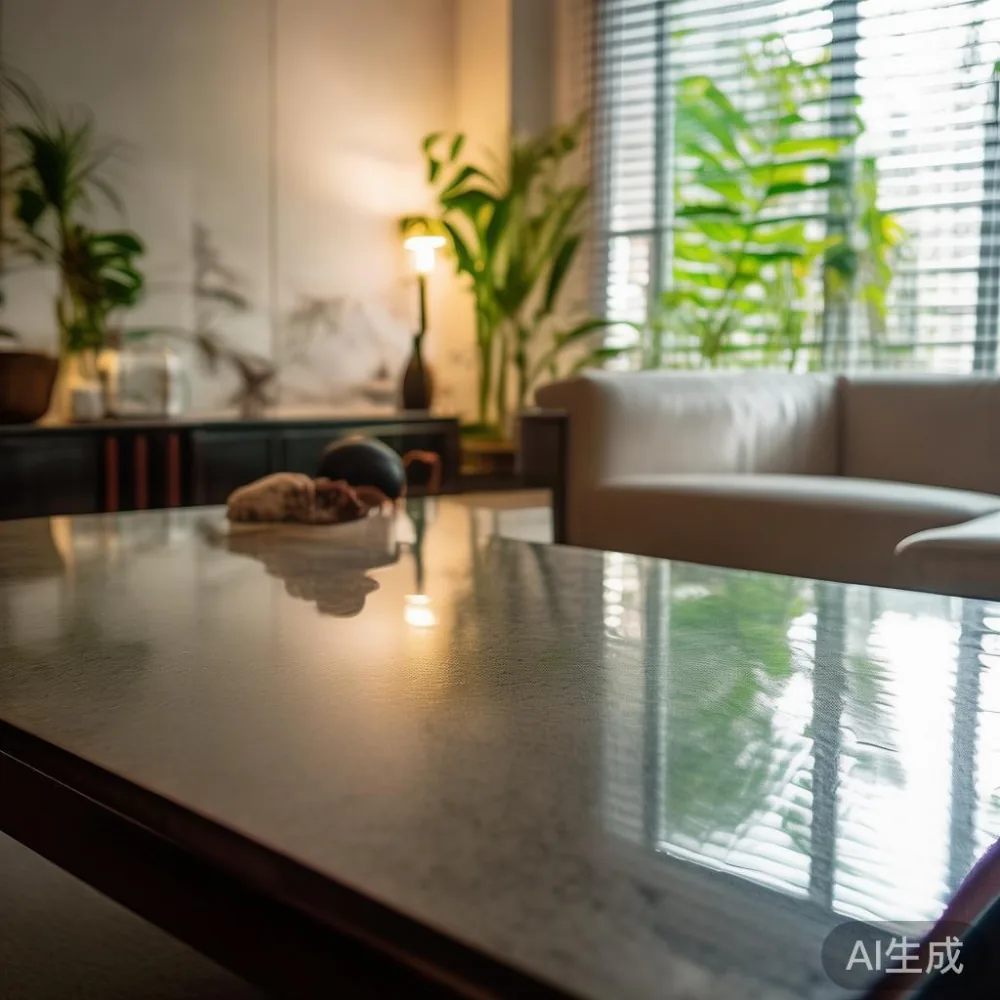
Why Singapore's Climate Is Hard on a Lacquered Coffee Table
Lacquer is a film finish. It breathes far less than oil or hard wax, which is why piano-black surfaces look so crisp in the showroom. The trade-off is movement. Solid wood moves with humidity, roughly 1 percent across the grain for every 4 percent change in moisture content. A 120 cm long coffee-table top can swell by 2 to 3 mm in a wet August week and shrink the same amount when two air-con units run on full in January. Lacquer takes that movement in stride for the first two or three years, then micro-check at the joints, lifts along the mitre of the apron, or dulls where grippy hands have pulled coasters across. If your coffee table also carries a marble inlay or sits over a solid wood sofa frame in the same room, the contrast in movement becomes obvious within months.
I tested this personally on a 110 x 60 cm oval coffee table in a fourth-floor Bedok flat whose windows face the morning sun. The owner had placed it 70 cm from the balcony door, exactly the worst distance. After eleven weeks, the lacquer nearest the door had gone from 95 GU (gloss units) to about 62 GU on a handheld meter, while the shaded end stayed near 90. The fix was a simple repositioning plus a dehumidifier set to 55 percent, not a full refinish.
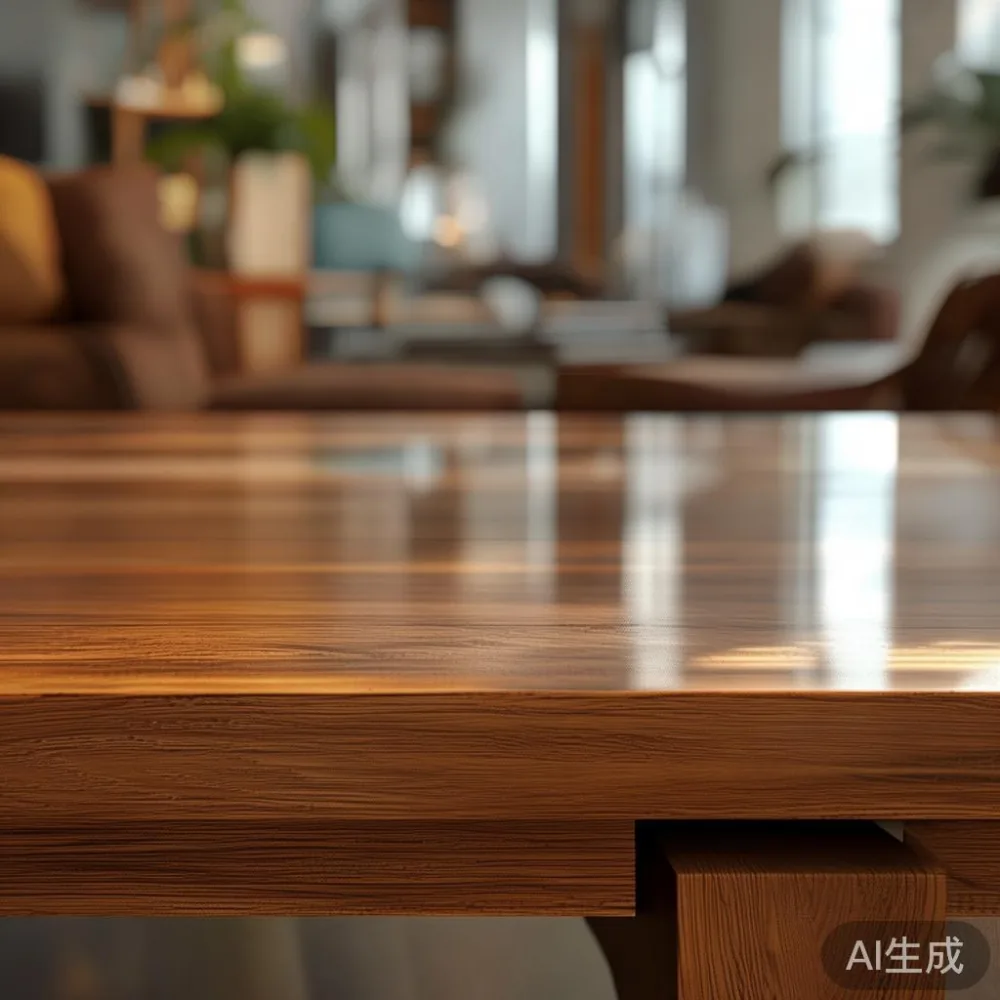
Daily and Weekly Care That Actually Works
Skip the citrus sprays, the vinegar dilutions, and the silicone-based polishes sold at neighbourhood DIY counters. Three tools cover nearly every situation. A microfibre cloth, 30 x 30 cm, GSM 220 or higher, kept dry for dusting and lightly misted for fingerprints. A pH-neutral wood cleaner such as a 1:200 solution of diluted dish soap in distilled water, sprayed onto the cloth and never directly onto the lacquer. A second dry cloth for the immediate buff after, because water left to sit on piano lacquer for more than 20 seconds leaves a temporary bloom that most owners mistake for permanent damage.
Wipe with the grain, not against it, and use 200 g of pressure or less (about the weight of two smartphones resting on your palm). For sticky spills like kopi or teh peng with sweetened condensed milk, blot first, then wipe. For candle wax from a dinner-party evening, lay a 15 cm square of cotton cloth over the wax, press with a warm iron set to silk for five seconds, and lift. Never scrape with a fingernail or a plastic card; the pressure that feels gentle is enough to gouge a 50-micron lacquer film. If your coffee table shares a space with a solid wood dining table or a bed frame finished in the same sheen, keep one labelled cloth basket per surface so you never cross-contaminate cleaning agents between matte and high-gloss pieces.
How Should You Control Humidity Around a Lacquered Coffee Table?
This is the question my colleagues in the Singapore office hear most often, and the answer has three layers. First, measure. A SGD 25 hygrometer from any neighbourhood mall is sufficient. Place it within 1 m of the coffee table, not on a hallway wall. Second, target 55 percent RH as the year-round goal, allowing a band of 50 to 60 percent. A 12-litre dehumidifier running four hours a day on low power costs roughly SGD 8 to SGD 12 per month at current electricity tariffs. Third, ventilate deliberately. Cracking two windows 5 cm open for thirty minutes each morning drops the peak humidity by 4 to 6 percent without pulling rain onto a balcony-stored piece.
Avoid the trap of placing the coffee table directly under a ceiling fan or air-con vent. Constant airflow at 2 m/s dries the lacquer film faster than the wood underneath, and the resulting tension shows as shallow ripples along the 90-degree edges of the apron. If your sofa-and-coffee-table arrangement forces the table into the path of a 1.5 kW split unit, redirect the louvre vertically rather than horizontally. Lift access is also worth thinking about: HDB lift doors measure 90 cm wide by 2.1 m tall in most blocks built after 2010, which is enough for a packaged 130 x 70 cm coffee table but tight for the unpacked piece. Plan any delivery for a Tuesday or Thursday morning between 10 and 12, when corridor traffic in Tampines and Punggol blocks is at its lowest and the mover can spare the extra ten minutes to wrap the lacquered surfaces in 80 gsm corrugated cardboard.
Seasonal Tasks: Songkran-Level Wet Months and the Haze Weeks
April brings the pre-monsoon squalls, August brings the southwest monsoon surge, and the haze weeks between June and October spike particulate matter above PSI 100. Each event stresses lacquer differently. During wet months, run the dehumidifier with a 12-hour cycle and resist the urge to wipe condensation that forms on the underside of a marble table or cooler surfaces near the coffee table. Condensation there is a sign the ambient humidity is high, not a sign the piece is leaking. Wipe it with a dry cloth only, and only if dripping onto electronics.
During haze weeks, dust carries silica and bound carbon that scuff the lacquer when rubbed dry. Switch to a slightly dampened microfibre cloth and rinse it every two square metres. A final buff with a clean, dry cloth restores the sheen. If your coffee table sits in a living room that doubles as a work-from-home space for two adults on staggered schedules, consider a 90 x 60 cm felt mat centred under the laptop area; the SGD 18 cost saves the lacquer from keyboard imprints that take 120 hours of bench time to rub out.
Spot Repairs You Can Do Yourself (and When to Ship It Back to Foshan)
Three repairs are within reach of a careful owner. White ring marks from a cold mug usually sit in the wax layer of the polish, not the lacquer itself. Place a cotton cloth over the mark, press with a warm iron on the silk setting for eight seconds, and the trapped moisture exits back into the cloth. Repeat twice if needed, cooling the cloth between passes. Shallow scratches under 30 microns, the kind a house key leaves on the apron, respond to a 2500-grit wet sand followed by a hand-rub with a soft paste wax blended for gloss finishes. Do not use oil; oil migrates into the surrounding lacquer over six to twelve months and turns yellow.
De deeper issues belong to a workshop. Gouges deeper than 0.5 mm, lifting at the mitre joints, orange peel over a 200 cm-squared area, or any blush that does not respond to the iron-cloth method within three attempts. MIDHILL offers lifetime refinishing on original-owner pieces regardless of where they were shipped, and the typical turnaround from collection in Singapore to return on a consolidated Foshan sea freight runs 75 to 95 days door to door. The shipping cost from Singapore to Foshan and back is included for orders over US$350, which covers almost every solid wood coffee table, side table, and nightstand in the lineup. Customers pay only the 9 percent GST on the refinishing labour, which works out to roughly SGD 60 to SGD 180 per piece depending on the scope.
Buying for Singapore: What to Ask Before the Coffee Table Arrives
Spec the wood and the finish to the floor. For ground-floor HDB units or any flat with a north-facing balcony that bakes in afternoon sun, ask for a closed-pore lacquer, usually two-component acid-catalysed, rather than an open-pore oil-modified polyurethane. Closed-pore holds 90 to 95 GU even after eight years; open-pore drops to 55 to 65 GU in the same period. Ask the maker to pre-condition the wood to 10 to 12 percent moisture content before lacquering, which is the equilibrium band for an air-conditioned Singapore home. If you are also choosing a wardrobe or a bed frame to match, request the same sheen level across the suite; a 15 GU mismatch reads loudly when pieces sit within 2 m of each other.
Confirm the dimensions against your lift. A 150 x 80 cm solid wood coffee table with a 35 cm apron will not fit an older lift with a 78 cm clear door width, and the mover will leave the piece in the corridor. Measure the lift car at the narrowest point, including the rubber seal, and add 10 cm of clearance for turning. For lift-less walk-ups above the fourth floor, ask for a flat-pack apron or a knock-down leg; MIDHILL's KD hardware uses eight stainless-steel inserts per joint and has held up for over a decade in a Sengkang HDB I visited last month. Delivery from the Foshan warehouse to a Singapore HDB door runs 18 to 28 days door to door, with free shipping on orders above US$350, and a 14-day return window if a hidden defect shows up after unboxing. Buyers comparing styles often ask how to choose European light luxury sofa pieces that pair with a high-gloss coffee table; the rule of thumb is one neutral fabric, one accent metal, and a leg height within 2 cm of the table apron so the eye reads a single horizontal plane.
Where This Fits in a Light-Luxury Living Room
Light-luxury styling, in the French, American, and post-modern readings of the term, leans on three honest materials at a time: wood, metal, textile. A lacquered solid wood coffee table supplies the wood and the reflective plane that a small HDB living room of 45 to 60 sqm needs to feel larger. Add a low-pile rug in undyed wool, one warm metal accent such as a brushed brass side table or lamp arm, and a solid wood sofa in oatmeal boucle. The result reads as light luxury for small living room settings without crowding the 3.2 m ceiling line that most resale flats in Bedok and Punggol still carry.
Many Singapore owners also ask how to style Japanese wardrobe in bedroom corners when the same lacquer tone runs from the wardrobe through a nightstand to the coffee table. Keep the wardrobe face in matte, the nightstand in satin, and the coffee table in gloss; the three-step sheen ladder prevents the room from feeling like a single flat slab. A similar question comes up about the sofa: how to style light luxury sofa in bedroom scenarios where a studio or one-bedder forces the bed and the sofa to share wall. Choose a sofa with a 78 to 82 cm seat height, a coffee table at 38 to 42 cm, and a bed frame at 55 to 60 cm from floor to topper. The 17 to 19 cm steps feel editorial rather than cluttered. Customers comparing an American sofa vs Japandi sofa for the same flat often settle on the Japandi profile, because the lower arm and the 8 to 10 cm exposed leg pair cleanly with a gloss coffee table that already carries visual weight on its own.
If you are planning a full-room refresh and want a single contact for the suite, MIDHILL's Singapore coordinator can be reached at +86 188 2788 2512 during their service hours, and they will arrange the 3D layout, the lift survey, and the moisture checks described above as part of the order, not as an upcharge. The workshop's 10-year structural warranty covers the joint work, and the lifetime refinishing promise keeps the lacquer honest through every monsoon season. For readers still weighing the wardrobe choice, the current buyer question on most Singapore forums is the best French wardrobe for 2026, where best refers to fitted interiors that survive a decade of folded textiles, soft-close hinges rated for 100,000 cycles, and a face finish that matches the same gloss level as a coffee table in the next room.