Coffee Table: What Actually Drives the Price of Solid Wood Furniture?
Most solid wood furniture prices look simple on a product page: one number, one finish, one delivery charge. Behind that number are decisions about timber, dimensions, joinery, finishing, packaging, and logistics. Those decisions explain why one coffee table may cost SGD 329 while a visually similar model costs SGD 689, and why a bedroom set can move by hundreds of dollars after GST and delivery are included.
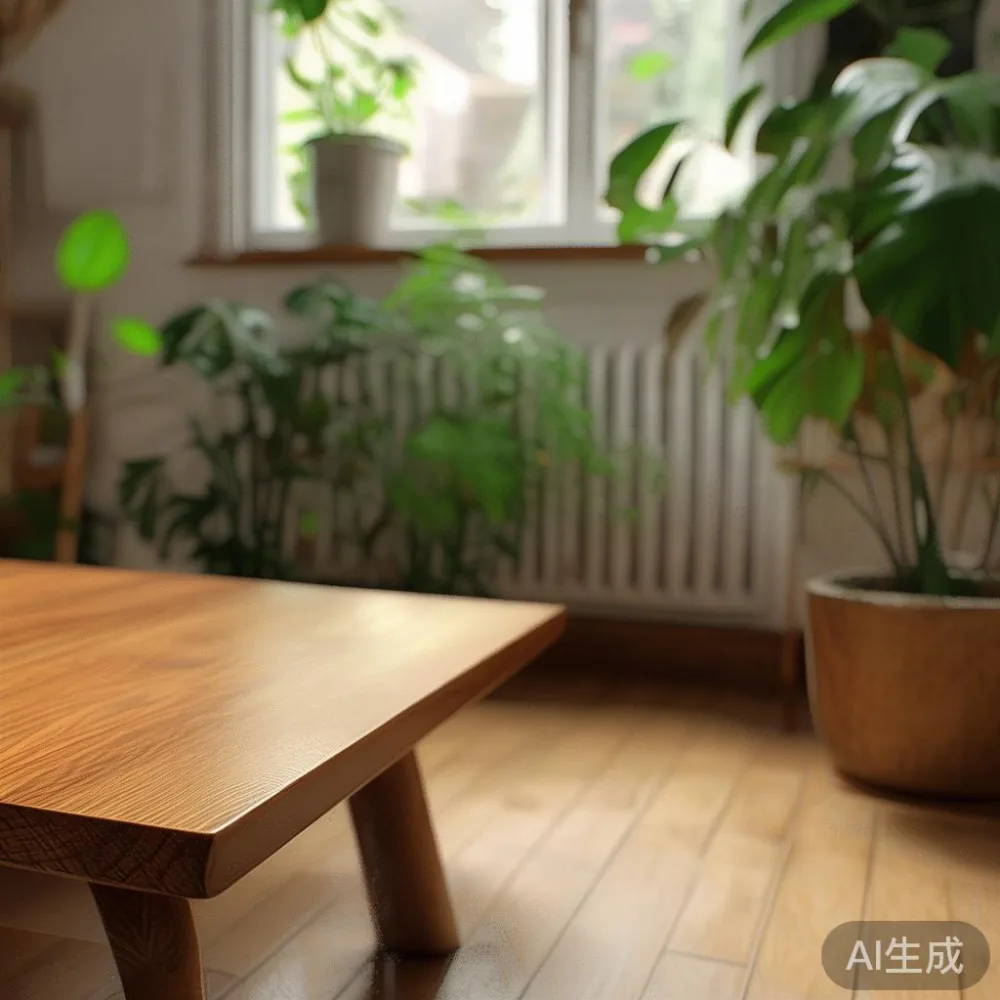
For Singapore buyers furnishing HDB flats in Tampines, Bedok, and Punggol, price is also shaped by the route into the home. A 120 cm coffee table may fit an HDB lift and corridor, while a 160 cm version may require turning at a landing or carrying through a narrower common passage. This guide breaks down the actual cost drivers without drifting away from coffee tables and related solid wood furniture.
What determines the price of a solid wood coffee table?
The starting point is the timber species and grade. Solid wood is not one material with one price. A 110 cm coffee table made from rubberwood may use about 0.08 m³ of timber, while the same design in oak can use roughly 0.09 m³ depending on cutting yield. The board, not the visible surface alone, determines consumption. Timber bought in small retail quantities also carries a different price from production-sized quantities.
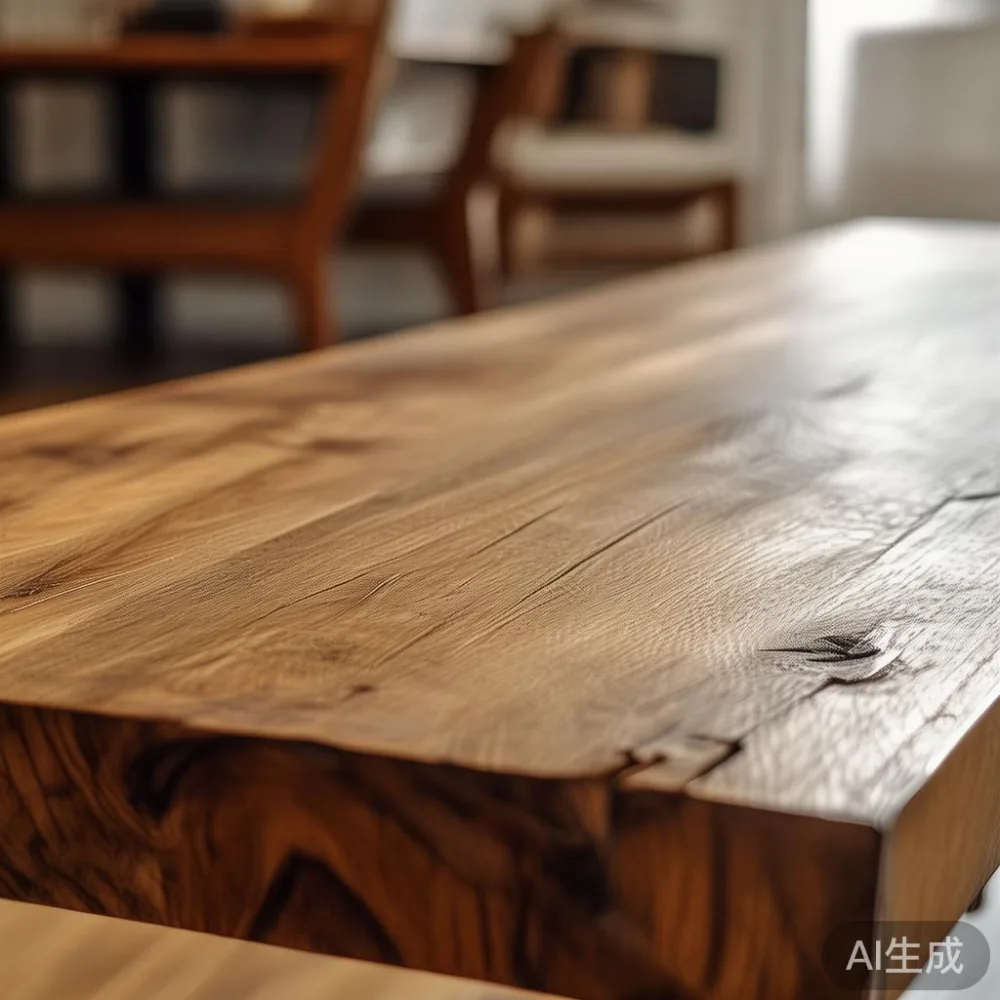
Species changes appearance and performance. Teak carries oil and weather resistance, which suits a balcony or an air-conditioned living room where spills happen frequently. Oak shows pronounced grain, while ash has a straighter figure. Walnut is often selected for darker American or French light luxury interiors, but its cost can reflect both scarcity and processing. A “wood” label does not tell you the species, grade, or whether every visible face is solid timber.
Grades matter because one board may contain knots, mineral streaks, sapwood, or colour variation. Select-grade material creates more usable yield than a lower grade, and full-width boards reduce the need to splice narrow pieces. The visual target also affects labour. Matching grain across a 140 cm top can take more time than cutting separate panels from one board.
A useful comparison is material cost per finished unit. If a coffee table consumes 0.08 m³ of timber and the mill cost is SGD 1,100 per m³, the raw material allocation is about SGD 88. If another model consumes 0.11 m³ of walnut at SGD 2,400 per m³, its allocation is about SGD 264. That SGD 176 difference can appear before shaping, finishing, hardware, packaging, or profit.
Does thickness alone make a coffee table more expensive?
Thickness is only one variable. Moving from a 25 mm top to a 40 mm top increases timber volume by 60%. It can also require larger cutting equipment, stronger joinery, and more material around the edges. Yet a very thick top made with poor internal construction may cost more without being proportionally better.
For an HDB living room, consider a 120 cm by 60 cm coffee table with a 30 mm to 35 mm top. Allow at least 40 cm around the main circulation route, or 90 cm if the table sits in front of a tightly arranged compact sofa. A 150 cm by 75 cm model may look grander but can dominate a 10 m² living room and complicate delivery through a 900 mm lift door.
Construction tells the stronger story. Mortise-and-tenon joints, dowelled aprons, and a fitted stretcher require more machining and checking than visible screw fixings. A frame assembled from short sections may also use more wood. Ask whether the structure is designed for a stated load rather than relying on a vague “heavy duty” claim. For normal residential use, a sensible working target is 80 kg, with the maker stating how that figure was assessed.
Last month I visited a Singapore supplier and watched a 120 cm coffee table top being fitted to its base. The timber had been planed to 32 mm, and the corner joints were checked with a square before assembly. The finished table weighed 31.4 kg. It was not exceptionally heavy by furniture standards, but the mass was distributed through a joined frame rather than concentrated in an unsupported slab. That visit made the difference between thickness and structural engineering easy to see.
Why do finishes change the final price so much?
Finishing protects the wood and creates the final appearance, but the process can add materially more than customers expect. A clear matte lacquer may require several preparation, sanding, sealing, and coating cycles. A smoked or fumed finish adds another process. Hand-applied stain and oil can look beautiful, but coverage, consistency, and repairability vary.
On a 2.1 m² coffee table top, the difference between a simple factory finish and a multi-stage hardwax finish may be SGD 80 to SGD 260, depending on labour and coating materials. High-sheen finishes can show fingerprints and streaks; light brown or smoked surfaces can reveal uneven absorption if the timber was not prepared consistently.
Light-luxury design language does not automatically mean expensive construction. French light luxury often pairs pale oak with curved edges, restrained hardware, and warm neutral textiles. American light luxury favours broader silhouettes, darker walnut tones, and substantial-looking frames. Post-modern light luxury may use cleaner lines, mixed materials, or asymmetric supports. The finish should support that language rather than disguise low-grade timber.
Careful buyers inspect the underside, not only the display face. Look for sealed edges, clean screw placement, and consistent colour. A table finished on all sides is more useful in an open HDB living room because the underside remains visible at low seating heights. If scratches occur, a repairable oil or wax finish may be easier to maintain than a thick sprayed coating.
How much do dimensions, design, and labour add to the cost?
A common design can earn a price because its tooling and assembly are already established. A sculptural coffee table with a curved top, rotating centre, or interlocking base needs more setup and inspection. Straight components are quicker to produce and pack, yet that does not make a restrained design less refined. Craft lies in proportion, joint fit, edge treatment, and stability as much as in unusual geometry.
Custom sizing carries a clearer premium. Adjusting a standard coffee table from 110 cm to 140 cm may add SGD 60 to SGD 180. Changing the leg profile, adding a shallow drawer, or matching a particular wall recess can add another SGD 90 to SGD 300. The largest jump often comes from requiring a new finish sample, prototype, or one-off setup.
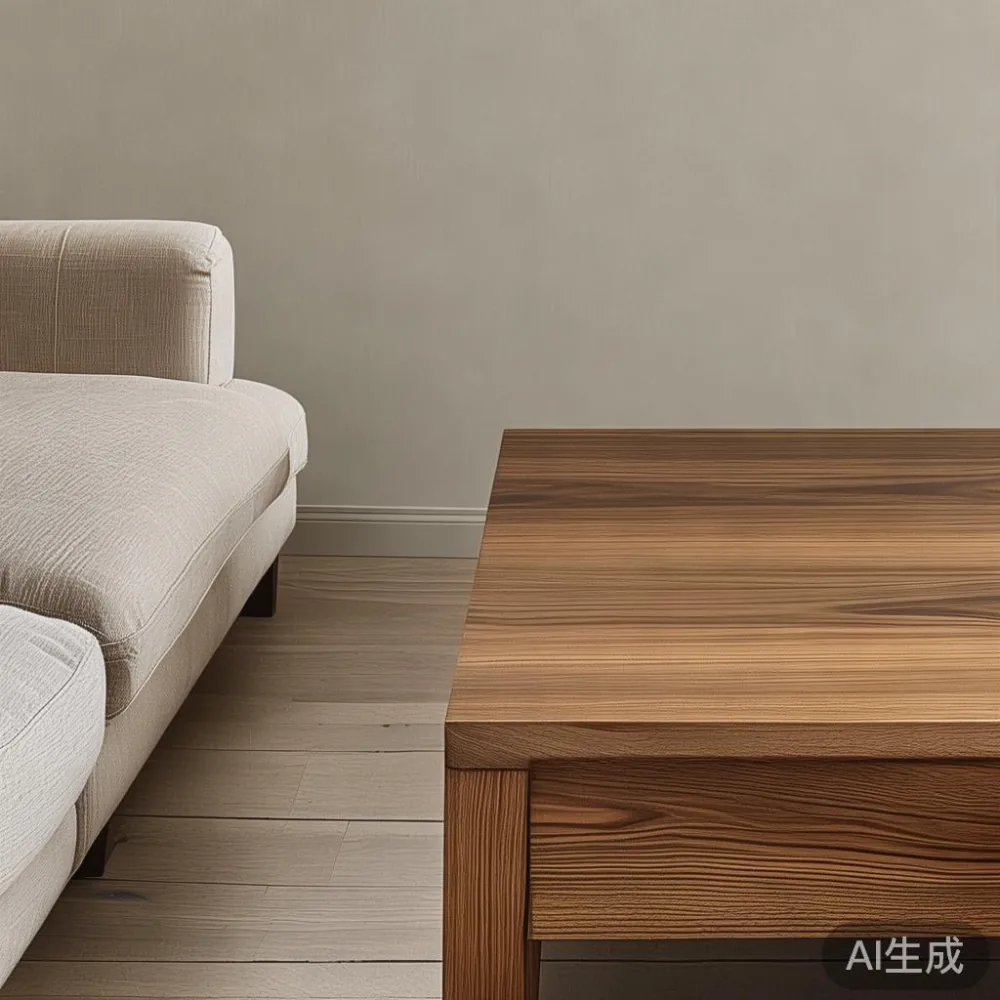
Hardware should be judged by function. A soft-close drawer, lift-up mechanism, or concealed cable opening adds parts and assembly time. Brass-coloured handles may look luxurious but need not be solid brass; the material, plating thickness, and movement matter more than appearance. For the light brown luxury sofa in the same room, a coffee table with rounded corners can improve circulation and soften a boxy interior without adding clutter.
Claims around solid wood furniture need specificity. A solid wood sofa may use solid timber in the frame while cushions use foam, fibre, and fabric. A solid wood bed frame can have plywood or slats supporting the mattress. The term describes a component, not the complete product. For a coffee table, ask whether the top, rails, legs, and drawer boxes are solid wood and identify any exceptions in writing.
The same clarity helps when comparing a MIDHILL dining table with a solid wood bed frame, wardrobe, nightstand, or marble table. A marble table introduces stone selection, edge work, weight, and fracture risk into the cost equation. A wardrobe consumes far more timber and needs doors, hinges, alignment hardware, and more complex delivery. Price comparisons are fairest when material area and function are similar.
What hidden costs should Singapore buyers include?
GST is one visible addition. For a consumer in Singapore, a SGD 899 coffee table becomes SGD 988.90 including 9% GST. Delivery can add another amount depending on the building, access, and destination. Some sellers quote a flat islandwide fee; others charge by lift level, handling, or remote area.
Measure before ordering. A standard HDB lift door may be around 900 mm wide, although older blocks differ. Internal lift dimensions can be approximately 1,100 mm deep and 1,400 mm wide in some blocks, but you should verify the specific car and door measurements. Corridors may narrow to 1,000 mm or less around corners. A 160 cm coffee table may still fit diagonally, but the 31 kg to 55 kg weight affects the number of people needed to carry it.
Upper-floor delivery in Tampines or Punggol commonly takes 5 to 10 working days after production. A made-to-order piece may require 25 to 45 days. Inspect within the stated return period of 14 days and keep the packaging until the item has been checked for finish defects, joint movement, chips, and incorrect dimensions.
Freight is also built into overseas supply. Export packing may include foam, cardboard, edge protection, and a carton or wooden crate. A flat-pack coffee table can reduce volumetric freight, while a fully assembled model can increase it. The final price combines timber, machining, finishing, hardware, packaging, freight, insurance, local delivery, GST, and operating costs. Profit and service support form part of the price too; a maker needs enough margin to honour a 10-year structural warranty and provide refinishing over the product’s life.
MIDHILL was established in 2008 and exports to more than 15 countries, which gives its production process international exposure without making every item mass-produced. Its stated 10-year structural warranty and lifetime refinishing service can affect the price because both represent long-term obligations rather than one-off transactions. Those benefits are most relevant when comparing otherwise similar products with unclear after-sales support.
Is a lower-priced coffee table poor quality?
A lower price can reflect a simpler material, smaller size, less labour-intensive design, or fewer included services. It can also reflect weak construction or misleading specifications, so price alone cannot answer the question. The practical test is whether the maker discloses timber species, dimensions, finish, joint type, load rating, delivery terms, and warranty.
Compare total delivered cost rather than the headline figure. A SGD 399 coffee table plus SGD 80 delivery and GST becomes SGD 521.90. A SGD 629 model with free delivery becomes SGD 685.61. The second option costs SGD 163.71 more, but if it uses thicker stock, better joinery, and a more durable finish, the difference may be reasonable for daily use.
Singaporean furniture searches often contain broad phrases such as cheap Modern light luxury furniture and top 10 Coastal furniture. A useful buying method is to turn those phrases into a specification checklist. Coastal styling can work with pale solid wood and a matte finish; modern light luxury can use clean proportions and tactile surfaces. Neither style label guarantees material quality.
For a complete room, search terms such as how to style American bed in apartment, how to choose light luxury bed, and how to choose American bed are useful, but measurements remain central. A queen bed frame near 160 cm by 200 cm may suit a larger bedroom more comfortably than a compact studio. A nightstand should fit beside the mattress without blocking the doorway, and a wardrobe must leave space for the door swing and internal drawers.
The fairest price comparison uses the same checklist: 120 cm length, 60 cm width, 32 mm solid timber top, joined apron, stated 80 kg load, sealed underside, known finish, written warranty, and delivered cost. When all these are visible, the price becomes easier to interpret.
What should you ask before paying for solid wood furniture?
Ask for the timber species and the dimensions of each major component. “Solid wood” alone is too broad. Confirm whether the coffee table top is 30 mm, 35 mm, or 40 mm and whether the legs are solid or engineered. Request photographs of the underside, joint areas, and finished edges. A reputable maker should be able to explain which parts are solid wood and why.
Ask how the item was protected for Singapore delivery and whether stair carrying is charged separately. Check the lift and corridor dimensions, especially for a coffee table wider than 120 cm. For a marble table or solid wood dining table, confirm whether the piece separates for transport. A bed frame may arrive in 2 sections; a wardrobe may arrive as 3 or more panels. Modular delivery can reduce risk and damage.
Ask what the warranty covers. A 10-year structural warranty may cover joint or frame failure under intended use, while surface scratches, water damage, and misuse may fall outside it. Lifetime refinishing may be a service entitlement with conditions, such as labour or shipping being chargeable. Read the terms rather than relying on a short headline.
Look at the return process. A 14-day return period gives time to inspect colour against daylight, check for movement, and test the coffee table’s stability around a compact sofa. Keep all packaging. If the item arrives with a chipped corner, damaged finish, or uneven drawer, document it before assembly.
Price is driven by a chain of physical and operational choices: 0.08 m³ of timber versus 0.11 m³, a 30 mm top versus a 40 mm top, 4 hours of hand finishing versus 30 minutes of spray coating, and flat-pack shipping versus a 48 kg assembled crate. Once those variables are visible, a solid wood coffee table becomes a clearer purchase. The right price is the one that supports the construction you can verify, the room you actually live in, and the service that continues after delivery.