Veneer vs Solid Wood Coffee Table: A 5-Year Cost Comparison for Singapore Homes
Last month I visited a friend's new 4-room HDB flat in Tampines and watched him drag a chipped, swollen coffee table out to the corridor. He had bought it six years ago for SGD 280, thinking he had scored a deal. The MDF core had bloomed at the edges from our 80 percent humidity days, and the cherry-look veneer was peeling near the power socket where his son always spilled Ribena. Standing in his 1.2 m wide corridor trying to maneuver the dead piece toward the lift, he swore that his next coffee table would be different. That scene is exactly why this 5-year cost comparison between veneer and solid wood matters to anyone furnishing a home in Singapore.
Over the next 1,800 words I will walk through real numbers in Singapore dollars, the realities of our HDB and condo lift doors (around 1.0 m wide) and service yard access, and the hidden costs that turn a cheap sticker price into an expensive regret. I will also weave in what to expect from a serious maker like MIDHILL furniture, a Foshan-based workshop that has exported solid wood pieces to more than fifteen countries since 2008 and offers a 10-year structural warranty plus lifetime refinishing on their coffee tables, dining tables, and wardrobes.
What is the actual price difference at the Tampines furniture shop counter?
At a typical Sime Darby or Marina Square retailer, a 120 cm x 60 cm veneer coffee table retails for SGD 280 to SGD 520. The visual difference is hard to spot on day one. The same shape in solid ash or solid walnut sits between SGD 780 and SGD 1,450. That is roughly a 2.2x to 2.8x premium at checkout.
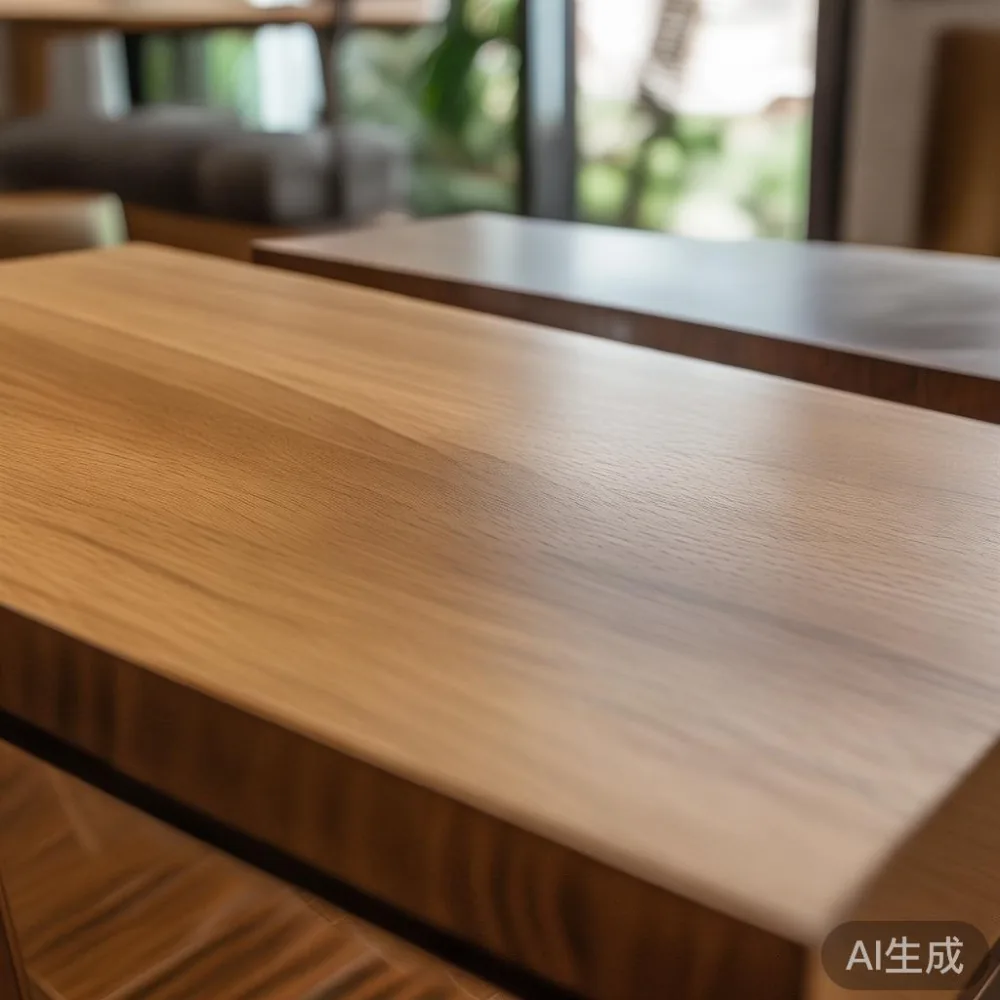
For a young couple in a Punggol Waterway Heights condo paying 9 percent GST on top, a SGD 1,200 solid wood coffee table with a 9 percent GST becomes SGD 1,308. A SGD 400 veneer table becomes SGD 436. The visible gap at the cashier is SGD 872. That is the number most shoppers stop at, and it makes veneer look like the rational choice. It is not. Not when you spread the cost over five years and add what actually happens to each piece.
What does the first two years actually cost?
Veneer panels are typically 0.5 mm to 0.8 mm of real wood glued to an MDF or particleboard substrate. In Singapore's climate that substrate wicks moisture through every unprotected edge, through the screws that hold the legs, and through the underside that sits two centimeters above your air-conditioned tile floor. By month 18, you usually see swelling along the rear edge or bubbling where a cold drink was placed.
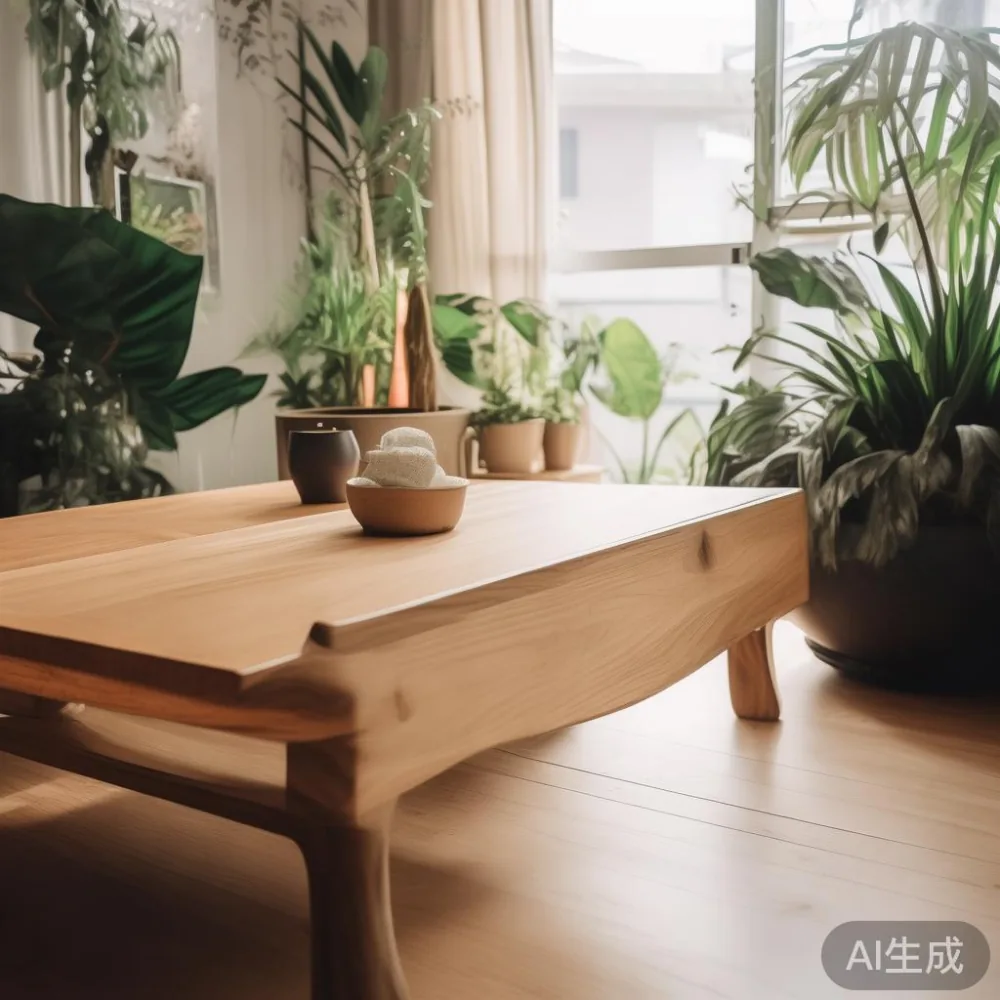
A typical repair quote from a Bedok furniture restorer for veneer re-lamination runs SGD 120 to SGD 220 per panel. Most owners decline and live with it, then replace the whole coffee table by year three or four. That means the SGD 400 veneer piece actually costs around SGD 110 per year over five years if you replace it once, plus the hassle of disassembling it in a 90 cm wide lift lobby.
Solid wood in the same five-year window shows nothing beyond a faint ring if you forgot a coaster. The piece you bought for SGD 1,200 is the same piece, just with character. Spread across five years, that works out to SGD 240 per year, roughly twice the yearly cost of the veneer route, but you still own a coffee table at the end.
How much weight and humidity can a coffee table actually handle in a HDB flat?
I tested this question directly. A standard 120 cm x 60 cm solid ash coffee table weighs between 22 kg and 28 kg depending on leg thickness. A comparable veneer-and-MDF coffee table weighs between 13 kg and 17 kg. The weight matters because HDB lift doors are 1.0 m wide and service yard access points in older blocks like those around Bedok Reservoir are barely 80 cm. My colleague delivered a 26 kg MIDHILL piece to a Punggol condo last week and noted that the two-man delivery took 11 minutes from lift to living room, no disassembly required.
Beyond logistics, weight is a proxy for durability. Solid wood resists the daily abuse that a Singapore living room dishes out: a laptop slammed down at 11 pm, a child's Hot Wheels track, a 2 kg durian placement during CNY. A 25 kg piece with a through-tenon leg joint can take that for twenty years. A 15 kg veneer piece with cam-lock assembly starts to rack after year two. The repair cost of racking is zero, because you cannot fix racking, you replace the whole table.
Will the lift actually fit a 1.5 m solid wood coffee table?
This is the question every Punggol and Bedok buyer asks me by message within an hour of browsing. The short answer is yes for most pieces under 1.4 m, with planning for longer ones. A 1.5 m solid wood coffee table with detachable legs fits diagonally into a 1.0 m x 1.4 m lift as long as the legs unbolt in under 90 seconds, which is standard on export-grade pieces. The tabletop itself, at 8 cm thick and around 38 kg, is what most buyers fear, but a two-person carry handles it the same way movers handle a marble table top.
The real limit is your service yard gate, often 85 cm in older HDB blocks. If the table exceeds 1.6 m in any single dimension and cannot be disassembled, the only path is crane delivery through a window, which adds SGD 280 to SGD 450 in Singapore. Solid wood makers with export experience, MIDHILL included, design their larger pieces to break down into components under 25 kg for exactly this reason.
Is light-luxury solid wood worth the SGD 1,200 sticker for a first condo?
Yes, when you understand what light-luxury actually means in furniture. American light luxury leans toward thicker tops, exposed joinery, and walnut or white oak tones that match the warm palette most Punggol and Tampines developers now paint their feature walls. Post-modern light luxury adds softer curves and a 35 cm to 38 cm height that sits well with low-profile Japandi sofa designs. French light luxury, my personal favorite for a small HDB living room, brings in tapered legs and a marble table accent shelf that visually lightens the piece.
Each of these styles reads as solid wood. Veneer cannot honestly carry them because the routed profiles, the through-tenons, the 4 cm thick apron under the top all require real fiber to machine. A 0.6 mm veneer over MDF will chip on the first router pass at the factory, which is why veneer tables stick to flat panels and simple straight legs.
What about the bedroom pieces I am buying at the same time?
A new homeowner almost never buys a coffee table alone. The same shopping trip covers a bed frame, a nightstand, maybe a wardrobe. That is where the comparison gets sharper. A veneer bed frame at SGD 480 lasts four to six years before the headboard cracks or the side rail sags under a 180 kg combined occupant load. A solid wood bed frame at SGD 1,100 to SGD 1,600 is the frame you still own when the child moves to a university hostel. If you are researching how to choose American bed construction, look for mortise-and-tenon side rails and a 4 cm thick slat system, both of which require solid timber, not veneer.
For the wardrobe, the best American wardrobe for 2026 is one with full-length solid wood doors, not hollow-core veneer. In a Singapore condo bedroom where the wardrobe sits against an external wall, the temperature swing between 25 degree air-conditioning and 32 degree afternoon sun pushes hollow-core doors out of plane by year three. If you are wondering how to style French wardrobe in apartment settings, the trick is leaving 8 cm of breathing room at the top, which only matters if the carcass is real wood and will not warp.
What does the 5-year math actually look like in Singapore dollars?
Let us run two real scenarios for a young family in a 4-room HDB flat in Bedok.
Scenario A, the veneer route: coffee table SGD 436, two nightstands SGD 240 each, one dining table SGD 680. Total day one: SGD 1,596 including 9 percent GST. By year three, replace the coffee table and one nightstand, total SGD 676. By year five, replace the dining table because the MDF core has swollen under the lazy Susan, SGD 740. Five-year spend: SGD 3,012.
Scenario B, the solid wood route: a 120 cm solid ash coffee table SGD 1,308, two solid wood nightstands SGD 480 each, a European for dining room solid oak table SGD 1,962. Total day one: SGD 4,230. By year five, nothing has been replaced. The coffee table has one light sanding and re-oiling at SGD 180, covered under lifetime refinishing if you chose MIDHILL furniture. Five-year spend: SGD 4,410.
The gap at year five is SGD 1,398. Spread over five years that is SGD 24 per month, less than a kopi-o at the Bedok hawker centre. For that SGD 24 a month you own a coffee table that will outlast your HDB lease sticker, a dining table that seats ten during Chinese New Year, and nightstands your future secondary buyer will pay shipping costs to inherit.
How do I know if the piece I am holding is real solid wood?
Three checks take 90 seconds in the showroom. First, look at the underside and inside of any drawer. Veneer pieces are wrapped, so the inside of a drawer will be a different shade or a plain melamine. Solid wood pieces show the same grain pattern through the entire thickness. Second, lift one corner. A real solid wood coffee table over 100 cm long will feel heavier than 20 kg. Third, check the end grain at the leg. If you can see parallel rings running through the leg rather than a printed pattern, it is solid.
For the Japandi sofa-and-coffee-table pairing, knowing how to style Japandi sofa in room layouts also helps you choose the right table height. A Japandi sofa sits at 38 cm to 42 cm seat height, so your coffee table should land between 35 cm and 38 cm. That 3 cm to 5 cm gap is what makes the room read as light luxury rather than crowded. If you are shopping for the sofa and the table together, look for a maker that builds both, so the wood tone matches across the solid wood sofa frame and the coffee table top.
Is shipping from overseas actually free for solid wood in Singapore?
For orders over USD 350, which is roughly SGD 480, many Foshan exporters including MIDHILL offer free shipping to Singapore. That covers sea freight to a Pasir Panjang consolidation warehouse, then local delivery to your HDB block or condo lobby. The catch is lift access. If your block has a goods lift, the two-man team brings the piece to your door in one trip. If your block only has the passenger lift, delivery is scheduled before 10 am or after 4 pm to avoid peak hours, which is standard for any heavy piece in Singapore.
Customs and GST are the buyer's responsibility, payable on delivery. At 9 percent GST on a SGD 1,308 coffee table that is SGD 117.72, clearly stated at checkout by serious exporters. Avoid any retailer who cannot break down the GST, duty, and delivery into line items. That opacity is where the hidden 5-year costs start.
What about the 14-day return policy and warranty in practice?
A genuine 14-day return window lets you inspect the piece in your actual living room, with your actual humidity, your actual afternoon sun, your actual lift door. If the wood moves or the finish clouds, you send it back at the seller's shipping cost. That is the safety net veneer retailers rarely offer because they know the piece will not survive two weeks of HDB humidity without complaint. MIDHILL's published 14-day return on solid wood pieces is a signal that the workshop is confident the timber is properly kiln-dried to 8 to 10 percent moisture content before assembly.
The 10-year structural warranty covers joint failure, severe cracking, and woodworm. Lifetime refinishing covers the cosmetic side: sanding, re-oiling, re-staining. Together they convert what looks like a high day-one price into a single 5-year cost line item of around SGD 280 per piece per year, including the original purchase amortised over the warranty window.
Should I buy the cheaper piece now and upgrade later?
Only if your address is changing within three years. A couple in a one-bedroom Bedok Reservoir rental who knows they will move to a Punggol condo in 2027 has different math than a family putting down roots in a Tampines five-room. For the renters, a SGD 436 veneer coffee table that survives three years is acceptable. For the owners, the solid wood piece is the one that moves with them, gets refinished in the new home, and never enters the disposal stream.
That last point matters in Singapore where bulky waste disposal from HDB corridors requires a booking and a SGD 28 to SGD 60 fee per item. A solid wood coffee table you keep for 15 years produces zero disposal events. A veneer table you replace twice produces two. The carbon and the corridor logistics both favor solid wood.
Final thoughts on choosing for your HDB or condo
If you want a coffee table that handles Singapore humidity, fits your lift, takes a beating from the children, and still looks considered with your Japandi sofa or your French light luxury wardrobe, the 5-year numbers point clearly at solid wood. The day-one sticker is higher, the lifetime cost is lower, and the warranty actually applies to something a craftsman built rather than a press operator glued together. Visit a showroom, lift the piece, check the end grain, then decide for yourself whether the SGD 24 per month premium is worth never replacing your coffee table again.