What Actually Drives the Price of Solid Wood Coffee Tables?
A coffee table may occupy only 110 cm by 55 cm of a Singapore living room, yet its price can vary by several thousand dollars. That spread usually has little to do with the photograph. It comes down to timber species, construction, finish, dimensions, hardware, branding and delivery logistics. Understanding these variables helps a buyer compare quotations on substance rather than appearance.
For Singapore residents furnishing HDB flats in Tampines, Bedok or Punggol condos, measurements and access deserve attention before checkout. A wide solid wood dining table can look generous in a showroom but become difficult to move through a 90 cm lift doorway or along a narrow corridor. The same principle applies to a coffee table with a 120 cm top, thick slab legs or a protective crate wider than 90 cm.
MIDHILL is a Foshan solid wood furniture maker established in 2008, with exports to more than 15 countries. Its positioning sits between practical joinery and light-luxury detailing: restrained forms, visible wood character and finishes designed for lived-in interiors rather than disposable trends. Its 10-year structural warranty, lifetime refinishing service, 14-day returns and free shipping above US$350 provide useful context, although every quotation should still be checked for Singapore-specific terms, GST and delivery charges.
Is timber species the biggest price driver for a solid wood coffee table?
Wood species is often the first factor to examine, but “solid wood” is a construction description, not a species or a grade. A table labelled solid wood might use rubberwood, oak, ash, beech, walnut or another hardwood for different components. That does not automatically make it inferior; it changes the price and visual result.
Rubberwood can suit a warm, accessible coffee table at SGD 680 to SGD 1,180 before GST. Oak versions may range from SGD 980 to SGD 1,880. Walnut, selected for darker colour and stronger grain contrast, can sit around SGD 1,680 to SGD 3,280. These are indicative retail ranges, not fixed factory prices. Board width, grade, moisture treatment and machining can move a piece above or below its category.
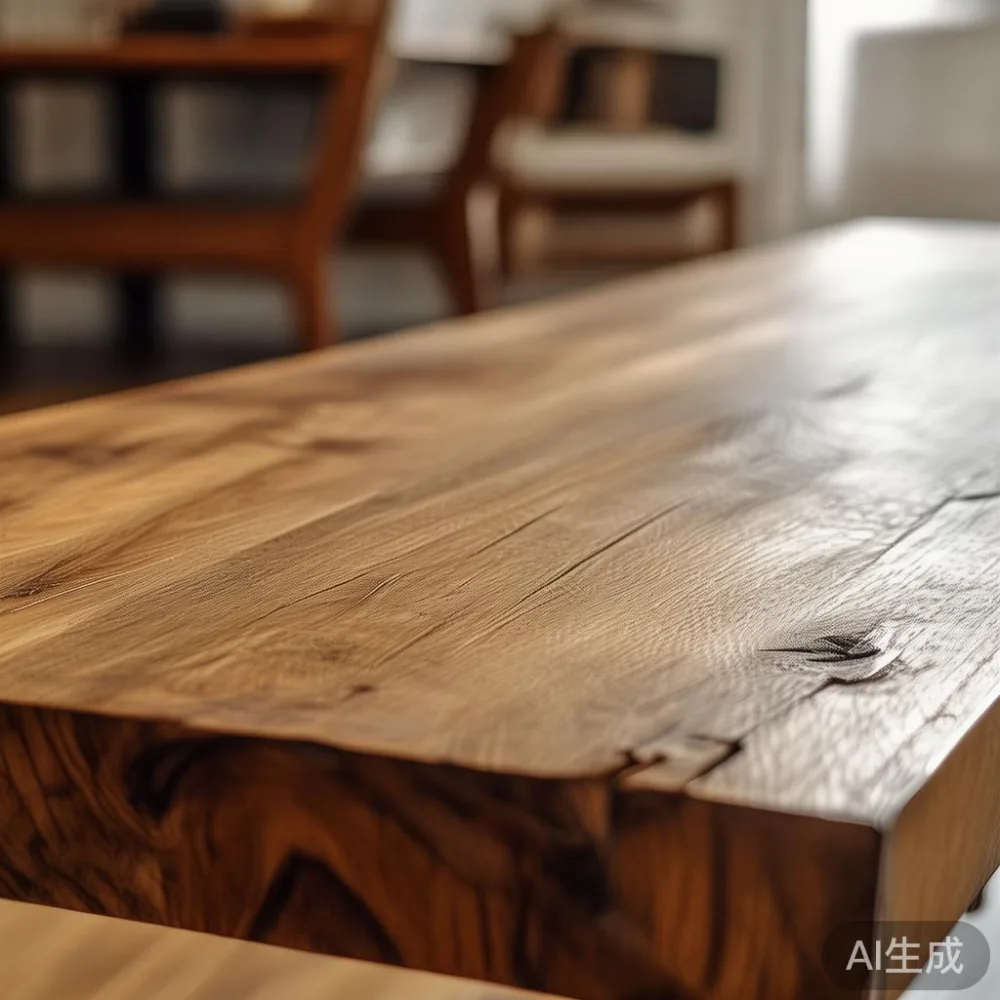
Look at the underside and edges, not only the display top. Veneer, particleboard and solid wood can appear similar under showroom lighting. Ask for an exploded construction drawing and an explanation of every panel. A useful specification names the species, thickness, finish and structural treatment. For a 120 cm by 60 cm table, a 20 mm top is common; heavier 24 mm to 30 mm slabs increase material use, weight and cost.
The price also reflects yield. A wide table requiring defect-free boards across 120 cm may use more premium timber than a smaller model. Finger-jointed sections and carefully selected board transitions can control cost while preserving a solid wood build. The aim is not simply expensive wood, but an honest balance of grain, stability and construction.
How do joinery and thickness explain the difference between two similar tables?
Two coffee tables can share the same oak finish and measurements while differing by SGD 900 because their internal construction is different. Machine-cut dowels and screws are economical. Mortise-and-tenon joints, corner braces and fitted aprons add machining and assembly time, but can improve resistance to movement and long-term loading.
Consider a typical family-room table. A daily load of 10 kg, a laptop, trays and occasional foot traffic should not produce visible joint movement. Ask whether the shelf or lower tier is supported by cleats rather than floating panels. Confirm that legs extend about 120 mm below the apron on a 420 mm-high table, giving the underside a balanced structure. For heavier sculpted bases, additional bracing may be required.
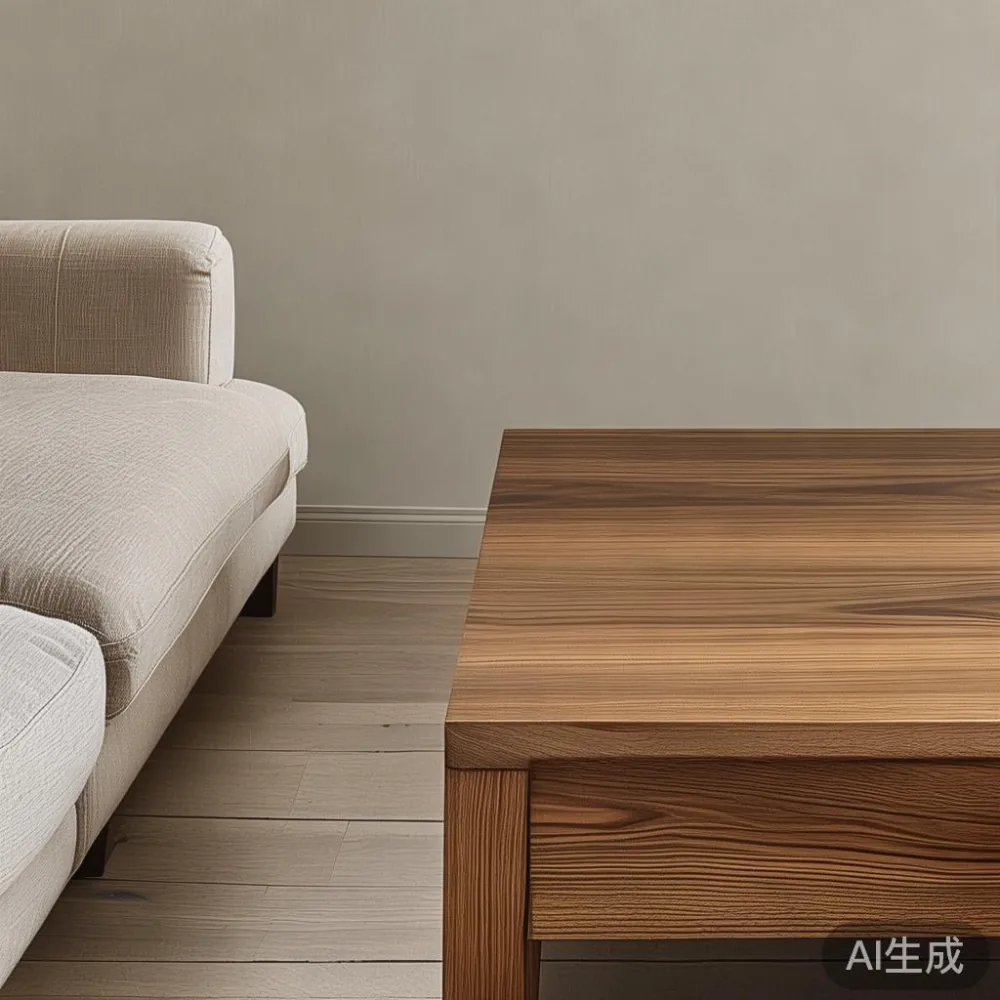
Sand-and-fill finishing matters too. A properly sanded surface may involve 5 to 8 preparation stages before the final coat. Some contemporary French light luxury coffee tables use pale oak, soft cream tones and rounded corners; American light luxury often favours straight profiles, darker walnut and substantial proportions. A post-modern light luxury approach may combine bevelled edges, mixed materials or a geometric base.
Mid-century construction adds another variable. A table inspired by 1950s and 1960s cabinet-making may use tapered legs, a thinner top and exposed fixings. Those forms demand accurate machining to look intentional. Buyers researching wholesale Mid-century modern furniture should compare joinery details, timber moisture content and sample dimensions, not merely the era label.
Why do finishes and hand-work create such large price differences?
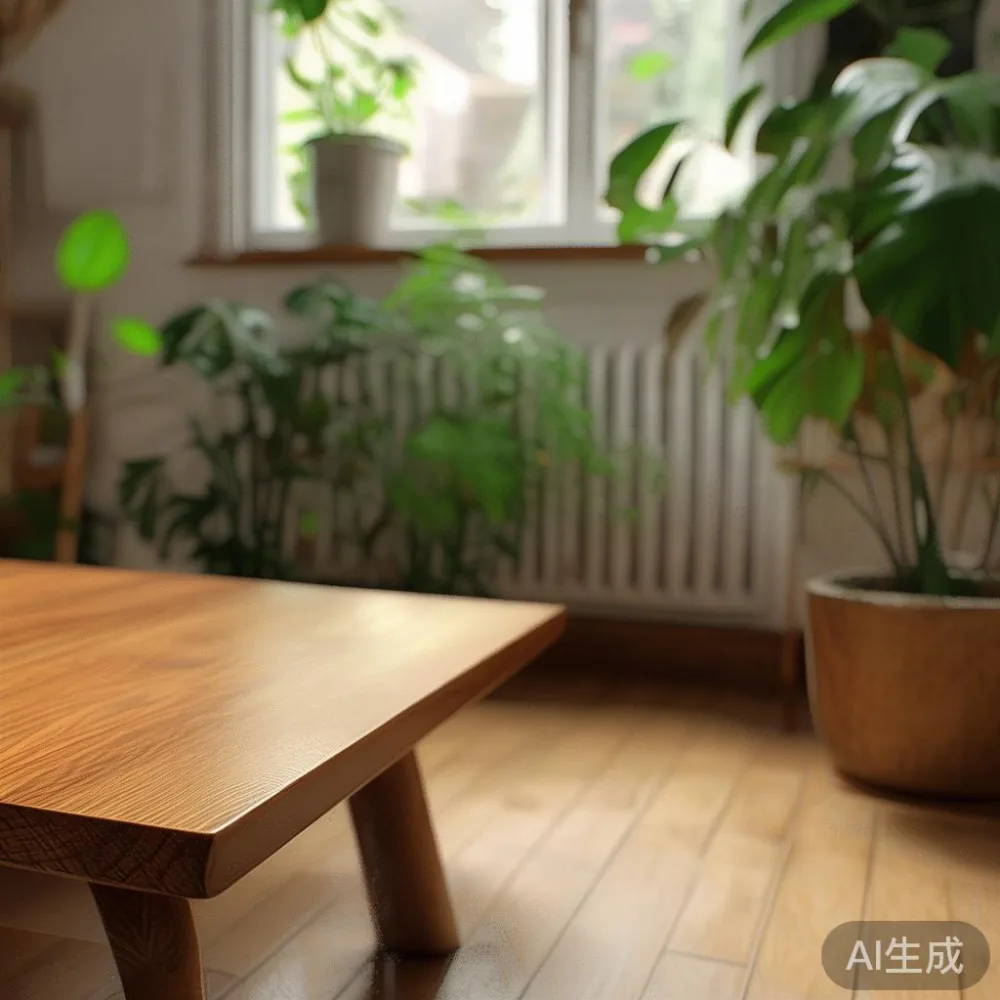
Finish is where material choices become visible, and it can account for 10 to 25 percent of a table’s retail price. Standard lacquer may be suitable for a straightforward model. A matte hardwax oil, multi-layer stain, fumed oak, wire brushing or hand-rubbed edges requires more preparation and labour. Clear finishes also vary in scratch resistance, repairability and how they behave under Singapore’s humidity.
The ideal finish for a solid wood coffee table is not merely the one with the longest description. It should be maintainable. For households with children, a repairable oiled or lightly lacquered surface may be practical. With pets, ask about cleaning agents and whether small marks can be corrected locally. In high-rise interiors without much natural light, pale finishes may show dust; darker walnut tones can disguise it.
Samples are more useful than screen colours. Request a 10 cm by 10 cm finish sample and view it under daylight and warm 2700K lighting. Grain can shift from honey to amber as it ages. A high-quality factory should explain expected variation, the effect of sunlight and the maintenance interval, often every 12 to 24 months depending on use and finish.
Hand-work must also be judged by consistency. Hand-applied stain can reveal subtle tonal variation, while inconsistent edges or drips indicate poor process control. Inspect the underside, the underside of the top and areas hidden by trays. Premium hand finishing is visible in clean transitions and uniform sheen, not in exaggerated irregularity.
How much do size, weight and Singapore delivery add to the cost?
A coffee table’s dimensions affect material consumption, packing and access. A compact 90 cm by 45 cm model may fit a lift and corridor easily. A 130 cm by 70 cm version may need a larger carton or detachable legs. The old National Solidarity Building Authority guidelines commonly cite 90 cm lift-car dimensions, but residents should measure the actual lift door, turning space and corridor pinch points rather than relying on a standard figure.
In my own visit to a Foshan workshop last month, I tested a 120 cm by 60 cm oak coffee table with a 28 mm top. It weighed 31 kg. Its protective crate measured 128 cm by 68 cm by 24 cm, so it could not pass through a nominal 90 cm lift without either opening the panels or disassembling the legs. The same table, with removable legs and a narrower crate, took 4 minutes to prepare for delivery. That practical difference affected installation more than any showroom accessory.
Delivery to a Singapore HDB flat might take 7 to 14 working days after production, while a custom-finished piece may require 4 to 8 weeks. Peak periods around a major renovation or festive redecorating period can add 3 to 7 days. A dedicated two-person service may cost SGD 90 to SGD 220 inside Singapore, depending on stairs and access. Curbside delivery may be available at a lower rate, but the recipient must handle the route indoors.
GST is generally 9 percent in Singapore, so a SGD 1,480 table becomes SGD 1,613.20 if GST is not already included. Check the quotation wording carefully. For international orders, the stated free shipping threshold of US$350 can help with freight, yet import duties, local delivery and site restrictions may still apply. These terms should be confirmed in writing for the destination address.
Does brand service really affect the price of a coffee table?
Brand service has a measurable financial component. A 10-year structural warranty means the maker must specify joinery tolerances, timber preparation and quality-control records that can support a repair claim. Lifetime refinishing requires the ability to reproduce or refresh a finish years later. That long-term capability can justify a higher price than an anonymous import with no local support.
MIDHILL’s service framework is relevant when comparing quotations, but it is not a substitute for product-level evidence. Ask whether the warranty covers the top, legs, joints and load-bearing components, and whether finish coverage is included. Understand the claims process, replacement freight and treatment of natural movement. The same 10-year period can mean very different things if labour and replacement components are excluded.
Branding can also influence design costs and market positioning. A piece with editorial recognition, coordinated collections and repeated quality checks may command more than a visually similar table. That premium should be connected to something tangible: a documented species, durable joint system, repairable finish, replacement parts or responsive service. “Luxury” becomes more credible when the buyer can identify what was paid for.
For a wider home project, a solid wood sofa, solid wood bed frame or solid wood dining table may carry shared production efficiencies, while a wardrobe and nightstand can complete a coordinated room. Search results for for sale French furniture or 2026 European light luxury furniture are useful for comparing design vocabulary, but the component specification remains the more reliable price measure.
What should I compare before paying for a solid wood coffee table?
Compare like with like. A useful worksheet contains 12 fields: timber species, board grade, top thickness, dimensions, net weight, joinery, shelf load rating, finish, edge treatment, hardware, warranty and delivered price. A photograph alone cannot supply those details. If a retailer cannot answer within a reasonable period, that uncertainty belongs in the budget.
Ask for the packaged measurements as well as the furniture dimensions. Verify that the lift door, corridor turns and entrance can accommodate the carton. Check whether the table is delivered assembled or in flat-pack sections, whether assembly tools are included and whether stairs require an additional fee. A coffee table arriving in 2 cartons rather than 1 is not a major concern if every part is labelled and protected.
Review the return window. MIDHILL offers 14-day returns, but confirm whether a used or assembled table qualifies and how collection is arranged. For a made-to-order finish or non-returnable item, request written approval. A deposit may be non-refundable after production begins, while a balance payment is usually due before dispatch.
For styling inspiration, guides on how to style French provincial bed in room or how to choose Italian light luxury sofa can show how material colour affects a whole space. A search for the best Vintage sofa for 2026 may lead toward deeper walnut, rounded silhouettes or distressed leather, all of which can guide coffee-table selection. If one interprets “best Vintage sofa for 2026” as the benchmark, a distressed finish should not be treated as automatically superior; inspect the actual frame and comfort construction separately.
Likewise, French provincial styling benefits from curved edges, warm timber and soft textiles, while Italian-inspired rooms often use sharper geometry or pale stone. A marble table can create a cool focal point, yet placing it beside a solid wood coffee table without coordinating scale can make the room feel disconnected. Materials should complement, not merely contrast.
Is a higher-priced solid wood coffee table always a better choice?
No. A SGD 780 rubberwood table with stable construction and a maintainable finish may be more rational than a SGD 3,600 walnut table with poorly joined legs. Value comes from the sum of material, workmanship, service and fit. Paying more does not repair weak construction, and paying less does not guarantee poor quality.
A sensible Singapore buying process starts with measuring the room and route, then setting a total delivered budget including GST and lift service. Shortlist 3 coffee tables at different price levels, request specifications and finish samples, and compare them in the same room for 24 to 48 hours. Inspect the table while carrying it, using a 10 kg load on the shelf and checking for movement at the joints.
Solid wood furniture rewards informed restraint. Timbers such as rubberwood, oak and walnut can all work; French light luxury, American light luxury and post-modern light luxury can all shape a room. The meaningful price drivers are the details visible years later: sound joinery, controlled moisture, honest material labels, repairable finishes and practical delivery planning.