What Actually Drives the Price of Solid Wood Furniture
Last month I visited a Tampines HDB show flat with a friend who was about to sign for a 4-room BTO. The developer had included a "solid wood coffee table" in the living room package, and my friend assumed it was the same quality as the oak dining table her parents bought in Bedok twenty years ago. It was not. The HDB piece weighed about 6 kg and had a thin veneer of oak over particleboard. Her parents' old dining table weighs roughly 38 kg and is still flat after two decades of curry spills and children doing homework on it. The sticker price of both sat around the same SGD range when adjusted for inflation, which is exactly the puzzle this article tries to solve: why do two pieces labelled "solid wood" carry such different price tags, and what are you actually paying for?
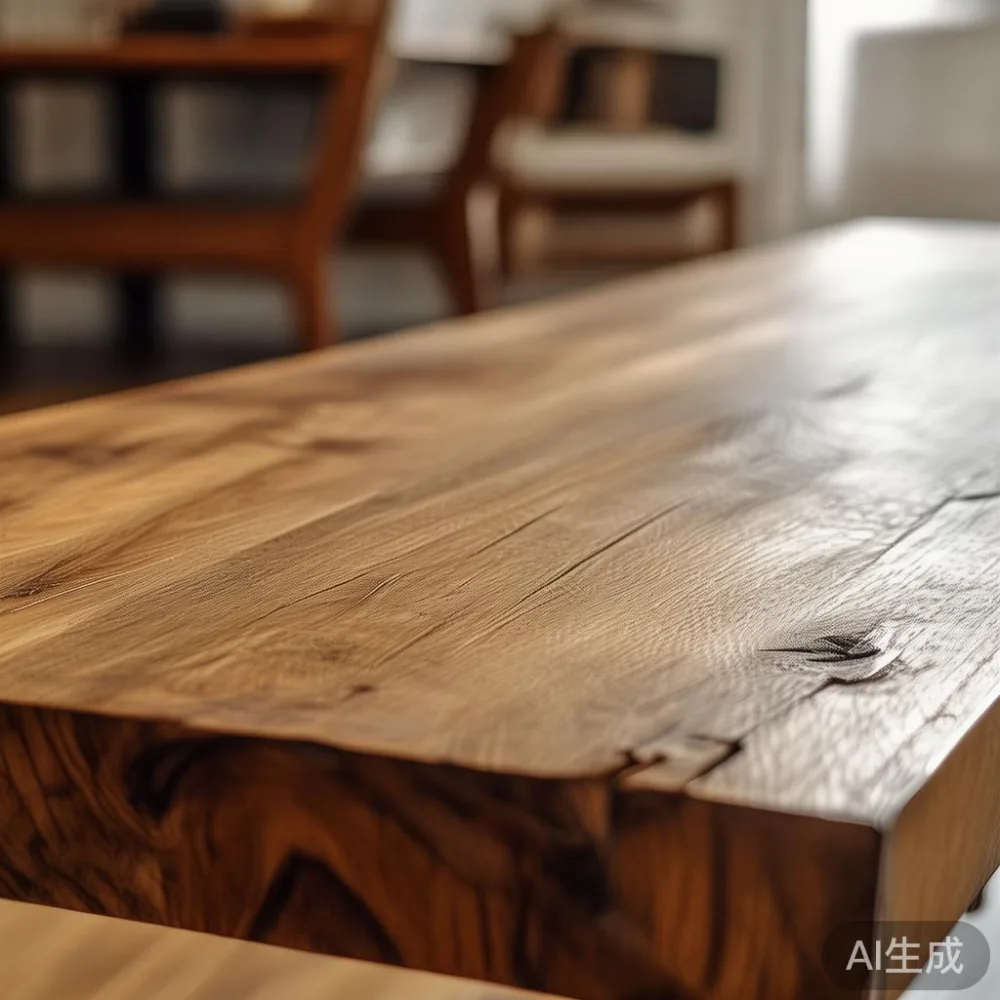
Why does one solid wood coffee table cost SGD 380 and another SGD 3,800?
The short answer is that "solid wood" is a category, not a single material. Within that category, four variables move the price the most: species, thickness, joinery, and finishing. A coffee table made from rubberwood with a 1.8 cm top, dowelled joints, and a single spray coat of lacquer can land in a Singapore furniture shop for SGD 380 to SGD 550. The same shape made from FAS-grade American white oak, with a 4 cm top, mortise-and-tenon joinery, and hand-oiled finish, will land closer to SGD 2,400 to SGD 3,800. The raw timber alone accounts for roughly 35-45% of that gap. Joinery and finishing account for most of the rest.
Rubberwood is a plantation species grown across Malaysia and Thailand. It is a genuine hardwood, it is solid, and it is the honest choice for a first home where you want something that looks like wood without paying oak prices. White oak from the Appalachian region costs about four to six times more per cubic metre at the sawmill because it grows for 80-120 years before harvest, versus 15-25 years for rubberwood. The grain is tighter, the colour is more uniform, and the boards are wider. A Punggol family choosing between the two should look at the room, the expected lifespan, and the budget honestly before deciding.
How do I choose a shipping damage for a study?
Inspect the piece within 48 hours of delivery, photograph every surface in daylight, and reject the order in writing if you find a structural crack, a snapped leg, or a warped top wider than 5 mm over one metre. Cosmetics scratches on the underside or back of a study desk do not count as damage; a 2 mm split along a load-bearing joint does.
That single sentence is the rule most buyers wish they had read before signing the delivery note. In HDB corridors the standard width is about 1.2 m, which means a long dining table or a king-size bed frame almost always has to be brought in vertically or partially disassembled. When a delivery team forces a 2.4 m wardrobe panel through a tight turn near a lift lobby in Bedok, the pressure point is usually the top corner of the carcass. That is where damage hides. Lift interiors in most Singapore blocks are about 1.5 m deep by 1.8 m wide, and the door opening is roughly 0.9 m wide, so anything wider than 90 cm in any dimension needs a folding strategy. A good supplier will tell you this before you order; a careless one will blame the corridor.
MIDHILL ships its solid wood furniture with a documented pre-delivery inspection, and the company has been doing this since 2008 out of Foshan, exporting to more than 15 countries. In Singapore that translates into a delivery window where the team checks the lift and corridor access at the booking stage, not when the lorry is already downstairs.
What does "joinery" really mean for the price of a bed frame or sofa?
Joinery is the method used to connect two pieces of wood without relying only on glue or screws. The four methods you will see on a price tag, from cheapest to most expensive, are dowel joints, biscuit joints, pocket-hole screws, and mortise-and-tenon. A solid wood sofa frame joined with dowels and glue is perfectly adequate for a rental condo, and many Singapore households have had dowel-joined pieces last 10-12 years. A solid wood bed frame joined with mortise-and-tenon, where a shaped tongue fits into a matching cavity and is locked with a wooden peg, can last 40 years and pass to the next generation. The labour time is the difference: a dowel joint takes about 90 seconds on a machine, a hand-cut mortise-and-tenon takes 25-40 minutes per joint.
A 1.8 m king-size bed frame in solid ash with dowel joinery retails around SGD 1,200 in Singapore showrooms. The same frame in solid white oak with mortise-and-tenon joinery sits at SGD 2,600 to SGD 3,400. The timber cost difference is roughly SGD 300. The labour cost difference is roughly SGD 900. The rest is finishing and brand overhead. The cheapest solid wood bed frame you find online is almost always dowelled; the most expensive are nearly always mortise-and-tenon, sometimes with hand-cut dovetails on the drawer housings of an attached nightstand.
How does finishing change the number on the price tag?
Finishing is the layer most buyers underestimate, and it is also the layer most prone to marketing language. A coffee table sprayed with a single coat of nitrocellulose lacquer, sanded lightly between coats, will look bright and smooth on day one and start to dull and yellow within 18 months in a sun-facing Punggol living room. The same table finished with seven to nine coats of hand-rubbed oil, with 24 hours of curing between coats, looks slightly softer on day one and ages into a deeper tone over a decade. The labour cost is roughly four times higher, and the material cost for a quality hardwax oil is about three times higher per litre.
For a marble table, finishing takes a different form: the marble top is sealed with a penetrating sealer, the underside is reinforced with a fibreglass mesh, and the wooden base is finished separately to match. A 90 cm round marble table with an oak base can run SGD 2,200 to SGD 4,800 in Singapore, with the marble grade (Bianco Carrara versus Calacatta versus Statuario) being the single biggest driver. For a dining table, an oil finish lets you refinish the surface every 5-7 years with a light sanding and a new coat of oil. A lacquered surface cannot be refinished at home; it has to be stripped professionally. MIDHILL offers a lifetime refinishing service on its solid wood dining tables and wardrobes, which is the practical answer to that long-term cost.
Is "American light luxury" or "post-modern light luxury" worth the premium?
Light luxury is a styling category, not a construction category, and that distinction matters. A French light luxury coffee table is typically a piece with cabriole legs, a marble or stone top, and a brushed brass accent. An American light luxury piece tends toward cleaner lines, walnut tones, and oversized proportions. Post-modern light luxury mixes the two: think a low-slung oak coffee table with curved edges, a single inset marble panel, and slim blackened steel legs. None of these labels tell you what is under the finish. A French dressing table korea designed in a Parisian style and built from engineered panels with a thin oak veneer can sell for SGD 4,500, while a similarly styled piece built from solid American walnut with hand-cut dovetail drawers sells for SGD 6,200. The styling premium is real, but the construction premium underneath it is what you actually live with.
For a Singapore buyer, the practical question is whether the styling premium matches the room. A Tampines condo with 2.7 m ceilings and a 3.2 m sofa wall can carry a post-modern light luxury coffee table at 130 cm long. A Bedok HDB with 2.6 m ceilings and a 2.4 m sofa wall looks crowded with anything over 110 cm, and the proportional mismatch makes even a SGD 5,000 piece look cheap. Measure the longest wall, subtract 60 cm, and that is your maximum coffee table length.
What about the price of a wardrobe or a nightstand — same rules?
The same four variables apply, but their weight shifts. For a wardrobe, the species matters less than the carcass thickness and the drawer slides, because a wardrobe is mostly vertical panels that are not seen. A 2.4 m tall, three-door solid wood wardrobe in rubberwood with 1.6 cm panels and soft-close hinges retails around SGD 1,800 to SGD 2,400 in Singapore. The same wardrobe in white oak with 2.2 cm panels and full-extension drawer slides retails around SGD 4,200 to SGD 5,500. The drawer slides alone account for SGD 250 to SGD 450 of that difference, and they are the part you touch every day for the next 15 years.
For a nightstand, the joinery and finishing matter most because the piece is small and visible. A single-drawer solid ash nightstand with dovetail joints and an oil finish is a 3-4 hour build for a skilled carpenter. The same dimensions in plywood with a wood-look laminate is a 40-minute build. The price difference in the showroom is about SGD 350 to SGD 600 for what looks like the same shape on the sales floor. Lift the nightstand. A solid wood piece of that size weighs 8-12 kg; a plywood piece weighs 4-6 kg. Weight is not a perfect proxy for quality, but at these sizes it is a useful one.
How does Singapore-specific logistics change the delivered price?
Three Singapore-specific factors quietly add 8-15% to the delivered price of solid wood furniture. First, GST at 9% on the landed cost applies to every imported piece above the personal relief threshold of SGD 400, so a SGD 3,000 coffee table carries roughly SGD 270 in GST. Second, delivery into an HDB often requires a smaller lorry because the multi-storey carparks have height limits around 2.1 m at the entrance and turning radii that full-size lorries cannot work through. That means a second-leg transfer from a depot, which adds SGD 80 to SGD 180 per delivery depending on the floor and the corridor. Third, HDB lift bookings in older blocks sometimes require a 48-hour advance notice to the town council, and a missed slot can push delivery back a week.
A solid wood dining table from a Foshan-based maker like MIDHILL typically ships by sea in 18-25 days to Singapore, clears customs in 3-5 working days, and delivers to the door in another 2-4 days once the booking is made. Free shipping thresholds above SGD 350 are now standard among the cross-border furniture sellers that serve Singapore, and 14-day return windows are common. What separates the serious suppliers from the casual ones is whether the warranty covers structural failure for 10 years or only the first 12 months, and whether the supplier has a local refinishing partner or asks you to ship the piece back to China. For a 90 kg wardrobe, that return shipment is not trivial.
So what is the honest way to compare two price tags?
Write down five numbers before you decide: the dry weight in kg, the top thickness in cm, the species and grade, the joinery method, and the finish type. Two coffee tables at SGD 1,200 are only comparable when those five numbers match. If they do not, you are looking at two different products that happen to share a category name. The cheapest honest solid wood coffee table in Singapore in 2025 sits around SGD 480 for rubberwood with a 2 cm top, and the most expensive reasonable one sits around SGD 4,500 for a 4 cm white oak top with mortise-and-tenon joinery and a hand-applied oil finish. Everything outside that band is either a styling premium or a marketing premium. Neither is wrong to pay, but you should know which one you are buying.