Humidity in Singapore: What It Does to Your Solid Wood Coffee Table and How to Keep It Looking New
I delivered a 1.6 m walnut coffee table to a fourth-floor walk-up in Bedok last month. The lift door measured 1.1 m wide by 2.1 m tall, which sounds generous until you angle a 90 cm-deep rectangular top through it. My colleague and I wrapped the edges in 8 mm of felt and used a piano dolly to cross the 38 m corridor. The flat belonged to a couple who had just moved into a 990 sqft HDB resale unit, and the husband said something I hear almost every week in Singapore: "The air feels wet even when the fan is on." He was looking at a piece of furniture he had bought partly because solid wood is supposed to last, and he wanted to know whether the climate was slowly destroying it. That question is the reason this article exists.
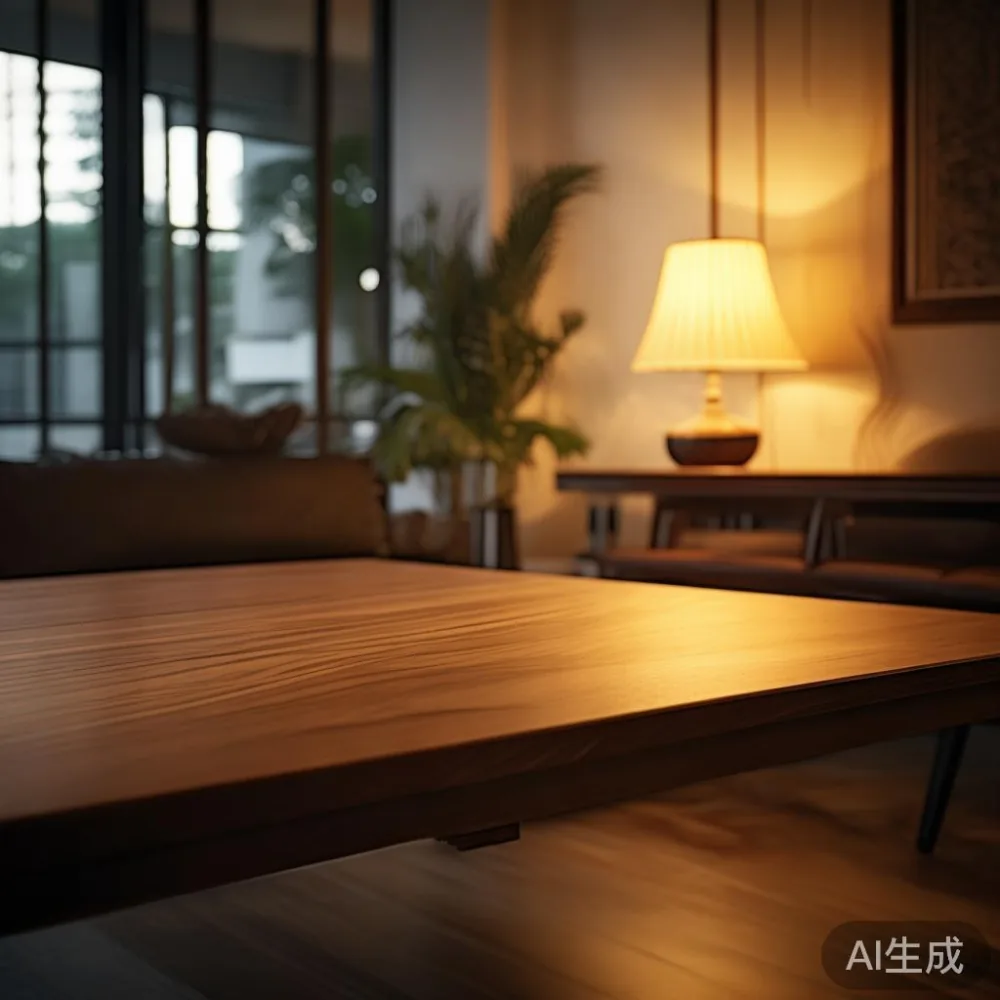
Why Singapore Humidity Is Harder on Wood Than You Think
Singapore sits near the equator, and the relative humidity (RH) in a Tampines condo rarely drops under 65% at night and climbs past 85% during the monsoon months of November through January. Indoor readings inside an air-conditioned unit usually drift between 55% and 70%, which is still well above the 40% to 55% range that furniture makers like MIDHILL calibrate their solid wood pieces for in the Foshan factory. Wood is hygroscopic: it absorbs and releases moisture to stay in balance with the air around it. When the surrounding RH rises 10 percentage points, a typical hardwood panel gains roughly 1% to 1.5% in weight as water vapour, and it swells across the width much more than along the length. A 120 cm-long oak coffee table top, for example, can move 2 to 3 mm across the grain in a single humid week.
The damage is rarely dramatic. It is the slow kind. A drawer slides 1 mm further than last year. A hairline gap appears between two planks that used to meet flush. The lower stretcher on a console grazes the floor skirting in August and floats free of it in February. None of this means the furniture is broken. It means the wood is doing its job — expanding and contracting — in a climate that pushes the upper limit of what most living-room pieces are designed to handle.
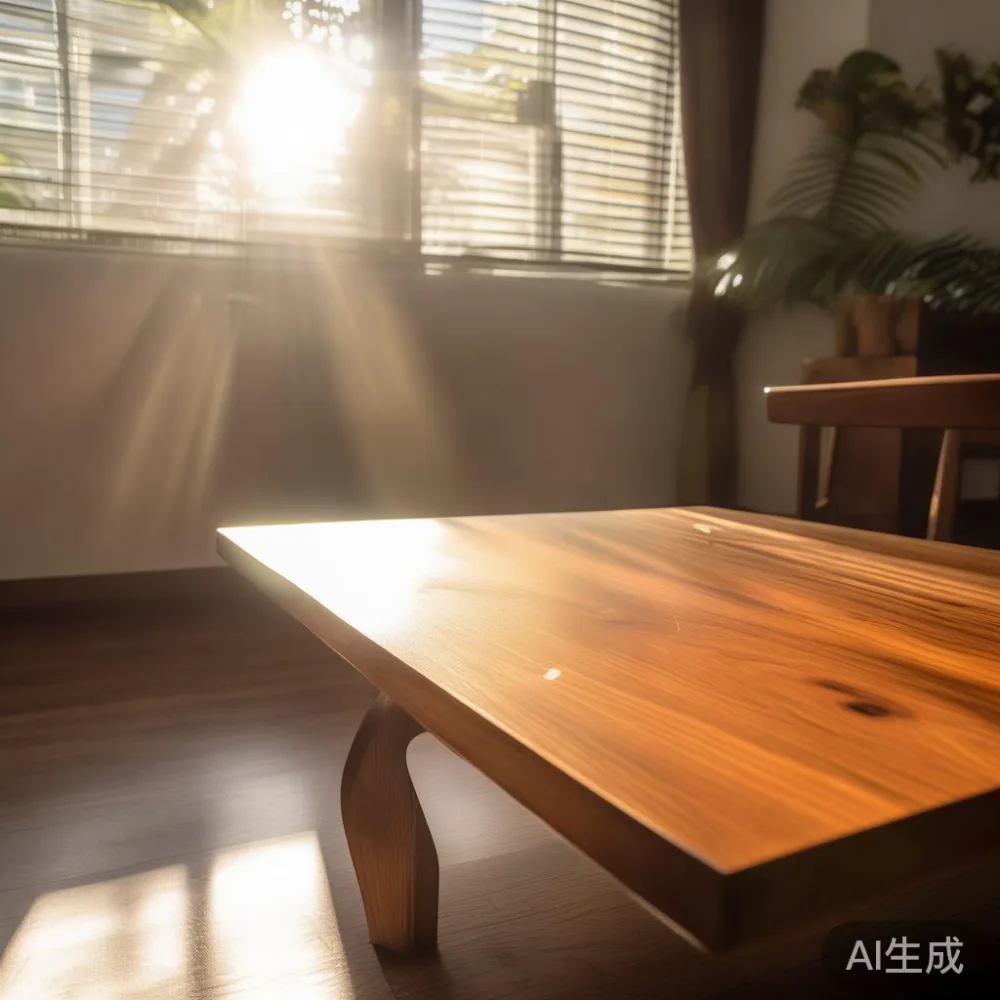
What Humidity Actually Does to a Solid Wood Coffee Table
Wood movement shows up in three predictable places on a coffee table. The first is the top. Flat-sawn planks are cut so the growth rings arc across the face, which means each board wants to cup slightly when humidity climbs. A well-constructed top uses breadboard ends or slotted splines to control that cup, but if the table was built without a kerf-and-pin design or a 6 mm wide x-baffle guarder gap around the perimeter, the edges will telegraph the panels and the centre will dome. The second is the apron and the stretchers below. Mortise-and-tenon faces against tenon cheeks need 0.5 mm of seasonal clearance, and if the joinery was glued too tight during the dry Foshan winter (RH often sits at 28% in the workshop in January), the shoulders can crack when the piece arrives in a 75% Singapore living room. The third is the finish. Polyurethane slows shelf movement; only hard wax oils let wood breathe. The 0.2 mm-thick lacquer film you sometimes see on a mid-range coffee table is a vapour barrier on top, but the underside is often unfinished, and that asymmetry is what makes tops bow when humidity swings.
For Singapore owners, this translates into a few practical observations. A coffee table placed 2 m from a window that faces west will see afternoon temperatures above 32 °C and direct sun on the surface; expect the sunlit half to dry and shrink while the shaded half holds its moisture. A coffee table sitting on a polished concrete floor in a Punggol condo will be cooler on its feet by 2 to 3 °C than the air around it, and that cooler surface condenses a thin film of water on humid nights. Both effects are small by themselves and large over a year.
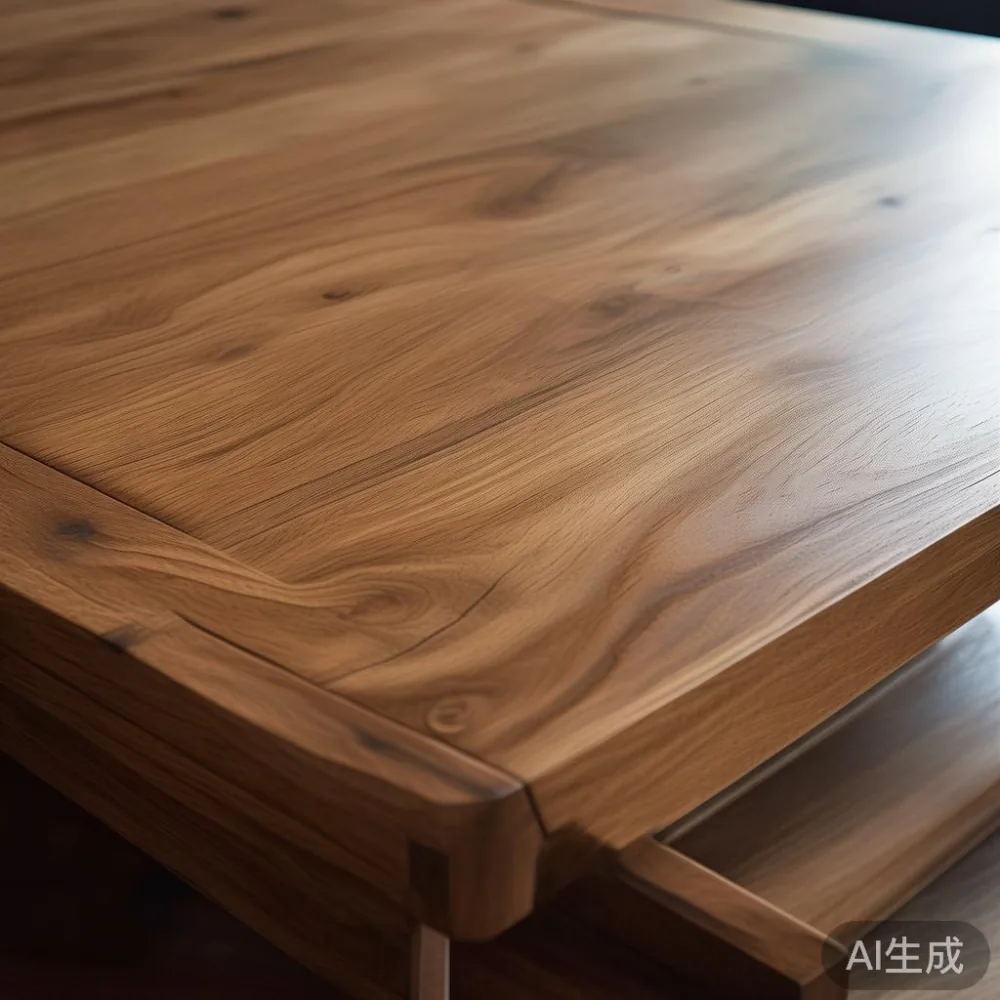
"Does My New Coffee Table Need Proving Itself Against the Weather?"
This is the question I get from buyers in Bedok and Tampines more than any other, and the honest answer is yes, but the proving period is short. A solid wood piece from a maker like MIDHILL, which has been kiln-drying European oak, North American walnut, and Burmese teak in its Foshan facility since 2008, arrives at roughly 8% to 10% moisture content. Singapore indoor conditions push it toward 12% to 14% within the first 6 to 10 weeks. During that settling window, owners sometimes see a few hairline checks at the end-grain of legs, a tiny lip at a breadboard edge, or a 1 mm step where two top boards come from different logs. None of this is a defect. It is the wood equalising with the room.
For buyers considering a top 10 light luxury furniture shortlist, this settling period is the single most important specification nobody prints on the spec sheet. A piece that has been acclimatised for 8 weeks in a Singapore warehouse will arrive with fewer surprises than one shipped direct from a colder climate in under 14 days. The same logic applies to buyers sourcing wholesale European light luxury furniture through a container programme: ask the supplier where the container was de-boxed and how long the stock sat in a climate-controlled room before delivery. A 2-week acclimatisation window is worth more than a 5% discount.
How to Style a French Wardrobe in Bedroom — and Why the Same Logic Applies to Your Coffee Table
There is a reason interior magazines keep publishing the same advice on how to style French wardrobe in bedroom: the answer is not about the wardrobe, it is about the 30 to 50 cm of breathing space around it. A French provincial wardrobe at 210 cm tall, 180 cm wide, and 62 cm deep weighs between 95 kg and 140 kg, and it needs 5 cm of clearance on the back panel so air can move behind it. The same rule governs a coffee table. The 60 cm to 80 cm wide coffee table in a 990 sqft HDB living room should sit at least 10 cm away from the solid wood sofa behind it, so that humid air can circulate on all sides. Pulling a coffee table flush against a 3-seater blocks the RH from equalising on the back edge, and you will see the back edge cup first.
Pairing a French provincial bed frame at 200 cm by 220 cm with a matching coffee table in front of the sofa creates the classic light luxury living room that buyers searching for the best French provincial sofa for 2026 are trying to capture. The look depends on negative space. Cramming a 130 cm coffee table into a 2.6 m wall-to-wall distance is a humidity mistake as much as an aesthetic one.
Five Habits That Keep a Coffee Table Flat in Singapore
The first habit is air movement, not air-conditioning. A ceiling fan running on low for 8 hours a day keeps the boundary layer of air next to the wood moving, which means the RH at the surface of the coffee table stays within 2 percentage points of the room reading instead of climbing to 80% inside a still corner. The third habit is to park a 250 g silica gel pack or two rechargeable dehumidifier cups inside the coffee table's lower shelf; they are SGD 12 to SGD 18 each at any Tampines Mall home store and they pull 30 to 50 ml of water per day out of the air pocket under a table top. The second habit is rotation: turn the coffee table 180° once a quarter so that the side facing the window faces the wall, evening out the seasonal cup. The fourth habit is to keep the coasters visible, not stuck inside a cabinet. A 4 mm-thick felt or cork coaster under a cold glass drops the temperature contrast at the surface from 5 °C to less than 1 °C, which is the difference between a condensation ring and a clean top. The fifth habit is a yearly check of the hardware: a 6 mm hex key, 90 seconds, and a quarter-turn on each of the four corner bolts of the apron will keep the top from racking when the humidity climbs.
None of these habits are expensive. A box of felt coasters costs SGD 9 to SGD 22, a rechargeable dehumidifier cup runs SGD 14 to SGD 28, and a decent hygrometer with a 20 to 95% range costs SGD 18 to SGD 45. The total spend under one beat is well under SGD 100, and it is the difference between a coffee table that looks new at year five and one that looks tired at year two.
What to Look for When You Buy a Coffee Table in Singapore
Three specifications separate a coffee table that survives Punggol air from one that does not. First, the moisture content at delivery should be 10% to 12%, measured with a pin meter at three points on the underside. Second, the joinery should be mortise-and-tenon on the apron and dovetailed on the drawer, with 0.5 mm to 1 mm of seasonal clearance at every shoulder. Third, the finish should be either a 0.05 mm to 0.1 mm hard wax oil on all six sides, or a 0.15 mm to 0.2 mm polyurethane on the top and sides with a wax-oil underside. Asymmetric finishes are the most common cause of cupping.
If you are looking at post-modern light luxury pieces — the kind with a 12 mm-thick marble top at 100 cm by 60 cm sitting on a solid ash base at 38 cm tall — the rules change slightly. Marble does not move with humidity, but the wooden base does. A marble table at 22 kg to 28 kg needs an MDF or plywood substrate at 6 mm to 9 mm thick glued to the underside, otherwise the marble will crack at a vein within 18 months in a non-air-conditioned balcony. The same applies to a Modern light luxury TV console at 180 cm wide with marble accents: ask whether the marble is resin-backed.
For buyers hunting under 2000 Coastal furniture, the construction is usually 95% MDF and 5% solid rubberwood, and the humidity tolerance is much lower. Mangwood can swell 1.5% across the grain at 80% RH, while solid oak swells 0.8% and solid teak swells 0.4%. A Coastal coffee table at SGD 850 in a Coastal variant will show movement in two monsoon periods that a full East Coast Park oak table at SGD 2,400 will not show in five. The price difference is the price of stability.
Where MIDHILL Fits Into a Singapore Living Room
MIDHILL ships solid wood coffee tables, dining tables, bed frames, wardrobes, and nightstands from Foshan to Singapore through a 28 to 35 day sea freight cycle, with de-boxing and acclimatisation at a Singapore warehouse before delivery. The standard structural warranty is 10 years on joinery, and lifetime refinishing is included for pieces bought through the direct programme. For buyers comparing pieces across dining table, bed frame, wardrobe, nightstand, and marble table categories, the same humidity logic applies: pick solid wood with a balanced finish, allow 5 cm to 10 cm of clearance on all sides, and budget SGD 80 to SGD 120 for the consumables that protect the piece.
The wider Foshan furniture export market has grown sharply since 2008, and Singapore remains one of the more demanding destinations because the climate stresses every joint in the piece. A coffee table that survives 10 years in a Tampines HDB is a coffee table that will survive almost any climate on earth, and that is the standard worth buying for.