What Actually Drives the Price of a Solid Wood Coffee Table in Singapore
I spent a Saturday morning at the Tampines Hub furniture showcase, tape measure in hand, walking between three different solid wood coffee tables priced S$890, S$1,650, and S$2,400. They looked similar in the brochure. Up close, the cheapest one weighed 18 kg, the middle one 34 kg, and the heaviest one 42 kg. That difference in mass, and what caused it, turned out to be the single clearest window into how solid wood furniture is actually priced. If you are shopping for a coffee table for a 4-room HDB in Punggol or a condo in Tampines, here is what your money is really paying for.
Wood species: where the price gap genuinely begins
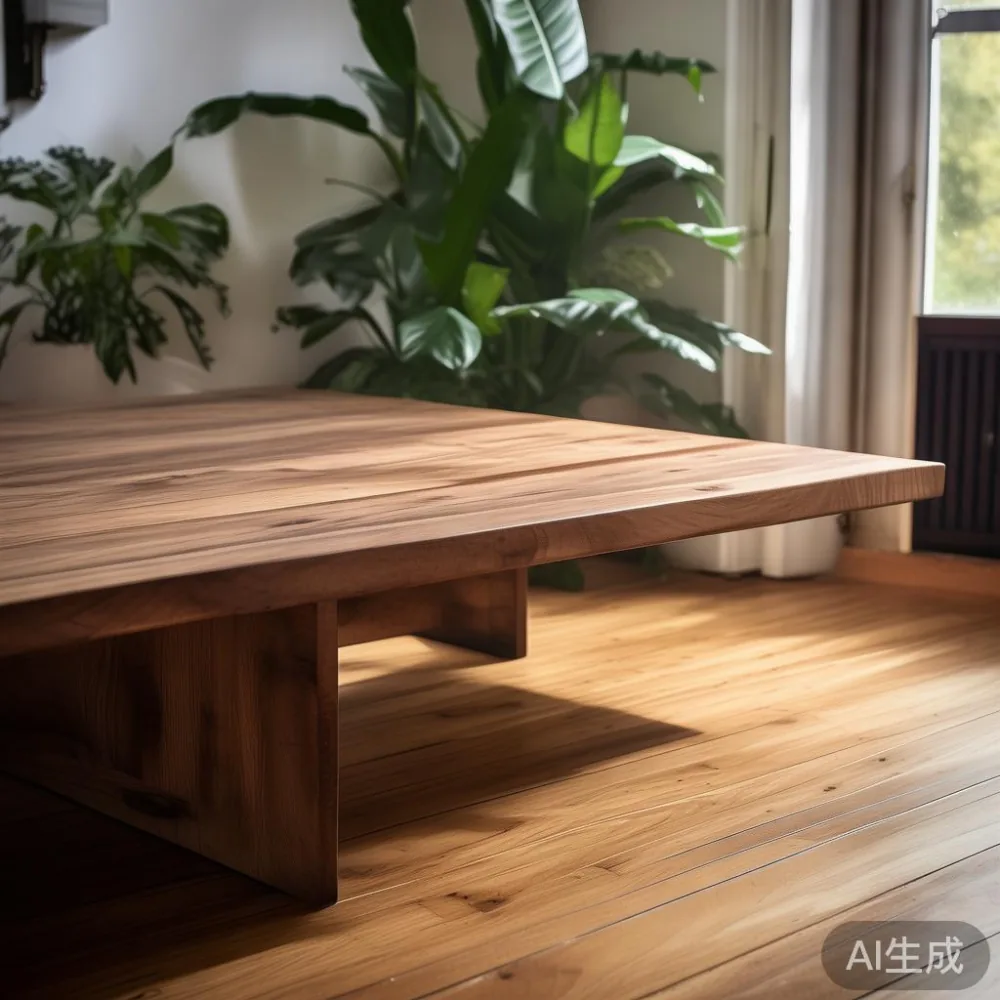
Two coffee tables built with identical dimensions can vary by S$1,000+ simply because of the species inside the frame. Rubberwood, plantation-grown and abundant across Southeast Asia, is a common starter option; it is dense enough to handle daily use and is typically the species behind entry-level price points around S$600 to S$1,200 for a 120 cm coffee table. Ash and walnut sit one rung higher, often S$1,400 to S$2,200 for the same size, because they machine cleanly and take a very smooth finish. White oak and North American black walnut, both imported, often push past S$2,500 once you add a marble table top or a thicker apron.
I asked the showroom manager at one of the Tampines outlets why two walnut coffee tables from neighbouring stalls were S$300 apart. He lifted one end of each. The heavier one had a 5 cm solid top instead of a 3 cm one, and the legs were 8 cm thick instead of 5 cm. Same species, twice the timber. That is why asking "what wood" is a more useful question than asking "what style."
Does the construction method really change the price?
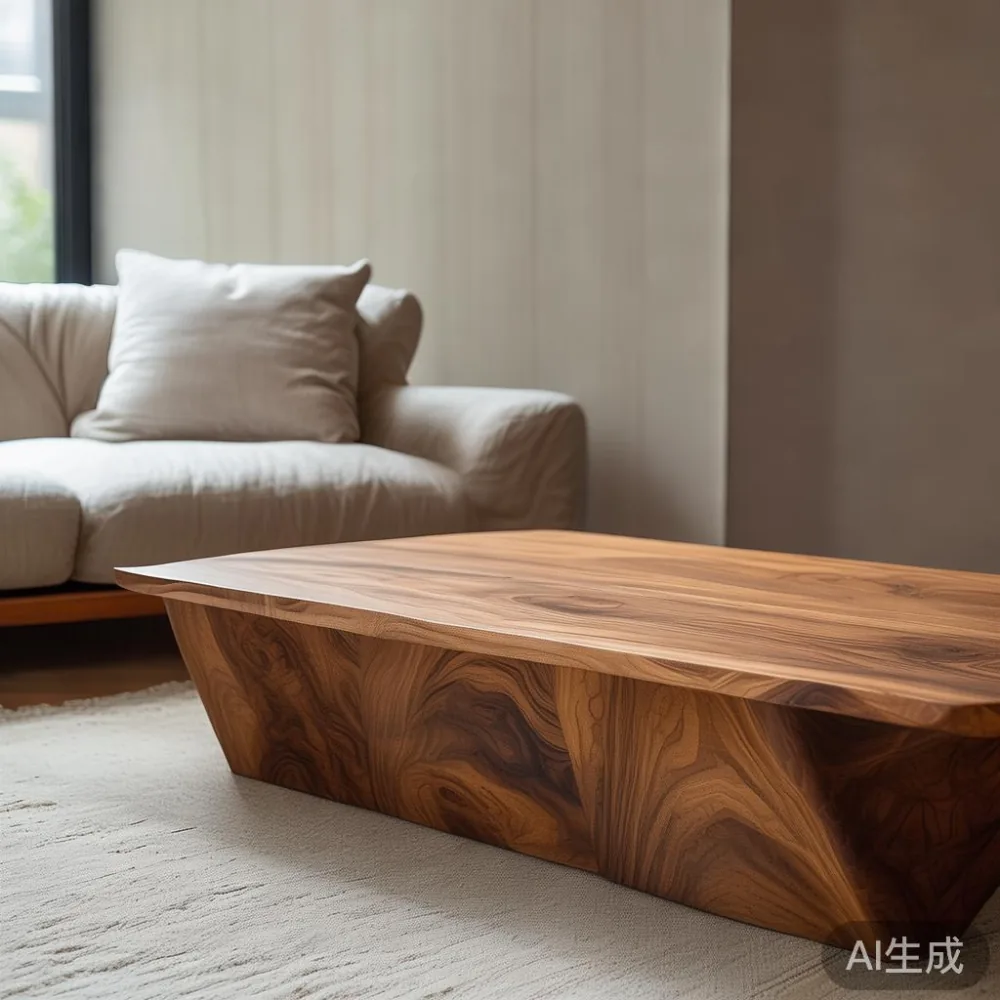
Yes, by 20% to 40% in most price lists I have seen. A solid wood coffee table can be built with mortise-and-tenon joinery, dowelled joinery, or simply screwed-and-glued corners. Mortise-and-tenon requires a CNC machine, a skilled operator, and extra production time. On a Foshan production floor, that adds roughly S$180 to S$350 per piece in labour and machine cost. Dowel joinery is the middle option. Corner screws with glue is what holds most sub-S$800 pieces together, and it is also what loosens within three to five years in a humid Singapore home.
This matters for lift access too. A fully solid, mortise-and-tenon coffee table built in white oak can weigh 45 kg to 55 kg. That is a two-person carry through a typical HDB corridor, and the lift at a Bedok 4-room block is usually 1.0 m wide by 1.4 m deep, internal, so a 130 cm long coffee table has to be tilted vertically to fit. Heavier, denser construction means more awkward handling, and any brand that ships from China with two-person delivery has built that cost into the price.
Why does a "light luxury" coffee table cost more than a plain one?
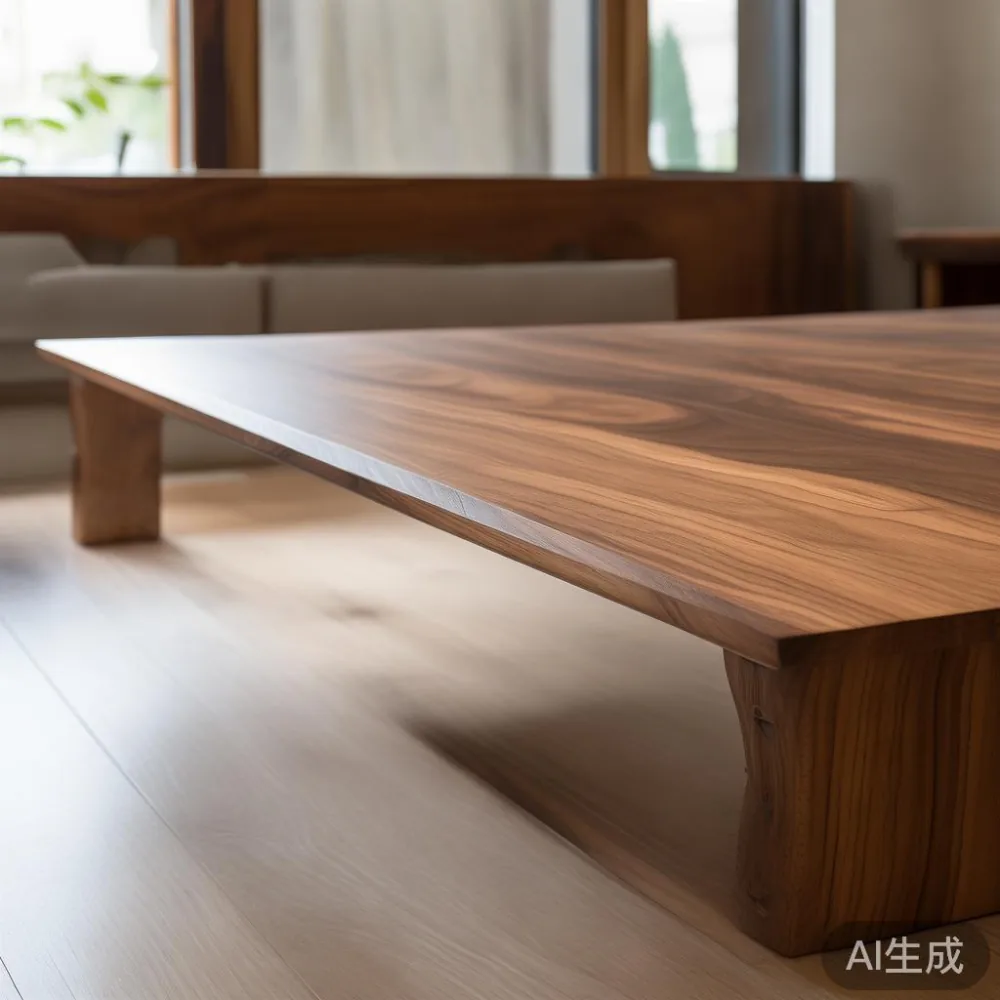
The phrase light luxury covers three broad directions in the market right now: French light luxury (curved edges, cabriole-inspired shapes, brushed brass or champagne hardware), American light luxury (cleaner lines, shaker-inspired panels, walnut or white oak with blackened steel), and post-modern light luxury (mixed materials, geometric bases, often combining a marble table top with a solid wood apron). Each adds cost in a specific place. Curved edges require steam-bending or CNC 5-axis routing, which adds S$200 to S$500 per piece. Brushed brass hardware costs S$45 to S$120 per set versus S$15 to S$30 for standard black or chrome. A genuine marble table insert in a 100 cm coffee table adds roughly S$600 to S$1,400 versus a stone-veneered alternative.
For shoppers browsing a MIDHILL French provincial sofa showroom, the same logic shows up across categories. A provincial sofa at S$3,800 versus a plain contemporary sofa at S$1,900 is not just upholstery; it is hand-finished carving on the frame, a higher fabric grade, and eight-way hand-tied springs in some lines. The premium you see on a light luxury coffee table is built from the same line items, just at a smaller scale.
How much of the price is finish, lacquer, and hardware?
More than most buyers expect. A multi-step open-grain finish on ash, where the wood is sealed, sanded, stained, sealed again, sanded again, and topped with two coats of water-based matte lacquer, uses six to eight labour hours per piece. A single-coat spray finish on the same shape uses one to two hours. On a Foshan production cost sheet, the difference is around S$120 to S$220 per unit, which on a S$1,500 coffee table is roughly 10% to 15% of the retail price.
Hardware is smaller but visible. Soft-close drawer runners on a coffee table with a lift-top mechanism cost S$25 to S$60 per pair from European suppliers, versus S$6 to S$12 for a basic friction runner. A 120 cm lift-top coffee table from a Foshan workshop with soft-close hardware, a real solid wood frame, and a multi-step finish lands around S$1,500 to S$2,200. The same shape with shortcut finishing and basic hardware lands around S$900 to S$1,200.
Is a light luxury bed worth it, or is the bed frame where I should save?
This is a question that has a different answer for a 4-room HDB versus a private condo. For a 4-room flat in Punggol where the master bedroom is typically 3.2 m by 3.6 m, a king-size light luxury bed frame at S$2,800 to S$4,200 anchors the room visually, and a weak frame makes the whole space feel temporary. A flat-pack veneer frame at S$700 to S$1,200 does the same sleep job but lowers the visual ceiling. If your wardrobe and nightstand are also solid wood, the bed frame is the one piece that should match their weight and finish, or the room reads as half-finished.
The other factor is mattress support. A solid wood slatted bed frame with 12 to 16 properly spaced beech slats (no more than 6 cm apart) protects a S$2,000 mattress for longer than a frame with 6 broad slats. That is roughly S$100 to S$200 of extra cost on the bed frame protecting a S$2,000 investment on the mattress. The math is usually obvious.
How to choose European wardrobe pieces without overpaying?
European wardrobes get their premium from panel thickness, soft-close hardware, and matching internal fittings. When you ask how to choose European wardrobe pieces for a Singapore home, three checks cover most of it. First, confirm the side panels are at least 18 mm thick, not 15 mm. Second, confirm the hinges are 110-degree or 165-degree soft-close from a named brand (Blum, Hettich, DTC), not unbranded. Third, check whether the back panel is 6 mm MDF with proper fixings, or 3 mm hardboard stapled on. A 240 cm wardrobe with 18 mm sides, Blum soft-close on three doors, and a real 6 mm back panel lands around S$2,400 to S$3,200 in solid wood configurations. A same-shape wardrobe with shortcuts lands around S$1,500 to S$1,900 and feels lighter to open.
For homeowners in a Tampines 5-room flat with a 2.4 m ceiling, a 240 cm wardrobe is the practical ceiling height. Anything taller requires a shorter top section or a custom step, which adds S$200 to S$450. The corridor width in most HDB blocks is 1.2 m to 1.5 m, so a wardrobe delivered flat-packed in 80 cm cartons is fine, while fully assembled 240 cm wardrobes have to be brought in vertically, which is why some brands charge a S$120 to S$200 difficult-access fee for walk-ups above the fourth floor without a service lift.
What about dining tables, nightstands, and matching pieces?
A solid wood dining table at S$1,800 to S$3,500 for a 6-seater in ash or walnut is the centrepiece that anchors a dining area. The same logic applies as the coffee table: thicker top, mortise-and-tenon legs, and a multi-step finish push the price up by 30% to 50% over entry-level. A matching nightstand at S$450 to S$900 each completes the room visually, and buying the nightstand as part of a bedroom set often saves S$150 to S$300 per pair versus buying them separately six months later, which is what I did and ended up with a slightly mismatched finish.
One last tip from my Tampines visit: weigh the piece in your mind against your room size. A 130 cm solid wood coffee table weighing 42 kg is right for a 3.6 m living room wall in a Punggol 4-room flat. A 110 cm coffee table weighing 28 kg is right for a 3.0 m wall in a 3-room flat. The heavier piece does not just cost more; it also signals quality through mass, and in light luxury interiors, that signal is part of what you are paying for.
How long should a solid wood coffee table actually last?
A well-made solid wood coffee table should hold its joinery for 15 to 25 years in a Singapore home with air-conditioning running most of the day. The relative humidity in a Singapore HDB sits around 60% to 80% most of the year, which is the upper limit for stable solid wood. Pieces built with proper kiln-drying (moisture content brought to 8% to 10% before assembly) handle this range well. Pieces built with green wood or poorly dried timber cup, crack, or develop movement at the joints within two to four years. The S$500 to S$1,000 you save on the cheaper piece is typically the S$500 to S$1,000 you spend replacing it within a decade.
This is why brands that publish a 10-year structural warranty, offer lifetime refinishing, and ship with two-person delivery are pricing the service, not just the wood. Refinishing a S$1,800 coffee table at the five-year mark costs roughly S$180 to S$320 in a Singapore workshop, so a lifetime refinishing offer is a real S$400 to S$700 value across 20 years. Free shipping above a set order amount, often S$500 equivalent, is the same idea: you are paying for logistics that protects the piece from lift scratches and corridor bumps. A solid wood wardrobe or a MIDHILL bed that arrives with corner damage on day one is no longer a bargain, and that risk has a price.
Where does the final price for a Singapore buyer actually land?
For a 110 cm to 130 cm solid wood coffee table in ash, walnut, or white oak, with mortise-and-tenon joinery, a multi-step finish, soft-close hardware (on lift-top models), and two-person delivery to a HDB in Tampines or a condo in Punggol, the realistic Singapore price band runs S$1,400 to S$2,800 before GST. With Singapore's 9% GST added, the same piece lands at S$1,525 to S$3,050. Delivery to a fourth-floor walk-up in Bedok without a service lift typically adds S$80 to S$150. Difficult-access surcharges above S$200 are a red flag and usually mean the piece is being subcontracted to a third-party logistics company with no training on the brand's specifications.
For buyers weighing a European light luxury dressing table, a Japanese-style platform bed, or a minimalist wardrobe as part of the same project, the same five questions apply across categories: what wood, what joinery, what finish, what hardware, what warranty. A best Minimalist wardrobe for 2026 will still be a solid wood cabinet on the inside with a clean outside, and the same S$300 to S$800 spread between a shortcut version and a properly built version shows up there. If you want to know how to style Japanese bed in bedroom without losing the calm look, the answer usually begins with a low solid wood platform, neutral bedding, and one piece of dark wood as the anchor.
So when you stand between two coffee tables that look similar in a showroom, the price difference is wood species at the bottom, joinery and finish in the middle, hardware and warranty at the top, and logistics running through all of it. Ask the showroom staff to lift one end of each piece, ask to see the underside of the top, ask what the moisture content was at assembly, and ask what the warranty covers. The answers will tell you which piece is worth S$1,400 and which is worth S$2,400, and you will walk out of Tampines Hub knowing exactly why.