Styling a Small Singapore Apartment: How the Right Coffee Table Sets the Tone
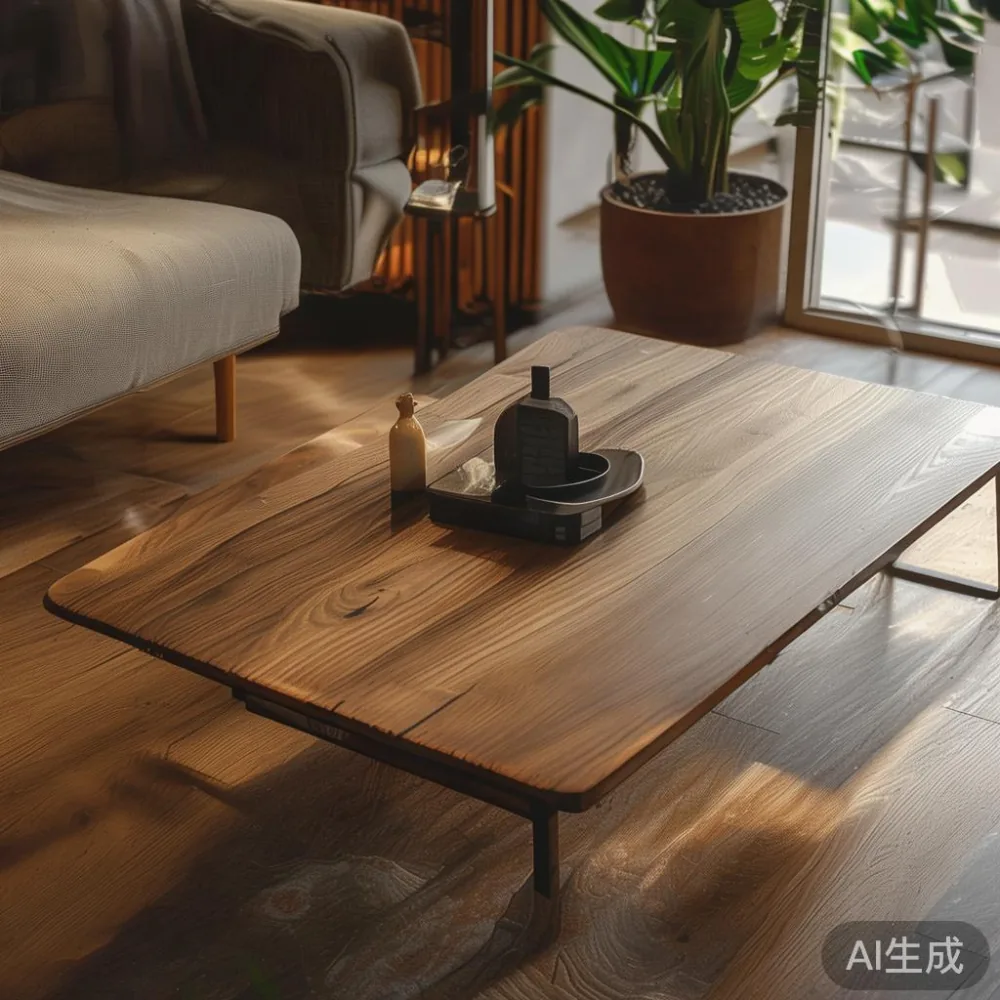
I spent a Saturday last month walking through three flats in Punggol with a client who had just moved into a 65 sqm two-bedder. Each unit came with the standard HDB layout, the same bay windows, the same narrow corridor leading from the front door. What struck me was how quickly the rooms shrank the moment a wrong-sized piece was placed in the middle. The owners had ordered a coffee table that was 120 cm long and 70 cm wide — far too large for a 2.4 m sofa to rest on. Within ten seconds of visualising the layout on graph paper, the living room felt half its true size. Replace that single piece with a 90 cm by 50 cm solid-wood coffee table with a slim profile, and the same room breathes again. That single switch has become my starting point whenever a Singaporean client asks me to style a compact home without making it feel crowded.
Why the Coffee Table Is the Heart of a Compact Singapore Living Room
In a Tampines four-room flat, the living room is typically about 3.6 m wide and 4.2 m deep — roughly 15 sqm once you account for the sofa depth and walking corridor. The standard HDB walking corridor between pieces is 80 cm, but the practical minimum for a two-person household is 70 cm. If your coffee table eats into that corridor, every trip to the kitchen becomes an elbow-knock.
Get the dimensions right first, then style around them. A piece measuring 90 cm to 110 cm long, 50 cm to 60 cm wide, and 38 cm to 45 cm tall will work behind a 2.2 m to 2.4 m three-seater solid wood sofa in most HDB layouts. Leave 35 cm to 45 cm between the sofa seat and the table edge so a lap tray or knees have somewhere to rest. That was the rule I applied in my client's Punggol home, and we built the rest of the room around it rather than the other way around.
Which Coffee Table Shapes Work in HDB Flats and Condos?
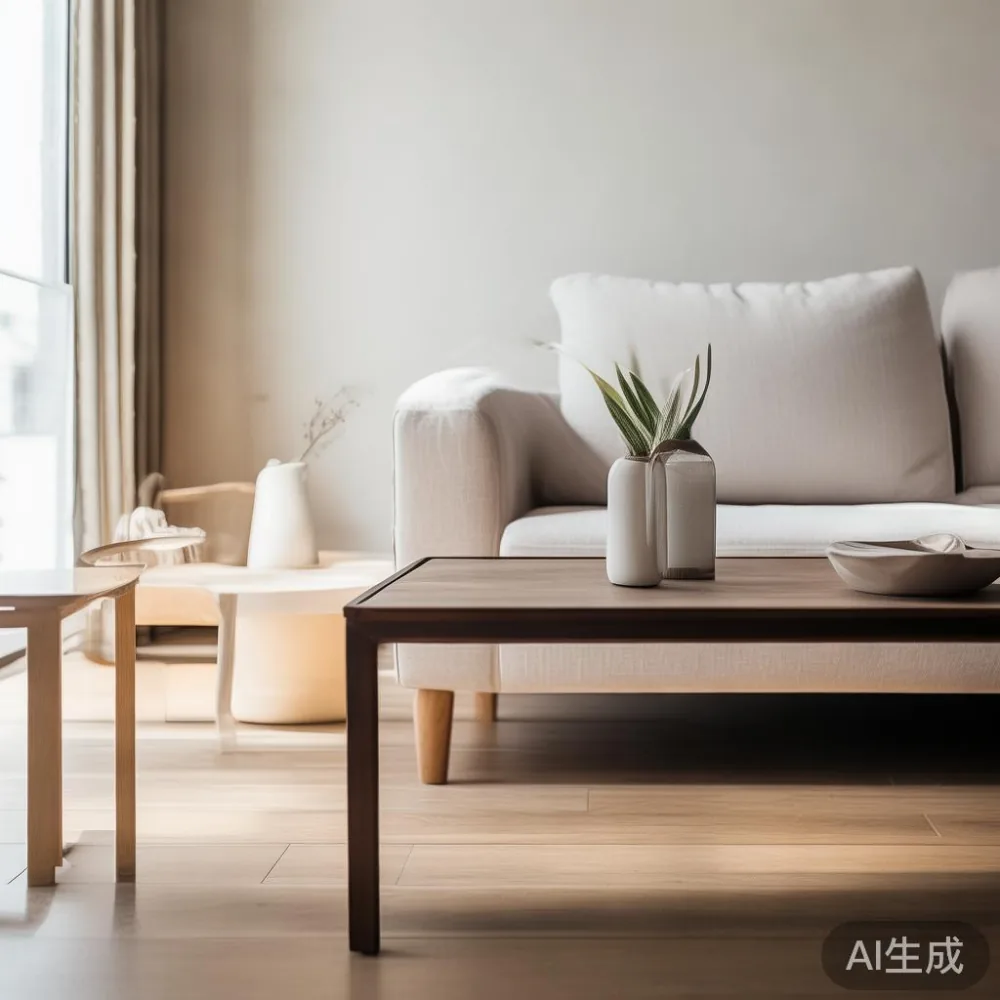
Round and oval coffee tables win on narrow corridors. A 90 cm round table cuts the same visual weight as a 100 cm rectangular table but has no hard corners to clip a passing hip. Rectangular shapes still work in newer condos around the Bedok Reservoir area where the living room extends past 4 m in width, but for a typical 3.6 m HDB width, round shapes always feel calmer.
Height matters more than Singapore buyers realise. The general rule is the table top should sit at the same height as your sofa seat, give or take 2 cm. If your solid wood sofa is 42 cm to the seat and your coffee table is 32 cm, you are forcing everyone to bend downward each time they set a mug down. Lift the table by 8 cm and the gesture becomes natural.
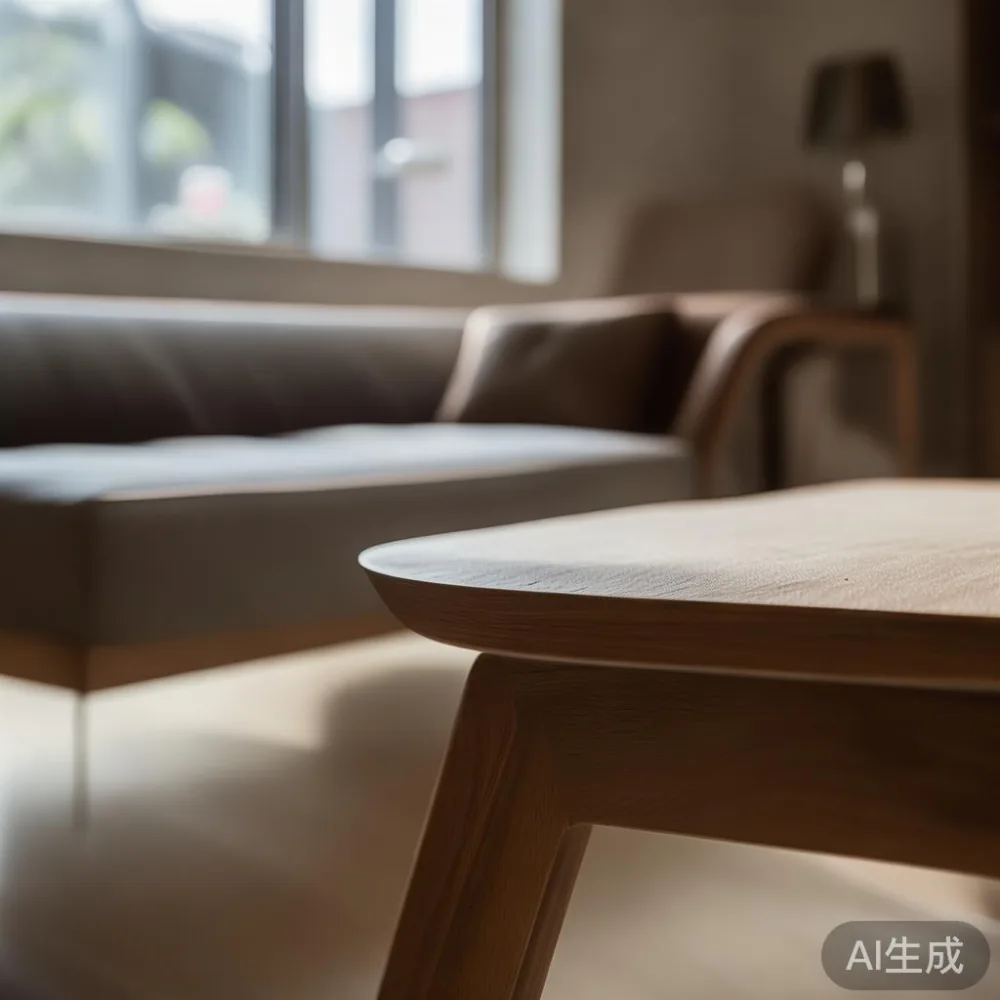
For materials, a solid rubberwood or ash frame with a thin marble table top around 18 mm thick keeps the visual weight low. A heavier marble slab at 30 mm feels impressive in a showroom but reads bulky at home, especially once you add a tray, a candle, and a book.
How Do You Style a Coffee Table Without Making It Look Cluttered?
The trick is grouping — and limiting yourself to three objects or fewer. I follow a tray + one focal object + one soft accessory rule. The tray (around 35 cm by 25 cm) corrals the remotes and coasters. The focal object might be a small vase with two stems of dried eucalyptus, around 22 cm tall. The soft accessory is a hardback book 2 cm to 3 cm thick, placed flat.
That is it. Anything beyond these three items turns into a shrine to clutter, especially in a flat under 70 sqm. One of my colleagues in the Jurong office styled a 55 sqm BTO around this exact rule and the homeowner told her the table looked "like a magazine" within a week. The same three-piece formula works for a marble table, a wooden table, or a glass-topped table — the tray acts as the visual anchor regardless of the surface beneath.
Clear the surface at night, even if you are leaving for the kitchen only. Smaller living rooms magnify visual noise under warm 2700K bulbs. A clean coffee table top reads as 10 to 15 extra centimetres of depth to the eye.
Lighting, Rugs, and the Surrounding Pieces That Make a Small Room Feel Larger
Once the coffee table is placed, you work outward. A rug should anchor the seating zone, with the front legs of the sofa resting on the rug and the coffee table fully inside the rug boundary. In a typical HDB, that means a 200 cm by 300 cm rug laid with the short edge along the TV console wall. Anything smaller and the rug looks like a bath mat.
Skip the oversized floor lamp in a flat under 70 sqm. A 110 cm arc floor lamp behind the sofa corner eats into the walkway, but a slim 140 cm wall-mounted swing-arm lamp gives the same reading light without using any floor footprint. Pair that with a single 35 cm table lamp on a side console near the window, and the layered effect reads comfortable without crowding the room.
Colour also does heavy lifting. Most Singaporean clients still default to all-white walls, which is fine, but the living room gains depth when the wall behind the sofa carries a soft greige (warm grey-beige) at NCS S2005-Y50R, while the other three walls stay white. The contrast makes the back wall recede by about 20 cm visually.
Can the Rest of the Home Follow the Same Logic?
Yes — the same three-piece, narrow-profile logic applies across a flat. In the dining zone, a 120 cm to 140 cm solid wood dining table seats four comfortably in a HDB dining corner, and pairs with post-modern light luxury dining chairs under 50 cm wide. If you want a touch of the French light luxury look, a slim brushed-brass pendant over the dining table brings the warmth without taking up any surface space. A solid wood bed frame in ash or walnut, sized at 160 cm by 200 cm for a standard queen, leaves 60 cm of walking room on each side in a 3.2 m master bedroom — that is the minimum you need to make a bed daily without bumping into the wardrobe. For the wardrobe itself, a Japandi-inspired flat-front design from floor to ceiling (240 cm tall) draws the eye upward and adds about 30 percent more hanging storage than a freestanding piece — a good starting point if you are researching how to style Japandi wardrobe in apartment layouts without sacrificing the calm, pared-back feel.
Pair that bed with two 45 cm wide nightstands under 50 cm deep, and the proportions hold. Marble-topped nightstands with slim metal frames are common in American light luxury showrooms, but in Singapore's humidity, a sealed solid ash version resists swelling better across the wet months from November through February.
Sizing, Pricing, and What Singapore Buyers Should Expect in 2025-2026
A solid wood coffee table from a Foshan-based maker like MIDHILL typically runs from S$520 to S$1,180 in Singapore retail, depending on whether you choose a plain ash top or a marble-veneered top. That bracket reflects landed pricing after 9% GST, shipping from Guangdong, and a 10-year structural warranty. Lift access in most HDB blocks allows pieces up to 220 cm long and 80 kg in the cabin, so a flat-pack coffee table under 35 kg in two boxes usually clears the lift doors without needing the service lift. Condo corridors around 1.2 m wide accept a 90 cm by 60 cm assembled table carried vertically.
If you are sorting through a long list when comparing top 10 European furniture brands against Chinese solid-wood makers, the key benchmarks to weigh are density (rubberwood at 560 kg/m³ versus pine at 420 kg/m³), joinery (mortise-and-tenon versus dowel), and finish (water-based polyurethane versus nitrocellulose lacquer). MIDHILL works with mortise-and-tenon on its core tables, which is a build quality many European catalogues charge a premium for.
Free shipping above US$350 translates to roughly S$480 in cart value. Below that, expect a S$40 to S$80 delivery fee depending on whether you are on the ground floor of a Punggol walk-up or the 18th floor of a Tanjong Pagar condo. Returns inside 14 days are easy if you keep the original foam wrap — keep at least one box for two weeks just in case.
Putting It All Together in a Real HDB Layout
Returning to my Punggol client from the opening: we ended up with a 95 cm round solid ash coffee table at 42 cm tall, paired with a 2.2 m three-seater solid wood sofa in oat boucle, a 200 cm by 290 cm wool rug in undyed ivory, a slim 140 cm swing-arm wall lamp, and a single brass picture light above a framed 70 cm by 100 cm canvas over the TV console. The total styling spend landed around S$4,200 including the sofa, the table, lighting, and a refurbished TV console from a Tampines carpentry shop.
That room now reads spacious even though the square meterage is identical to the empty flat we walked into at 10 am that morning. The difference was not a bigger budget — it was choosing each piece to suit the 3.6 m width first, then styling second. If you want a single takeaway, treat your coffee table as the centre of gravity for the whole living room. Get the dimensions right, leave 70 cm to 80 cm of walking corridor on every side, limit styling to a tray plus two objects, and the rest of the small apartment falls into place naturally.
For shoppers still mapping out the wider home, the same logic scales. A Modern light luxury bed in a low-profile ash frame paired with a slim oak nightstand keeps the master bedroom airy. A dining set anchored on a 130 cm solid wood table reads as light luxury for dining room without crowding a 2.8 m wide HDB dining corner. And if you are browsing for a Modern for small living room concept across sofa, table, and storage, look for makers who publish density figures, joinery photos, and a warranty longer than three years — those three signals separate a piece built for ten years from one built for the next move. MIDHILL, the Foshan workshop I visited in 2024, fits that brief on every count.