How Southeast Asian Humidity Affects Your Solid Wood Coffee Table (and What Tampines, Bedok, and Punggol Homeowners Should Know)
I learned this the hard way last month. A client in Bedok called me in a panic because the oak coffee table she had bought only eight months earlier had developed a 4 mm gap along one long edge. Her aircon ran at 22°C most evenings, but her corridor-facing window leaked humid afternoon air whenever the wind shifted. She had paid S$1,280 for what she thought was a solid wood piece, and now she was staring at a hairline crack that looked like a desert riverbed. When I inspected the table, the underside was dry as paper, the top was slightly tacky to the touch, and the drawer faces had cupped inward by roughly 2 mm. None of this had to happen. Understanding how humidity behaves in Singapore — and how a properly built coffee table is supposed to respond to it — is the difference between a piece that lasts ten years and one that falls apart before the third Chinese New Year.
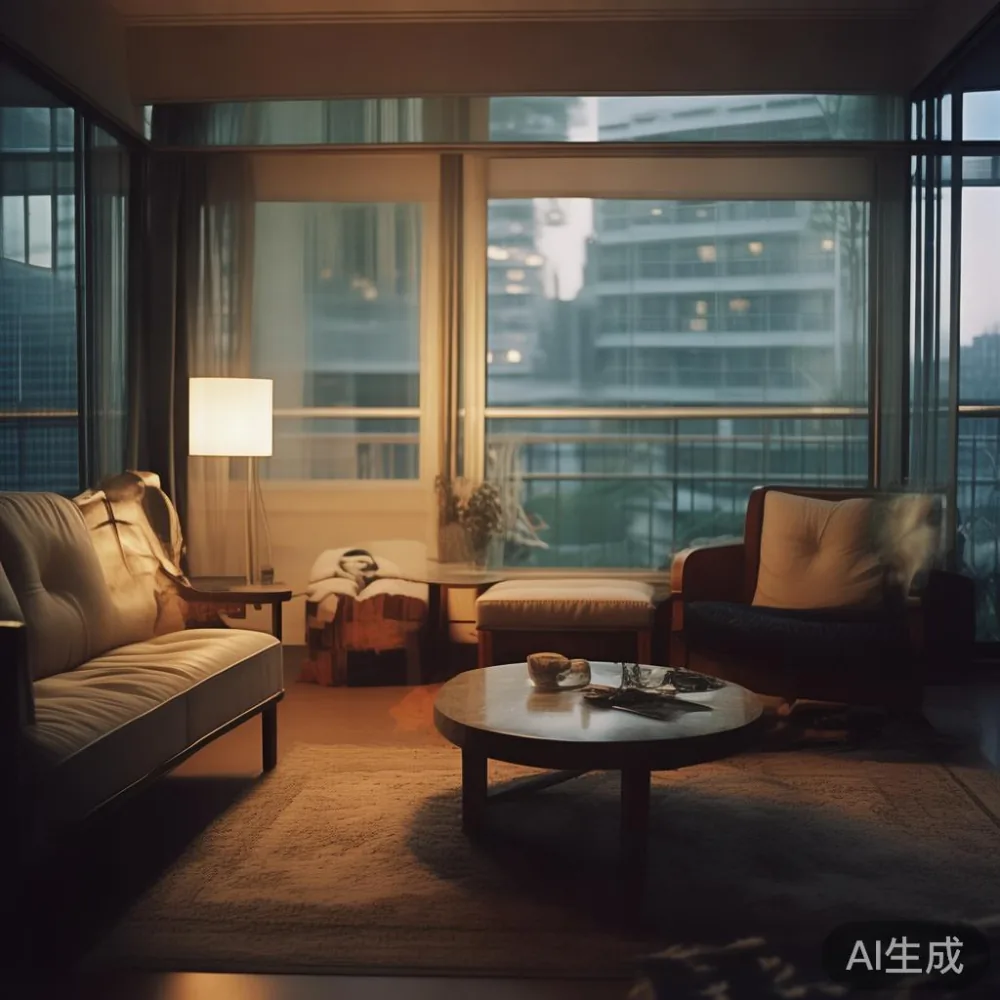
Why Singapore's humidity is a different beast from a temperate climate
Singapore sits between 1° north of the equator, and our daily relative humidity (RH) routinely cycles between 65% in air-conditioned rooms and 92% on a wet afternoon in Tampines after a Sumatra squall passes through. Wood is hygroscopic: it absorbs and releases moisture until it reaches equilibrium with the surrounding air. For a 120 cm × 60 cm × 45 cm coffee table made from solid ash, that equilibrium movement translates into dimensional change of roughly 1.5% across the grain for every 10% swing in equilibrium moisture content (EMC). On a flat panel, 1.5% on a 120 cm width equals about 1.8 mm of expansion or contraction. That is enough to open a visible gap at a mitre joint, or to push a drawer face out of square by 2 mm — exactly what I saw in Bedok.
Temperate-climate furniture is often built and dried for a 40–55% RH environment. Drop that same piece into a Punggol condo where afternoon windows are left ajar and you are in effect asking a Scandinavian-dried board to live in a tropical greenhouse. The problem is not the wood itself; the problem is the mismatch between how the piece was dried, how it was joined, and how the customer uses it.
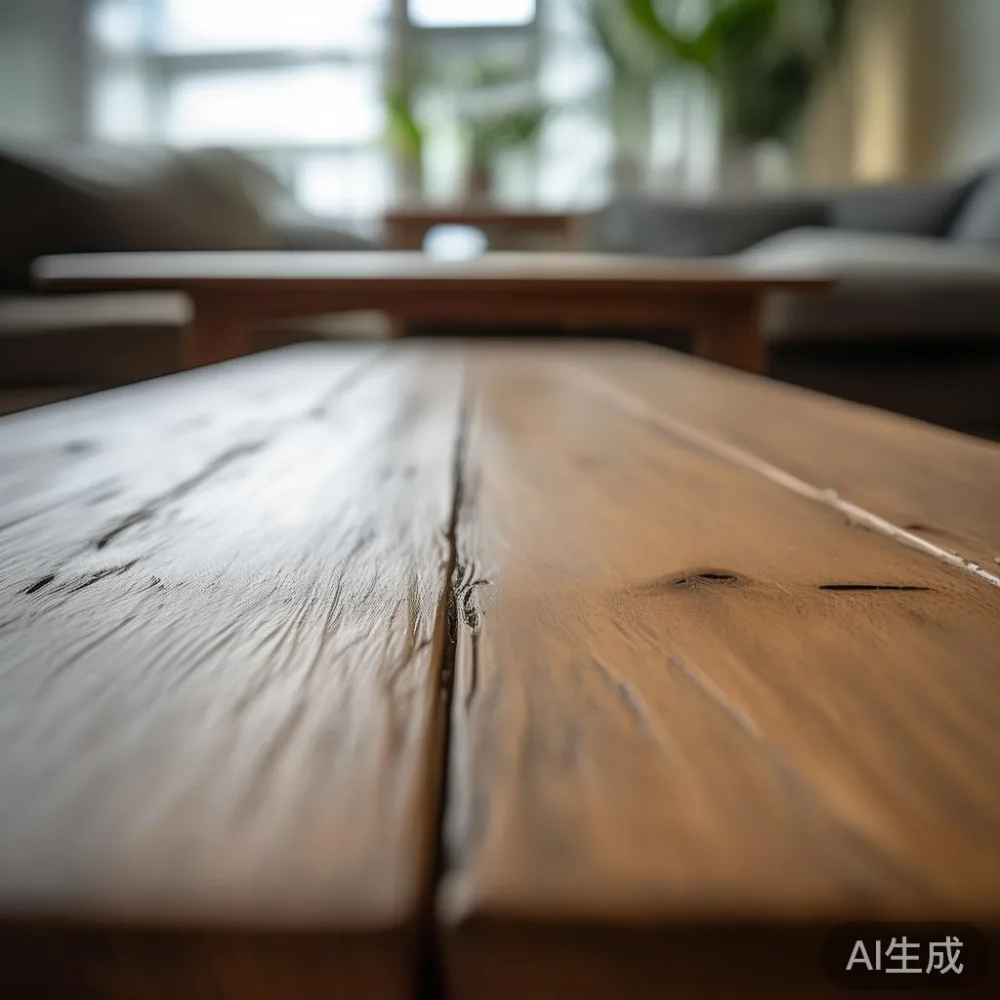
Is solid wood really more stable than veneer in our climate?
This is the question I get asked at least three times a week, usually by HDB owners in four-room flats around Punggol who are staring at a S$400 engineered-wood coffee table and a S$1,650 solid wood one, trying to justify the difference. Here is the honest answer: a properly dried, properly joined solid wood coffee table is more forgiving in our climate than a thin-venered MDF piece, but only if it has been dried to roughly 8–10% moisture content and joined in a way that allows the top to float. A solid ash plank 4 cm thick will move with humidity; a 0.6 mm ash veneer glued to an MDF core will crack, peel, or bubble when the MDF absorbs moisture through the unsealed edges — and the edges of a coffee table are exactly where condensation drips from a cold drink in our weather.
I keep a reference slab of European oak in my workshop that has been sitting at ambient humidity in Singapore for three years. It measures 220 cm × 25 cm × 5 cm. Its width has shifted by 4 mm between the driest February afternoon and the wettest October morning. That is the real number — wood moves, and it moves more in Singapore than it does in Frankfurt. The job of good furniture design is to make that movement invisible: breadboard ends on a solid wood dining table, floating tops secured by slotted brackets, drawers that fit with 1.5 mm of clearance on each side instead of 0.5 mm, and finishes that slow moisture exchange instead of sealing it in.
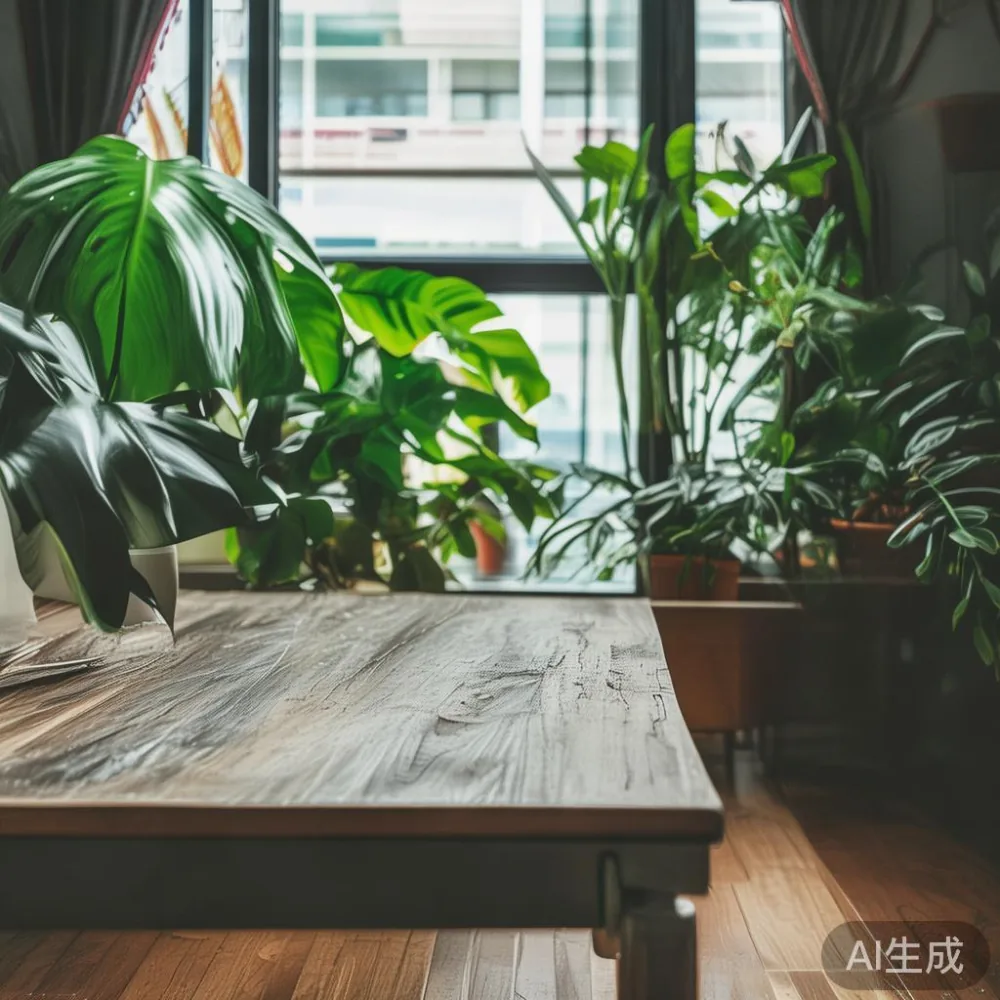
What about engineered boards, plywood, and marble tops in HDB conditions?
Plywood is genuinely useful here. A 12-ply birch plywood panel with a 2 mm solid oak face is far more dimensionally stable than a single 4 cm solid plank, which is why many higher-end designers use it for wardrobe doors and large bed frame headboards in our market. For a coffee table specifically, I lean toward either a fully solid top with traditional joinery plus a hardwax-oil topcoat, or a plywood-core top with a marble or sintered stone surface if the homeowner is set on a stone look. A 90 cm round marble table on a solid ash base, for instance, gives you the coolness of stone (which is indifferent to RH) bonded to the warmth of wood at the legs, with the wood doing the small movement and the stone doing none.
Watch out for three things I see again and again in condo corridors. First, MDF cores wrapped in 0.3 mm laminate — they swell within 18 months when the lift-well humidity spikes during the monsoon. Second, rubberwood or poplar that was kiln-dried for the Chinese domestic market at 6% MC and never re-acclimatised before being glued up; the moment it enters your flat, it starts absorbing and the joints shift. Third, metal-to-wood contact points without a felt or cork gasket; the metal does not move, the wood does, and the joint either cracks or the metal welts rust into the grain. When I specified the marble table I keep in my showroom, I insisted on three cork spacers between the stone top and the ash sub-frame, plus a 3 mm expansion gap hidden by the overhanging lip. That table has sat in an un-air-conditioned studio in Geylang for four years with zero cracks.
What should Tampines, Bedok, and Punggol buyers actually check before buying?
Five concrete checks, in order of importance:
1. Ask the moisture content at the workshop, not in the showroom. Showrooms are air-conditioned to 22–24°C and 50–55% RH, which is a temperate-climate number. The piece will change the moment it sits in a Tampines corridor during the December northeast monsoon. A workshop reading of 9–11% MC is what you want for Singapore, and any solid wood maker who cannot show you a pin or pinless meter reading is hiding something.
2. Look at the underside, not the top. The top is always finished for sales. The underside tells you whether the maker treated all six sides equally. Uneven sealing is the number-one cause of cupping on a solid wood coffee table top.
3. Check the joinery. Drawers should slide on wood-on-wood with a clear 1–1.5 mm gap. Mitres should be reinforced with a spline or a pocket screw, not just glue. Aprons should attach with slotted brackets that allow the top to float. If the maker describes the construction as "just glued," walk away.
4. Measure your lift and your corridor before ordering. Newer HDB blocks in Punggol have lifts that are roughly 1.4 m wide × 2.1 m tall internally, and corridors are typically 1.2 m wide. A 140 cm × 80 cm solid wood dining table will not turn the corner of a typical Bedok corridor without removing the legs. A 120 cm × 70 cm coffee table, fully assembled, will clear most lifts if you remove the drawers first. Some makers (the ones I trust, including the Foshan-based workshops I have visited) will partially disassemble for delivery and reassemble in your living room — ask before you pay, because the reassembly fee in Singapore is typically S$80–S$180 if charged separately.
5. Confirm the after-sales. Refinishing, joint tightening, and drawer re-alignment should be free or low-cost for the first five years. Anything less and you are buying a disposable object at a solid-wood price. Lifetime refinishing is a real thing, not a marketing phrase; it usually means the maker will sand and re-oil your piece for a service charge of around S$200–S$350 per visit, which is roughly the cost of one new engineered-wood coffee table every five years.
How does shipping and GST change the real cost of an imported coffee table?
Direct-from-Factory solid wood pieces shipped to a Singapore condo typically take 35–55 days door-to-door, including sea freight from Yantian or Shekou, Singapore port handling, and last-mile delivery. Sea freight on a 45 kg coffee table in a 1.2 cbm crate is roughly US$220–US$280 (about S$300–S$380) per piece; air freight doubles or triples that. Land it in Singapore and you pay 9% GST on the landed value, plus a customs clearance fee of around S$60–S$120 depending on your broker. A S$1,650 ex-works coffee table becomes roughly S$2,180–S$2,260 landed and delivered to a Punggol unit on the 18th floor. Free shipping over US$350 typically refers to the factory door, not your HDB door, so confirm "delivery to unit" in writing before paying.
I usually tell my clients to budget 12–15% on top of the listed price for true landed cost. If a piece costs S$1,400 listed and the landed number looks like S$1,600 or below, the freight and GST are likely being subsidised — which is fine, but ask what happens if the piece arrives damaged and a replacement has to be shipped. Replacements are always sent at the buyer's freight cost. That single question separates a real after-sales policy from a brochure.
Will my aircon actually protect a coffee table from humidity damage?
Only partially, and here is why. A 9000 BTU split unit pulling humidity down to 50% RH in a 16 m² living room during a 32°C afternoon is doing real work, but it is doing it unevenly. The coffee table sitting 1.5 m from the indoor coil will sit at roughly 52% RH; the same table 4 m away near a corridor wall will sit at 68% RH. That 16-point spread, sustained across the 120 cm width of a solid top, is enough to cup the panel by 1–2 mm over a single monsoon week. Add direct sunlight through a west-facing Tampines window during the 3 pm slot and the top surface can hit 38°C while the underside stays at 26°C, which accelerates surface drying and opens end-grain cracks at the table ends.
Three habits that work: keep the table 30 cm away from the aircon indoor unit so it does not get blasted with cold dry air on one side; rotate the table 180° once a quarter so any sun-facing cupping reverses before it becomes permanent; and wipe condensation off marble or sintered stone tops within ten minutes — the water ring is not the stone staining, it is the moisture migrating into the wood sub-frame beneath. None of these habits cost anything. All three of them add years to a piece.
What about the light-luxury styles — do French, American, and post-modern designs hold up equally well here?
They hold up equally well if the construction underneath the style is identical. A French light luxury coffee table is typically a marble top on a carved or turned solid wood base, often in walnut or beech, with soft curves and brass-tipped sabots. A post-modern light luxury piece is more geometric — think a 110 cm × 70 cm oval travertine top on three slim solid ash legs, brass-plated hardware, no carving. An American light luxury piece tends toward thicker tops, exposed joinery, and walnut or white oak with a matte hardwax-oil finish. All three are achievable in Singapore; what matters is the joinery underneath, not the silhouette.
The construction question is the same regardless of style: is the top floating, are the legs attached with mortise-and-tenon plus a mechanical fastener, and is the finish breathable (hardwax oil) or sealed (lacquer)? For our climate, hardwax-oil finishes are kinder to the wood because they slow moisture exchange without sealing it completely. Lacquer looks beautiful on day 1 and tends to crack along the grain by year 3 in Punggol if the piece moves. If you want a French light luxury look, ask for a marble table with a solid beech or walnut base in hardwax oil. If you want post-modern light luxury, ask for a sintered stone top with solid ash legs, again in hardwax oil. The same logic applies whether you are buying a coffee table, a nightstand, a bed frame, a wardrobe, or a solid wood sofa frame — the rules do not change.
Can I keep a coffee table in a non-airconditioned guest room or service yard?
Yes, with caveats. A covered service yard in a HDB block that is sheltered from direct rain but exposed to ambient RH of 80–90% is fine for short-term storage during a renovation, but not as a permanent location. A guest room that is air-conditioned only when guests visit is borderline — the table will cycle through humidity every time the room sits empty for a week. If you are styling a guest room in French light luxury style with a small marble side table and a walnut console, keep the aircon running on a basic timer at 26°C and 60% RH even when the room is empty. The electricity cost is roughly S$12–S$18 a month; the refinishing cost on a S$1,800 piece is S$280–S$350. The math is obvious.
For anyone wondering how to choose a French bed or a French-style guest room layout that also survives our humidity, the same five checks above apply — moisture content reading, six-sided sealing, joinery type, lift and corridor measurement, and after-sales policy. The style is the surface; the construction is the structure. Get the structure right and the style is a finishing decision.
How long should a well-built solid wood coffee table actually last in Singapore?
With basic care — quarterly rotation, six-side oiling once a year for the first three years, then every 18 months, plus immediate wipe-down of spills — a properly built solid ash, oak, or walnut coffee table should give 15–25 years of daily use in a Singapore condo. A ten-year structural warranty is the realistic baseline from any workshop that understands our climate; lifetime refinishing is the marker of a workshop that expects to be around long enough to honour it. I have a personal one — a 110 cm round walnut coffee table with a 4 cm thick top that I built myself in 2019 — which sits in an un-airconditioned studio half the week. It has moved, visibly, twice. Both times, a light sanding and a coat of Osmo Polyx-oil put it right. That is what real durability looks like in our weather: not zero movement, but movement you can reverse.
If you are browsing for sale Vintage furniture in Singapore, the same rules apply in reverse — older teak from the 1970s and 1980s has already done most of its movement and is unusually stable, which is why vintage teak coffee tables from that era hold their shape even decades later. New solid wood needs the same five years to settle. Budget for it, ask the right questions, and a coffee table bought today will still be the centre of your living room in 2040.
Where does MIDHILL fit in this picture?
The reason I keep recommending Foshan-based workshops to my Singapore clients is not romantic attachment to a region — it is the supply chain. Foshan has been a furniture manufacturing cluster for over four decades, and the serious workshops there (including the one I visited last March, where MIDHILL runs a 10-year structural warranty on every solid wood sofa, dining table, wardrobe, nightstand, bed frame, and coffee table they ship) have spent those decades solving the exact problems that tropical buyers face. Their kilns are calibrated for the export market, the joinery standards are higher than the domestic Chinese market, and the after-sales network in Singapore has tightened up considerably since 2022 because of repeat orders.
For a buyer in Tampines or Bedok, the question is not whether Foshan quality is good. The question is whether the specific workshop you are buying from dries for 8–10% rather than 6%, joins for movement rather than against it, and stands behind the piece when the second monsoon hits. Ask for the moisture meter reading. Ask for the joint drawing. Ask what happens if the top cups by 2 mm in year two. The workshop that answers those questions clearly is the one whose coffee table you will still be using in 2040.