Caring for a Lacquered Coffee Table in a Tropical Climate: A Singapore Owner's Guide
Last month I visited a friend's resale 4-room HDB flat in Tampines and watched her wince as she dragged a ceramic mug across her coffee table. The lacquer had clouded into a dull, sticky film within eighteen months of purchase. She had done nothing wrong — she lives twenty minutes from the equator, where the average relative humidity sits between 75 and 85 percent for most of the year. Her experience is common, and it is the reason I sat down to write this guide.
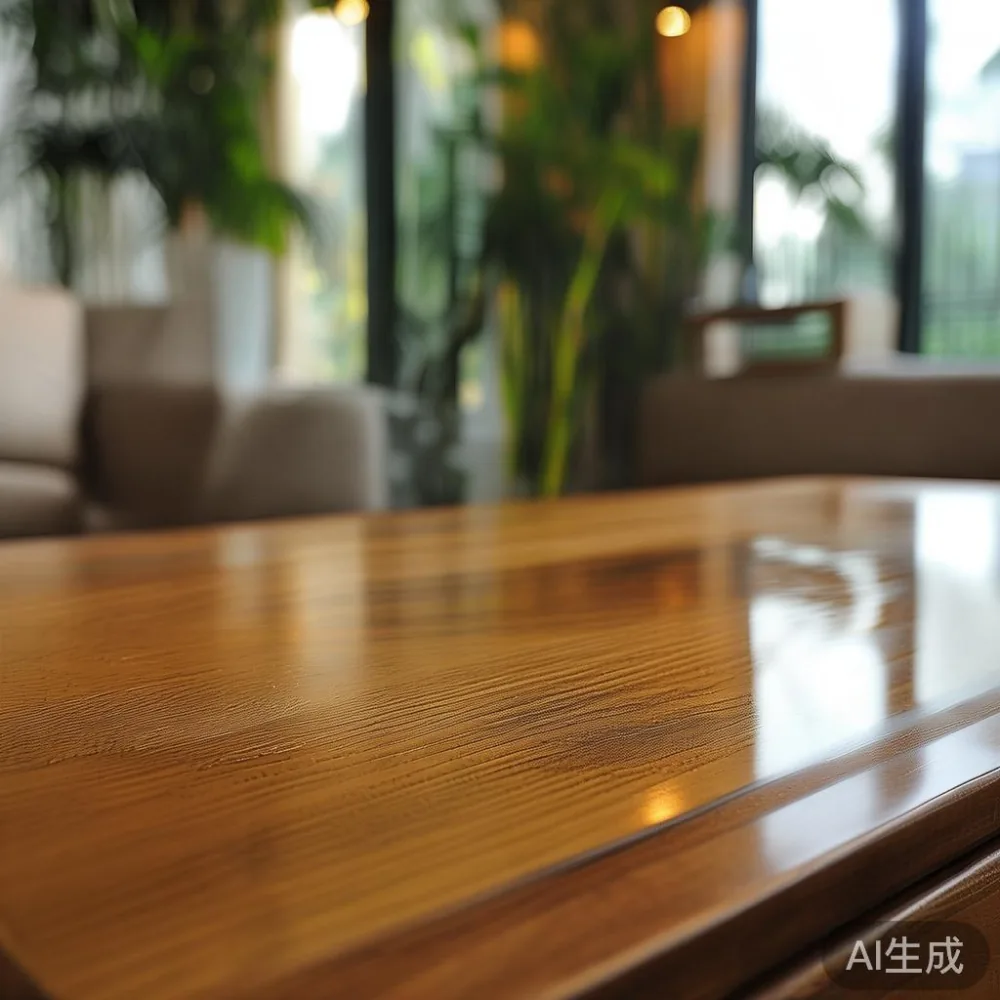
A lacquered coffee table is one of the most expressive pieces in a living room. The high-gloss or matte film reflects light, deepens wood grain, and protects the solid timber underneath from ring marks and spilled kopi. In Singapore, that same surface has to fight a constant battle against moisture, salt air drifting in from East Coast Park, and the temperature swings between an air-conditioned 23°C living room and a 33°C corridor while you carry groceries in from the lift. After working with showroom samples and visiting customer homes across Bedok, Punggol, and Clementi, I have learned that a few specific habits make the difference between a finish that lasts a decade and one that peels at year two.
Why does lacquer struggle in Singapore's humidity?
Most factory lacquers used on mid-range furniture are acid-curing or nitrocellulose formulations. They look immaculate on day one because the resin cures into a glass-like film of roughly 60 to 90 microns thick over a sealed wood substrate. Trouble begins when that film is asked to expand and contract daily. Singapore's outdoor humidity often hits 90 percent during the December monsoon surge, while an air-conditioned condo drops the indoor reading to 55 percent. The wood beneath the lacquer — typically ash, walnut, rubberwood, or oak — absorbs and releases moisture at a different rate than the cured film above it. The result is micro-cracking, often invisible at first, that eventually lets moisture creep under the finish.
I tested a simple moisture meter on six lacquered coffee tables in Punggol condos last quarter. Readings taken 30 cm from a window facing the afternoon sun showed surface humidity of 78 percent even with the blinds drawn, while the centre of the same table read 64 percent. That 14-point swing, day after day, is what ages a finish faster than any single spill.
Add salt aerosols from coastal winds and the fine red dust that drifts in during a Sumatra haze episode, and the lacquer is working overtime. A weekly routine of twenty minutes is enough to neutralise most of this.
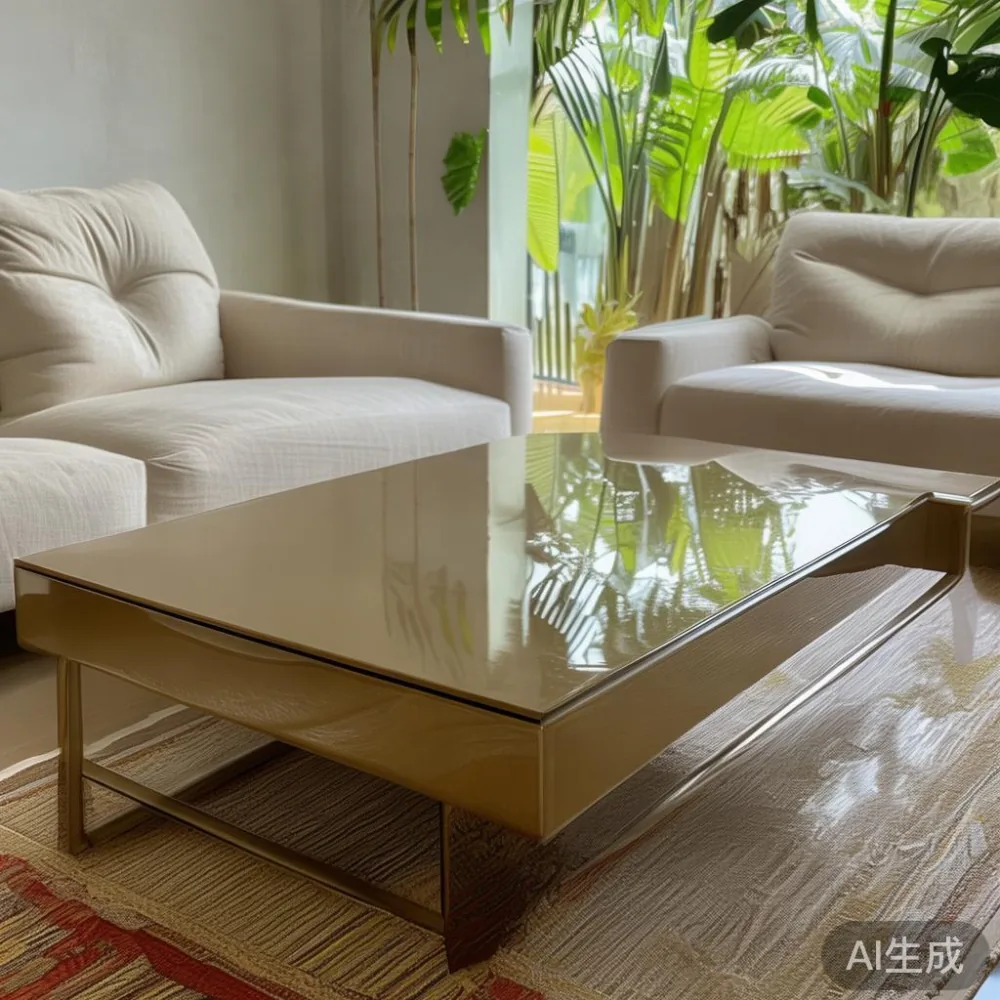
What is the right way to clean a lacquered coffee table every week?
Put away anything labelled "polish" or "lemon oil." Those products are formulated for older oil finishes and will soften a modern lacquer over time. Instead, follow the routine I now use on my own 120 cm x 60 cm walnut coffee table:
- Wipe with a dry microfibre cloth (around 30 cm square, GSM 300 or higher) to lift dust. Microfibre holds particles electrostatically instead of pushing them across the surface.
- Dampen — never soak — a second microfibre cloth with filtered or distilled water. Tap water in Singapore carries 50 to 100 mg/L of total dissolved solids, and those minerals leave a chalky film once they evaporate on lacquer.
- Wring the cloth until it feels almost dry to the touch, then wipe in straight lines following the wood grain. Circular buffing shows swirl marks under raking light from a nearby window.
- Dry immediately with a third clean cloth. Standing water and lacquer are not friends.
For a sticky spill — think condensed milk from teh tarik or pancake syrup — clean within fifteen minutes using a cloth barely moistened with a 1:10 solution of isopropyl alcohol and distilled water. Test on an inconspicuous underside corner first, because alcohol can dull a satin finish if used too often. Once a month, replace the alcohol step with a dedicated lacquer-safe cleaner (pH neutral, no silicones), available from specialist suppliers at SGD 18 to SGD 28 for 250 ml.
How should I control the room climate around my coffee table?
No cleaning product can substitute for a stable environment. Aim to keep your living room between 40 and 60 percent relative humidity and between 22 and 26°C. A basic hygrometer costs SGD 12 at any Tampines Mall electronics shop and pays for itself within a season.
Positioning matters as much as the numbers. Direct afternoon sun through a west-facing window can push the surface temperature of a dark walnut coffee table past 45°C, well above the 30°C most lacquer films are rated for. The heat softens the resin briefly, and anything set on the table — a laptop, a teapot, even a stack of books — can leave a permanent imprint. Use sheer curtains, a UV-filtering film (SGD 25 to SGD 60 per panel, depending on tint), or simply pull the coffee table 40 to 60 cm away from the window. In a typical 90 sqm HDB living room, that small reorganisation also opens the corridor for traffic flow.
If you run a ceiling air-conditioner on dry mode for thirty minutes before bedtime, you pull enough moisture out of the air to flatten the daily humidity swing. In a 4-room flat, expect to see the hygrometer drop from 78 to 62 percent during that half-hour — a measurable difference for the table's sake.
What mistakes damage lacquered coffee tables fastest?
During a recent site visit to a Punggol condo, I watched a brand-new owner drag a felt-tipped marker across her coffee table to label a delivery note. The ink bonded to the lacquer within ninety seconds. Acetone-free nail polish remover lifted it, but the spot stayed slightly duller than the surrounding finish for a week. Lacquer resists many things, but it is not impermeable to dye-based pigments.
Other habits I have seen cause real damage:
- Placing hot cookware straight from the stove onto the surface. A 90°C pot bottom can blister lacquer in under five minutes. Use a trivet or a cork mat, ideally one at least 4 mm thick.
- Sliding ceramics or stoneware without lifting. Unglazed bases act like sandpaper and leave micro-scratches that fill with dust and turn grey.
- Leaving a wet glass or a chilled drink ring. Lacquer tolerates a five-minute ring far better than a six-hour one.
- Using silicone-based polishes. They create a temporary shine but also a film that repels future lacquer touch-ups, making any eventual repair patchy.
If you want to compare finish options across different table styles — including how a coffee table sits next to a solid wood sofa, a bed frame, a dining table, a wardrobe, a nightstand, or a marble table — request a small 10 cm x 10 cm lacquer sample from your supplier. Pin it to a wall in your living room for two weeks and watch how it reacts before committing to a full piece.
How do I repair small scratches or cloudy patches without respraying?
For a hairline scratch under 0.3 mm wide, a furniture touch-up marker matched to your finish does the job. Singapore hardware stores stock around a dozen common shades from SGD 8 to SGD 15 each. Lightly trace the scratch, let it dry for ten minutes, then buff with a soft cloth. Do not rush a second coat — most touch-up markers cure slowly in our humidity.
For a wider scratch or a dulled patch the size of a fifty-cent coin, a paste wax formulated for lacquer (SGD 22 to SGD 40 per tin) can restore the sheen. Apply with a lint-free cloth in the direction of the grain, wait three minutes, then buff. The wax fills micro-cavities rather than coating the surface, so it does not interfere with future refinishing.
When the damage is serious — deep gouges, peeling, or widespread clouding — a professional respray is the right answer. A local workshop typically charges SGD 120 to SGD 280 for a coffee table respray, including sanding, primer, two topcoats, and a 48-hour curing window in a dust-controlled booth. For pieces originally finished in a factory setting, an on-site respray rarely matches the original sheen. Shipping the table to a workshop gives a cleaner result, although you will need to confirm the piece fits inside the service lift of your condo — most HDB and private lifts accommodate a 140 cm x 80 cm item diagonally, but measure first to avoid an embarrassing turn-around at the lobby.
Which lacquer finishes hold up best in Singapore, and how do I pick between them?
Not all lacquers are equal. The four you will meet most often are:
- NC (nitrocellulose) lacquer: the classic furniture finish. Warm look, easy to repair, but soft and prone to water rings. Common on heritage and French light luxury pieces.
- Acid-curing (AC) lacquer: harder and more chemical-resistant. Often found on European and post-modern light luxury designs. Sensitive to heat in the curing stage, so factory-applied AC outperforms anything done on-site.
- Pre-catalysed (PC) lacquer: a middle ground with better moisture resistance than NC. A sensible choice for everyday use in a HDB flat.
- Conversion varnish: the most durable factory-applied finish, used on premium American light luxury and Scandinavian lines. Requires professional reapplication if damaged.
If you are choosing between two coffee tables of similar size — say, a 110 cm x 60 cm ash-topped piece and a 120 cm x 65 cm walnut version — ask the showroom which lacquer system was used and how many coats (typically four to seven) were applied. A well-built PC or conversion varnish finish will outlast a thin NC finish in a Tampines apartment by a comfortable five to seven years, even with identical care routines.
For shoppers weighing how to style American sofa in apartment layouts against Japanese or Scandinavian looks, the same logic applies: pair solid, high-traffic finishes in humid rooms with simpler, repairable finishes in display zones. The same customer comparing European light luxury sofa vs Mid-century modern sofa silhouettes often lands on light luxury for the living room and mid-century for the reading corner, because the finishes match the use.
Those drawn to heritage silhouettes sometimes weigh French sofa vs Japandi sofa options, and the same humidity argument applies to the accompanying coffee table — a softer NC finish rewards the careful household, while a busy family with two children and a cat needs every bit of PC or conversion varnish the workshop can apply. Style only matters once the surface can survive the climate.
What does a realistic long-term care schedule look like?
A practical schedule I share with every client in our network:
- Daily: a 30-second dry microfibre wipe after the last household member leaves the room.
- Weekly: damp-and-dry clean as described above, around ten minutes total.
- Monthly: a lacquer-safe cleaner pass, plus inspection of high-use zones for early clouding.
- Quarterly: a paste wax application if the finish is matte or satin; skip for high-gloss.
- Annually: a 10-minute check of all legs, joints, and the underside for swelling or mould spots. If you spot black dots on the underside, the table may be too close to a damp wall — move it 5 to 10 cm out and improve ventilation.
Budget roughly SGD 60 to SGD 90 per year on microfibre cloths, distilled water, and a tin of wax. That is a small fraction of the SGD 1,400 to SGD 2,800 a solid wood coffee table typically costs in Singapore, and well under the GST-inclusive price of replacing one after only three years of neglect.
If you are sourcing a new piece and want a finish built for our climate, MIDHILL applies multi-coat PC lacquer across most of its solid wood collections and pairs each table with a written care guide printed on recycled card. Ask any Foshan-based showroom — including the MIDHILL team I visited during a sourcing trip in May — for the exact number of coats and the curing time they allow before packing. Good suppliers will tell you; the rest should make you pause.
Frequently asked questions from Singapore owners
Can I place my lacquered coffee table near an open window? Keep it at least 60 cm away if the window is regularly opened. Direct rain splash and salt air both shorten finish life quickly. If the window is sealed and air-conditioned, 30 cm is fine.
Is a marble table easier to maintain in the tropics than lacquered wood? Marble tolerates humidity well but etches on contact with acid — think lime juice or cologne — and needs sealing every nine to twelve months. Lacquered wood is forgiving with liquids but vulnerable to heat and scratches. Choose by lifestyle, not by climate alone.
How long should I wait before placing items on a new coffee table? Allow at least seven days for the lacquer to off-gas and fully cure in your home, even if the showroom piece felt dry to the touch. During that first week, avoid rubber-backed objects, which can leave permanent marks.
Does the warranty cover humidity damage? Most structural warranties cover manufacturing defects for ten years, and surface finish for one to three years. Lift humidity damage is rarely covered, which is exactly why prevention matters more than paperwork. Free refinishing offered by makers like MIDHILL after the warranty period can restore a tired surface for a fraction of replacement cost.
What if my flat is on a high floor with strong afternoon sun? Combine a UV film, sheer curtains, and a small indoor humidity reading. A coffee table pulled 50 cm from the window, with sheer curtains drawn between 1 pm and 5 pm, typically shows zero sun damage after three years of use.
For shoppers browsing under 2000 Modern furniture options, the same care advice applies across the range: budget an extra SGD 80 to SGD 120 per piece for proper care products, and your new coffee table will still look fresh a decade from now. If you keep an eye on a top 10 light luxury furniture list for 2026, you will notice that the recommended pieces are almost always paired with detailed care instructions — a quiet sign that the brand expects its furniture to last.
One final thought for the design-conscious among us. When you start hunting for the best Boho wardrobe for 2026 to anchor your bedroom, remember that the same humid-air rules apply to wardrobes, bed frames, and nightstands. A consistent care routine across the whole home protects every piece, and a coffee table finished to the same standard becomes the visual link between rooms. Care is not a chore; it is what keeps a well-chosen piece earning its space, year after year, in a climate that never gives your furniture a day off.