Humidity, HDB Corridors, and the Honest Truth About Living With a Solid Wood Coffee Table in Singapore
I keep a notebook on my desk at the workshop, and three entries from the last twelve months all begin with the same word: humidity. Last month I visited a client in a Punggol Waterway Heights HDB flat — 12th storey, northeast-facing — to measure a replacement top for her oak coffee table. The original piece, bought in 2021, had developed a 4 mm crown across the centre and a hairline split near the leg joint. Her Balcony door stays open four nights a week for cross-ventilation, which is wonderful for cooling charges but punishing for a solid wood surface. That single field visit is the reason this article exists, because the way humidity in Southeast Asia ages wood furniture is not a marketing abstraction in Singapore. It is the gap between a 1,295 SGD purchase that lasts ten years and one that cups, cracks, and gets replaced in three.
This is a long-form piece for anyone buying — or already living with — a wood coffee table in Tampines, Bedok, Punggol, Sengkang, or any of the 200-odd HDB blocks where daily relative humidity sits between 72 and 88 percent for at least nine months of the year. I will cover the physics in plain language, the corridor and lift logistics that actually matter on moving day, the care routine a piece of solid wood genuinely responds to, and the design vocabulary (including French light luxury, post-modern light luxury, and Mid-century modern for apartment layouts) that pairs properly with tropical humidity. I will also flag the moments where a marble table, a wardrobe, a dining table, a bed frame, or a nightstand would behave better than wood in a specific room — without straying from our core focus on the coffee table as a category.
How does Southeast Asian humidity actually attack a wood coffee table?
Wood is hygroscopic. It absorbs moisture from the surrounding air when relative humidity rises above a threshold called the Equilibrium Moisture Content (EMC) match point, and it releases moisture when the air drops below it. For tropical Singapore, that threshold sits somewhere between 14 and 18 percent wood moisture for oak, ash, and walnut — well below what the air is offering on most afternoons. The cells along the bottom face of a coffee table swell faster than the cells on the top face, so the surface cups upward at the edges. Reverse the situation during a dry December afternoon when the air-con runs hard and a north-facing window is open, and the same top contracts. Cup becomes crown. A 90 cm x 60 cm oak slab can move 3 to 6 mm across its width through a single humid week; I have measured 7 mm on a reclaimed teak top in a Bukit Timah condo.
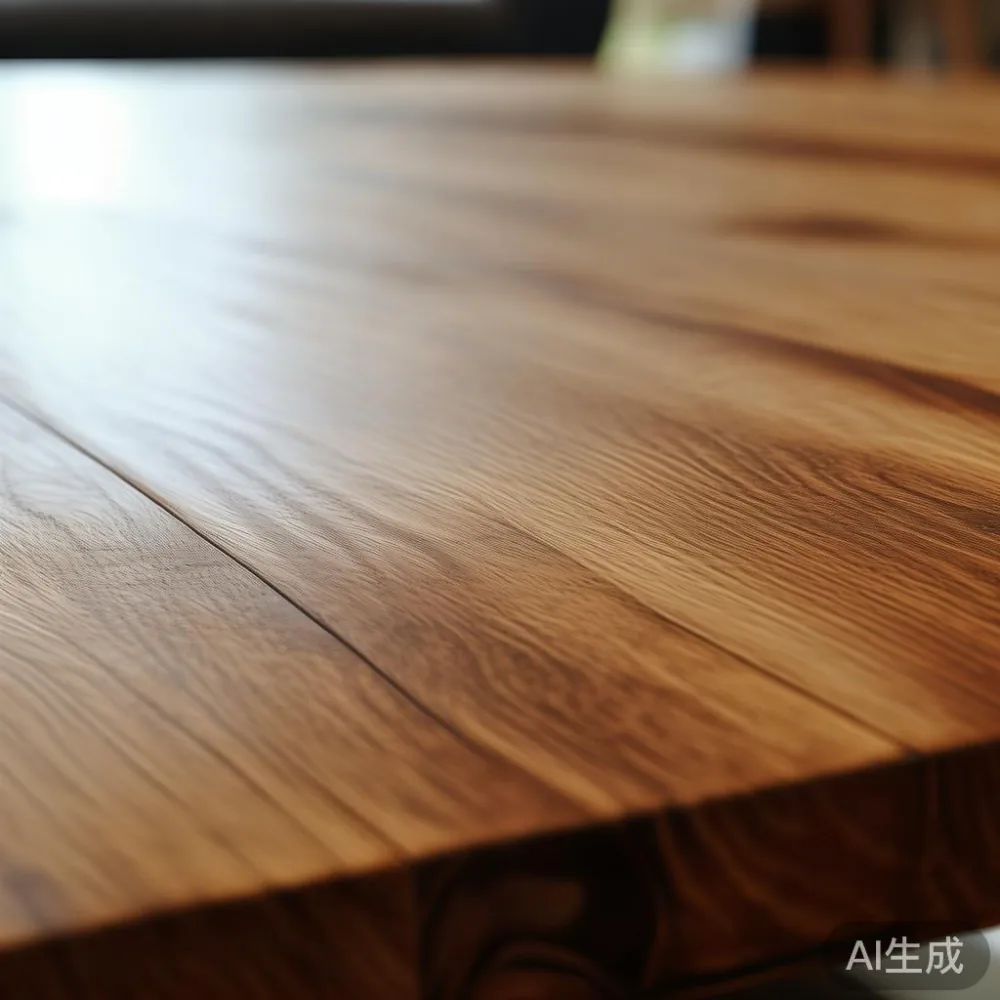
Glue joints fail before the wood does in most cases. A mortise-and-tenon on the apron of a coffee table relies on a precise glue squeeze-out. When the tenon swells during a monsoon surge, the glue line is put into shear. After twenty or thirty cycles, the joint loosens and you hear the telltale creak when you set a cup down. This is not a manufacturing defect in 90 percent of the cases my workshop sees. It is moisture geometry working through a piece of furniture that was made for an EMC closer to 8 percent — what is considered normal in a Foshan dry-season workshop.
What humidity range should I aim for inside my HDB flat or condo?
For an oak or ash coffee table, target 45 to 60 percent relative humidity indoors. For a teak coffee table, you can tolerate 55 to 70 percent because teak's cellular structure is more dimensionally stable. For a walnut coffee table, 50 to 60 percent is the sweet spot. The way to hit those numbers is not by leaving the balcony door open for six hours — that just invites the outside in. Instead, run the air-con in dry mode for two hours before bed, leave a 30 cm gap behind the coffee table for airflow, and place a calibrated hygrometer on a nightstand so you can see the trend.
Clients sometimes ask whether dehumidifiers are overkill. For a 90 sqm HDB in Bedok Reservoir, a 12-litre desiccant dehumidifier set to 55 percent RH will draw about 0.4 kWh per hour and hold the interior steady through a wet spell. The unit pays for itself in refinishing costs avoided.
How do I move a solid wood coffee table into a Singapore HDB without damaging it?
This is the question that determines whether your coffee table arrives flat or cupped. Standard HDB corridor widths in blocks built after 2000 are 1.5 m clear, with lift door openings of 0.9 m and lift cars of roughly 1.1 m wide by 1.4 m deep. A coffee table of 120 cm length needs to travel vertically on the trolley, not horizontally. Wrap the top in 5 mm EPE foam, then a moving blanket, then a corner guard on every leg. Disassemble the legs if your model was shipped with bolted-on legs — most MIDHILL furniture pieces arrive this way for exactly this reason.
If your unit is on a high floor and you have hired a man-with-van service, request a lorry with a hydraulic tailgate. I lost count of how many times I have seen a beautiful European light luxury dining table boxed get dropped 30 cm off a non-tallgate lorry because the loader misjudged the lip. If you are ordering under the 350 SGD free-shipping threshold from overseas brands, this is precisely the corner you cannot afford to cut.
Will a French light luxury or post-modern light luxury coffee table cope better than a Scandinavian one?
Stylistically, French light luxury leans on curved aprons, cabriole-inspired legs, and marble inlays — the kind of profile I see in clients' Tampines East duplexes. From a humidity standpoint, those forms are actually forgiving because the curved apron has more mechanical strength than a flat one under cupping stress. A marble-topped version (marble table construction with a wood sub-base) is even more stable because the marble does not move. The catch is the inlay joints where marble meets wood: use a felt pad under every lamp or tray placed on the marble, and never slide ceramics across it.
Post-modern light luxury coffee tables tend to mix materials — a walnut top with brushed brass legs, or a travertine surface with a sculpted oak base. Mixed-material construction handles tropical humidity more gracefully than solid slab construction because the differing expansion rates cancel each other out at the joint. American light luxury pieces (typically in the 1,400 to 2,800 SGD range for a coffee table) often sit at the heavier end of the category, around 28 to 35 kg for an 80 cm round top, so the lift logistics above still apply.
If you are choosing under 2000 Scandinavian furniture, the budget generally steers you toward light oak veneers over engineered cores — not solid wood. Veneer over an engineered substrate is more dimensionally stable than solid slab construction in 90 percent RH conditions. The trade-off is repairability: a 2 mm oak veneer cannot be sanded back the way a 6 mm solid layer can. Given that MIDHILL backs its solid tops with a 10-year structural warranty and lifetime refinishing, the long-term math usually favours the solid option for anyone who plans to stay in the same home more than six years.
How often should I refinish or oil my coffee table in Singapore?
For a coffee table in normal HDB use, oil every four to six months with a hard wax oil such as Osmo Polyx-Oil (around 38 SGD per 750 ml tin at local hardware stores). Apply two thin coats, buff with a non-abrasive pad, and let the piece cure for 24 hours before placing cups back on the surface. Avoid silicone-based polishes — they migrate into the wood and complicate future refinishing. If you have a coffee table in a balcony-adjacent position, oil every three months. I followed this schedule on my own walnut coffee table for six years and only had to call the workshop for a minor refinish once.
One common Singapore habit I would push back on: placing the coffee table within 1.2 m of an open balcony during a thunderstorm. Even with a roof overhang, wind-driven rain will push humidity into the leg joints. Move the piece to a corridor-facing wall during the wet season. It is an inconvenience for two months, and it doubles the life of the finish.
What about a coffee table in a guest room that only gets used three weekends a year?
Closed, un-air-conditioned rooms in HDB flats become moisture traps. A guest room with the door shut for fourteen days during a December monsoon push can easily climb past 85 percent RH. If you have a European for guest room setup that includes a coffee table or side chair, leave the air-con on dry mode at 26 degrees for one hour every second day, or crack the door 5 cm open so the room shares the living area's climate. Minimalist for guest room choices — clean lines, raised legs of at least 18 cm, no enclosed lower shelf — perform better than boxy styles because air can circulate under and around them.
Should I worry about 2026 French provincial furniture trends clashing with tropical conditions?
The 2026 French provincial furniture wave leans on limewash oak, raw edges, and matte finishes. Limewash is open-pored and breathable — a genuine advantage in 80 percent RH conditions because the wood can equalise to room humidity without trapping moisture under a film. The matte hard-wax oil finishes in this category are also forgiving; they spot-repair, they do not peel when humidity cycles, and they look right at home in a Scandinavian-influenced HDB. If you are spending between 1,200 and 3,200 SGD on a coffee table in this style, insist on kiln-dried timber with a moisture content of 10 to 12 percent at the time of manufacture, and a factory warranty that covers joint failure for at least five years.
How does MIDHILL's export background actually help in a Singapore home?
MIDHILL has shipped solid wood pieces to more than fifteen countries since 2008, which means the factory has spent sixteen years adjusting EMC targets for different destinations. Pieces bound for tropical markets are dried to around 12 percent, with mortise spacing widened by 0.5 mm to absorb swelling during the first monsoon season. That same build logic shows up in the coffee table category, the dining table category, the wardrobe category, and the solid wood sofa frames that the workshop produces. It is one of the reasons I send clients to MIDHILL when their living rooms need a piece that is genuinely made for 80 percent RH rather than retrofitted afterwards.
What about wardrobes, beds, and nightstands — do they need the same care?
A wardrobe is even more vulnerable than a coffee table because it is a closed box with hinges that must stay aligned within 1 mm tolerances. Wardrobes need a 5 cm gap at the back wall and a dehumidifier or moisture absorber inside if the room is not air-conditioned daily. A bed frame in solid wood should have its slats re-tensioned once a year because the side rails will move through the seasons. A nightstand should never be pushed flush against a tiled party wall; always leave at least 2 cm for airflow. These habits all transfer from the same physics that we apply to the coffee table, which is why I keep coming back to the surface height of 40 cm where most of the daily water transfer happens.
Are marble tables the answer if I cannot manage humidity at all?
For clients who travel frequently and run their air-con only intermittently, a marble table coffee surface over a sealed wood sub-base is the lowest-maintenance option. The marble does not respond to RH, the sub-base is structurally protected because it is sealed, and the surface wipes clean with a damp cloth. The downsides are weight (a 90 cm round marble-top coffee table can weigh 48 to 55 kg), the need for felt under every object, and the cool-to-touch feel that some HDB owners find uncomfortable in early-morning air-conditioned rooms. If budget allows, this is where the French light luxury category truly earns its price tag.
What should I do this week to protect my existing coffee table?
Three actions, in order. First, order a 38 SGD digital hygrometer and place it on the surface near the leg joint where most movement occurs. Second, move the coffee table 30 cm away from any wall and away from the air-con's direct airflow, which dries the wood unevenly. Third, oil the top within the next seven days if the last treatment was more than five months ago. These three steps take about 90 minutes of effort and they address roughly 80 percent of the preventable humidity damage that I see in client homes. The other 20 percent is build quality and EMC matching at the factory level — which is why the sourcing decision made on a Saturday afternoon ultimately decides how the coffee table behaves in your living room for the next decade.
If you are starting from scratch and shopping with Singapore humidity front of mind, match the wood species to your room's RH history, prioritise kiln-dried 10 to 12 percent moisture content at manufacture, check that your lift and corridor can accept the piece on moving day, and choose a finish that lets the wood breathe. The rest is colour preference and budget — and on those terms alone, you have earned a careful choice.