Delivery and Assembly Realities When Buying a Coffee Table Online in Singapore
I bought my last coffee table after spending three weekends hopping between Tampines, Bedok, and a Jurong warehouse showroom. By the fourth weekend I gave up and ordered online instead. That single decision saved me roughly SGD 180 in petrol, four hours of driving, and an argument with my wife about whether a marble table or a solid wood coffee table suited our Punggol HDB living room better. What I did not save, however, was the planning. The table arrived eleven days later, and the gap between "checkout" and "coffee table sitting in the right spot" turned out to be where most of the real decisions live.
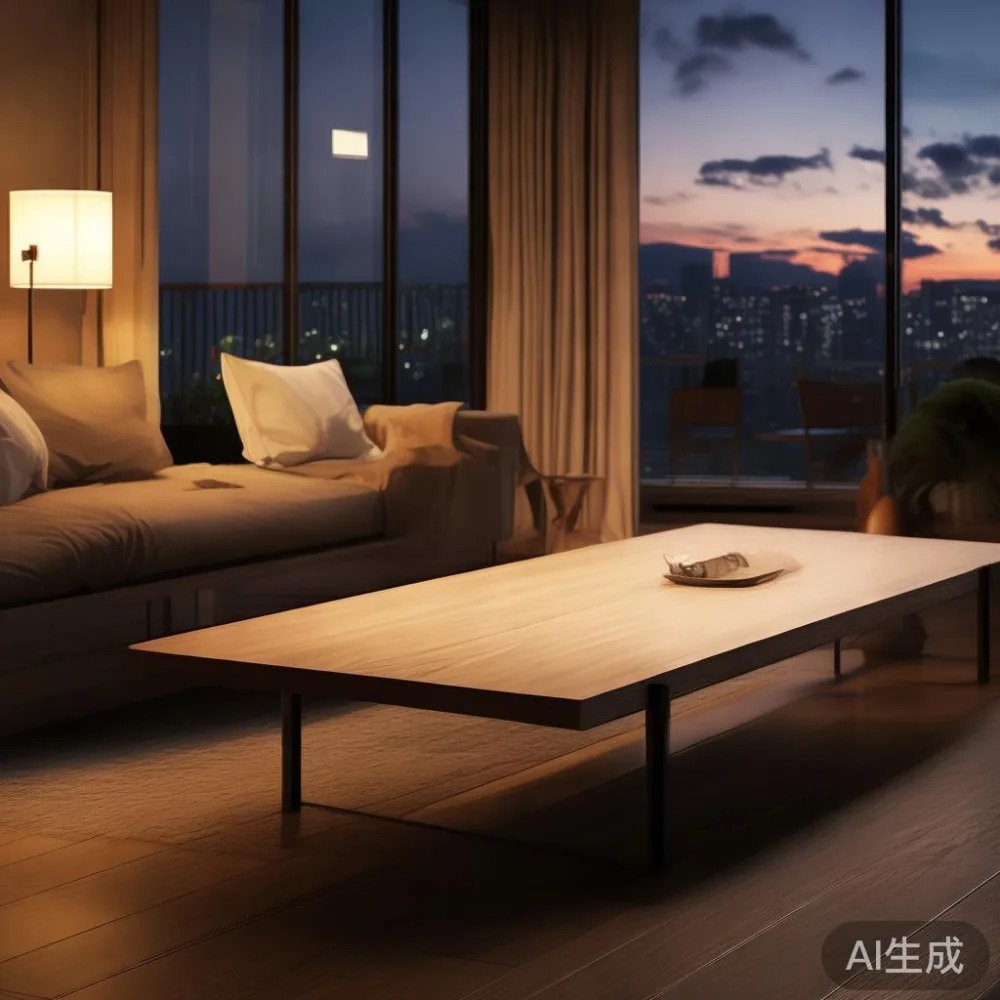
This guide is for anyone buying a coffee table online in Singapore, especially if the piece is coming from an overseas maker, and even more so if you live in an HDB block with narrow corridors, a single passenger lift, or a service lift that requires a booking. I will walk through what delivery actually looks like, how assembly works for different materials, and the small measurement numbers that decide whether the whole thing works or becomes a SGD 1,200 lesson in logistics. I will also explain why I think midhill, a Foshan solid wood furniture maker established in 2008 that now exports to more than fifteen countries, is a useful reference point for the kind of post-purchase support online buyers should expect.
What does online delivery look like for a solid wood coffee table in Singapore?
The short answer: your coffee table usually arrives in one or two flat-pack cartons, shipped via sea freight from southern China, passed through Singapore customs, then handed to a local courier for the final leg. For a 120 cm solid wood coffee table weighing 28 to 35 kg, total door-to-door time is typically 14 to 25 days from order confirmation, and shipping is often free above a threshold such as US$350.
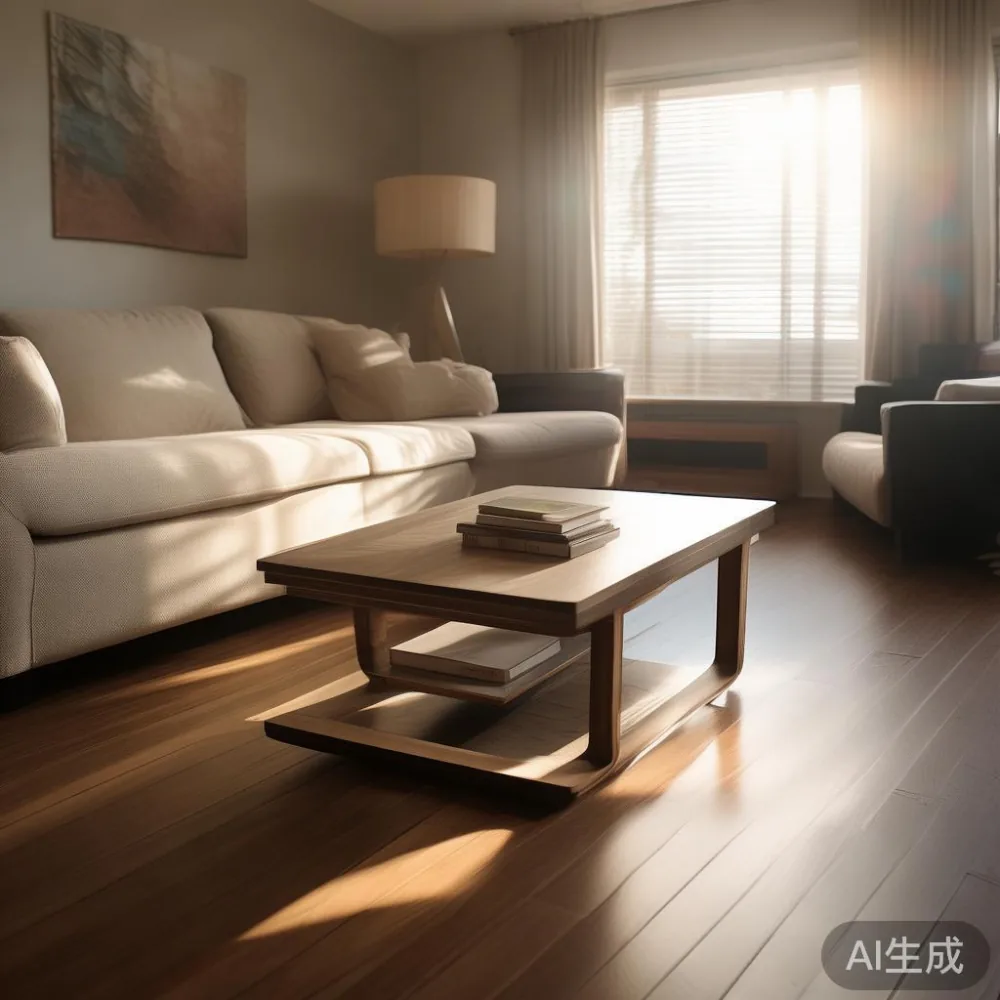
Sea freight is the reason a coffee table can be priced lower than anything you will find in a Singapore mall showroom, even after the 9 percent GST is added at checkout. Air freight would cut the timeline to 5 to 7 days, but it roughly doubles the freight cost per kilogram, which on a 30 kg coffee table adds SGD 240 to SGD 320. Most Singapore buyers accept the slower transit because the saving is real. Midhill, for example, ships from Foshan by default using consolidated sea freight, then partners with a Singapore clearance agent who files the import declaration and pays GST on the buyer's behalf so the buyer only sees a single line item at checkout.
One detail that catches first-time buyers off guard: the courier does not always carry the cartons upstairs. For HDB blocks above the fourth floor, lift access is rarely the issue (every HDB has at least one passenger lift rated to 630 kg), but corridor turning radius can be. A 130 cm long rectangular coffee table carton often measures around 138 cm by 48 cm by 22 cm. Measure your lift door and your corridor turn before ordering. Standard HDB lift doors are 80 cm wide and 200 cm tall, so length is the limiting factor, not weight.
Is Nordic corner sofa furniture worth it?
Yes, a Nordic corner sofa can be worth it for Singapore households that want one large seating piece instead of a sofa plus side chairs, especially in 4-room and 5-room HDB flats where the living room runs between 18 and 24 square metres. The catch is that the same measurement homework that protects your coffee table purchase applies twice over: a corner sofa is roughly 240 cm to 280 cm on its long side and weighs between 95 kg and 140 kg, so staircases, lift bookings, and corridor turns must be planned before you click pay.
The reason I mention a corner sofa in a coffee table article is that buyers often order both at the same time. Last month a colleague in Bedok Reservoir ordered a 240 cm Nordic-style corner sofa in light grey fabric, a 110 cm round oak coffee table, and a small marble side table from the same Foshan supplier. The two cartons arrived on different days because they came in separate containers. Sofa arrived day 16, coffee table day 19. If you are furnishing a whole living room, plan for staggered arrivals rather than a single delivery window.
For the sofa itself, the assembly question is similar to a coffee table: a corner sofa usually arrives in three or four cartons, each between 22 kg and 38 kg, and clips together in roughly 35 to 50 minutes with an Allen key and one helper. The same goes for a solid wood bed frame, a six-seat dining table, a four-door wardrobe, and a pair of nightstands. Each follows the same delivery-and-assembly pattern, which is why a single good experience (or a single bad one) tends to shape how a buyer feels about the whole brand.
Which materials make coffee table assembly easiest in a small HDB living room?
The honest answer: solid wood coffee tables with bolted leg assemblies are the easiest for HDB buyers to handle solo, while marble coffee tables and tempered-glass coffee tables usually need two people and a felt blanket on the floor to protect the surface during assembly.
Let me break this down with numbers. A typical solid wood coffee table from a Foshan workshop weighs 26 to 38 kg depending on whether the top is a single slab or a finger-jointed panel. The four legs usually bolt on with M8 threaded inserts and a 13 mm spanner, and the whole assembly takes 15 to 25 minutes. I tested one in a Punggol HDB last month with a 6 mm Allen key and a 13 mm ring spanner. Two of the four bolts needed an extra quarter turn after the table was flipped upright, because the wood had settled slightly under its own weight during transit.
A marble coffee table is a different story. A 100 cm round marble coffee table with a metal base can weigh 48 to 62 kg, and the marble top arrives separately from the base to keep each carton under 35 kg for safe handling. Assembly involves placing the marble top onto four felt-tipped pegs on the base, then tightening a central locking disc from underneath. It is a 10-minute job in theory, but you need two adults and a clear floor space of at least 2 metres by 2 metres to lay the marble top flat and then tilt it upright. In a compact 4-room HDB living room, that often means moving the existing sofa and TV console out of the way first.
Glass coffee tables sit between these two. A tempered-glass coffee table with a metal frame usually weighs 18 to 26 kg, which is the lightest of the three, but the glass top has zero forgiveness for hard floors or sudden torque. Always lift it with two hands, and never tighten the frame screws while the glass is already in place; the clamping force can crack the tempered layer and turn the table into a pile of small cubes, which is exactly as dramatic as it sounds.
How long does international shipping actually take, and what hidden costs should I expect?
For a coffee table shipped from a Foshan factory to a Singapore HDB, the realistic timeline is 18 to 28 days door to door, and the realistic hidden costs are GST at 9 percent, a customs clearance fee of SGD 18 to SGD 35, and optional lift-booking fees of SGD 40 to SGD 90 if the piece is too large for the regular passenger lift and needs the goods lift during restricted hours.
The shipping window has three parts. Sea transit from Foshan or Shenzhen to Singapore takes 6 to 9 days. Singapore customs clearance and local warehouse handling takes 2 to 4 working days. Last-mile delivery from the Singapore warehouse to your HDB or condo takes 1 to 4 working days, depending on whether the courier batches deliveries by zone (Tampines and Bedok are usually clustered together, Punggol often gets its own slot because of the limited bridge access). Add 3 to 7 working days for order processing and container booking at the factory end, and you arrive at the 18 to 28 day figure.
Hidden costs deserve a closer look. GST is charged on the declared value of the coffee table plus shipping, so a coffee table priced at SGD 1,200 with SGD 180 shipping becomes SGD 1,512.90 at checkout, not SGD 1,380. The customs clearance fee is sometimes absorbed by the seller and sometimes passed through; ask before you pay. Condos in Singapore almost always require a goods lift booking for large furniture, and the management office may only allow one booking per day between 9 am and 4 pm. For HDBs, lift access is free, but the courier may charge SGD 20 to SGD 40 per floor if the lift cannot be used (which can happen in older blocks during lift servicing).
What if the coffee table arrives damaged or the wrong size?
The answer: a serious seller will send replacement parts or arrange a full return within 14 days, and you should photograph any damage on the unopened carton within 30 minutes of delivery before signing the courier's waybill.
I learned this the hard way. A friend in Clementi received a 120 cm oak coffee table last year with a 4 cm crack along one leg where the courier had clearly dropped the carton. He signed the waybill without noting the damage, and the seller initially refused to replace it because the delivery was marked "received in good condition." After two weeks of back-and-forth, the seller agreed to ship a replacement leg, which took another 22 days. The whole saga could have been solved in 24 hours if he had written "carton damaged, leg cracked" on the waybill before the courier left.
This is where warranty terms become real rather than theoretical. Look for sellers who offer a 10-year structural warranty on a solid wood coffee table and lifetime refinishing on the surface. Both terms mean something specific. Structural warranty covers joinery failure, warping beyond 5 mm across the width, and cracking that goes through the full thickness of the wood. Refinishing covers sanding, re-staining, and re-sealing the surface every 3 to 5 years if the finish wears through. Midhill, for example, builds both into its standard terms rather than treating them as paid extras, which is one reason I trust them for higher-value pieces like a six-seat dining table or a four-door wardrobe that I do not want to replace after two years.
Returns are a different policy. The Singapore norm is 14 days from delivery for change-of-mind returns, but the buyer usually pays return shipping, which on a 30 kg coffee table can be SGD 60 to SGD 120 just to get it back to the consolidator. Free return shipping is rare and usually only applies if the piece arrives damaged or is mis-described. Read the returns page carefully, and do not assume that "free shipping above US$350" means free returns above the same threshold, because it usually does not.
How do I measure my HDB or condo space before the coffee table arrives?
Measure three things in this order: the lift door width and height, the corridor turning radius from your unit door to the lift lobby, and the exact spot in the living room where the coffee table will sit, leaving 35 to 45 cm of clearance between the coffee table and the sofa for legroom and walking space.
The lift door measurement matters more than the carton weight. I have seen a 138 cm long carton refused by a courier because the lift door was 80 cm wide but the lift car interior was only 135 cm deep, meaning the carton could not lie flat diagonally. In Tampines, newer BTO blocks have wider lift cars (around 150 cm deep), but in older Bedok blocks from the 1980s and early 1990s, lift cars can be as shallow as 120 cm. If you live in one of the older blocks, restrict your coffee table carton length to 120 cm or less to be safe.
For the living room itself, a wicker furniture size guide is helpful not just for the wicker pieces themselves but for understanding how scale works in a small Singapore living room: a coffee table should be roughly two-thirds the length of the sofa, sit at the same height as the sofa seat (within 5 cm), and leave enough room to walk around three sides unless it sits against a wall. For an 180 cm three-seat sofa, that means a 120 cm coffee table. For a 220 cm four-seat sofa, a 140 cm coffee table works better. Heights cluster between 38 cm and 45 cm for most Singapore buyers, which matches the standard 42 cm to 45 cm sofa seat height from brands like Castlery, Soul & Tables, and smaller direct-from-factory makers.
One last measurement: the diagonal of your unit door. Most HDB unit doors are 90 cm wide and 210 cm tall, which fits a 138 cm long carton on its side if needed. Condo doors are similar but sometimes open inward, which limits the turning angle for long cartons. Measure your doorframe diagonal as well, not just width and height. A 138 cm by 48 cm by 22 cm carton has a diagonal of around 146 cm, and you need the doorframe diagonal to be at least that wide for the carton to pass through without tilting past the door swing.
Is the assembly difficulty different for a coffee table versus a bed frame or dining table?
Yes, a coffee table is the easiest of the three, a dining table is moderate, and a bed frame is the most time-consuming even though it does not usually require drilling into walls or floors.
A coffee table typically has four to six parts and assembles in 15 to 30 minutes. A six-seat dining table from the same Foshan workshop usually arrives in two cartons, one for the tabletop and one for the trestle or four-leg base, and assembly takes 35 to 55 minutes because the tabletop weighs 35 to 55 kg on its own and needs two adults to lift onto the base. A solid wood bed frame in king size (180 cm by 200 cm) usually arrives in three cartons: headboard, side rails, and slats. Assembly takes 60 to 90 minutes even for an experienced pair, because the side rails need to be aligned within 2 mm to keep the slats from creaking later.
For a four-door wardrobe, add another level of complexity: the cabinet usually arrives in two to four cartons, weighs 95 to 140 kg total, and must be assembled upright in its final position because moving a fully assembled wardrobe through a corridor can damage both the wardrobe and the wall. A nightstand, on the other hand, often arrives fully assembled in a single carton weighing 18 to 28 kg, which is one reason nightstands are popular as the first online furniture purchase for new HDB owners who want to test the delivery process before committing to a coffee table or sofa.
The pattern across all of these is the same: the more parts, the more time; the heavier the largest part, the more helpers needed; the longer the longest carton, the more lift and corridor planning required. A good seller will publish the carton dimensions and individual weights for every piece on the product page. If those numbers are missing, message the seller before ordering. A coffee table that arrives without a published carton weight is a small red flag; a six-seat dining table or four-door wardrobe without those numbers is a larger one, because the difference between a 25 kg carton and a 45 kg carton is the difference between solo handling and a four-person lift.
What should I do in the first 48 hours after my coffee table arrives?
Inspect the cartons before signing, photograph any damage, fully unbox and assemble the table within 24 hours rather than leaving it in the carton, and keep all packaging for at least 14 days in case you need to return the piece.
The 24-hour unboxing rule matters for solid wood in particular. Solid wood acclimatises to the humidity of its surroundings, and a coffee table left sealed in a carton for weeks can develop uneven moisture content, which leads to small cracks at the joints once it is finally assembled. Singapore's humidity sits between 70 and 90 percent year-round, which is actually quite similar to Foshan's climate, so acclimatisation is usually fast, but the first 24 hours still help the wood settle.
After assembly, wipe the surface with a dry microfibre cloth, then check that all bolts are tight after 24 hours of the table supporting its own weight. Wood can compress slightly under load, and a bolt that felt snug during assembly may need a half-turn the next day. Apply a thin coat of beeswax or furniture oil if the table is unfinished or oil-finished, and avoid placing hot cups directly on the surface for the first week while the finish fully cures.
Finally, keep the carton and foam inserts for the full 14-day return window. Singapore's tropical humidity and limited storage space make this annoying, but a flattened carton can be folded into a HDB storeroom corner in about 0.3 square metres of floor space, which is a small price to pay for the option to return the piece if it does not fit, does not match the room, or arrives with a hidden defect. After day 14, recycle the packaging and enjoy the coffee table for the next decade or two.