Styling a Small Singapore Apartment Around One Clever Coffee Table
I spent last Saturday at my cousin Priya's new 4-room HDB in Punggol. The BTO had just handed over, the movers were done, and she was staring at a 14 sqm living room asking me one question: "How do I make this feel like a flat in a Tiong Bahru shophouse without crowding it?" We spent four hours with a tape measure, two coffees, and one printed floor plan. The single decision that changed the room was the coffee table — specifically, a 90 cm solid wood coffee table with a slim profile. Everything else flowed from that. This article walks through the same logic we used, with the prices in SGD, dimensions that actually fit HDB lift landings, and a few lessons I picked up from shipping furniture into Tampines and Bedok blocks over the past six months.
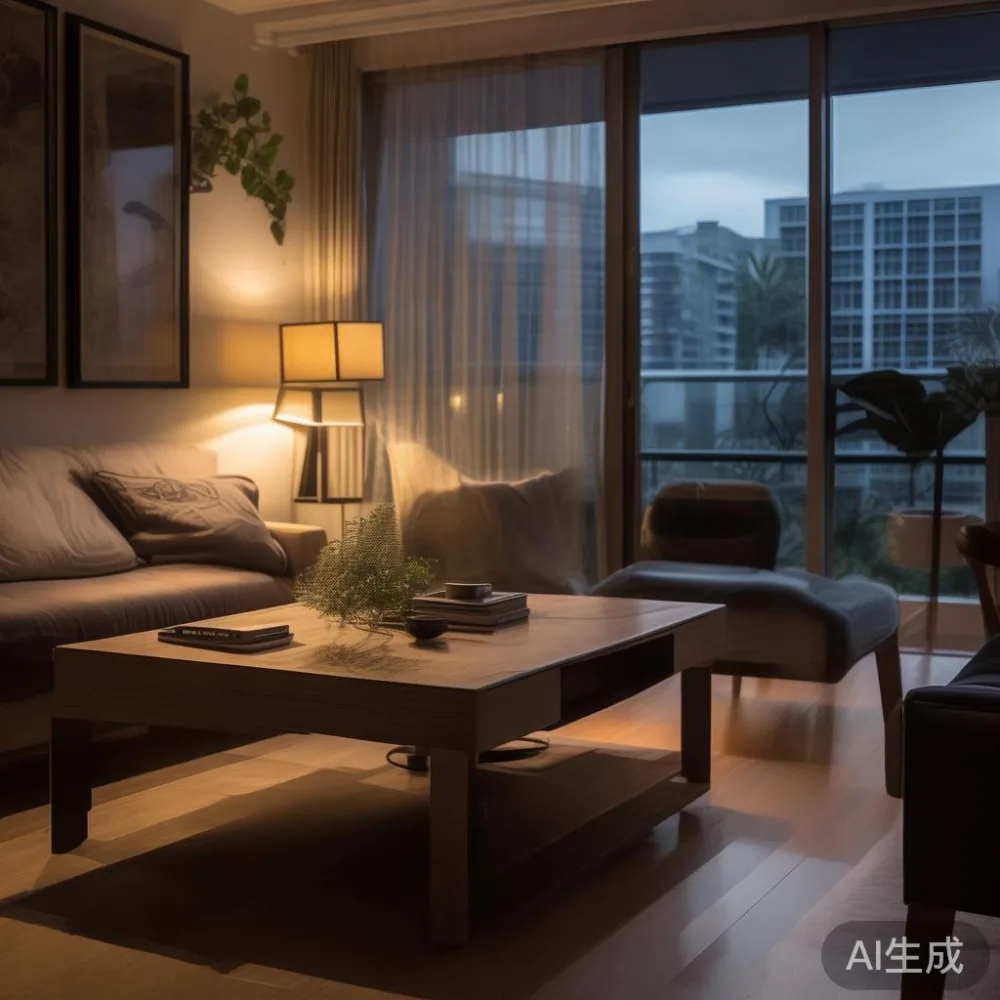
Why your coffee table is the anchor of a small living room
In a compact HDB or condo unit, the coffee table sits at the intersection of three zones: the seating cluster, the walking corridor to the kitchen, and the line of sight from the entrance. Get it wrong, and you bump into it every morning. Get it right, and it quietly holds your remote, a 25 cm vase, two mugs, and a stack of magazines without ever shouting for attention.
For most Singapore flats, the workable coffee table dimensions sit between 90 cm and 110 cm long, 50 cm to 60 cm wide, and 38 cm to 42 cm tall. Anything over 120 cm starts to dominate a 3-seater sofa. Anything under 40 cm tall feels like a footstool next to a standard 45 cm seat height. A solid wood coffee table in those dimensions typically weighs 12 kg to 18 kg — heavy enough to feel substantial, light enough for two people to shift during a CNY deep clean.
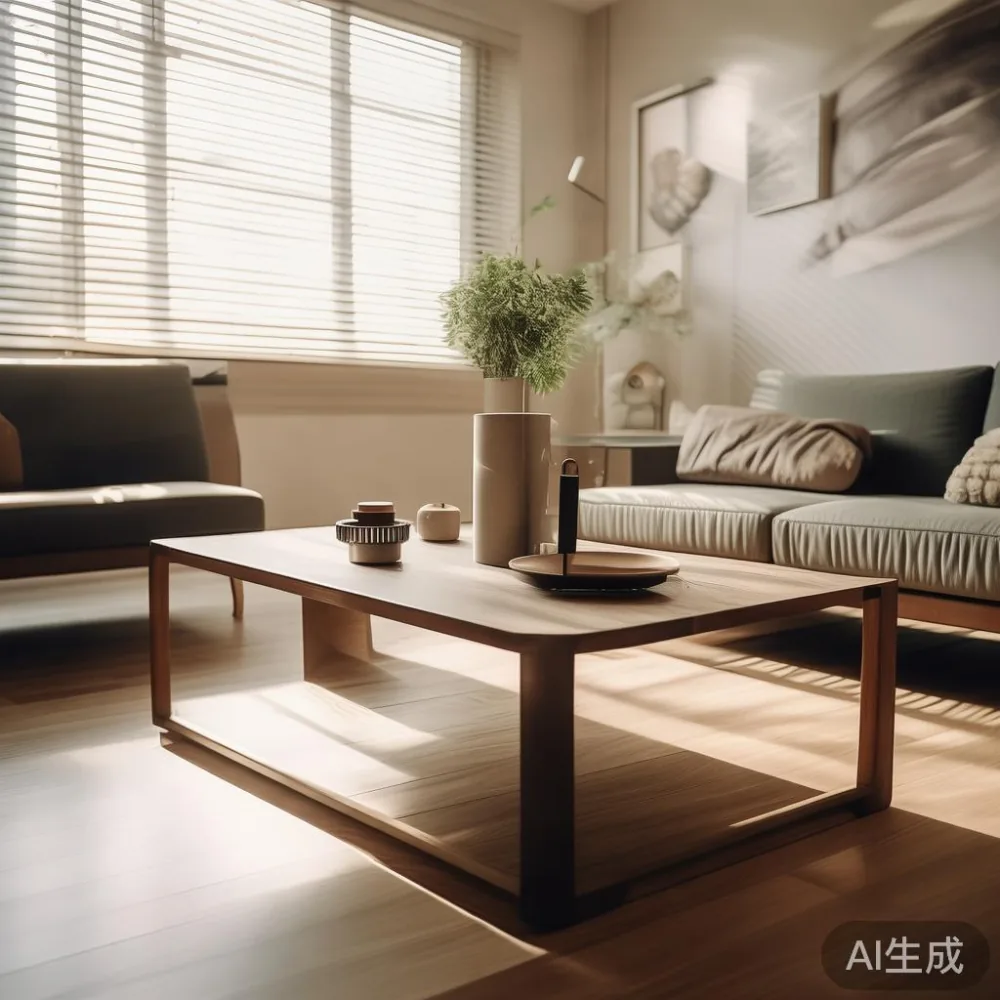
I tested this on Priya's floor. We moved a 100 cm oak coffee table 15 cm to the left, and suddenly the corridor to the kitchen opened from 62 cm to 77 cm. That 15 cm is the difference between brushing the corner with your hip and walking past with a tray. When you live in a 4-room HDB, those centimetres compound across the day.
How do I choose a fabric sofa for a living room?
You choose a fabric sofa for a living room by matching three numbers to your space — sofa width against your wall length, seat depth against your walking corridor, and fabric rub count against your household — then picking a frame and filling you can actually lift up three flights if the lift breaks down. In Singapore HDBs, that means starting from your wall, not from a showroom.
Measure the wall where the sofa will sit. In a typical Tampines 4-room, that wall is usually 280 cm to 340 cm once you subtract the air-con ledge and the switch plate. A 2-seater sofa at 160 cm to 180 cm wide leaves 100 cm to 160 cm of breathing room for a side table, a floor lamp, or simply negative space. A 3-seater at 210 cm to 230 cm eats almost the whole wall and forces the coffee table to shrink to 80 cm or less, which then feels too small for two laptops and a plate of kueh.
Seat depth matters more than most buyers realise. A 60 cm seat depth looks generous in a showroom, but at home it pushes the front edge of the sofa 60 cm out from the wall. If your TV console is 40 cm deep and sits against the same wall, you are left with 100 cm of walking corridor between the two — workable, but tight. Drop to a 55 cm seat depth and the corridor opens to 105 cm, which is enough for a child to run past without scraping a knee.
Fabric rub count is the quiet number that decides whether your sofa still looks presentable in year five. For a family flat with one child and a cat, aim for 30,000 rubs or higher. Performance weaves from Belgian mills and heavy-duty cotton-linen blends sit in the SGD 2,400 to SGD 4,200 range for a 2-seater in Singapore. A solid wood sofa frame in oak or ash, with 8-way hand-tied springs and a 10-year structural warranty, will sit at the upper end of that range but outlast a cheaper plywood frame by a decade.
The lift, the corridor, and the 2-seater nightstand for study
Every HDB block I have delivered into shares the same two constraints: a lift car roughly 1.1 m wide by 1.4 m deep with a door opening of about 80 cm, and a corridor between the lift and the front door that turns 90 degrees within 3 m. A standard 2-seater nightstand for study — the kind with two drawers and a slim 40 cm depth — fits through both, but a bulky 6-drawer wardrobe will not survive the corner. Measure the diagonal of every lift landing you plan to use, including the service lift if your block has one.
This is the same logic I used last month when I helped a colleague furnish a 5-room flat in Bedok. We needed a 180 cm dining table, a 200 cm wardrobe, and a queen bed frame. The wardrobe came in two boxes, each 95 cm by 55 cm by 18 cm. The dining table top was 180 cm by 90 cm by 8 cm — too long for the lift, so we tilted it vertically and it cleared the 1.4 m internal height with 12 cm to spare. The queen bed frame split into headboard, footboard, and side rails, each under 1.9 m. None of this works without a manufacturer that pre-cuts for container shipping rather than showroom assembly, which is why I tend to recommend suppliers who have been exporting solid wood pieces to 15 or more countries since the late 2000s — they have already solved the disassembly puzzle for you.
For Priya's study nook off the living room, we picked a 2-seater nightstand for study in white oak, 80 cm wide, 40 cm deep, 55 cm tall. It doubled as printer stand and book storage, and it slid under the window ledge when not in use. SGD 480, delivered in 12 working days, and the box measured 86 cm by 46 cm by 18 cm — easy single-trip carry from the lift to the door.
Marble, light luxury, and why one accent surface changes everything
The French light luxury approach in a small flat is not about filling the room with gold trim and chandeliers. It is about letting one surface speak — usually marble — and letting everything else step back. In a 14 sqm HDB living room, that marble moment should be your coffee table top, not your entire floor.
A round marble table at 80 cm diameter, paired with a rectangular solid wood coffee table on the adjoining wall, sounds contradictory until you place them. The round softens the geometry, the rectangle grounds the seating cluster, and the marble veining catches the afternoon light from the window. Prices in Singapore for a genuine marble-top coffee table run from SGD 1,100 (for a 70 cm round with a powder-coated steel base) to SGD 3,800 (for a 90 cm round with a brushed brass base and book-matched Calacatta vein). A sintered stone alternative gives the same look from SGD 650, with the bonus of being 8 kg lighter and stain-proof against soy sauce and kopi spills.
American light luxury tilts the other way: warmer woods, brushed brass rather than polished chrome, and a thicker cushion profile on the sofa. Post-modern light luxury sits somewhere between the two, with cleaner lines than French, warmer tones than Scandinavian, and a willingness to mix a marble coffee table with a matte black floor lamp. The point is not to pick a school and defend it. The point is to pick one accent — your marble table, your brushed brass lamp, or your solid oak dining table — and let it carry the visual weight of the room.
Building a small-space bedroom that still feels grown-up
The bedroom in a 4-room HDB is usually 12 sqm to 14 sqm, which sounds generous until you place a queen bed frame, a 6-door wardrobe, and two nightstands. The trick is depth, not width. A 55 cm deep wardrobe holds hanging shirts on one side and folded knitwear on the other, while a 60 cm deep wardrobe wastes 5 cm of corridor that you will feel every morning.
For the bed frame itself, a platform style in solid ash or oak at 200 cm by 160 cm (queen) sits 28 cm off the floor. That 28 cm is your under-bed storage zone, which in a Singapore flat matters more than headboard design. Sliding drawers from the side need 60 cm of clearance to open fully, so if your corridor is under 60 cm, choose a gas-lift platform instead. Prices for a solid wood queen bed frame with a 10-year structural warranty start around SGD 1,400 for ash and SGD 2,100 for white oak, including mattress support slats.
The nightstand on at least one side should be a 2-seater nightstand for study, even if you do not have a study. The extra drawer depth swallows laptops, chargers, passports, and the small admin pile that otherwise migrates to the dining table. Priya ended up with one standard nightstand on her husband's side and a 2-seater nightstand for study on hers, and within a week she had cleared the dining table entirely.
What about a dining table in a flat that barely fits one?
For most Singapore HDBs, the workable dining table is a 120 cm to 140 cm rectangular solid wood dining table, or a 90 cm round one if the dining area is a corner of the living room. A 140 cm rectangular table seats four comfortably and six at a squeeze; a 120 cm seats four without the squeeze. Width matters more than length here: 80 cm wide lets two plates sit side by side with a shared dish in the middle; 70 cm wide forces diners to choose between elbow room and serving bowls.
Solid wood dining tables in oak or walnut, with a thickness of 4 cm to 5 cm, weigh 28 kg to 42 kg at 140 cm. That is heavier than a coffee table but lighter than a marble equivalent, and you can usually tilt it through the lift without calling the building management. Delivery from a Foshan-based maker to a Singapore address typically runs 18 to 28 working days by sea freight, with GST payable on the declared value at customs. For a SGD 2,400 dining table, that is roughly SGD 192 in GST on top.
Where does MIDHILL fit into a small Singapore flat?
I have walked three friends through their furniture orders this year, and two of them ended up with pieces from MIDHILL — once for a solid wood coffee table and matching dining table in Tampines, once for a full bedroom set in Punggol. Both orders shipped from Foshan, both arrived within the quoted 22 working days, and both boxes cleared the lift without disassembly drama. The 10-year structural warranty and the lifetime refinishing service were the deciding factors, since both friends expect to keep their furniture through at least one move within Singapore. If you are planning a HDB or condo refresh and want a piece that survives the lift, the corridor, and the next ten years, MIDHILL is worth a shortlist.
FAQ
What is the smallest coffee table that still works for a 3-seater sofa? A 90 cm by 50 cm rectangular solid wood coffee table is the practical floor. Below 80 cm, it disappears visually and stops functioning as a surface.
Can I fit a queen bed frame and a 6-door wardrobe into a 12 sqm HDB bedroom? Yes, if the wardrobe is 55 cm deep rather than 60 cm, and the bed frame is a platform with under-bed storage rather than four poster style. Allow 60 cm corridor on the wardrobe side for drawer clearance.
How long does furniture shipping from China to Singapore take? Sea freight from Foshan to Singapore runs 18 to 28 working days for in-stock pieces, plus 2 to 5 working days for last-mile delivery within Singapore. Custom dining table sizes add 10 to 15 working days.
Is a marble table practical in a HDB with children? Sintered stone is more practical than natural marble for families, since it resists stains and chips. Natural marble needs sealing every 12 months and will etch under lemon juice or vinegar.
Do I need to worry about HDB corridor rules when placing a coffee table? Internal furniture placement is not regulated by HDB, but the front door corridor outside your unit must stay clear for fire safety. Your coffee table lives entirely inside your flat and is not subject to that rule.