Humidity in Singapore and How It Shapes the Solid Wood Coffee Tables You Actually Live With
I keep a small notebook on my desk at the MIDHILL Foshan workshop, and the page I flip to most often has nothing to do with joinery or finishes. It has numbers from a hygrometer I borrowed in Tampines last month, when I visited my colleague Priya's new 4-room HDB flat in the East. Her living room sat at 82% relative humidity on a Tuesday afternoon. By Saturday morning, after three days of steady rain and her air-con running at 24 °C, the wall hygrometer still read 74%. Those readings are normal for Singapore between April and October, and they matter far more for a solid wood coffee table than almost any design choice a buyer agonises over.
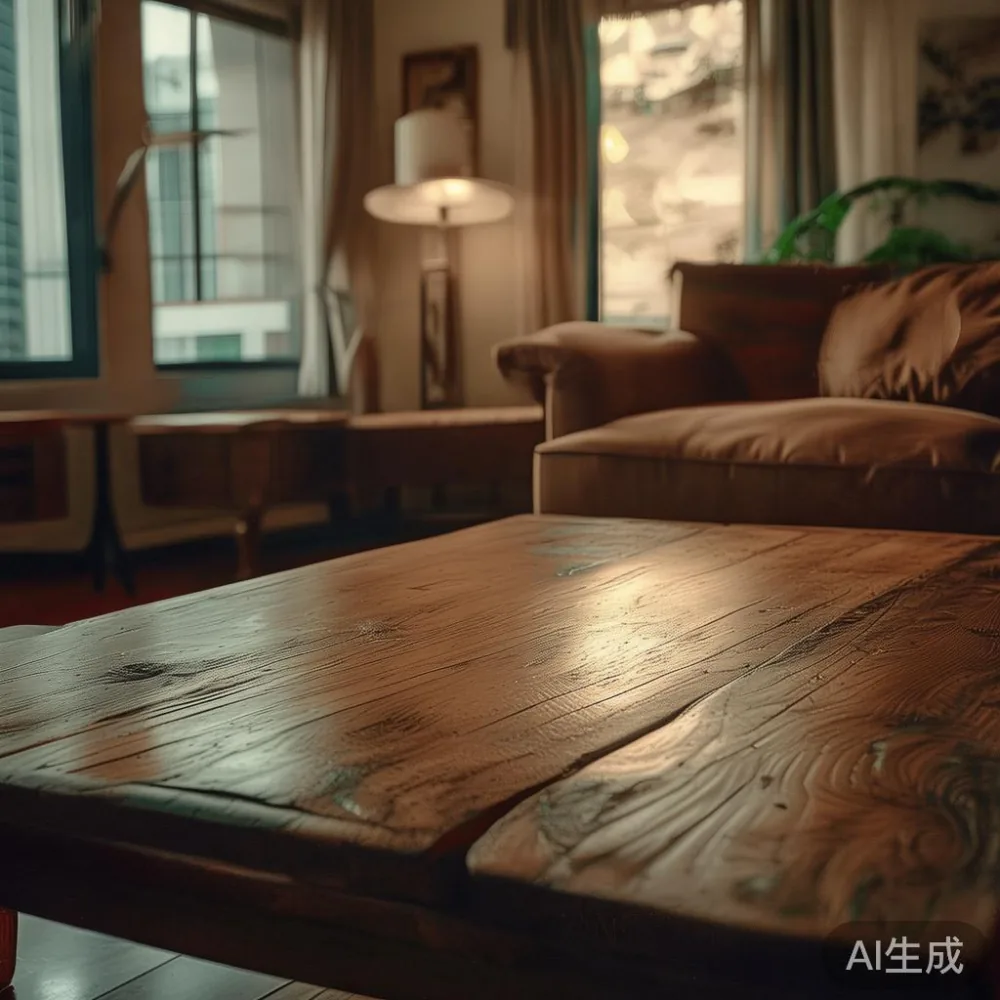
This article is written for people shopping for a coffee table in Singapore, Johor Bahru, or anywhere along the Equator where the air feels like it is wearing a wet shirt. It pulls together what I have seen on the factory floor at MIDHILL, what Priya and her Bedok neighbour Rina are dealing with at home, and what our export customers in Bangkok, Manila, and Kuala Lumpur have written to us about. We will keep the focus tight: humidity, wood movement, and how to pick a coffee table that still looks calm in five years.
Why Singapore humidity is unusually aggressive on a solid wood coffee table
Wood is hygroscopic. It is always trading moisture with the room around it. The technical term is equilibrium moisture content, or EMC, which is the moisture level a piece of wood will eventually settle at when the surrounding air stops pulling water out or pushing water in. In Foshan, the climate is humid but the seasonal swing is gentle, so most solid wood pieces leave the kiln at around 8–10% moisture content and find their EMC of 11–13% within a few weeks. Singapore is a different animal. Year-round RH sits in a 65–85% band, and indoor conditions often land between 11% and 16% EMC depending on how aggressively you run the air-con and dehumidifier.
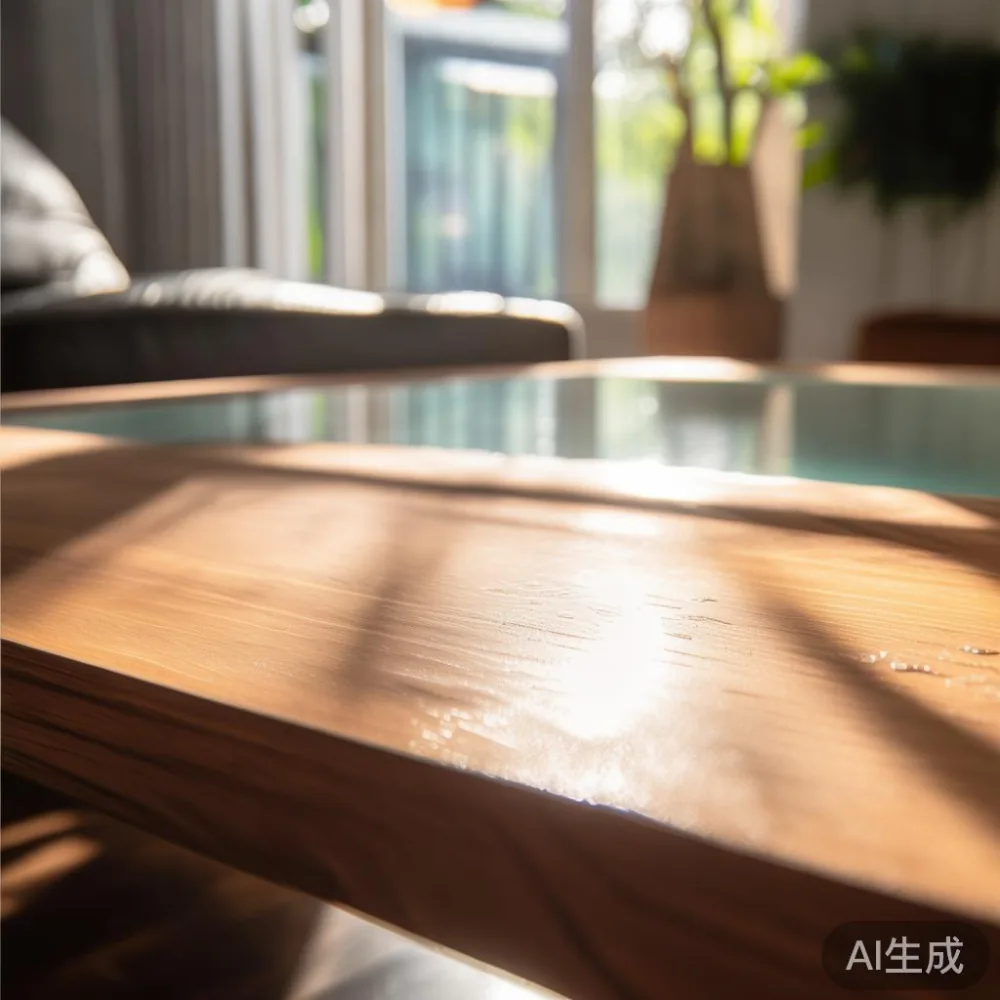
For a 110 cm × 60 cm solid wood coffee table top, a 4% swing in moisture content translates into roughly 1.2–1.6 mm of movement across the width. That is invisible at the edges if the top is properly framed, but it shows up as a hairline gap at a breadboard end, a tabletop that bows slightly toward the air-con vent, or a drawer that rubs in July and slides freely in January. I have seen all three in the Tampines and Punggol HDBs I have visited over the last two years.
What actually happens to wood at 80% RH
Three things, in order of how often I see them on warranty claims.
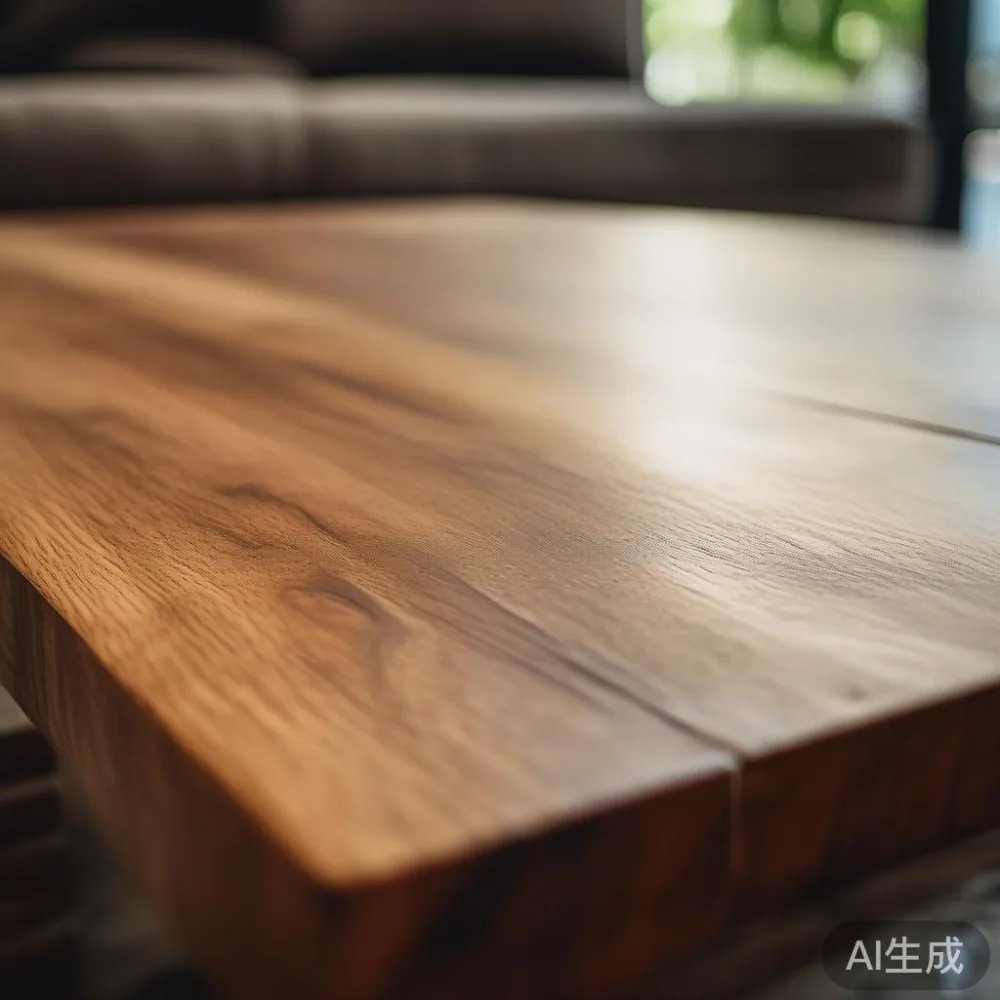
First, the top expands across the grain. A solid oak or walnut coffee table top will swell about 0.18% for every 1% rise in moisture content, and 0.08% along the grain. Across the width, that means a 60 cm panel can move 1.0–1.5 mm per 1% MC change, which is small per day but meaningful over a wet season.
Second, joinery opens up. Mortise and tenon joints on older or poorly dried frames will show daylight through the seam when the wood swells and the joint cannot absorb the growth. Well-made frames handle this. Frames that were glued up too wet will telegraph the same problem in reverse.
Third, finish failure. Lacquer and conversion varnish both block moisture exchange, but only on the surfaces they cover. The end grain on the underside of a coffee table top can absorb and release moisture faster than the finished face, which leads to cupping when one side breathes and the other does not. The fix is balancing the finish on all sides, which our factory does as a default step.
How do I style a French neoclassical sectional sofa in a small apartment?
Anchor the seating on a long wall, choose a low rectangular solid wood coffee table at sofa-seat height (around 40–45 cm), and keep the legs slim and visible so the floor plane reads as open. A French neoclassical sectional sofa already carries curve, tufting, and a carved trim line, so the coffee table beneath it should stay quiet: a rectangular top in walnut or ash, no fussy apron, and a matte finish that will not fight the sofa's sheen. In a typical 90 sqm Singapore condo, that pairing leaves 70–80 cm of walking room behind the coffee table, which is the minimum corridor that keeps a 1.0 m wide lift lobby from feeling crowded when guests circulate.
The same logic applies to the rest of the room. A bed frame with a low headboard keeps the sightline calm, a dining table without a centerpiece leaves the eye somewhere to rest, and a wardrobe pushed flush against the wall frees up the 90 cm swing arc most condo doors need. The nightstand beside the bed should match the coffee table's wood tone within two shades, so the room reads as one piece rather than a collection. This is the part of French light luxury that actually works in 800 sqft flats: restraint, proportion, and one strong material running through the whole space.
How humidity moves through a HDB or condo apartment
Most people assume their indoor humidity matches the outdoor reading on the weather app. It does not. Three forces shape what your coffee table actually feels.
First, the air-con. A typical 2.5 kW split unit running for eight hours will drop a 25 sqm living room from 80% RH to 55–60% RH. That sounds great, but the swing from 80% daytime to 55% nighttime is exactly the kind of cycle that stresses wood. The fix is either a steady 23–24 °C setpoint or a dehumidifier set to 55% RH.
Second, the corridor. HDB corridors in blocks like those around Tampines Walk and Bedok Reservoir are partially sheltered but still vented. When the lift lobby door opens, a slug of humid corridor air enters the home. This matters less for a coffee table in the centre of the room and more for one pushed against the wall, where the back face sees different RH than the front.
Third, the floor. Ground-floor units in Punggol and Sengkang sometimes see higher slab moisture, especially in the first 18 months after TOP. A solid wood coffee table sitting directly on a damp slab for six months can wick moisture from the feet upward and show raised grain at the leg joints. Felt pads and a 5–10 cm air gap under the table help. Most of our Singapore customers place 3 mm felt under each leg as a baseline.
Reading a coffee table spec sheet through a humidity lens
Two numbers tell you almost everything about how a coffee table will behave in Singapore.
First, the kiln-dried moisture content. Anything in the 8–10% range is fine for an air-conditioned Singapore home. Anything above 12% means the wood will shrink after delivery, which shows up as gaps at the mitres and a slightly cupped top.
Second, the construction method. A solid wood coffee table with a floating top, where the planks are glued to a sub-frame that is screwed to the legs, will move with the seasons without cracking the top. A solid wood coffee table with a single glued-up slab and no relief cuts will eventually check at the ends when it cycles through two wet seasons. The same rules apply to a marble table with a wooden base, a dining table with breadboard ends, and the carcass of a wardrobe: the more the panels are allowed to float, the longer the piece will last.
Third, the finish. A matte open-pore finish will let the wood breathe and will hide small movement. A thick high-gloss lacquer will protect against spills but will also highlight any movement underneath. For humid climates, open-pore matte is the more forgiving choice.
Fourth, the underside. Ask whether the underside of the top is sealed. If the answer is no, the table will cup in the first wet season. If the answer is yes, the table will stay flat for a decade.
Will my solid wood coffee table crack in Singapore?
Not if it was built for the climate, and not if you keep indoor RH in the 50–65% range. Cracking happens when the moisture swing between wet and dry seasons exceeds what the joinery can absorb, or when the wood was dried too quickly at the factory. The fix for the first is a dehumidifier and a stable setpoint. The fix for the second is buying from a maker who kiln-dries properly and who will refinish the table if something does go wrong.
MIDHILL has been making solid wood furniture in Foshan since 2008, and one of the quiet services we offer is lifetime refinishing on structural pieces. Coffee tables qualify. If a customer in Singapore sends back a top after five years of use, we can sand it, re-balance the finish, and ship it back for the cost of freight, which from Foshan to a Singapore HDB door typically lands at SGD 180–260 for a 110 × 60 cm top, including the lift-up to the unit. The 10-year structural warranty covers frame cracks and joint failure, which are the failures we never want to see.
Buying guide: what to look for in a coffee table for Singapore
Pick the wood first. White oak, ash, and walnut are all stable enough to handle 4% MC swings if the construction is right. Rubberwood is cheaper but moves more, and teak can be excellent when quarter-sawn but is heavy, often 28–34 kg for a 110 × 60 cm coffee table, which is a real consideration if you are moving into a fifth-floor walk-up in a pre-2010 HDB block without a lift.
Pick the size second. A 110 × 60 cm rectangular top fits a 3-seater sofa with 35–40 cm of overhang on each end, which is the comfortable reach for a drinks glass. A 90 cm round top fits a smaller conversation grouping but eats more floor space visually. In a typical 4-room HDB living room of around 18–22 sqm, the rectangular 110 × 60 form is the most space-efficient.
Pick the height third. Sofa-seat height in our sofa line sits at 44 cm. The coffee table should land within 2 cm of that, so 42–46 cm is the sweet spot. A low 35 cm table looks editorial but forces you to lean forward every time you pick up a glass, and over a year that is an actual neck complaint.
Pick the finish fourth. A matte hardwax oil is repairable and breathable. A satin lacquer is tougher against spills but harder to refinish. For a household with kids under 10, satin lacquer is the practical call. For an apartment with adults only, hardwax oil ages more gracefully.
Pick the legs fifth. Tapered solid wood legs in 6 × 6 cm or 7 × 7 cm section look light and let the room breathe. Turned legs in 8–10 cm section look heavier and suit a post-modern light luxury scheme. Metal legs at 2.5 cm diameter read almost invisible and shift the piece toward American light luxury.
How to live with the table after delivery
Three habits keep a solid wood coffee table flat in Singapore.
Run a dehumidifier in the living room for 4–6 hours a day during the wet season, target 55% RH. A standard 12 L/day unit costs around SGD 280–420 and uses about 2.5 kWh per day, which adds roughly SGD 25–30 to a monthly bill at current GST-inclusive rates.
Keep the table 30 cm away from the air-con louver. Direct cold air on one side of the top will dry that face faster than the rest, and you will see a slight bow toward the vent within a season.
Wipe spills within 20 minutes. Standing water leaves a white ring on most oil finishes, and on a humid day the wood under the ring will absorb more moisture than the wood around it, which sets up a local swell that takes weeks to relax.
For a household that already owns a solid wood sofa, a bed frame, a dining table, a wardrobe, and a nightstand from the same maker, the coffee table becomes the visual through-line. Matching tones within two shades across those pieces makes a small Singapore condo read as a designed room rather than a collection of furniture.
What MIDHILL does differently for Southeast Asian customers
We kiln-dry to 8% MC before assembly, then condition the finished piece at 75% RH for 14 days in our Foshan holding room. That pre-stabilises the wood for the climate you actually live in, which is closer to Singapore or Bangkok than to a dry indoor showroom. The undersides of all table tops are sealed to the same film thickness as the tops, and we float-mount every solid wood panel where the design allows.
Our Singapore deliveries run 18–24 days from Foshan to door, including consolidation at our Tuas warehouse and a same-day booking window of 09:00–13:00 or 13:00–18:00. Free shipping kicks in above US$350, which works out to roughly SGD 470 at today's rate, and a 110 × 60 cm solid walnut coffee table sits comfortably above that line. Returns within 14 days are accepted on unused pieces in original packaging, which matters for condo buyers who want to see the table in the room before committing. The same care we put into a coffee table goes into every solid wood sofa, bed frame, dining table, wardrobe, and nightstand on the line.
If you are weighing a marble table against a solid wood coffee table for a Tampines or Punggol condo, the honest answer is that marble wins on heat tolerance and surface hardness, and wood wins on warmth, repairability, and the way it softens a small room. Either choice will behave well in Singapore if you keep the indoor climate honest. The table you pick is the smaller decision. The humidity you manage is the larger one.