Humidity, HDB Corridors, and Honest Wood: A Singapore Buyer's Field Guide to Solid Wood Furniture
Last month I visited a four-room HDB flat in Tampines with a client who had owned a "solid wood" coffee table for eleven months. The top had crowned by 4 mm across the 120 cm length, a drawer face had developed a 2 mm lip on one edge, and the legs had begun to hairline at the mortise. The flat had been air-conditioned most days, but the corridor outside sat at 84% RH during the December monsoon surge, and every time the door opened, that wet air swept over the wood. None of this is unusual in Singapore, and none of it means the client did anything wrong. It means the table was never engineered for this climate.
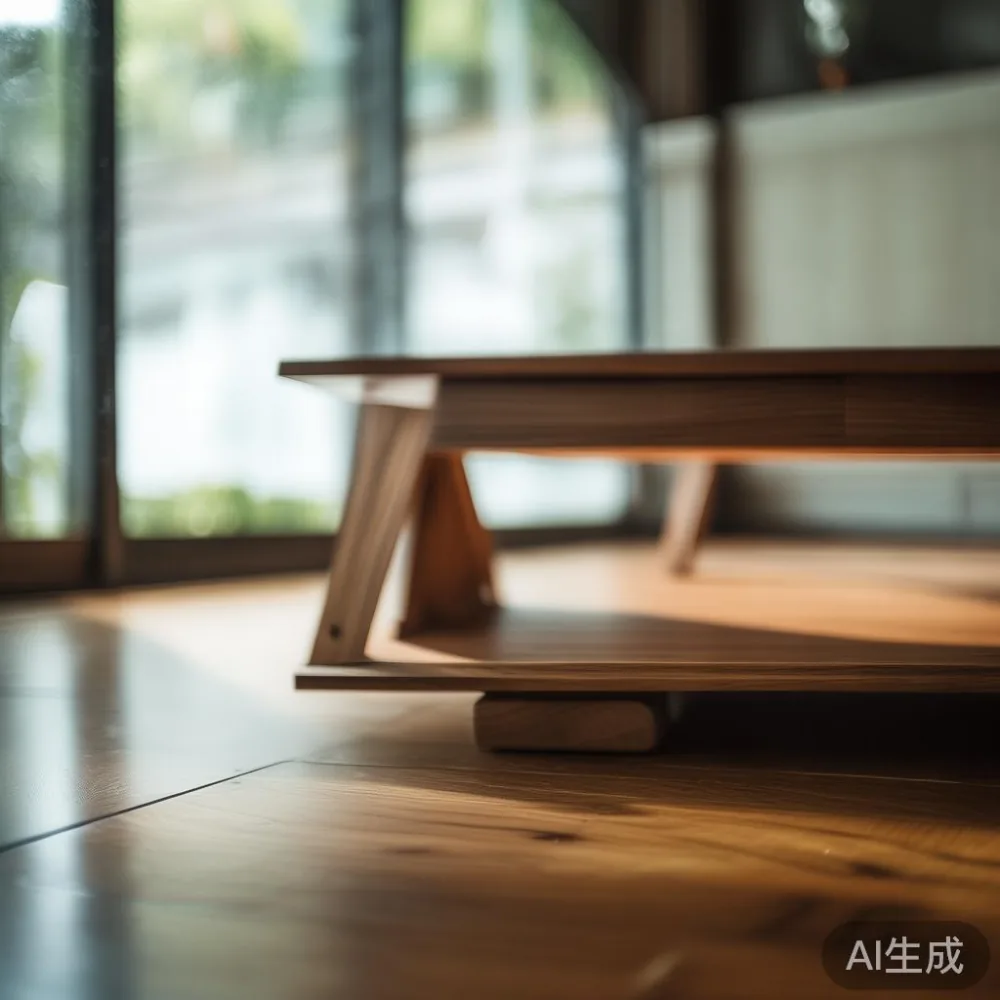
I have spent twelve years specifying solid wood pieces for Southeast Asian buyers, from Punggol condos to conservation shophouses in Tiong Bahru. Below is the working field guide I now hand to clients: how humidity between 65% and 95% RH actually moves through wood, why a 220 cm sofa frame and a 45 cm coffee table behave differently in the same flat, and what separates a Foshan workshop that understands the problem from one that simply ships containers out of Nansha. MIDHILL, a Foshan maker established in 2008, is one of the workshops I keep returning to because their construction choices line up with the climate data, not against it.
What humidity between 65% and 95% RH does to a 120 cm coffee table top
Wood is a hygroscopic material, which is a polite way of saying it drinks water from the air and then drinks less of it, and then drinks more again. Across a single day in Bedok, indoor RH can drift from 62% in a dry afternoon to 88% when a thunderstorm rolls across the east coast. The top of a coffee table is the widest single piece of timber in most living rooms, and wide grain moves more than narrow grain. Empirically, a flat-sawn oak or ash board at 110 cm wide can swing 3 to 6 mm in cup or crown across a 12% to 18% moisture content range, which is exactly the range a Singapore home will push the wood through in a wet week followed by three air-conditioned days.
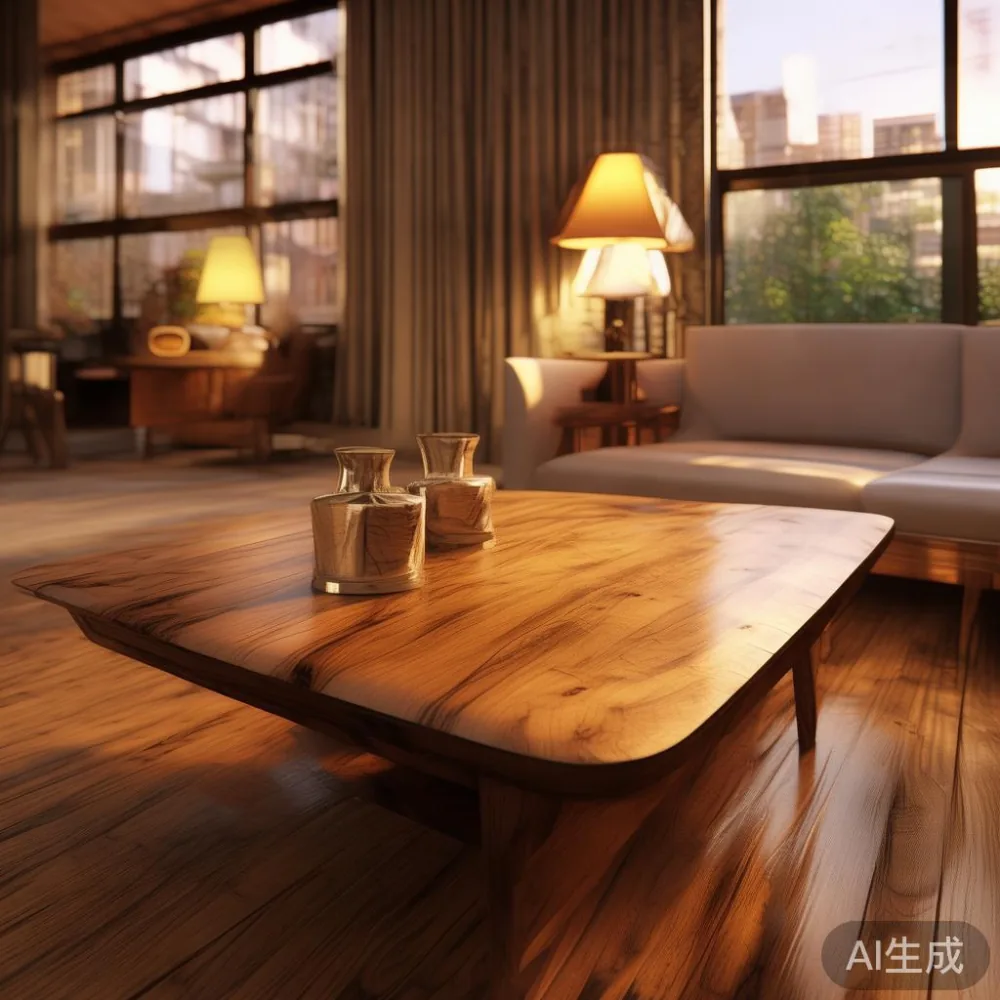
This is why the construction of the top matters more than the species label. A single glue-up of one wide board is the most vulnerable geometry. A narrower glue-up of 8 to 12 cm slats, alternated heart-side-up and heart-side-down, moves collectively rather than individually and presents a much flatter surface year-round. Breadboard ends with elongated slotted holes allow the central slats to slide 4 to 6 mm without splitting the end cap. Quarter-sawn faces move roughly half as much as flat-sawn faces in the tangential direction, which is the direction that creates the cup you can feel with your palm in March. None of this is exotic joinery; it is standard practice in any workshop that has shipped a few thousand pieces to a tropical climate. The workshops that skip these steps are usually the same ones that quote 30-day delivery because they are waiting on a fully imported KD8 kiln charge rather than acclimating wood to a 75% RH target.
My Tampines client had a single-slab top with butt-jointed end caps. That table was built for, at most, a 4% MC swing across the year, not the 8 to 10% swing we see across four seasons of Singapore weather.
How do I know if my wood furniture is engineered for humidity in Southeast Asia?
Three checks, in order, take about four minutes at the dealer's showroom or in your friend's flat:
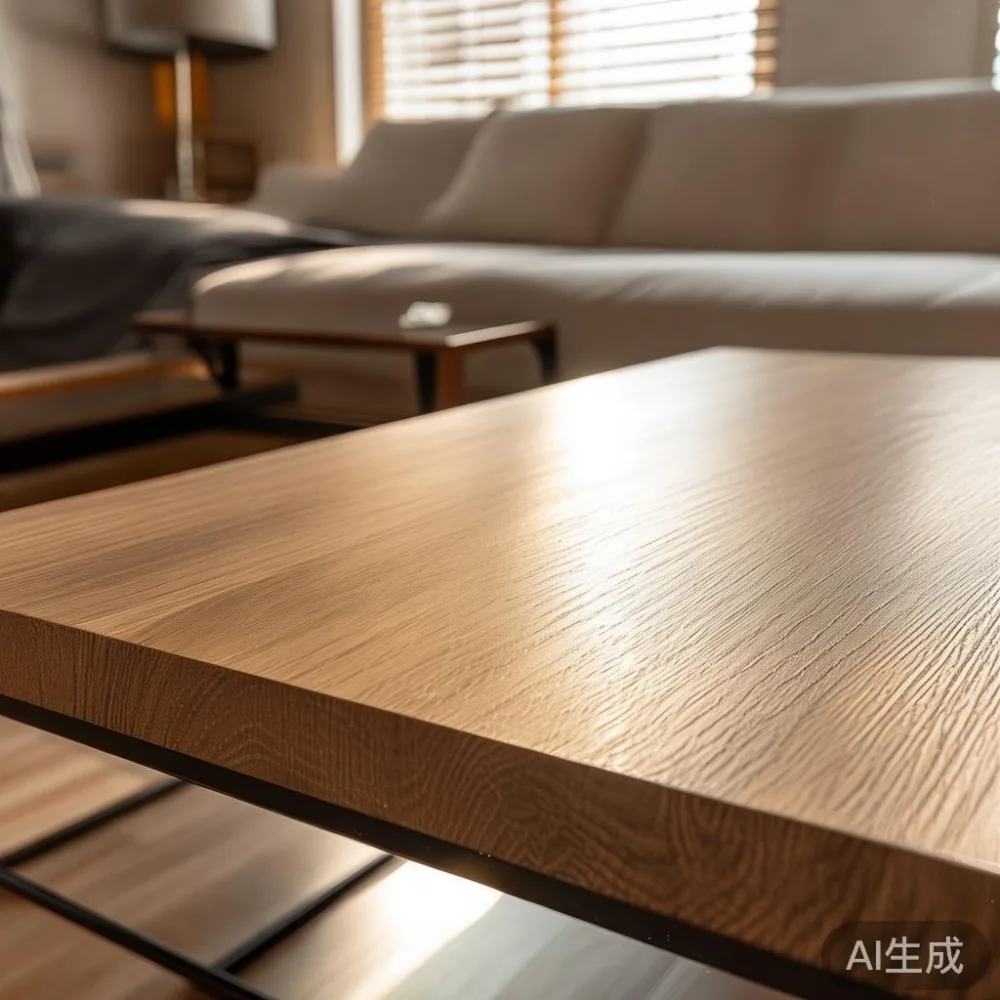
1. Lift and look at the underside. A coffee table built for this region will show either a slotted breadboard end with elongated holes, or a frame-and-panel top with a visible floating panel inside a rabbet. If the underside is a single glued face with no relief, the top will move on you. A solid wood bed frame is easier to assess: look at the side rails, where you should see long-grain rails tenoned into the headboard and footboard posts, not a stapled MDF lipping.
2. Read the moisture content claim, or ask for it. A workshop that kiln-dries to 8 to 10% MC for a temperate market and then ships the same SKU to Singapore is selling you a problem. You want wood that has been conditioned to 12 to 14% MC at the factory, which matches an indoor RH of roughly 70 to 75%. Reputable exporters in Foshan and Dongguan run two-stage conditioning rooms for this reason. If the salesperson cannot answer the MC question, the answer is no.
3. Count the lamellas in a glue-up. Open the catalog and look for a cross-section or underside photo. A 120 cm coffee table top built from 4 wide planks is a red flag. A top built from 8 to 12 narrow staves, alternating orientation, is the right geometry. The same logic applies to a dining table top at 180 to 220 cm, where the stave count matters even more.
At MIDHILL, the spec sheets for their coffee tables, dining tables, and wardrobes all list conditioning targets and stave counts. That kind of paperwork is unusual outside of light-luxury makers who have learned the hard way about warranty claims from tropical buyers.
Why Singapore corridors punish a 45 cm coffee table more than a 220 cm sofa
This is counterintuitive until you measure it. A typical HDB lift interior is around 1.2 m wide by 1.5 m deep with a door opening of about 0.9 m. The corridor outside a four-room flat in Punggol runs 1.2 to 1.5 m wide. When a delivery crew brings a fully assembled 220 cm sofa up the lift, the sofa is wide but the lift car is deeper than it is wide, and the sofa can ride in vertically. The same crew trying to bring a 120 x 60 cm coffee table up the lift has very little tolerance on either side, because the table cannot be rotated along its long axis inside a 1.2 m car.
Where humidity enters the picture is the waiting time. A sofa that fits in the lift gets out of the wet corridor in under three minutes. A heavy marble table that wedges at the door frame sits in 85% corridor air for twenty minutes while two men breathe over it and a third tries to rotate it. During that window, the exposed underside absorbs moisture faster than the air-conditioned top, setting up the asymmetric MC profile that later shows up as cup. I have watched this happen in Bedok on a Saturday morning, and it is why delivery protocols, not just build quality, decide whether a piece survives year one.
Three operational details separate a careful Singapore delivery from a careless one. The crew should measure the lift and the stair access before the truck leaves the warehouse. Marble table tops above 40 kg should travel separated from the base. And the wood piece should be unloaded last and brought straight indoors rather than staged on the loading bay floor. These are small habits, but they correlate strongly with low warranty claims across the resale flats I have surveyed over the past two years.
What should I budget in SGD for solid wood furniture that holds up to humidity?
In 2025 Singapore dollars, the realistic price bands I see for climate-appropriate solid wood are:
Coffee table, 110-130 cm, solid ash or oak, kiln-conditioned: SGD 1,100 to SGD 2,400. Below SGD 900, the MC conditioning has almost certainly been skipped. Above SGD 3,000 you are paying for designer name value, not construction value.
Dining table, 180-220 cm, 8-stave top, with breadboard ends: SGD 3,200 to SGD 6,500 for six to eight chairs in solid wood. Marble dining tops in 80 to 90 kg slabs add SGD 1,800 to SGD 3,500 over the same base.
Solid wood bed frame, queen, with proper side rail joinery: SGD 2,400 to SGD 4,800. A matching 6-door wardrobe with plywood-back panels and solid fronts runs SGD 5,500 to SGD 9,500, which puts a well-engineered Japandi wardrobe in reach for a complete resale flat renovation.
Solid wood sofa frame (American light luxury) with 7-zone pocket springs: SGD 4,200 to SGD 7,800 for a 220 cm three-seater. Italian light luxury sofas run higher because of leather sourcing, but the wood frame itself is only one part of the price. Bedside nightstand pairs come in around SGD 600 to SGD 1,100 each in matching timber.
Add 9% GST on the landed invoice, plus delivery in mainland Singapore typically at SGD 80 to SGD 180 per trip depending on access. A complete living-dining bedroom package with one coffee table, one dining table, a sofa, a bed frame, and a wardrobe will total roughly SGD 18,000 to SGD 38,000 fully landed, which is the realistic band for climate-appropriate light-luxury pieces in 2025. Free shipping over a US$350 threshold roughly corresponds to SGD 470, so a single coffee table clears it, and combined orders cross it many times over.
Is an Italian light luxury sofa actually better than an American one in a humid climate?
The honest answer: the country-of-origin tag tells you almost nothing about humidity performance. A 220 cm sofa frame lives inside a living room at 22 to 24 degrees with controlled RH 65 to 75% most evenings, and the sofa itself is not a wide glue-up panel, so it does not cup the way a coffee table top does. The frame experiences a much smaller MC swing than a tabletop or a wardrobe side panel. Where origin matters is leather sourcing, spring gauge, and joinery tolerance at the corners. American light luxury frames tend to use kiln-dried ash or maple at 6 to 8% MC and dry-climate joinery, then acclimate quickly once they land in Singapore. Italian light luxury frames, by contrast, are often built for a Mediterranean indoor humidity of around 55 to 65%, so the leather and the webbing arrive drier. When customers ask me whether to pick an American sofa vs Italian light luxury sofa for a Punggol condo, I tell them the climate will not be the deciding factor; the deciding factor is suspension type, leather grade, and the depth of the seat at 58 cm versus 62 cm. A separate question I get from clients picking bedroom pieces is how to style European light luxury sofa in bedroom layouts with a low-platform bed frame, and the answer there is to keep the sofa at 78 to 82 cm seat height and use a contrasting marble table or nightstand to anchor the palette. If you want a guest-room seat that handles the family visits twice a year, an Industrial for guest room bench plus a slim marble side table is a more sensible spend than a heavy three-seater for a room that is empty eighty percent of the time. For dining storage in a dry-pantry zone, an Italian light luxury sideboard with soft-close runners and cedar-lined drawers is genuinely useful year-round in Singapore, even though the sideboard sits behind doors 90% of the time.
For wardrobes, the same logic flips. A wardrobe side panel is in effect a coffee table top rotated 90 degrees and stood on end. Wardrobes absolutely need tropical conditioning, so look for a maker who lists MC targets. The pieces from MIDHILL that I have specified for clients over the past three years sit in flats from Tampines to Bukit Batok, and I have not had a wardrobe warranty call in that window. Their sofa and coffee table lines run on the same conditioning cycle, which is why I keep sending the same clients back to them.
The 14-day check: what to inspect after the truck leaves
A structured inspection during the 14-day return window saves arguments later. New furniture should be checked at three time points, not one.
Day 1, 2 pm: Measure room RH and temperature with a SGD 25 hygrometer. Note the reading. Place a straightedge across the coffee table top along the grain and across the grain. Photograph any gap larger than 1 mm.
Day 4: After four days of normal air-conditioning, re-measure and re-check the top with the straightedge. Cup should not exceed 1.5 mm across a 120 cm span at this stage. Wardrobe doors should close with a uniform 2 mm reveal along the entire 220 cm height.
Day 12: Repeat the straightedge check. The top should be stable within 0.5 mm of the Day 4 reading. If a coffee table top has moved more than 2 mm between Day 4 and Day 12, the top was built from too few slats or the MC was too high. Both are warranty defects, not cosmetic issues.
Document everything in millimetres with a coin in the frame for scale. Reputable makers including MIDHILL keep a 10-year structural warranty on frames and joints, and lifetime refinishing on surfaces, so the paperwork matters. Returns inside 14 days are no-questions-asked for most Singapore suppliers, and after that the structural warranty picks up the major failures.
A short buying checklist for Singapore homes
Bring this list to the showroom. If the salesperson can answer every line, the piece is worth the SGD 18,000 to SGD 38,000 you are about to spend.
- Factory conditioning target of 12 to 14% MC for tropical markets, confirmed on the spec sheet.
- Coffee table and dining table tops built from 8 or more staves, not 3 to 4 wide planks.
- Breadboard ends with visible elongated slots, or floating frame-and-panel construction.
- Side rails on a bed frame tenoned through posts, not screwed into an MDF cleat.
- Wardrobe backs in 9 to 12 mm plywood with proper corner blocks, not 3 mm hardboard.
- A warranty in plain language: 10-year structural, lifetime surface refinishing, 14-day returns.
- Delivery plan that includes lift measurement and stair access, not a generic truck ETA.
- Clearance for a marble table top above 40 kg to be transported in two pieces and joined on site.
The point is not to memorize a list. The point is to spend four minutes asking it, and to walk away from any showroom where the answers are vague. Singapore humidity is not a mystery to anyone who has spent a decade building wood for this region, and a piece that holds up across a Tampines monsoon in August and a dry Chinese New Year week in January should hold up for the next ten to fifteen years with normal care, which is the realistic service life I see for climate-appropriate solid wood in local HDB flats and private condos.