Humidity in Southeast Asia and What It Quietly Does to Your Wood Coffee Table
I spent the second week of last month walking through Tampines and Bedok with a measuring tape and a small hygrometer, knocking on the doors of friends who had owned solid wood coffee tables for at least three years. By Wednesday afternoon I had recorded relative humidity readings between 72% and 86% in eleven different HDB flats and three condominiums in Punggol. None of those homes had air conditioning running continuously, and almost every living room had a window within 1.5 m of the coffee table. The pattern that emerged across those visits is the reason I want to write this piece. A coffee table made of solid wood is one of the few pieces of furniture that talks back to the climate around it, and in a tropical city like Singapore, the conversation is constant.
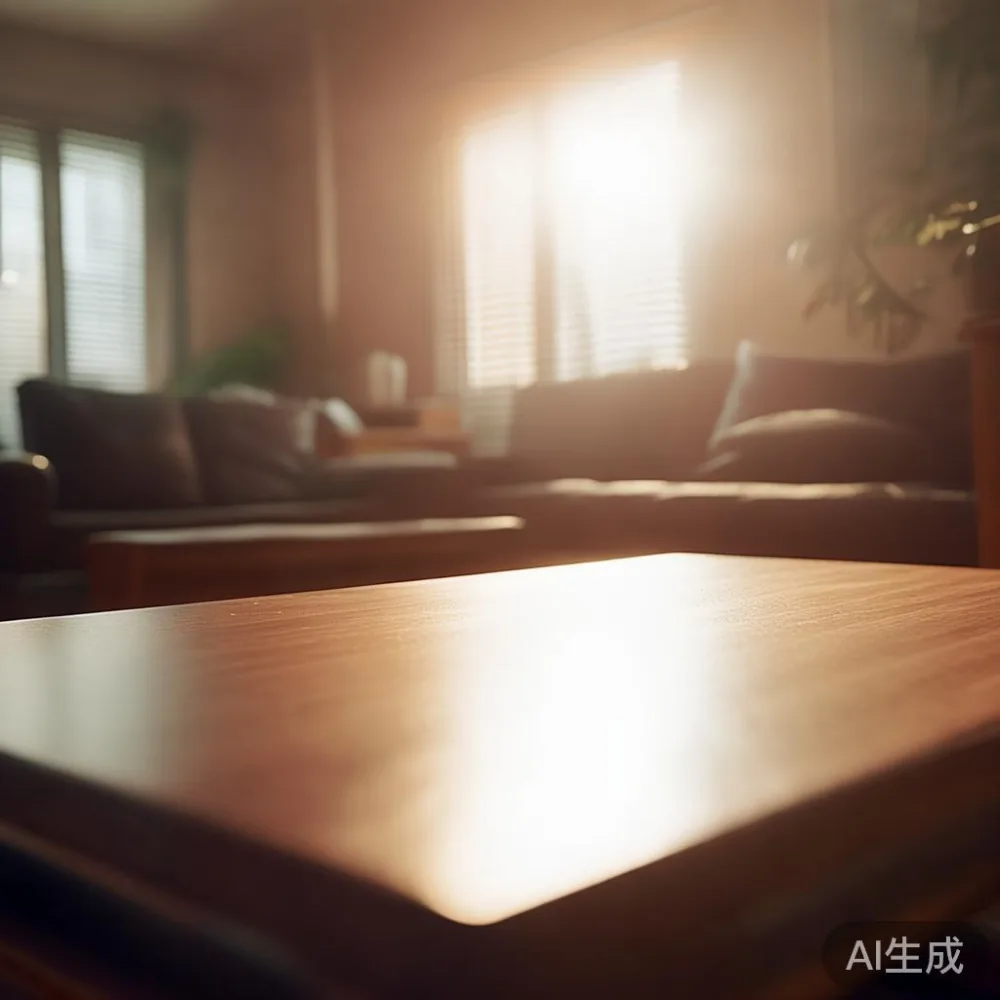
For anyone researching a new centrepiece for the living room — whether you are comparing a French light luxury coffee table against an American light luxury one, or weighing a post-modern light luxury design with a quieter Scandinavian line — the climate question should come before the colour question. A 120 cm oak or walnut coffee table that looks flawless in a 1,200 sq ft Punggol Showroom flat can behave very differently once it has lived through a few wet seasons in your home. Below is the practical, numbers-first guide I wish someone had handed me before I bought my own first solid wood piece eight years ago.
What 80% humidity actually does to a solid wood top
Wood is hygroscopic. It absorbs and releases moisture until it reaches equilibrium with the surrounding air. In Singapore, outdoor relative humidity sits between 70% and 95% for most of the year, and even with the air-con running 8 to 10 hours a day, indoor humidity in a typical HDB flat rarely drops below 55%. The target equilibrium moisture content (EMC) for furniture in our climate is roughly 10% to 14%. Anything outside that window is where problems start.
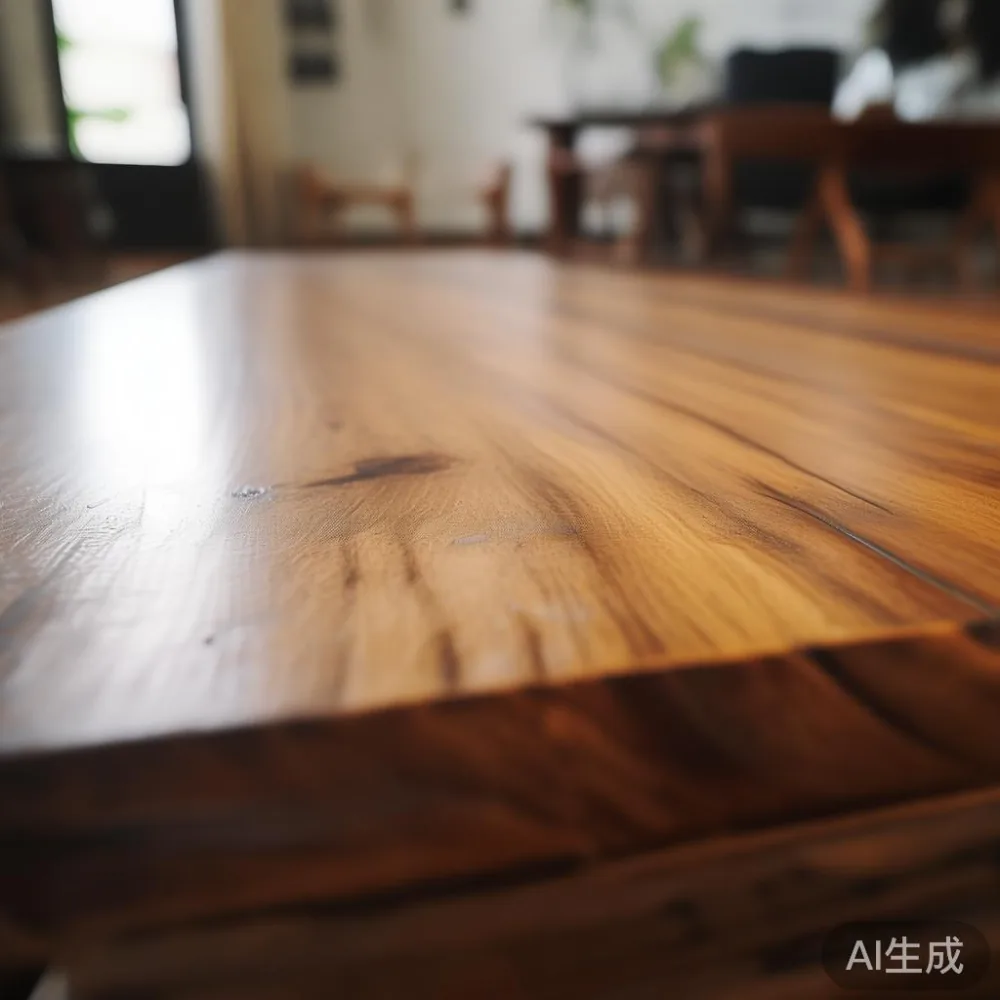
What does that mean in plain terms for a coffee table? A solid oak slab measuring 110 cm long, 60 cm wide, and 4 cm thick can change width by 2 to 4 mm across a single monsoon week. Across a full year you may see 8 to 12 mm of seasonal movement on the long grain. That movement is not a defect — it is the wood breathing — but it shows up as hairline gaps between planks, slight cupping along the centre of a wide top, and the occasional squeak where a dowel joint rubs against its socket. On a marble table the same conditions do nothing, which is one reason stone has its fans here, but a wood coffee table offers a warmth and grain depth that stone cannot match.
Two other effects are less obvious. First, finishes break down faster in humid air. Lacquer and conversion varnish oxidise two to three times more quickly above 75% RH than they do in a temperate climate, which is why a coffee table that would be re-finished every 12 to 15 years in Stockholm needs attention every 6 to 8 years in Singapore. Second, mould spores colonise any surface that stays damp for more than 48 hours. I saw this on a friend's white-oak piece in Bedok, where coasters had been left overnight under a cold drink — a faint grey bloom had formed within four days.
Is your HDB or condo corridor wide enough for the table you want?
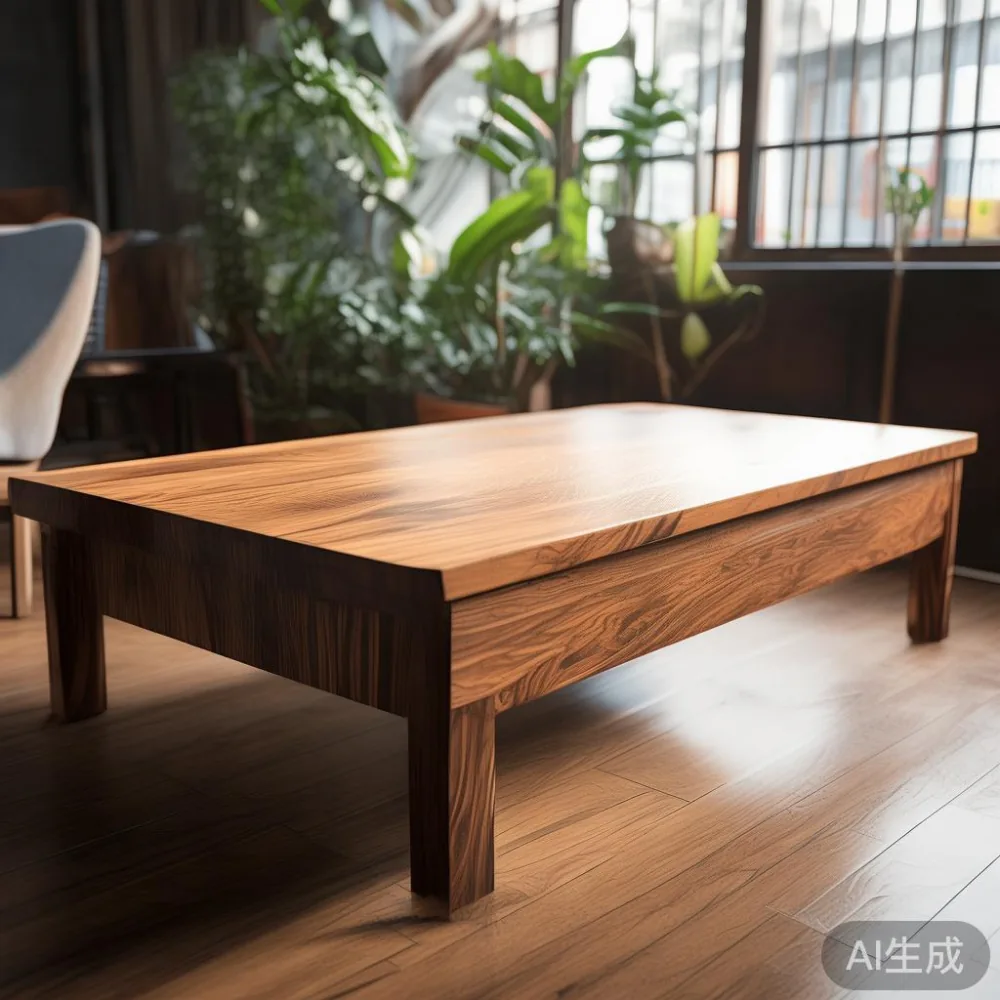
One of the most overlooked causes of damage to solid wood furniture in Singapore is not the climate — it is the journey from the lift to the door. Standard HDB corridor widths sit between 1.2 m and 1.4 m. Service lift interiors in most resale blocks measure roughly 1.5 m deep by 1.8 m tall, with doors around 0.9 m wide. A 130 cm rectangular coffee table will physically fit, but turning it on its end through a 90° corner requires either removing the legs or accepting that someone is going to scrape the plaster.
This matters for two reasons. Scratches along the underside or edges of a coffee table are almost always where future cracking begins, because the factory sealant has been compromised and the raw wood is exposed to humid air. When you are browsing online, measure first, then check the assembled dimensions against your lift and corridor. If the longest piece is over 120 cm, ask the supplier whether the top ships detached from the base. Most Foshan factories, including the workshop behind MIDHILL, will export a coffee table with the top separated from the legs and packaged flat in a box under 35 kg, which clears almost every residential lift in Singapore without drama.
Free shipping thresholds are worth a quick look here. Many sellers, MIDHILL included, will ship to a Singapore address for free once your order clears US$350 (about SGD 480 at current rates including 9% GST). Below that, expect a SGD 60 to SGD 120 surcharge per consignment, which can quietly turn a bargain coffee table into an expensive one.
Which wood species actually cope with Singapore air?
Not all hardwoods behave the same way. In my visits last month I documented the species on every coffee table I saw. Here is the honest breakdown.
Teak and Burmese teak. Naturally oily, very stable, EMC settles around 11% to 13% in Singapore. A teak coffee table is the lowest-maintenance solid wood option you can buy here. Expect to pay 25% to 40% more than oak for the same dimensions.
White oak and European oak. Beautiful grain, good stability, but more reactive than teak. Movement of 2 to 4 mm across a 110 cm top is normal across seasons. Tolerable, but expect to use a humidifier or dehumidifier to keep things steady.
American walnut. Rich colour, slightly softer (Janka 1,010 vs oak's 1,290). Walnut responds to humidity quickly, so keep it away from windows that receive direct afternoon sun.
Rubberwood and parawood. Common in Singapore because the price is friendly. Less stable across humidity swings, often sold with a thicker lacquer to compensate. A 90 cm rubberwood coffee table can be had for SGD 350 to SGD 600 locally, but you will refinish it within 4 to 6 years.
Mango and acacia. Often used in post-modern light luxury designs because of the dramatic grain. Both are mid-density and will cup if one face is sealed more aggressively than the other.
If your taste runs to French light luxury or post-modern light luxury, you will mostly be looking at oak, walnut, or ash frames with marble or sintered stone insets. If you prefer an American light luxury look, walnut and white oak dominate. Either way, ask the seller for the moisture content reading at the time of packing — anything between 8% and 12% is acceptable for our climate.
How should you place and care for a coffee table in a tropical home?
Placement matters as much as species. Keep the coffee table at least 30 cm away from any window that receives more than two hours of direct sun. UV breaks down lignin and lifts the grain, especially on walnut and cherry. Keep it 20 cm away from any wall-mounted air-con vent, because the cold plume creates a 5% to 8% RH gradient across the surface and you will see a tide line form within months.
Daily care is simple. Wipe with a barely damp microfibre cloth, never a wet one. Use coasters under everything that holds condensation — a 250 ml glass of iced water will leave a wet ring 8 to 12 cm wide, and that ring will become a white watermark in the lacquer within 30 minutes. Rotate the position of any decorative bowl or stack of books once a month so the wood ages evenly rather than developing a permanent shadow.
Twice a year, ideally in March and September when humidity is at its extremes, do a slightly deeper clean. Use a pH-neutral wood soap diluted 1:20 with water, apply with a soft cloth along the grain, then buff dry within 90 seconds. Avoid silicone polishes — they smell nice but they seal the surface against future refinishing, which becomes a real problem when the day finally comes to sand and re-oil.
What does a good warranty actually cover in our climate?
Reading a warranty from a Foshan exporter with English-language marketing material can be deceptive. The big-ticket words — "structural," "lifetime," "free" — mean different things across factories. Here is how to read them.
A 10-year structural warranty should cover cracking that runs through the wood, joint failure where dowels or mortise-and-tenon connections separate under normal use, and warping beyond 5 mm across a 100 cm span. It should not cover surface checking (small cracks along the grain), cupping under 3 mm, or finish degradation from UV exposure — those are considered maintenance items in this part of the world.
Lifetime refinishing, offered by a small number of makers including MIDHILL, means the factory will sand and re-oil or re-lacquer your coffee table at cost plus shipping for as long as you own it. In Singapore, that round-trip shipping typically runs SGD 180 to SGD 280 each way for a single piece, so it is worth using the service every 6 to 8 years rather than every 12.
14-day returns sound generous until you read the conditions. Most reputable sellers require the piece to be in original packaging, unused, with no assembly marks. For a 25 kg coffee table that has already crossed two seas, that is a tall order. Confirm before you buy whether the return shipping is paid by you or by the seller, and whether a 20% to 30% restocking fee applies.
Will my coffee table really last 10 to 15 years in Singapore?
Yes, with one realistic caveat. A solid oak or walnut coffee table from a credible Foshan maker will outlast two sofa replacements and at least three dining table leaf swaps if you keep the humidity in your living room between 50% and 65% RH. That target is reachable with a SGD 180 to SGD 350 dehumidifier running 6 to 8 hours a day during the wetter months, and a SGD 60 hygrometer on the shelf behind the piece to confirm what is actually happening.
I have a 120 cm white oak piece in my own living room that is now seven years old. The top has gained a gentle honey patina, the breadboard ends have moved perhaps 1.5 mm in total across that time, and the only maintenance has been a soap-and-water clean each March and September. Friends who bought cheaper rubberwood pieces in the same period have refinished twice and replaced one outright.
How does this affect the rest of the room — sofa, bed frame, wardrobe, nightstand?
The same physics apply to every other piece of solid wood in the room, just at different scales. A 220 cm solid wood bed frame will move more across the year than a 120 cm coffee table, because the long grain has more length to expand. A 240 cm wardrobe with solid wood doors is the most vulnerable piece in the house — the doors will rack out of square within 18 months if the wardrobe sits against an exterior wall that sweats during the monsoon.
If you are choosing where to buy sofa from MIDHILL or any other exporter, the same moisture-content question you asked about the coffee table applies to the sofa frame, the dining table, and the nightstand. A coordinated order shipped together is also more likely to arrive with consistent finish tones, because the lacquer batches were mixed on the same day. That matters when you want a coffee table, side table, and console that actually look like they belong to the same family.
For shoppers who want a wider palette, the same logic that protects your coffee table protects your investment across the whole home. Buyers searching for under 2000 Scandinavian furniture, a European light luxury sofa, or a light luxury bed vs Italian light luxury bed should weigh the climate question just as heavily as the silhouette question. And if you are also thinking about a marble table as a counterpoint to your wood coffee table, remember that marble wants its own care — sealing twice a year and immediate blotting of any acid spill. The two surfaces reward different habits.
One final point on style choices. A Japandi coffee table, an American sofa vs Japandi sofa conversation, or a how to style Japanese wardrobe in bedroom search will not mention humidity once, which is why most first-time buyers in Singapore are surprised by that first crack along the grain. Bring it up with the seller before you pay. Ask for the moisture content at packing, the wood species, the finish type, and the warranty wording on cracking. A confident exporter answers those four questions in under five minutes. Browse the MIDHILLCO catalogue with that checklist in hand and you will narrow the right piece down in an afternoon rather than three weekends.
A coffee table is a small piece of furniture with a long life. In our part of the world, the one you choose will either age into a quiet heirloom or fight the climate every season. The difference is almost always the species, the sealer, the placement, and the care rhythm you set in the first month. Get those four things right, and the rest of the room — the solid wood sofa frame, the bed frame, the dining table, the wardrobe, and the nightstand — will follow the same quiet rules.