How to Match a Coffee Table to a Warm Minimal Interior
A warm minimal living room is not an empty room. It is a space with pale walls, carefully controlled colour, clean circulation, and just enough tactile contrast to feel comfortable. The coffee table plays a central role because it occupies the visual centre between a sofa and the rest of the interior. Its height, footprint, material, and shape can either make the room feel ordered or make it feel crowded.

For Singapore homes, practical measurements matter as much as style. HDB flats and condos in Tampines, Bedok, and Punggol often combine compact living rooms with generous natural light, but lift doors, service corridors, and turning points can limit furniture delivery. A table that photographs well in a showroom may still be awkward to carry upstairs. A 120 cm coffee table is a sensible starting point for many apartments, while a 90 cm model suits narrower layouts. Choosing solid wood with a stable stretcher or a compact slab design can make the move less stressful.
This guide explains how to match a coffee table to a warm minimal interior while keeping proportion, function, and local conditions in view. It also considers how the coffee table works with related pieces such as a solid wood sofa, bed frame, dining table, wardrobe, nightstand, or marble table without turning the living room into a catalogue of competing styles.
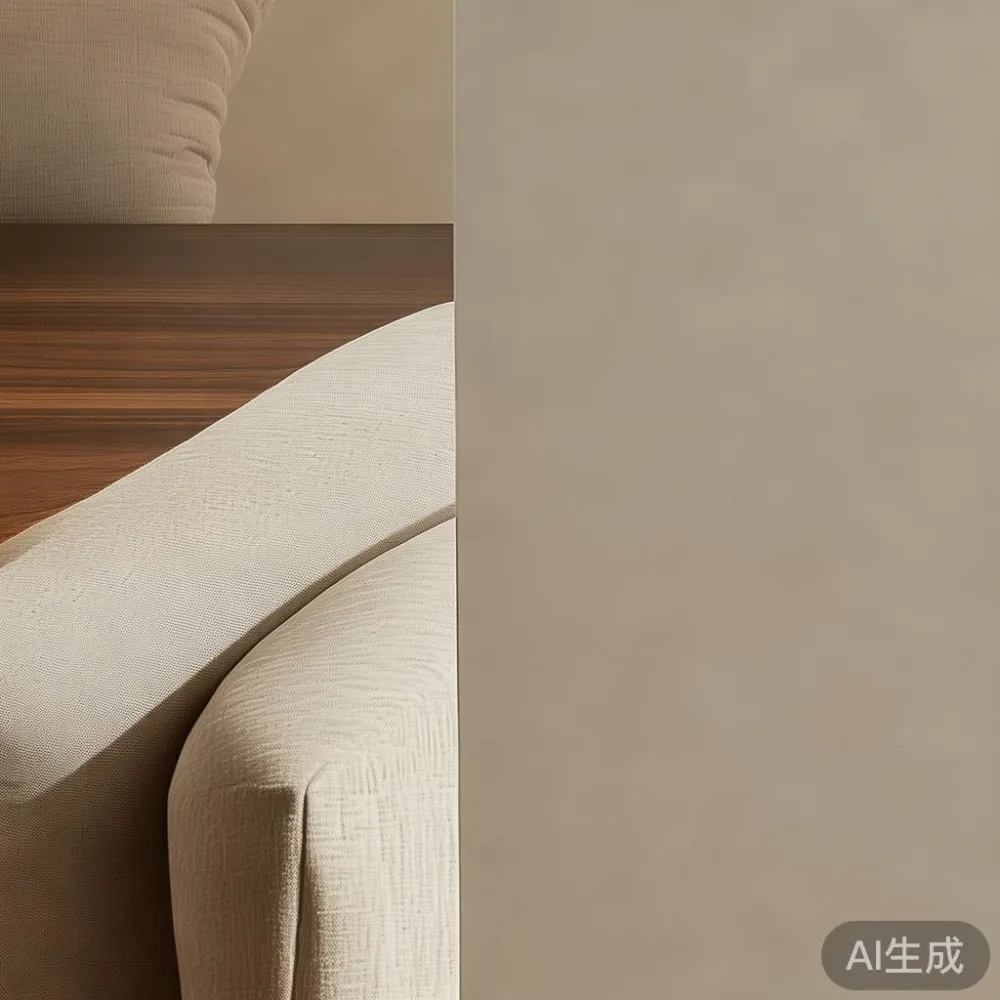
What Proportion Should a Coffee Table Be in a Singapore Living Room?
A useful rule is to leave 35–45 cm between the coffee table and the sofa. This allows someone to walk through, reach for a cup, or sit on the floor without knocking the table. The coffee table should generally be no longer than two-thirds of the usable sofa width. A 200 cm sofa can carry a 110–120 cm coffee table, while a 160 cm sofa usually looks balanced with an 80–100 cm model.
Height also affects comfort. A table around 38–42 cm high pairs naturally with a standard sofa whose seat is approximately 40–45 cm from the floor. If the sofa is unusually low, select a coffee table around 32–38 cm high to preserve an easy relationship between the two pieces. Round edges are helpful in a family home because they soften both the silhouette and the risk of a sharp corner beside a play area.
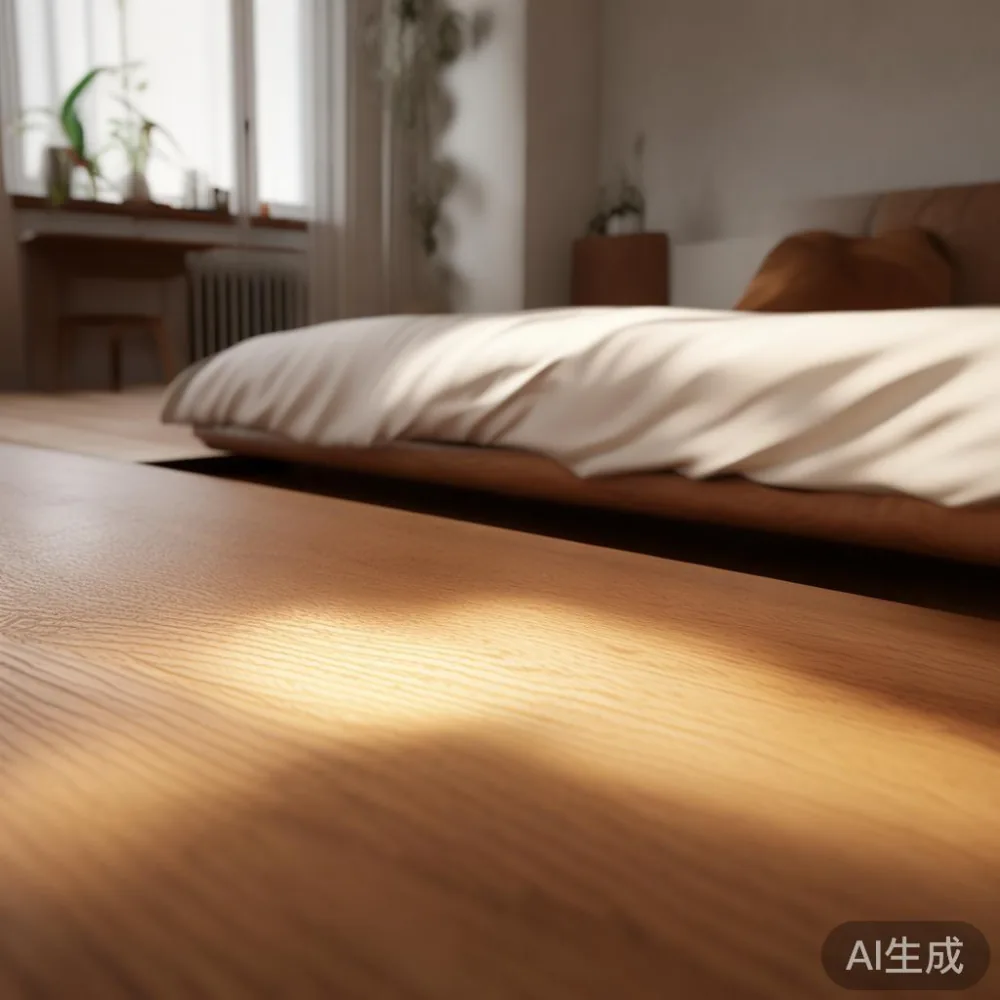
Measure the room before choosing the table, not afterwards. In an HDB living room, note the sofa position, television console depth, window doors, and the clear route from the entrance. Leave at least 75 cm of circulation space where people regularly pass. In a Punggol condo with an open kitchen, the dining table may share the same visual field as the coffee table; matching their timber tones can prevent the room from looking fragmented.
Which Wood Suits a Warm Minimal Interior?
Warm minimalism works particularly well with woods that have visible but calm grain. Light oak, ash, beech, and warm walnut can each work, provided the finish remains matte or softly satin rather than high-gloss. Pale oak creates an airy Scandinavian effect, while walnut brings a deeper French light luxury mood. Teak is also practical in Singapore because it suits humid conditions and ages with character, although oiled teak may darken from a honey tone to a deeper brown over several years.
For a restrained room, avoid mixing too many timber colours under one ceiling. A warm oak coffee table can coordinate with an oak dining table and a solid wood sofa in oatmeal fabric. If the larger pieces are already dark or cool-toned, a medium-toned coffee table can bridge them without drawing excessive attention. The wood should feel like a continuation of the architecture, not a separate decorative statement.
Solid wood construction offers useful longevity for a frequently touched centrepiece. MIDHILL produces solid wood furniture in Foshan and supports each piece with a 10-year structural warranty, which is a meaningful consideration for a table that supports daily use. A kiln-dried hardwood frame, secure corner joints, and an even top are more important than a complicated underside that cannot be inspected.
Do not judge the weight only by appearance. A 110 cm solid oak coffee table may weigh roughly 35–55 kg depending on its construction and density. That weight gives stability, but it must be considered during delivery. A lighter 90 cm model may weigh about 25–40 kg and could be easier for two people to manage.
Should the Coffee Table Be Round, Rectangular, or Oval?
Shape should follow the room's geometry. A rectangular coffee table reinforces the straight lines often found in HDB living rooms, open-plan condos, and window grids. It is especially useful when the sofa faces a television or console and there is a clear 100–120 cm width to fill. Choose softened corners or a gently curved end if the table sits close to the main walkway.
A round coffee table brings balance to a room with a linear sofa. Two circular forms—one rounded back edge and one round top—create a relaxed rhythm without requiring additional ornament. An oval version can work beside a sofa that sits against a curved wall or in a narrow room where a rectangle would create visual congestion. The practical difference is circulation: a round table can preserve a smoother path around a corner, but it should not be pushed so far back that people must twist around it.
For a warm minimal interior, choose one primary form and avoid layering several competing shapes. A slim round coffee table beside a rectilinear sofa is enough. If a marble table already occupies a nearby corner, a simple timber coffee table will usually look more composed than another heavily veined stone piece.
Some homeowners compare seating options before settling on the table. The question of Japanese sofa vs Nordic sofa often comes down to visual weight: a Japanese-style, low-profile solid wood sofa can make the room feel grounded, while a Nordic sofa with lighter legs may leave more visible floor area. The coffee table should support that impression rather than overpower it.
How Do You Match a Coffee Table to a Warm Minimal Palette?
Begin with the colours already present. Warm minimal interiors commonly use ivory, sand, oatmeal, taupe, camel, and muted clay, supported by black, charcoal, or dark brown accents. The coffee table can repeat one of these colours, but it does not need to match everything exactly. A warm walnut top can sit comfortably with a cream solid wood sofa, a charcoal rug, and pale plaster walls.
Keep the palette to approximately three main colour families: wall colour, upholstery, and wood. Add one accent through objects rather than through large furniture. For example, pair a 110 cm oak coffee table with a beige sofa, off-white walls, and a single rust-coloured ceramic tray. This creates warmth without making the room visually busy.
Texture is often more useful than colour for a minimal room. A tactile rug, a ceramic vase, and a woven basket can soften a plain coffee table. If the table has an open shelf, leave it mostly empty and use one book stack of about 20 cm by 27 cm or a small plant. Overfilling a minimal table quickly reduces its visual calm.
Consider neighbouring furniture carefully. If the room contains an Italian light luxury bed, its refined lines and likely light upholstery can inform a restrained living area without creating a literal room set. In a master bedroom, the nightstand should sit close enough to reach from the bed; in the living room, the coffee table should perform the same compositional role by anchoring the seating group.
How Much Clearance Is Needed Around a Coffee Table?
Clearance is where styling often becomes less realistic. Between the coffee table and a console or television unit, allow about 30–45 cm. Between the table and an upholstered armchair, leave 35–45 cm. A main passage should retain at least 75 cm, preferably 90 cm when someone carries a tray of food through it.
These dimensions also help when a room is used by several generations. A lower gap may allow children to walk safely, but it also creates a place for toys to collect. A concealed drawer or a shelf with a solid panel can keep the area tidier than an open framework. For a compact HDB flat, a coffee table with a lower shelf around 12–18 cm above the floor can provide storage without appearing visually heavy.
Do not sacrifice legroom for a large surface. A 120 cm top looks generous in a photograph, yet it can make a 180 cm sofa feel undersized if the table projects too far into the seating zone. Step back and view the arrangement from the doorway. The table should look centred, not stretched.
How Will the Coffee Table Fit Through the Lift and Service Corridor?
Measure the full delivery route before ordering: the parking bay, lift entrance, lift car dimensions, corridor turns, and the door opening into the home. Standard HDB lift doors may be around 80–90 cm wide, while some condo service lifts and corridors vary considerably. A 120 cm rectangular coffee table may fit diagonally, but a deep drawer, removable top, or tapered legs can make the difference between a smooth move and a difficult one.
Ask the supplier for the packaged dimensions and weight rather than relying on the assembled size. A box may add 2–5 cm on each side. For a corridor, a table that is 110 cm long and 55–60 cm wide may still be manageable if it can be turned on its side, provided the route is not blocked by a fire door or sharp turn.
Delivery timing and cost also deserve attention. MIDHILL offers free shipping for orders over US$350, although the final Singapore delivery charge should be confirmed before purchase because freight, access, and local handling can differ. GST and any import charges may be shown separately. A typical production and delivery estimate might be 30–45 days, but custom dimensions can require 45–60 days. Confirm the dispatch window in writing.
Singapore's lift and corridor dimensions are especially relevant for furniture made in Foshan Lingzhan and surrounding manufacturing districts. A supplier that understands export packing and can provide clear carton measurements is better placed to support the last stage of delivery, where careful measurement prevents damage to walls, doors, and the furniture itself.
How Do You Keep Warm Minimalism From Feeling Cold?
Warmth comes from material, layering, and light rather than from clutter. A matte timber coffee table is more comforting than a polished metal one. Add a soft runner or tray, keep one warm-toned textile nearby, and use lighting at approximately 2700–3000 kelvin. A table lamp on one side and a directional lamp opposite create depth without filling the walls.
Scale matters as much as warmth. A 70 cm coffee table beside a large sofa may look like an afterthought, while a 130 cm table in a tiny room can dominate it. In most Singapore interiors, 90–120 cm is the practical range, with depth around 50–65 cm. If the sofa has a deep seat, select a narrower coffee table so the gap remains usable.
Other furniture should support the same language. A solid wood bed frame with simple lines can carry a warm-minimal bedroom; a solid wood dining table can extend the material palette into an open-plan living area. If storage is prominent, the question of is Mid-century modern wardrobe worth it can be evaluated through proportion and finish rather than labels alone. A tidy wardrobe with warm timber fronts may complement the living room's restraint, although it should not be placed where it steals attention from the coffee table.
For a guest room, the phrase Industrial for guest room may suggest metal, exposed masonry, and strong contrast. If that room is visible from the living area, coordinate the coffee table with warm wood and matte black metal sparingly. The goal is continuity, not a full conversion to industrial style.
What Makes a Coffee Table Feel Light Luxury?
Light luxury is about proportion, material quality, and precise details rather than visible extravagance. A solid wood coffee table can qualify through a slender profile, a well-aligned joint, a quiet grain pattern, and a finish that does not look excessively polished. French light luxury often leans towards carved edges, curved silhouettes, and richer walnut tones. American light luxury is more likely to use generous scale, clean upholstery, and architectural forms. Post-modern light luxury can introduce an unexpected geometry or a mixed-material detail while keeping the surrounding room controlled.
For a warm minimal interior, the strongest choice is usually restraint. A 120 cm solid oak coffee table with a 22–28 cm thick top and a recessed base can look substantial without becoming blocky. If walnut is preferred, select a straight-grained board with restrained movement in the grain. Avoid a table with too many decorative objects on display; one ceramic bowl and one book can make the surface feel considered.
The surrounding seating matters too. When comparing an American bed vs Modern bed in the bedroom, the practical conclusion will often differ from the living-room decision, but the principle remains: one clear material identity creates coherence. A solid wood sofa with a warm oatmeal fabric provides a suitable backdrop for a solid wood coffee table. A marble table may be better placed elsewhere if the living room already contains veining, glossy surfaces, or strong pattern.
Can a Coffee Table Be Both Practical and Easy to Maintain?
Yes, if its finish and construction suit the way you live. In Singapore's humid climate, choose a solid wood coffee table with a stable finish that can be wiped with a slightly damp cloth and dried promptly. Avoid placing a delicate lacquered surface directly beneath a plant with wet soil. Coasters should be around 9–10 cm to protect the wood from condensation, and the top should not be dragged during cleaning.
Storage adds function. A drawer with an internal size of about 40 by 30 cm can hold coasters, remotes, and charging cables. An open shelf should be at least 20 cm high for magazines, although closed storage looks calmer in a minimal room. Stable construction matters more than maximum capacity; a narrow top that wobbles is less useful than a compact table that feels solid under a 10 kg load.
Care should also be considered at the end of the furniture's life. A refinishing service can extend the appearance of a well-made solid wood piece, but the condition of the original finish determines how much can be restored. Owners should avoid extreme heat, direct sunlight, and standing water. Wipe the surface every 1–2 weeks during frequent use and inspect the joints every 6–12 months.
Returns and warranties provide different forms of reassurance. MIDHILL offers a 10-year structural warranty and lifetime refinishing, while its 14-day returns policy allows a buyer to assess the coffee table at home. Check whether the return process includes assembly, packaging, and freight costs. For a made-to-measure item, return conditions may differ from standard stock, so measurements and finish approval should happen before production.
How Can I Test the Coffee Table Before Buying?
Request a material sample whenever possible. Hold it next to the sofa fabric and wall colour under daylight, not only under showroom lighting. Check the grain direction, warmth, and sheen. A table that looks pale at midday should still coordinate with the room's warm lamps at night.
Last month I visited a client renovation in Tampines with a 3.8 by 4.2 m living room. The sofa was 210 cm long and faced a 180 cm television console. A 125 cm coffee table had initially looked attractive in the catalogue, but it left only 28 cm behind the sofa and made the seating area feel compressed. We exchanged it for a 105 cm solid oak model with a 58 cm depth. The walking gap became 39 cm, and the table could also fit through the HDB lift when turned on its side.
At home, test the table with daily objects rather than decorative ones. Place a laptop, a cup of water, two remote controls, and a dinner tray on it. If all fit without crowding, the top size is probably appropriate. Sit at different points on the sofa and check whether the table is reachable without leaning forward. Finally, walk around it with a laundry basket or food tray to verify that circulation still feels natural.
A well-matched coffee table should feel obvious in the room without looking as though it was placed there without thought. In a warm minimal interior, the right combination is usually a warm timber tone, a disciplined 90–120 cm footprint, softened edges, and enough clearance for daily life. Measure the room, inspect the delivery route, and compare finishes under Singapore daylight before committing.