How Southeast Asian Humidity Affects Your Coffee Table: A Singapore Owner's Guide
I spent the first six months after moving into a 4-room HDB flat in Punggol wondering why the drawer of my ash coffee table stopped closing smoothly. The air felt warm, the air-con ran at 23 degrees most nights, and the windows stayed shut against afternoon showers. When a furniture-restorer friend came over for kopi in Tampines, he placed a small digital hygrometer on the surface of the coffee table and pointed at the reading: 82 percent. "That," he said, "is why the panel is swelling." That single number changed how I shop for solid wood furniture, and it is the reason I now pay attention to moisture data whenever I evaluate a dining table, a bed frame, or a wardrobe destined for a Singapore home.
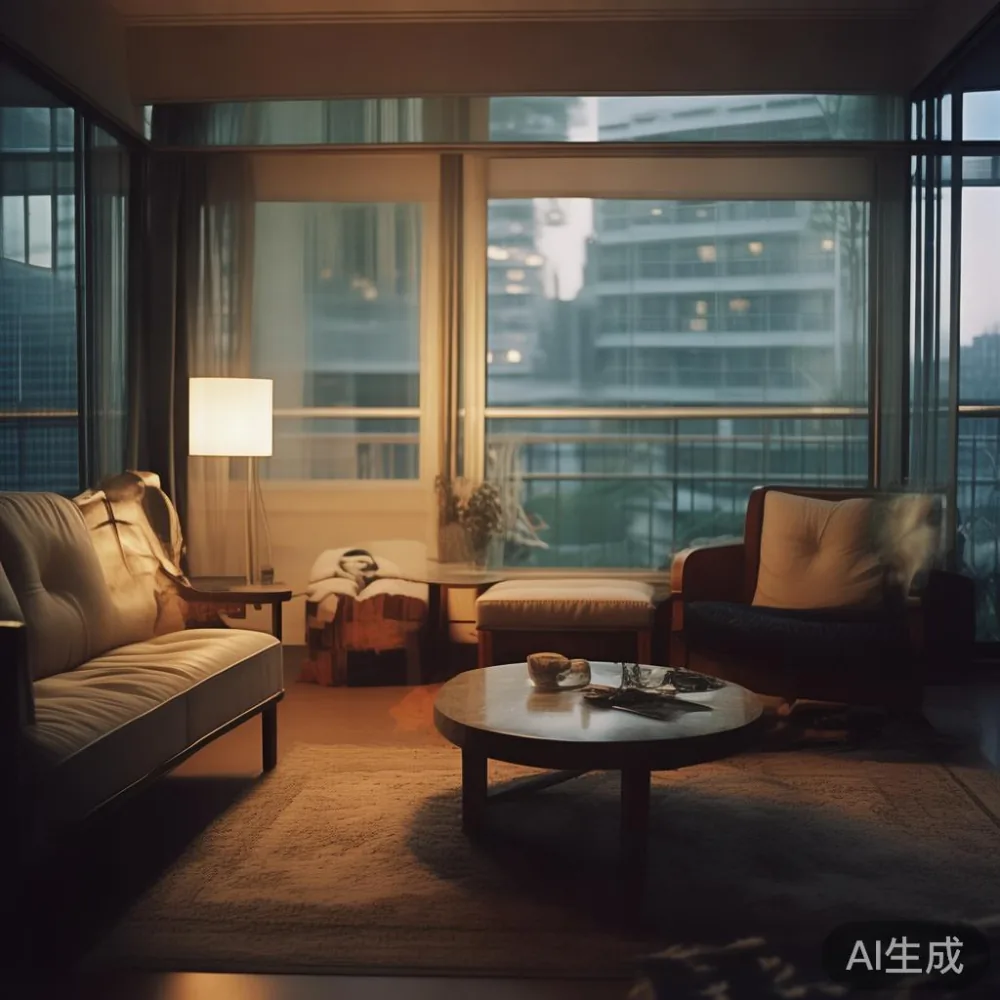
Singapore sits roughly one degree north of the equator, and the average relative humidity hovers between 70 and 85 percent for most of the year. The December monsoon pushes it higher, while the air-conditioned indoor environment can drop it to a brittle 40 percent if you run the compressor all night. That 40-point swing is the silent enemy of any solid wood sofa frame, nightstand, or marble-topped table you bring into a HDB flat in Bedok or a condo in Tanjong Pagar. The good news: a little knowledge about wood movement, factory drying standards, and daily care goes a long way toward keeping your coffee table flat, your wardrobe doors square, and your wallet untouched by premature repair bills.
What does Singapore's humidity actually do to a solid wood coffee table?
Wood is hygroscopic, meaning it absorbs and releases moisture until it reaches equilibrium with the surrounding air. When the relative humidity rises, the cell walls absorb water vapour and the timber expands; when it falls, the wood shrinks. Across a 200 mm wide tabletop, a swing from 40 percent to 80 percent relative humidity can move the panel by 3 to 5 mm. Multiply that by an 800 mm wide coffee table top and the cumulative expansion becomes visible at every joint.
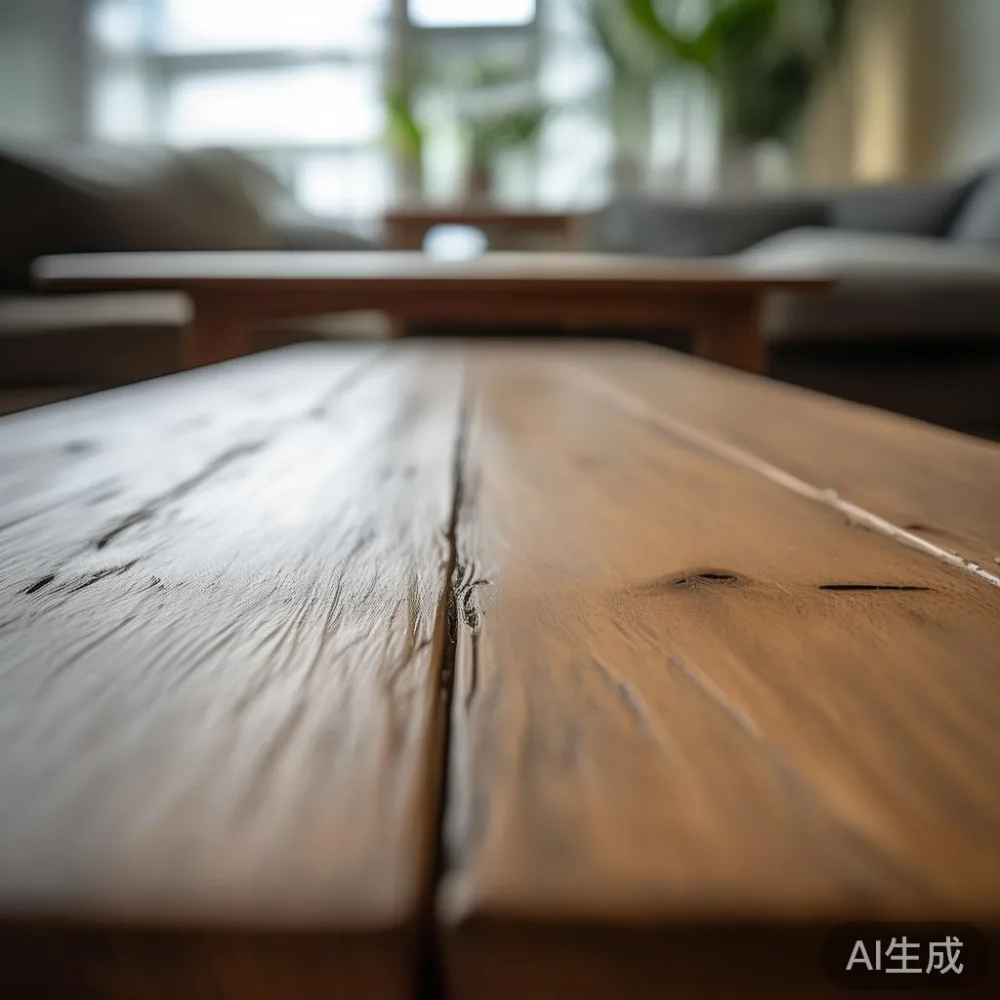
In practice, this shows up in three familiar ways. The first is cupping, where the centre of a wide table panel rises above the edges because the face absorbs moisture faster than the back. The second is bowing along the long edge, which is what happened to my Punggol coffee table. The third is the appearance of small checks or hairline cracks on end-grain surfaces such as table legs, where moisture escapes fastest. A well-constructed piece designed for tropical climates accounts for this movement with floating joinery, quarter-sawn timber, and a factory moisture content of 8 to 12 percent, which is the sweet spot for an indoor Singapore environment running air-conditioning most of the day.
One quick test I now do in any showroom: ask the sales staff for a moisture meter reading on an unpolished underside of a sample. A reading above 14 percent in air-conditioned Foshan or Jakarta showrooms is a warning sign, because the wood will shrink once it sits in your 22-degree living room. MIDHILL, a Foshan manufacturer established in 2008, kiln-dries its solid wood sofa, dining table, and wardrobe components to a target of 10 percent before assembly, and the pieces I inspected in their Guangzhou bonded warehouse last March read between 9.2 and 10.6 percent on a pin-type meter.
Is the lift in my HDB block wide enough for a marble-topped coffee table?
Yes, this matters more than most buyers realise. A standard HDB passenger lift in a 2010s block in Tampines or Punggol has an internal cabin of roughly 1.6 m deep by 1.1 m wide, with a door opening of about 0.9 m. A 120 cm long marble table top will not fit flat; you must tilt it on edge and pad the corners. Two movers, three layers of moving blanket, and a 15-minute wait for the lift during the no-lift-restriction window after 10 pm is the safest route. I learned this the hard way when a 138 cm marble table cracked a corner against the lift frame on a Saturday afternoon in Bedok. The replacement cost S$420 plus a 14-day wait, and the building management added a note about lift etiquette on the noticeboard the following Monday.
Corridors in HDB blocks are typically 1.2 m to 1.5 m wide, and the staircase turning radius on upper floors is tight. A coffee table delivered in a flat-pack box between 18 kg and 35 kg is manageable for one person, but a fully assembled solid wood coffee table weighing 40 kg to 55 kg is a two-person job. A lightweight coffee table in the 22 kg to 30 kg range, built on a poplar or rubberwood base, will save your back and your lift relations.
For private condos, lift cabins are often 1.8 m to 2.1 m deep, which makes moving a 150 cm long dining table much easier, but the loading bay may only operate between 9 am and 5 pm on weekdays. Always book the loading bay slot at least 48 hours ahead, and confirm whether the estate requires a S$50 to S$80 delivery pass per trip.
How should I acclimatise a new coffee table before the first cup of kopi?
Acclimatisation is the unglamorous step that prevents 80 percent of the humidity-related complaints I hear from friends. The rule is simple: leave the table in the room where it will live, unwrapped, with the air-conditioning set to your normal temperature, for 7 to 14 days before placing heavy objects on it. If you have just moved into a freshly painted resale flat in Hougang and the air feels clammy, run a dehumidifier for 48 hours before the furniture arrives. A 12-litre desiccant dehumidifier costs around S$189 at any neighbourhood electronics store in Jurong, and it will pull the relative humidity down to a stable 55 percent in a 20 sqm living room.
During the acclimatisation window, do not place the table directly against an external wall, because the surface behind it stays 2 to 3 degrees cooler and the differential can cause localised warping. Keep the piece 8 cm to 10 cm away from the wall, and never store damp items underneath. If the table has a drawer, leave it half open for the first 48 hours so the inner panels can equalise at the same rate as the outer ones.
For pieces such as a French provincial dressing table with carved detailing, or a French provincial TV console with louvred doors, the acclimatisation period matters even more because the smaller cross-sections and decorative cut-outs respond to humidity swings faster than a plain tabletop. The same applies to a Mid-century modern dining table with tapered legs: the 38 mm to 42 mm leg thickness is more forgiving than a 25 mm leg, but the joinery at the apron still needs time to settle.
Which wood species and finishes handle Singapore's climate best?
Not all solid wood performs equally in a tropical indoor environment. After 12 years of visiting workshops in Foshan, Shunde, and Johor, I have a short list of species that hold up well. White oak, with a tight grain and a Janka hardness of 1,360 lbf, is my first choice for a coffee table base because it resists warping and accepts stain evenly. Rubberwood, the sustainable by-product of the latex industry in Malaysia, is widely used in Singapore-friendly furniture and machines cleanly, though it darkens under UV exposure over 18 to 24 months. Ash behaves similarly to white oak but is 10 to 15 percent cheaper per cubic foot, which is why it shows up in many mid-range solid wood sofa frames and dining tables.
Teak remains the gold standard for humid climates because its natural oils resist moisture cycling, but expect to pay S$2,800 to S$5,200 for a 120 cm coffee table in genuine grade-A Burmese teak. Walnut, by contrast, is a poor choice for ground-floor HDB flats that feel damp, because it moves more than oak and is prone to surface checking. For a marble-topped piece, ask whether the stone is bonded to a moisture-resistant MDF substrate or to solid wood; the former is more dimensionally stable in air-conditioned rooms but the latter lasts longer in a non-AC balcony setting.
Finishes matter as much as species. A conversion varnish or a hardwax oil penetrates 0.2 mm to 0.5 mm into the surface and slows moisture exchange, while a polyurethane film finish seals the top completely but can crack at corners when the wood moves underneath. For a nightstand or a small coffee table in a child's room, hardwax oil is easier to spot-repair every 12 to 18 months. For a 180 cm dining table that sees daily use, a catalyzed conversion varnish is the more practical choice.
How do I stop my wardrobe and bed frame from warping in a master bedroom?
Bedrooms are the most stable rooms in a Singapore home because the air-conditioner runs 6 to 10 hours every night. Keep the set temperature between 23 and 25 degrees Celsius, and the relative humidity will settle around 50 to 55 percent, which is ideal for a solid wood bed frame and a matching wardrobe. If you prefer a fan-only setup, expect 65 to 70 percent humidity and choose a bed frame with a floating slatted base rather than a solid platform, so air can circulate underneath and prevent mildew on the underside of the mattress.
For wardrobes, leave a 3 cm gap at the back of the unit so the wall can breathe. Push-fit wardrobes that sit flush against a damp HDB wall will trap moisture and develop black spots along the bottom edge within 12 months. If you are researching how to choose Mid-century modern wardrobe options for a condominium, look for pieces with back panels made of 9 mm to 12 mm plywood rather than 5 mm MDF, and confirm that the back is set into a rebate rather than stapled flat. A well-built wardrobe door should have 2 mm to 3 mm of seasonal clearance at the top and bottom; if the fit is too tight in the showroom, it will bind in your bedroom within a year.
Understanding how to choose Italian light luxury bed frames is similar in principle: focus on the joinery, not the marketing. An Italian light luxury bed with mortise-and-tenon corner joints, dovetailed drawer boxes, and a kiln-dried moisture content of 9 to 11 percent will outlast a glossy import with stapled joints and unknown drying standards by a factor of three. A piece from a maker that offers a 10-year structural warranty and lifetime refinishing is also a signal that the factory stands behind its drying and assembly process, which is exactly the kind of reassurance you need in a tropical climate.
What daily habits keep a coffee table flat for the next 15 years?
Once the table is settled, three habits will carry it through Singapore's seasonal swings. First, wipe spills within 10 minutes. A wet ring left overnight on an oak coffee table will leave a white watermark that takes 48 hours and a coat of hardwax oil to remove. Second, rotate the position of any heavy object, such as a stone fruit bowl or a stack of design books, every three months so the wood does not develop a permanent compression set. Third, refinish the top every 18 to 24 months. A 250 ml tin of Osmo Polyx-Oil costs about S$38 and covers a 90 cm by 60 cm coffee table with two thin coats, applied with a lint-free cloth in the direction of the grain.
Keep a small digital hygrometer on the table, ideally a model that logs min and max readings such as the Govee H5179, which retails for S$29.90 on Shopee. Check the weekly average; if it climbs above 70 percent, run the air-conditioner or a dehumidifier. If it drops below 45 percent during a dry February spell, place a shallow bowl of water near the table to add gentle moisture back into the air. The aim is a steady 50 to 60 percent range year-round, which is the band where solid wood is happiest.
Finally, lift the table rather than dragging it when you rearrange the living room. A 28 kg coffee table dragged across a tile floor can crack a tenon joint that took a craftsman 20 minutes to cut. If you are styling an american sofa set design in a 5-room HDB in Sengkang, pair the sofa with two smaller side tables on coasters rather than one large central coffee table, so each piece is light enough for one person to shift during the quarterly deep clean.
Where can Singapore buyers find humidity-tested solid wood furniture?
Most large Singapore retailers source from Guangdong, Johor, or Vietnam, but the drying standards vary widely. A direct-from-factory route through a Foshan maker with 16 years of export experience, an on-site kiln-drying facility, and a showroom in the Sino-Singapore Guangzhou Knowledge City gives you access to moisture data and joinery details that a local department store will not share. MIDHILL, for example, ships from its Foshan base to Singapore in 18 to 25 days by sea, with consolidated container rates that work out to around S$60 to S$120 per piece for orders above US$350 in value. Free delivery is included above that threshold, and 14-day returns are honoured for any structural defect traced back to moisture content at delivery.
If you are comparing a Mid-century modern dining table against a French provincial TV console for the same living room, ask both suppliers for the moisture content of the components before shipping. The factory that answers with a number between 8 and 12 percent has a working kiln; the one that says "we do not measure" is shipping air-dried timber that will move in your HDB flat. After a decade of buying, restoring, and sometimes regretting, I have learned that the most expensive piece of furniture is rarely the one with the highest price tag. It is the one that arrives wet, warps in three months, and cannot be returned because the warranty excludes moisture-related movement. Spend the extra five minutes on moisture data, and your coffee table will still be the centrepiece of your living room when your Punggol flat turns 30.