A 5-Year Cost Comparison: Veneer vs Solid Wood Coffee Tables
A coffee table sits at the centre of daily life in a Singapore home. It carries mugs, receives delivery parcels, supports a laptop during remote work, and often becomes the improvised dining surface when guests arrive. Yet choosing one is not simply a matter of comparing a photograph with a showroom sample. Veneer and solid wood look similar at first glance, but their five-year costs can differ sharply once delivery, maintenance, repairs, replacement, and resale are counted.
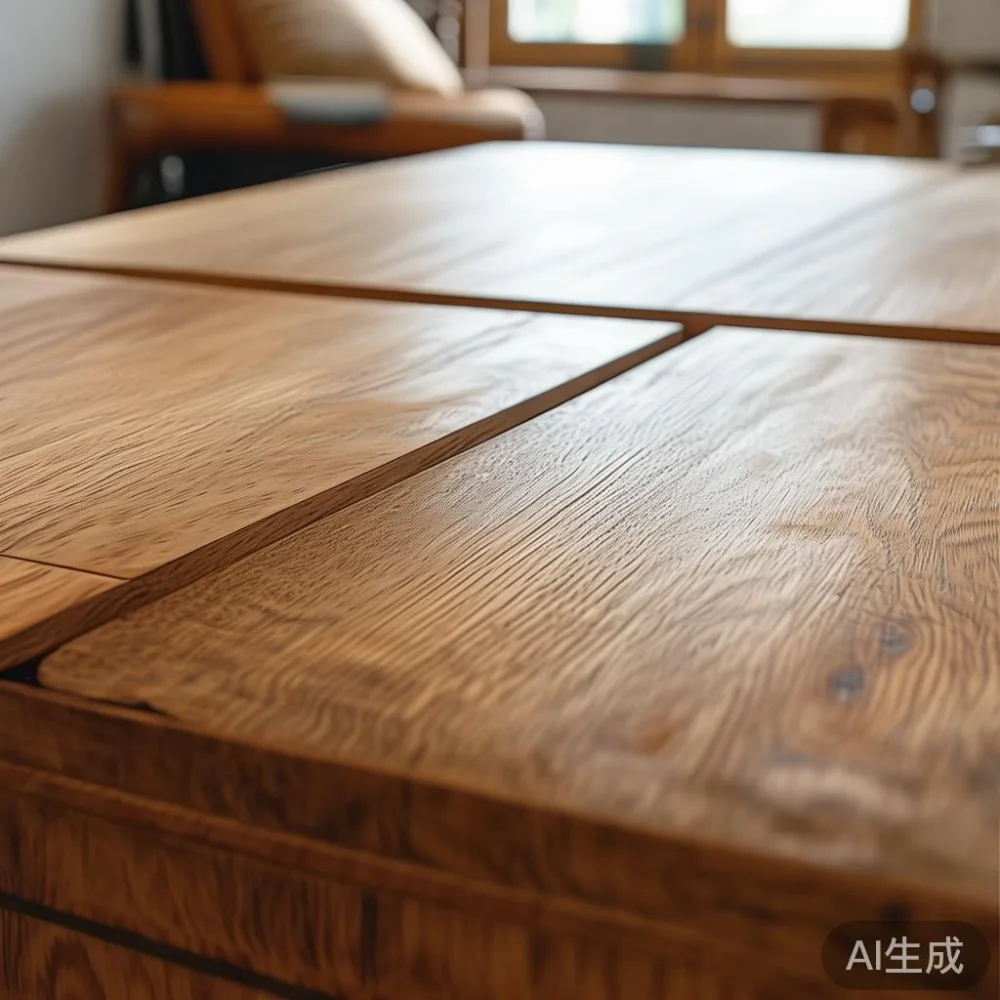
I compared typical coffee table purchases for Singapore HDB flats and condos in Tampines, Bedok, and Punggol, using prices in SGD and practical dimensions in centimetres. I also visited my colleague’s home last month to inspect a veneered coffee table that had been in daily use for four years. Its edge banding had begun to lift, while the top remained intact. That inspection shaped the figures below.
This comparison concerns coffee tables only. The aim is to calculate a realistic five-year ownership cost rather than declare one material automatically superior. Material quality, thickness, construction, humidity exposure, and owner habits all affect the result.
What does a coffee table cost in Singapore?
A practical veneer coffee table in Singapore may cost SGD 120 to SGD 450. Entry-level options often use particleboard or MDF cores with paper or wood veneer, with common top dimensions of 90 × 50 cm or 100 × 55 cm. Engineered options marketed as wood veneer can cost SGD 400 to SGD 900 when the finish and proportions are more refined.
A solid wood coffee table generally costs SGD 380 to SGD 1,800. Common solid wood specifications include oak, ash, teak, rubberwood, or walnut, with tops measuring 100 × 55 cm, 110 × 60 cm, or 120 × 65 cm. Thicker slabs, hand-rounded edges, mortise-and-tenon joints, and lower-volume finishes command higher prices.
For a fair comparison, I used two typical configurations: a 110 × 60 cm table weighing about 18 kg in veneer and a 120 × 65 cm table weighing about 24 kg in solid wood. These sizes suit many Singapore living rooms, but a 70 cm wide model may be more practical where the lift is narrow. Before purchase, check the packaged width rather than assuming the table dimensions will fit the lift door.
Singapore’s GST is 9%. If the listed price excludes GST, a veneer coffee table at SGD 260 becomes SGD 283.40, while a solid wood table at SGD 780 becomes SGD 850.20. Delivery to most Singapore addresses may be free above a stated order threshold; MIDHILL’s stated free-shipping threshold is US$350, so a Singapore buyer should confirm the local checkout amount, GST treatment, and lift surcharges before paying.
How much does a veneer coffee table cost over 5 years?
For this calculation, I used a mid-range veneer coffee table with an initial price of SGD 283.40 after GST. It had an MDF core, 0.6 mm veneer faces, a lacquered finish, and a retail price of SGD 260 before GST.
Over five years, the likely expenses are:
- Purchase price after GST: SGD 283.40.
- Local delivery: SGD 0 if the order qualifies for free shipping, or approximately SGD 25 to SGD 60 for a doorstep lift delivery.
- Lift or corridor handling fee: SGD 0 to SGD 20.
- Protective coasters and pads: SGD 20 over five years.
- One minor repair or refinishing visit: SGD 45 to SGD 120.
- One replacement due to edge lifting or core swelling: SGD 300 to SGD 550 including GST and delivery.
That produces a five-year cash cost of approximately SGD 348 to SGD 923. The middle scenario is SGD 283.40 + SGD 40 delivery + SGD 35 accessories + SGD 80 repair + SGD 425 replacement = SGD 863.40.
Veneer can be sensible for a dry, rental, or frequently replaced interior. Its printed or sliced surface may reproduce grain consistently, and a well-made panel can remain stable within Singapore’s indoor humidity range. The weak point is the edge and exposed substrate. Once moisture reaches the core, the thin face veneer may chip, peel, or separate from the base.
My colleague’s 120 × 65 cm veneer coffee table had a lifting edge after four years. Replacing the edge band cost SGD 85 and required the table to be removed from the living room for about 2 days. The repair improved appearance, but the joint had already weakened. One year later, replacing the table at SGD 425 remained cheaper than attempting a full structural restoration.
How much does a solid wood coffee table cost over 5 years?
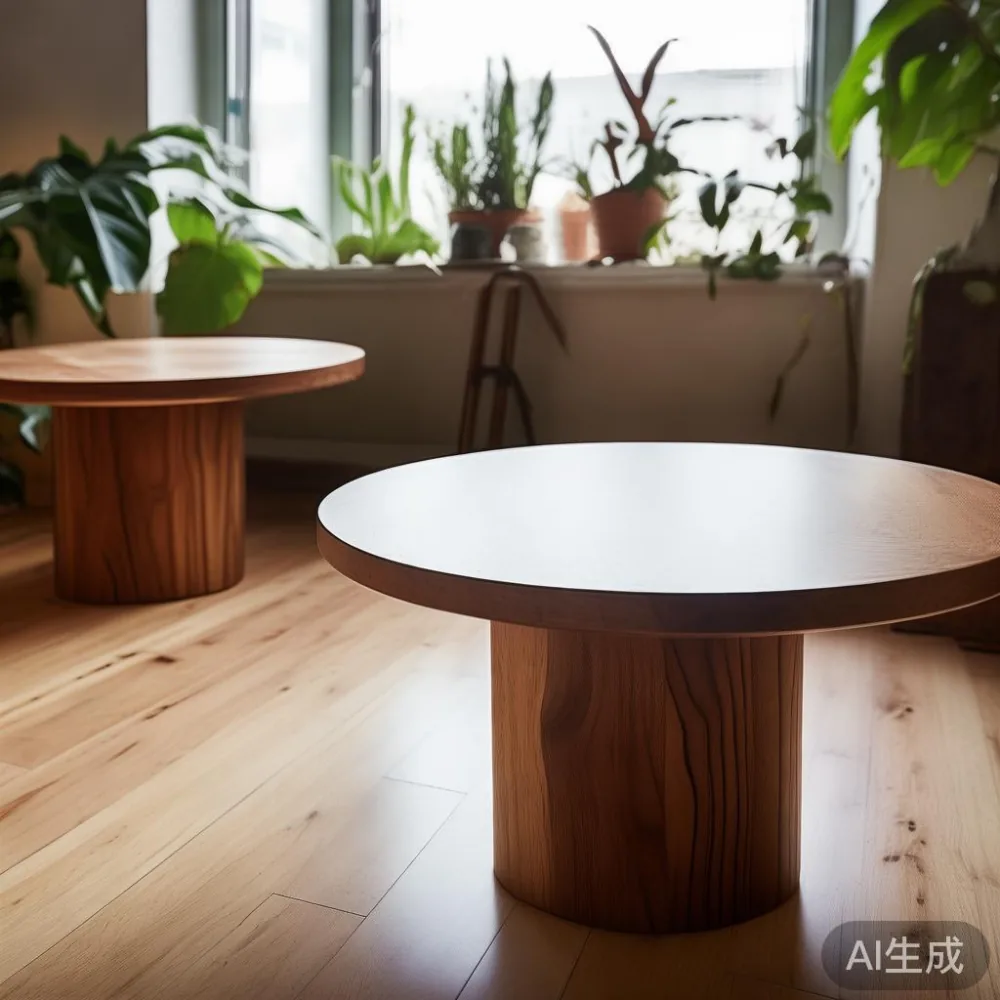
I used a solid oak coffee table priced at SGD 780 before GST, or SGD 850.20 after GST. It measured 120 × 65 cm, weighed 24 kg, and had a hardwax-oil finish. The legs were 6 × 6 cm, with tenon joints and a lower shelf that reduced the need for separate side tables.
Its likely five-year expenses are:
- Purchase price after GST: SGD 850.20.
- Delivery and lift handling: SGD 40 to SGD 90.
- Oil maintenance supplies: SGD 55 over five years, with 2 applications in year 1 and one every 12 to 18 months thereafter.
- Minor scratches or sanding: SGD 0 to SGD 60.
- One professional refinishing service: SGD 180 to SGD 320.
- Expected replacement within five years: SGD 0.
A middle five-year cost is SGD 850.20 + SGD 65 delivery + SGD 55 maintenance + SGD 30 sanding + SGD 250 refinishing = SGD 1,250.20. At the lower end, the figure is around SGD 895. At the upper end, it reaches approximately SGD 1,430.
The solid wood table costs more at purchase, but its repairability changes the calculation. Scratches can be sanded and oiled; small splits can sometimes be stabilised; and the whole top can be refinished. A veneer table may require new edge banding or core repair because the printed surface cannot be restored as easily.
Weight affects delivery as well. A 24 kg coffee table may need two people to carry it through a corridor or up a staircase. Some Singapore furniture couriers charge more for a second-person carry, a timed lift booking, or an oversized-package surcharge. Confirm the packed dimensions: a 120 × 65 cm body may have a carton around 128 × 72 × 18 cm.
Which material has the lower 5-year cost?
Using middle estimates, veneer reaches SGD 863.40 over five years, while solid wood reaches SGD 1,250.20. The difference is SGD 386.80, or about 45% more for solid wood. On an annual basis, that is SGD 172.68 for veneer and SGD 250.04 for solid wood.
However, the result changes if a damaged veneer table is repaired rather than replaced. If edge repair costs only SGD 85 and the table remains serviceable, veneer’s five-year cost falls to roughly SGD 473.40. Solid wood can also become the more economical choice if the buyer expects to keep it for 8 or 10 years, has children or pets, or values refinishing over replacement.
Here is the working comparison:
| Cost item | Veneer coffee table | Solid wood coffee table |
|---|---|---|
| Initial price after 9% GST | SGD 283.40 | SGD 850.20 |
| Delivery and lift | SGD 40 | SGD 65 |
| Maintenance | SGD 35 | SGD 55 |
| Repair | SGD 80 | SGD 30 |
| Refinishing | SGD 0 | SGD 250 |
| Replacement reserve | SGD 425 | SGD 0 |
| Five-year total | SGD 863.40 | SGD 1,250.20 |
This is a planning model, not a guarantee. A premium veneer table built around a plywood core may cost more and resist edge lifting better than the sample used here. Conversely, a low-cost solid wood table with poor drying can develop checks that increase repair expenses.
How should Singapore buyers compare veneer and solid wood?
Start with the core, not the surface photograph. For veneer, ask whether the substrate is plywood, MDF, or particleboard, how thick the veneer is, and whether all edges are sealed. A 0.6 mm veneer face is common, but exposed edges remain vulnerable. Inspect the underside for untreated particleboard and look for factory-fit edge banding with no gaps.
For solid wood, confirm the species, thickness, moisture treatment, and joint method. A top around 20 to 25 mm can withstand ordinary use, while decorative thinner panels may be more easily damaged. Look for straight grain, tight joints, and clean transitions where the legs meet the top. Ask whether the finish is lacquer, hardwax oil, or another coating that can be renewed locally.
Measure the route into the home. HDB lift doors may be around 80 to 90 cm wide, but internal depth and the turning radius at the landing matter. A condo lift may be larger, yet the corridor can narrow to 90 cm. A coffee table wider than 80 cm may still fit if turned vertically, but a 120 × 65 cm top needs a second person and careful corner control.
Consider the whole home before setting a style. The same material language can connect a solid wood sofa, a solid wood bed frame, a dining table, a wardrobe, a nightstand, and a marble table, although marble should be treated as a separate surface decision for heat and weight. For compact HDB interiors, the phrase Nordic for small living room is often used in planning notes, but low-profile coffee tables usually offer more practical clearance than bulky solid wood versions.
Can a light-luxury coffee table suit an apartment?
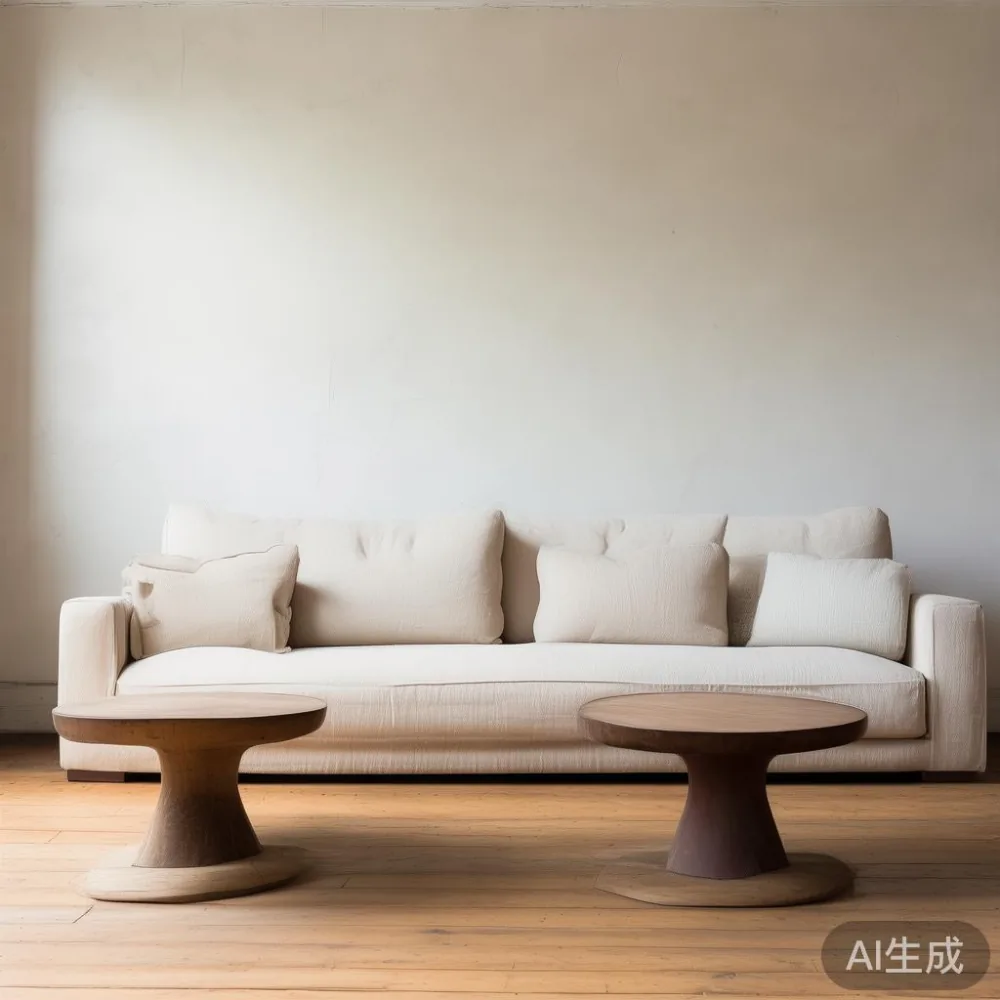
Yes, provided scale is managed. French light luxury often suggests pale tones, elegant profiles, and restrained ornament. A 110 × 60 cm coffee table in light oak with softened corners can feel refined without overwhelming a 25 to 35 sqm living room. American light luxury tends toward deeper timber tones, sturdy construction, and visible grain, which can work in a larger condo but may feel heavy beside a compact sofa.
Post-modern light luxury can use mixed materials, asymmetric forms, and subtle metal details. A marble table may anchor this look, while a solid wood coffee table provides warmth and easier repair. European light luxury for dining room is a useful material reference, but a coffee table should remain lower and less formal than the dining table to preserve circulation.
In a Tampines flat, a 100 × 55 cm top may leave 75 to 90 cm between a sofa and the opposite seat. Clearance near a walkway should ideally be about 75 cm where people pass regularly. Punggol homes often benefit from a narrow coffee table with sliding storage, while Bedok units with wider living rooms can accommodate a 120 cm top. These are planning ranges, not fixed rules.
Product descriptions should remain consistent with the build. A solid wood sofa, a solid wood bed frame, or a solid wood dining table should specify which components are solid timber rather than implying that every visible surface is solid wood. Likewise, a wardrobe with wood-grain fronts may use veneer while its structural carcass uses another engineered board. Clear labelling prevents a material premium from being applied to a decorative layer that cannot be refinished.
What questions should you ask before buying a coffee table?
Ask for the packaged dimensions, actual weight, core material, veneer thickness if applicable, solid wood thickness, joint construction, finish type, warranty coverage, and delivery charge. For a 24 kg solid wood table, request two-person delivery if the lift entrance requires turning. Allow 5 to 12 delivery days after the order is confirmed, with longer periods near public holidays or during peak furnishing periods.
Ask how scratches are treated and whether refinishing labour is included. MIDHILL states a 10-year structural warranty and lifetime refinishing for qualifying products, while also offering a 14-day return window. The buyer should obtain the written terms for the specific coffee table, including what “lifetime refinishing” covers, who pays freight, and whether finish colour must match the original batch.
For a new apartment, prioritise a stable core and sound construction over elaborate styling. If the table will also serve meals, increase the top height to around 42 to 45 cm, choose a load capacity of at least 40 kg, and check that the surface is broad enough for typical plates. A household with children may value rounded solid wood edges; a pet household may value a repairable finish. For short-term rentals, a mid-range veneer may be more practical if replacement cost is already budgeted.
Among search topics, the best Minimalist wardrobe for 2026 is mainly relevant to storage around the coffee table rather than to its structure. Likewise, how to style Japandi bed in apartment and Mid-century modern for small living room describe broader room composition, while the best Nordic sofa for 2026 concerns seating compatibility. A coffee table with a 35 to 40 cm height pairs naturally with many sofas, but every dimension should be checked against the chosen seat.
Is solid wood worth the higher 5-year price?
Solid wood is worth considering when the coffee table is expected to stay in the home for at least five years, receive heavy use, or be refinished after a move or decor change. The additional middle-case cost of about SGD 386.80 buys a surface that can usually be sanded and restored, a structure less dependent on glue holding a thin skin to a core, and a lower likelihood of replacement within the five-year period.
Veneer offers the lower starting price and can be a rational choice when the budget is fixed, the table sits in a dry interior, and replacement is acceptable. The five-year figure of approximately SGD 863 includes one replacement, so it should not be mistaken for a five-year saving if the table actually lasts. A well-made veneer coffee table that survives without replacement may cost less in cash, but the buyer gives up much of the repair flexibility associated with solid timber.
For Singapore, the practical decision is not veneer against solid wood in isolation. It is a comparison between purchase price, delivery difficulty, care schedule, repair response, and expected service life. Mid-range solid wood usually produces the stronger long-term financial case, especially when the owner values refinishing and keeps furniture beyond five years. Veneer can serve the same design brief at a lower entry cost when durability requirements are modest.