What Actually Drives the Price of Solid Wood Coffee Tables in Singapore
I spent a Tuesday last month walking the MIDHILL showroom in Foshan with a notebook, a tape measure, and a Singaporean friend who had flown in specifically to buy a coffee table for her new Punggol HDB flat. By the end of the afternoon she had looked at eleven coffee tables, asked roughly the same eight questions at each one, and walked out confused. Not because the staff were unhelpful — they were excellent — but because the price gap between two coffee tables that looked almost identical was SGD 1,400, and nobody had explained, in plain language, where that gap came from. This article is the explanation I owe her, and the explanation I think most Singapore buyers deserve before they spend four figures.
Wood species: where the biggest price jump hides
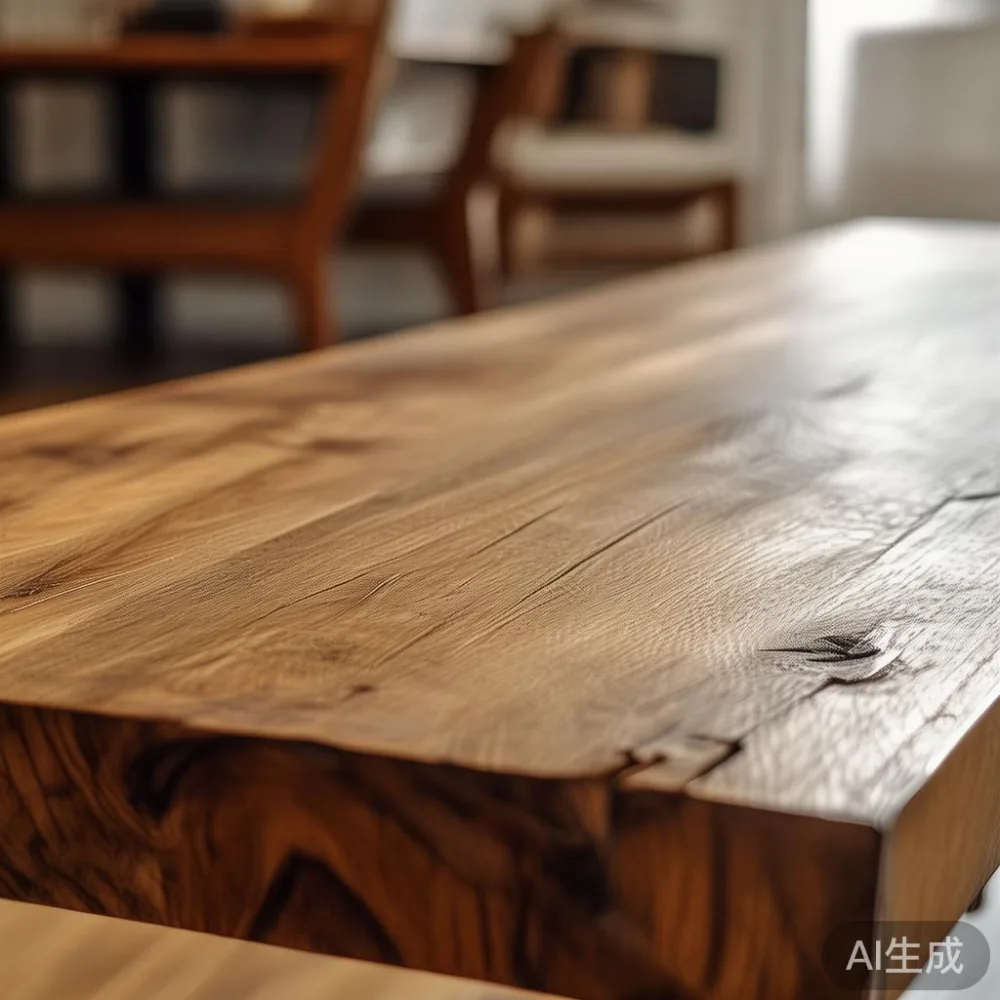
If you take two coffee tables of identical size, identical joinery, and identical hardware, and you change only the wood species, the price can move by 60 to 200 percent. That is not a marketing trick — it is a reflection of how slowly the tree grew, how rare the timber is, and how much of it warps during drying.
Rubberwood, which is what most entry-level coffee tables in Singapore are made from, grows in plantations across Malaysia, Vietnam, and southern China. A rubber tree reaches usable size in 15 to 25 years and the wood is relatively soft, with a Janka hardness around 1,600 lbf. A coffee table made from rubberwood in a 120 cm × 60 cm rectangle will land in the SGD 360 to SGD 580 range for a mid-range build.
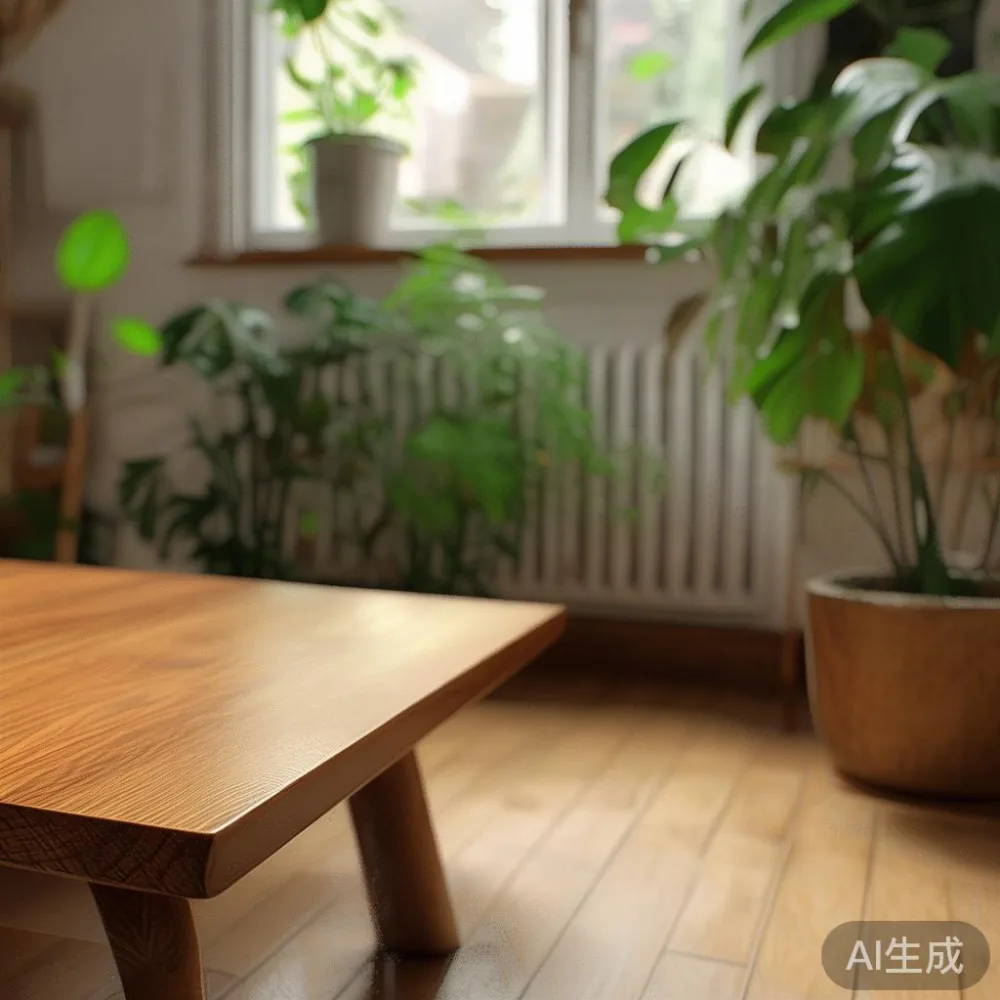
White oak is a different animal. A white oak tree takes 60 to 80 years to mature, the wood is roughly 40 percent harder on the same scale (Janka 1,360 for the European variant, higher for American white oak at 1,350 lbf measured on side grain, with significantly better wear resistance in daily use), and it must be air-dried for months before kiln-drying. A grey oak coffee table in the same 120 × 60 cm size sits at SGD 1,050 to SGD 1,800 depending on whether the top is solid planks or quartersawn boards. That single upgrade — rubberwood to oak — explains most of the sticker shock buyers feel.
Walnut, ash, and cherry sit above oak. Teak, particularly Burmese or Fijian teak, sits above walnut. Each rung takes another 20 to 50 percent off your wallet. If a coffee table price surprises you, ask the seller which species you are actually looking at, and whether the top is solid planks, finger-jointed boards, or a veneer over engineered wood. The honest answer usually explains the number on the tag.
Construction: solid, joined, and how much glue is hiding
Species sets the ceiling. Construction sets the floor — and the gap between them. A coffee table can use the most expensive walnut in the world and still fall apart in three years if the joints are wrong. Here is what to look at when you flip a coffee table over or peer underneath.
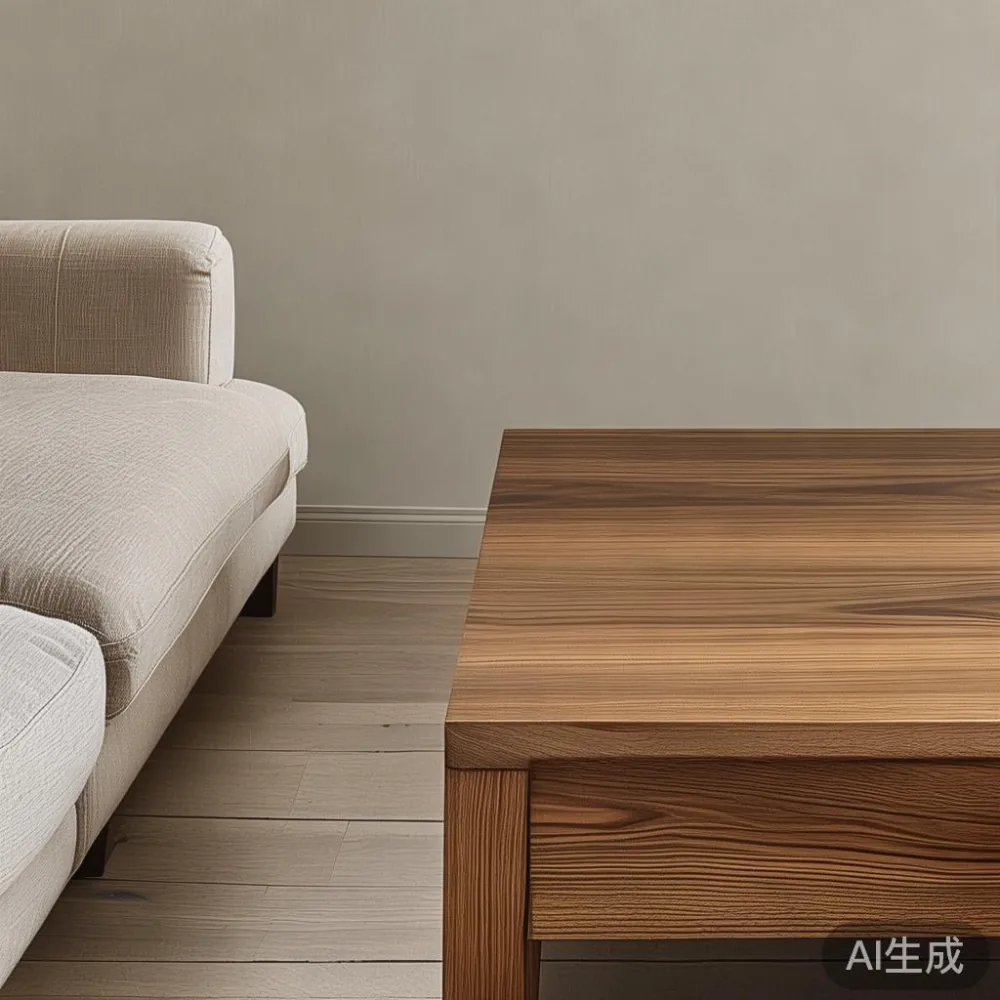
Mortise and tenon, dowel, or pocket screw? A traditional mortise-and-tenon joint, glued and sometimes pinned, is the strongest corner joint for a coffee table apron. A doweled joint is acceptable and common in mass production. A pocket-screw joint, where a screw is driven at an angle into the rail, is fast and cheap but it leaves a visible screw head and it weakens over time as wood expands and contracts in Singapore's 80 percent-plus humidity. A well-built solid wood coffee table uses mortise and tenon on the apron corners and either dovetail or domino joinery on the drawer if there is one.
How thick is the top? A serious coffee table top is 3 cm to 4 cm thick after planing. Anything under 2 cm thick is either a veneer over MDF or a species chosen for low cost. You can measure with a tape at the showroom — I did, on eleven coffee tables, and the thickness numbers ranged from 1.8 cm to 4.2 cm. The thinnest one was also the cheapest. Surprise.
Drawers, slides, and felt lining. If the coffee table has a drawer, full-extension soft-close slides cost roughly SGD 18 to SGD 35 per pair in component price. That is a small number, but on a coffee table priced at SGD 480, soft-close slides are a meaningful 4 to 7 percent of the build cost. A drawer lined with felt or vegan suede adds another SGD 6 to SGD 12. None of this is exotic, but it adds up, and it is where mid-range and premium coffee tables visibly diverge.
Finish: what you are paying for when you pay for the surface
Finish is the part of a coffee table that touches your hand and your eye, and it is the part most buyers underestimate. A coffee table finished in a catalyzed conversion varnish will outlast one finished in a basic nitrocellulose lacquer by a factor of three or four in a Singapore home, where the afternoon sun through west-facing windows can hit 38°C on a glass panel and the humidity rarely drops below 65 percent.
There are four finish tiers I see regularly on solid wood coffee tables in Singapore:
Tier 1 — single-coat wax or oil. Cheapest. Looks beautiful on day one. Needs re-oiling every 6 to 12 months. Often used on entry-level rubberwood coffee tables in the SGD 280 to SGD 460 range.
Tier 2 — nitrocellulose lacquer. The industry workhorse. Two to three coats, sprayed, then hand-buffed. Dry time is fast, repair is straightforward. A coffee table with this finish sits at SGD 500 to SGD 1,100 for most species.
Tier 3 — conversion varnish or pre-catalyzed lacquer. Harder, more chemical-resistant, more expensive to apply because of VOC control. This is what most American light luxury coffee tables use, and what you find on pieces labelled as contract-grade. Coffee tables in this tier run SGD 950 to SGD 2,200.
Tier 4 — hand-rubbed oil and wax, multiple coats, each cured and buffed. This is the French light luxury approach, and it is what you see on the highest-end oak and walnut coffee tables. A single coffee table top can take a craftsperson two full days to finish by hand. The price reflects it: SGD 2,400 and up for a 130 × 65 cm oak coffee table.
The finish also dictates how the coffee table will age. A conversion varnish seals the wood and slows color change. An oil finish lets the wood patina, which is the look most buyers chasing post-modern light luxury furniture actually want. There is no wrong answer, but there is a wrong expectation. Ask which finish is on the piece you are buying, and what the maintenance schedule looks like in a non-air-conditioned Singapore corridor space.
Hardware, marble, and the small parts that add up
Hardware is the easiest place to cut corners, and therefore the easiest place to inspect. On a coffee table, hardware means leg brackets, levelers, drawer pulls, and any metal-to-wood connectors. A black powder-coated steel bracket costs SGD 1.40 in component price. A solid brass European-made bracket costs SGD 9 to SGD 14. Across four corners plus a center stretcher, that gap is roughly SGD 30 to SGD 50 per coffee table — meaningful, but not the source of a thousand-dollar price difference.
Marble is the source of a thousand-dollar price difference. A marble-topped coffee table uses either solid marble, a marble slab with a plywood substrate, or a marble veneer. Genuine Carrara or Calacatta marble tops, 2 cm thick, can add SGD 600 to SGD 1,400 to the cost of the same wooden base. Marble-look sintered stone adds SGD 220 to SGD 480. MDF with a printed laminate adds roughly SGD 40. If the price on a marble table seems too good, lift one corner — a real marble top in 110 × 55 cm weighs 28 to 35 kg. A sintered top of the same size weighs 18 to 22 kg. A printed laminate top weighs 9 to 12 kg. Your back will tell you the truth.
Levelers matter more in Singapore HDB flats than in most markets because the floors are not always level, especially in older blocks in Bedok and Tampines where the slab tolerance can run 8 to 12 mm across a living room. A coffee table with threaded brass levelers sits flat. A coffee table with plastic glides rocks. The price difference is SGD 4 per leg. Worth every cent.
How do I choose a nursery furniture for a study?
A solid wood coffee table chosen as a study surface for a child or young adult should be 45 to 50 cm tall — the same height as a standard Singapore study desk — with rounded corners of at least 2 cm radius, a water-based finish with zero-VOC certification, and a top thick enough (3 cm+) to survive a decade of elbows, textbooks, and hot-melt glue accidents.
That answer is the short version. The longer version is that the phrase "nursery furniture for a study" usually means a piece that does double duty: a coffee table in the living room by day and a homework or reading surface by evening. For that role, I would narrow the species choice to oak or ash (both hard enough to take a dropped laptop without denting), insist on a finish that carries a Greenguard Gold or equivalent low-emission certification, and skip any coffee table with a drawer under 12 cm deep because textbooks do not fit. A 110 × 55 cm oak coffee table in this role runs SGD 780 to SGD 1,400 at a Foshan direct maker like MIDHILL, which is roughly half what a comparable piece retails for in a Singapore boutique — and the structural warranty on those crosses is 10 years, so a child's growth spurt through three school levels is comfortably covered.
What logistics cost in a Singapore HDB or condo
A coffee table is the largest piece of furniture that has to fit through the smallest door in your home. Singapore-specific logistics add real cost, and many forget to price them in.
Corridor width. Most Singapore HDB corridors are 1.2 m wide. Most coffee tables are 55 to 70 cm wide, so the piece itself fits. But a long marble coffee table over 130 cm long will not make the turn from lift lobby to corridor without tilting, and some Tampines and Bedok blocks have lift interiors of only 1.5 m deep. Measure before you buy. A 130 × 65 cm coffee table will not fit a lift under 1.6 m deep if it cannot be tilted.
Lift booking and delivery windows. Many condos require lift bookings 3 to 7 days in advance and restrict deliveries to weekday hours between 10am and 4pm. Some newer Punggol condos restrict weekend deliveries entirely. A furniture maker that offers scheduled Singapore delivery inside a 2-hour window is worth a small premium.
Free shipping thresholds. Direct-from-Foshan makers like MIDHILL typically offer free Singapore shipping above US$350, which is roughly SGD 470 at current rates. Below that, shipping runs SGD 80 to SGD 180 depending on weight. A marble coffee table over 50 kg will tip into the higher band even on a free-shipping-threshold order, because freight is calculated on volumetric weight for stone-topped pieces.
GST and duty. Since January 2023, GST on imported goods is 9 percent. For a coffee table at SGD 1,200 landed, that is SGD 108 in tax that the courier or importer will collect. Some Foshan makers absorb GST on orders above a certain value; ask.
Returns. A 14-day return window is the industry baseline. Read the conditions: many exclude marble pieces, custom sizes, and items where the packaging has been opened. A coffee table unboxed in your living room is usually final sale.
The five price tiers, with what each one buys you
To make this concrete, here is the price band a Singapore buyer should expect for a new solid wood coffee table in 2025, including GST and standard Singapore delivery:
SGD 280 to SGD 520 — entry level. Rubberwood or acacia. Pocket screws or basic dowel joinery. Single-coat oil or wax finish. Asian flat-pack construction, often requiring 30 to 60 minutes of self-assembly. Looks good in year one, may wobble in year three.
SGD 540 to SGD 980 — mid range. Oak, ash, or walnut. Mortise-and-tenon joinery. Nitrocellulose lacquer or pre-cat finish. Factory-assembled or light assembly. Where most quality-conscious Singapore buyers land. This is also the band where MIDHILL's solid wood coffee tables sit, alongside their matching solid wood sofa frames, bed frame options, dining table collections, wardrobes, and nightstands.
SGD 1,000 to SGD 1,800 — upper mid. Quartersawn oak or figured walnut. Conversion varnish. Soft-close drawer. Felt-lined compartments. Marble or sintered-stone top optional. Often American light luxury in style — cleaner lines, less ornamentation, slightly bigger scale.
SGD 1,900 to SGD 3,400 — premium. Solid marble top on a hardwood base. Hand-rubbed oil finish. Brass or stainless hardware. French light luxury influences — cabriole legs, tapered detailing, restrained curves. Workshop-built rather than factory-line-built.
SGD 3,500 and up — collector tier. Single-source timber with documented provenance. Hand-carved details. Bespoke sizing. Pieces at this tier are typically commissioned, not stocked, and lead times run 8 to 14 weeks from order to Singapore delivery.
The honest checklist before you pay
Five questions to ask any seller, in any Singapore showroom or online:
1. What is the species, and is the top solid planks or finger-jointed? Get the answer in writing on the invoice.
2. What is the joinery at the corners, and what is the top thickness after planing? Under 2.5 cm is a yellow flag.
3. What finish is applied, how many coats, and what is the recoat or refinishing schedule? A 10-year structural warranty plus lifetime refinishing is what serious makers offer — anything less on a piece above SGD 1,000 is a sign the maker does not expect the piece to last.
4. What is the actual marble — solid, slab-on-plywood, or veneer? And what is the country of origin for the stone?
5. What are the return conditions, the warranty length in years, and the GST-inclusive landed price to my postal code? If the seller cannot answer the last one clearly, the rest of the answers are probably soft too.
My friend from Punggol eventually bought a 110 × 55 cm oak coffee table with a hand-rubbed oil finish, soft-close drawer, and threaded brass levelers. Landed price including GST and tier-2 Singapore delivery: SGD 1,180. She has had it for six weeks as of this writing, and she has texted me twice to say the levelers saved her from a wobbly coaster on the first evening alone. The piece will outlast the lease on her flat, and probably the next one too. That is what the price was actually paying for.