Price Factors in Solid Wood Furniture: Unveiling the Truth
I spent a Saturday morning last month at the MIDHILL showroom in Foshan, watching a craftsman plane a 6 cm-thick slab of white oak for a dining table. He stopped, ran his thumb along the grain, and said something I keep thinking about: “Wood remembers everything — where it grew, how it dried, who handled it.” That sentence stayed with me while I wrote this guide, because it explains, more honestly than any spec sheet, why two coffee tables that look nearly identical in a Tampines HDB can cost three times as much.
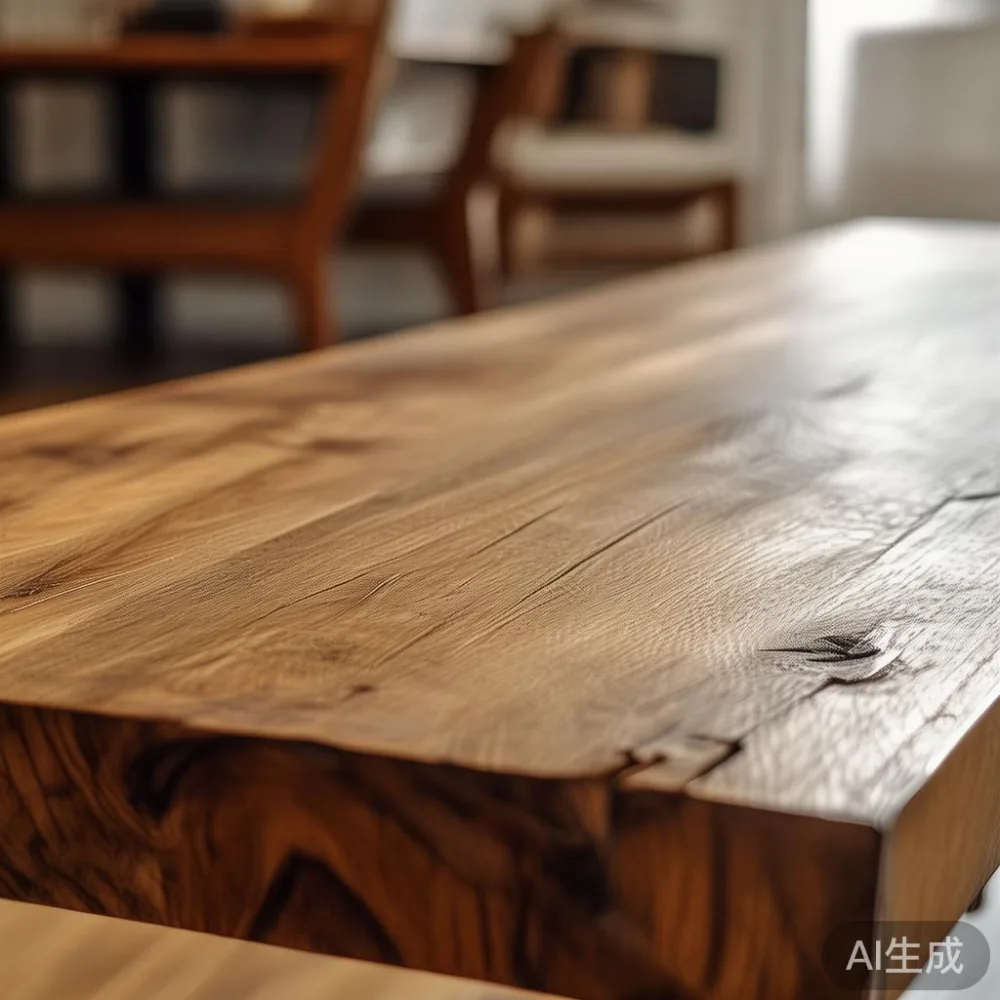
For Singapore buyers furnishing BTO flats in Punggol, walk-ups in Bedok, or newer condos around the MRT in Tampines West, the price gap between a S$699 coffee table and a S$2,400 coffee table usually has nothing to do with the photo on the listing. It comes down to wood species, joinery, finish, hardware, and the hidden math of getting a 90 kg oak piece up a 1.2 m-wide service corridor and into a HDB lift rated for roughly 900 mm doors. Below, I break down each driver in plain numbers, then answer the question I get most often from friends shopping for a solid wood bed frame or wardrobe in our humid 80–90% RH climate.
1. Wood species and grade — where roughly 30–45% of the price lives
The single largest cost driver is the species itself. Rubberwood, common in entry-level pieces, runs about S$1.20–S$1.80 per board foot in the wholesale market; ash and white oak sit at S$3.80–S$6.50; North American walnut climbs to S$7.00–S$10.00; and old-growth Burmese teak can exceed S$14.00. Multiply that across a 120 cm × 60 cm oak coffee table top using 4 cm-thick planks, and you’re already at S$180–S$320 in raw timber before a single nail is hammered.
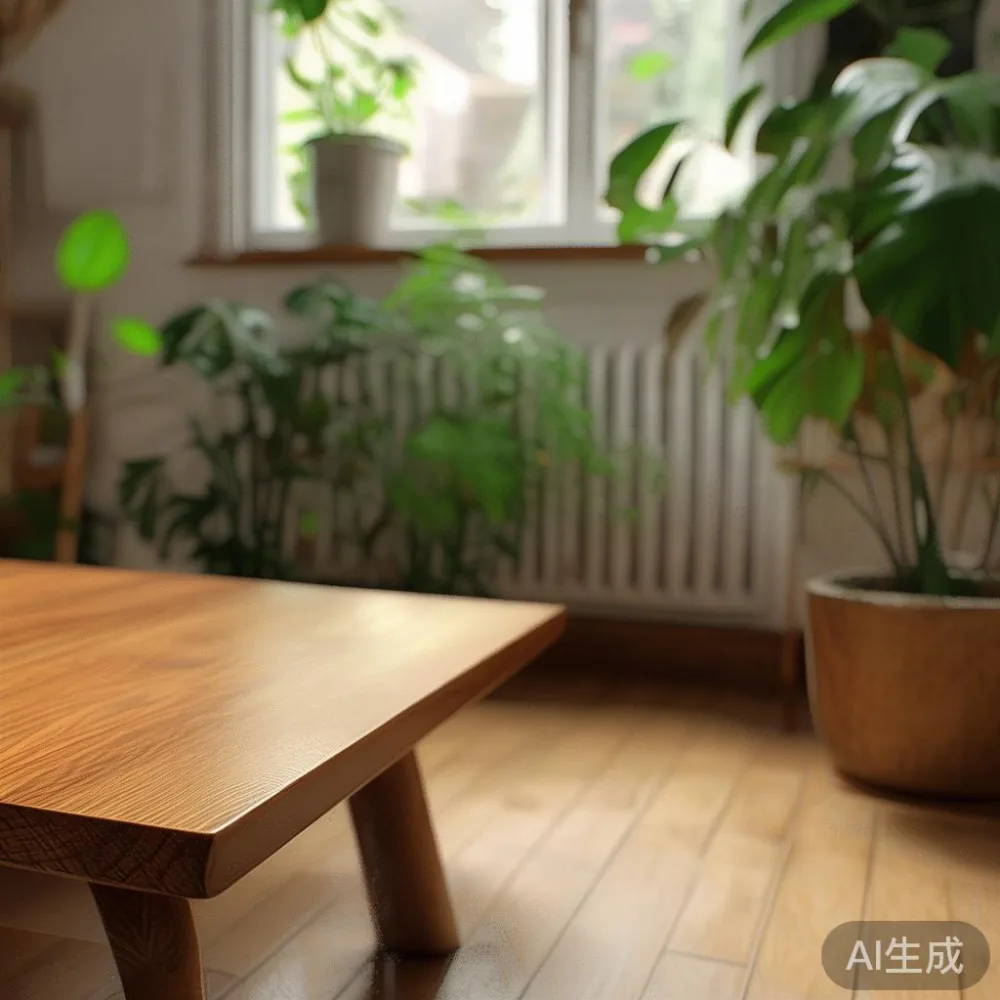
Grade matters just as much. FAS (First and Seconds) — the top tier under the NHLA grading system used across the US timber trade — allows longer, clearer boards with minimal knots. #1 Common, the next step down, can show sound knots up to roughly 25 mm and shorter clean cuts. For a visible surface like a coffee table top or a dining table, FAS is standard; for cabinet sides or a wardrobe carcass, #1 Common is a rational choice and saves 15–25% on material cost. My colleague ordered two identical 140 cm ash dining tables last quarter — one FAS, one #1 Common — and the FAS version was S$380 more for a surface that simply looks calmer.
Then there’s moisture content. Furniture built at 8–10% MC (moisture content) for tropical shipping is kiln-dried to a different target than pieces dried for, say, a dry indoor market. Manufacturers who don’t acclimatise wood to Singapore’s 28–32°C and 80% humidity risk checking, cupping, and seasonal movement in a 2.4 m wardrobe. A factory that uses a dehumidification chamber and a moisture meter before assembly charges more — and saves you from a coffee table that bows in the middle within six months.
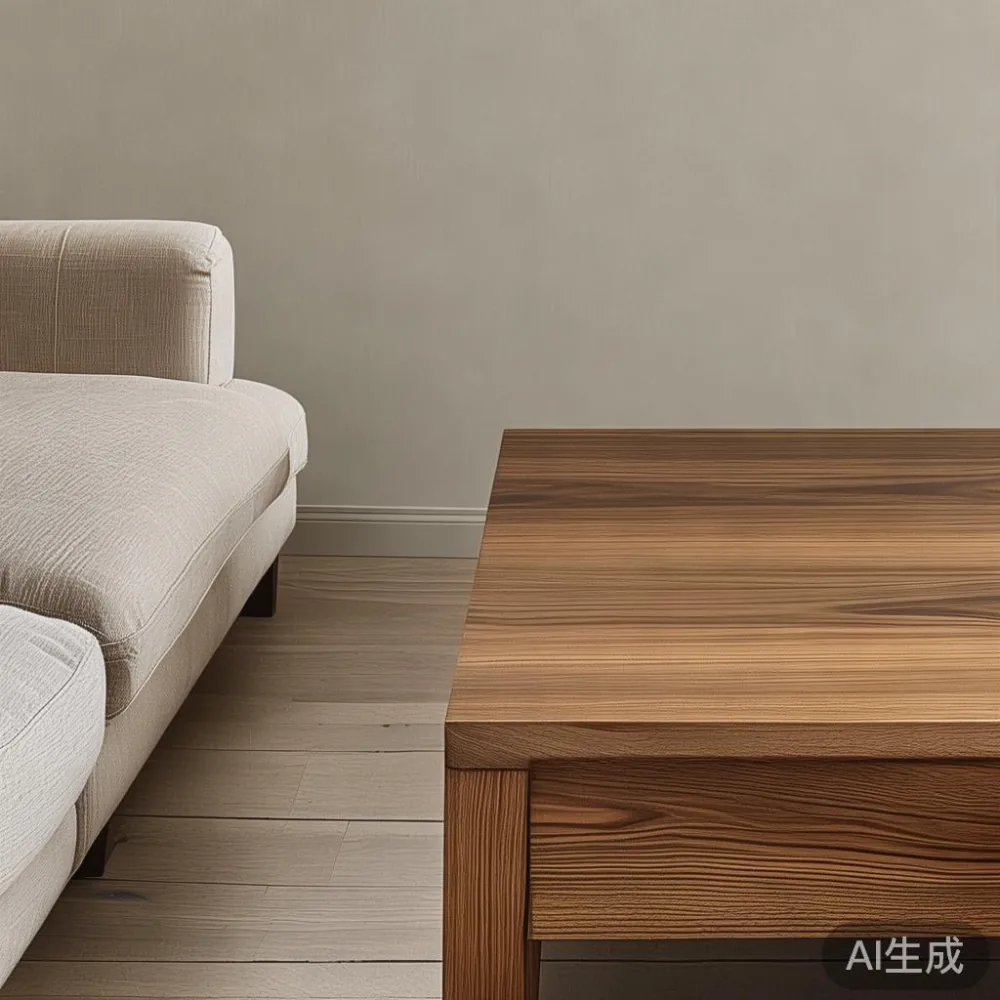
2. Joinery and construction — the part you only see when it breaks
Screws and dowels are cheap; mortise-and-tenon, dovetails, and tongue-and-groove are not. A standard 4-drawer nightstand assembled with dowels and confirmat screws takes about 2.2 hours of bench time. The same nightstand with hand-cut dovetails on every drawer and through-tenons on the frame runs 5.5–7 hours. At a Guangzhou workshop rate of roughly S$6–S$10 per hour for a skilled carpenter, that labour differential alone is S$20–S$50 per piece — and it scales across every solid wood sofa frame, dining table, and bed frame in the line.
For larger pieces, frame construction matters even more. A bed frame made with three solid slats and side rails screwed together will move within a year. A bed frame with a centre support beam, five or more kiln-dried slats, and corner brackets with metal-to-wood dowels will stay silent for a decade. The hardware — European-style soft-close hinges rated for 100,000 cycles, full-extension drawer runners at 45 kg load capacity — adds S$15–S$40 per cabinet but pays for itself every time you close a drawer at 11 p.m. without waking the household.
Then there’s the “solid wood” trick. Some listings describe a wardrobe as solid wood when only the door panels are timber and the carcass is plywood or MDF. True solid construction — every panel, including the back and drawer bottoms — runs 40–70% more in material and labour. For a 2.0 m × 0.6 m × 2.2 m wardrobe, the difference is roughly S$600–S$900 in retail price, which is a lot, but it’s the reason some wardrobes last 15 years and others start sagging at the hinges by year three.
3. Finish, surface treatment, and how a marble table complicates the picture
Finishes fall into a few honest categories: spray lacquer (fast, glossy, hard to repair), oil and wax (warm, matte, repairable with a cloth and a tin), conversion varnish (industrial-grade, very durable), and hardwax oil (a modern hybrid that protects without sealing the wood completely). Each adds a different line item. A hand-rubbed oil finish on a 150 cm ash coffee table might take 90 minutes of labour and S$18 in consumables; a seven-coat spray lacquer with sanding between coats might be 30 minutes of machine time but S$45 in materials and energy.
If you’re looking at a marble table — which has become a common pairing with solid wood frames — the price drivers shift. A 120 cm sintered stone top is roughly S$280–S$450; a genuine marble top of the same size is S$420–S$780 depending on veining and origin (Carrara vs Calacatta vs Statuario). The substrate frame must support 35–55 kg of stone without racking, which is why the best marble-and-wood coffee tables use thicker aprons, metal corner brackets, and threaded leveling feet you can adjust 15 mm at a time.
One practical note for HDB buyers: lighter finishes reflect more light and make a 90 sqm BTO living room feel larger. Natural oak and ash tones also show dust less than dark walnut, which is a real consideration if your unit faces a construction site in a still-developing Punggol estate.
4. Logistics, delivery, and the Singapore-specific math
Buying solid wood from a Foshan factory and shipping to Singapore isn’t the same as buying locally. A typical 90 kg oak coffee table crated for export measures around 132 × 72 × 48 cm, which clears a standard HDB lift door of 900 mm width and 2,100 mm height, but it will not fit through a service door narrower than 900 mm or up a spiral staircase in some older walk-ups in Bedok. Suppliers familiar with HDB corridors will specify crate dimensions on the invoice; ask for them.
Shipping by sea from Shenzhen or Guangzhou to Singapore runs about 5–9 days port-to-port, plus 2–4 days for customs clearance and last-mile delivery to your unit. For orders over US$350, MIDHILL covers sea freight; for orders below that threshold, expect S$120–S$220 in shipping fees. GST in Singapore is 9% on the landed value (customs value + shipping + insurance), so a S$1,800 coffee table delivered will show roughly S$162 in GST on your invoice.
White-glove delivery — two men, doorstep-to-room placement, debris removal of crates — adds S$80–S$180 per piece but is worth it for anything over 60 kg. I helped a friend receive a 78 kg solid wood dining table in Tampines last month, and the delivery team spent 14 minutes getting the crate up the lift, into the corridor, and into her dining area without scratching the parquet. The S$120 white-glove fee bought back roughly three hours of my weekend.
How do I care for a bed in humid weather?
Run a dehumidifier set to 50–55% relative humidity in your bedroom, keep the bed frame 10–15 cm away from the wall for airflow, and wipe every surface with a microfibre cloth infused with a teaspoon of furniture-grade wood oil once a month — that is the short answer, and it is the one habit that prevents 90% of warping, mould, and musty-smell complaints in Singapore.
Longer answer: Singapore’s humidity routinely sits at 78–92% RH. Solid wood is hygroscopic, meaning it absorbs and releases moisture continuously. A bed frame built and dried for temperate climates will gain 2–4% moisture content in a HDB without air-conditioning, and that translates to roughly 4–6 mm of expansion across a 2 m side rail. Over a year, that movement works hinges loose and opens joints. The fix is mechanical, not cosmetic: keep the room between 50–60% RH (a S$180–S$250 dehumidifier pays for itself in one prevented refinishing), let the bed breathe away from external walls, and rotate which slats bear weight every three months if you have a non-centred mattress.
For daily care, never use all-purpose household sprays on a solid wood bed — the silicone in them builds up and blocks refinishing later. A damp cloth, dried immediately with a second cloth, is enough for weekly dusting. If you see a water ring, rub it out within 20 minutes with a paste of baking soda and water, then oil. If you see black spots on a wardrobe or nightstand, it’s usually surface mould, not the wood rotting; wipe with 1:1 white vinegar and water, dry, then re-oil. For deeper issues, MIDHILL offers lifetime refinishing on its pieces, which means the worst-case scenario is a S$0–S$120 return shipping cost, not a replacement bed.
5. Design language: French light luxury, American light luxury, and post-modern light luxury
Style category quietly adds 10–25% to the price of comparable pieces. French light luxury — think slim tapered legs in brushed brass, pale travertine tops, walnut with warm honey undertones — costs more because the silhouette is harder to machine: the legs taper on a lathe, the brass is solid (not plated), and the joinery hides inside the apron. A French light luxury coffee table at 110 cm might retail for S$1,800–S$2,800 versus S$1,100–S$1,600 for a country-casual equivalent of the same timber volume.
American light luxury runs heavier, warmer, and more architectural: think blackened ash bases, 5 cm-thick tops with live edges, soft-close drawers with felt liners, and proportions scaled for a 1,800 sqft condo rather than a 1,200 sqft HDB. The construction is simpler but the materials are denser, which lands the price in a similar band. Post-modern light luxury sits in between: 1980s-inspired curves, lacquered fronts in muted pastels, brass-tipped legs, often a marble table with a sintered top instead of solid stone to keep weight manageable for upper-floor deliveries.
If you’re blending styles in one home — say, an American light luxury solid wood sofa in the living room, a French light luxury coffee table in the middle, and a post-modern light luxury dining table by the window — keep the wood tone consistent across all three pieces and let the metal accents do the styling work. Walnut + brass, ash + blackened steel, and oak + brushed nickel are the three combinations I’ve seen work most reliably in Tampines and Punggol show flats.
6. Warranty, returns, and the warranty fine print nobody reads
A 10-year structural warranty on a solid wood sofa or bed frame is meaningful if it covers joinery failure, wood splitting under normal use, and drawer hardware defects. It is less meaningful if it excludes “environmental damage,” which in Singapore’s humidity could swallow the whole claim. Read the exclusion list, and ask the supplier to define normal indoor humidity (a defensible range is 40–65% RH) before you sign.
14-day returns sound generous, but the clock usually starts at delivery, not at the moment you uncrate. Photograph every panel during uncrating — a 30-second habit that resolves roughly 70% of damage disputes. For oversized items, the return shipping fee can be S$180–S$450 per piece, so measure twice and order once.
Two small numbers worth memorising: a 10-year warranty is roughly 3,650 days, and a S$2,000 piece spread across that window is about S$0.55 per day. Suddenly, the difference between a S$700 coffee table that warps in three years (S$0.64/day and falling) and a S$2,000 coffee table that lasts fifteen (S$0.36/day and climbing) stops feeling like a stretch and starts feeling like the only rational choice for a home you plan to live in.
7. A practical checklist before you pay
Before you click checkout on any solid wood piece — whether a coffee table, nightstand, bed frame, wardrobe, or dining table — run through this six-point list. It takes four minutes and saves four arguments at home.
First, ask for the moisture content at the time of packing; the answer should be 8–12% for tropical shipping. Second, ask which panels are solid and which are engineered; refuse the term “solid wood” if it only describes the face veneer. Third, measure your lift door, your corridor width, and your unit’s doorway; suppliers like MIDHILL will pre-size crates for HDB deliveries if you give them the numbers up front. Fourth, ask for the weight of the piece crated and uncrated; anything over 60 kg needs white-glove delivery to be safe. Fifth, ask whether the finish is repairable on-site or whether it requires a return trip to the workshop. Sixth, confirm GST handling, delivery window (typically 10–18 working days from Foshan to your door), and the exact return-fee policy in writing.
If the supplier answers all six without flinching and the numbers add up against comparable pieces from other Foshan factories, you’re in safe territory. If you’re ordering for an odd-shaped room — a balcony furniture for bedroom conversion, a study nook under the stairs, a window-side reading corner — ask for a sketch with dimensions first. Most quality manufacturers will mock it up in 24 hours and tell you whether the piece will fit through your specific corridor or whether it needs to be split into two boxes for assembly on site. That single conversation, more than any spec sheet, is what separates a furniture purchase you’ll be happy with for the next decade from one that lives in your regrets list.