What Actually Drives the Price of Solid Wood Furniture
Last month I visited a Tampines HDB flat where the homeowner had just replaced a six-year-old coffee table. The first one had been flat-pack MDF, sold for S$189 during a warehouse clearance. The replacement was a solid wood coffee table, around 8 kg heavier, with through-tenon joinery and a beeswax finish. It cost S$640 delivered. She told me she wished she had bought the heavier one the first time, because in six years the cheap table had cost her S$189 plus a S$60 repair bill and a S$40 scratch touch-up pen. The solid wood piece, she figured, would still be serving coffee in 2040.
That conversation stuck with me because it gets at the real question buyers in Singapore quietly ask: why does one coffee table cost S$189 and another S$1,400 when both look like wood on a phone screen? The short answer is that solid wood furniture pricing is driven by a stack of measurable decisions: species, grade, joinery, hardware, finish, origin, and logistics. None of these are mysterious once you pull them apart.
This article walks through each cost driver in order, with concrete numbers in SGD and measurements that matter in a 4-room HDB or a Punggol condo. I have also included a real customer question, with a direct answer you can copy, because pricing is the kind of topic where vague advice wastes everyone's time.
1. The Wood Species and How Much of It Actually Goes Into the Piece
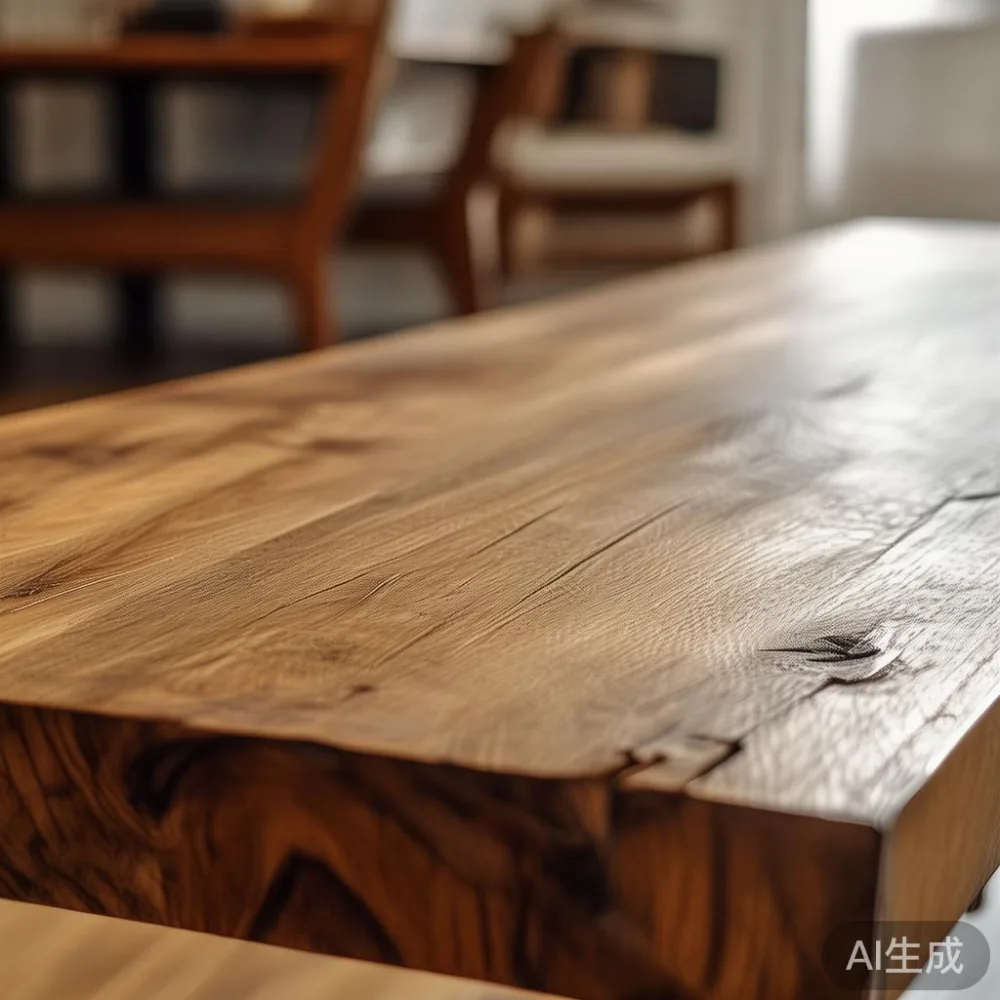
The single largest price variable is species. An oak coffee table with a 4 cm thick top will weigh roughly 18 to 22 kg for a 110 cm x 60 cm surface, while the same shape in rubberwood will weigh 14 to 16 kg. Density matters because you are paying for kilograms of timber, and heavier hardwoods cost more per board-foot.
For reference, kiln-dried FAS-grade oak runs around US$1,800 to US$2,400 per cubic metre at 2024 wholesale rates, while FAS-grade ash is closer to US$1,200 to US$1,600, and rubberwood about US$550 to US$750. Multiply that by the volume of a coffee table (roughly 0.06 to 0.10 cubic metres for a mid-sized piece) and you already see a S$200 to S$400 spread before any labour, hardware, finishing, or shipping is added.
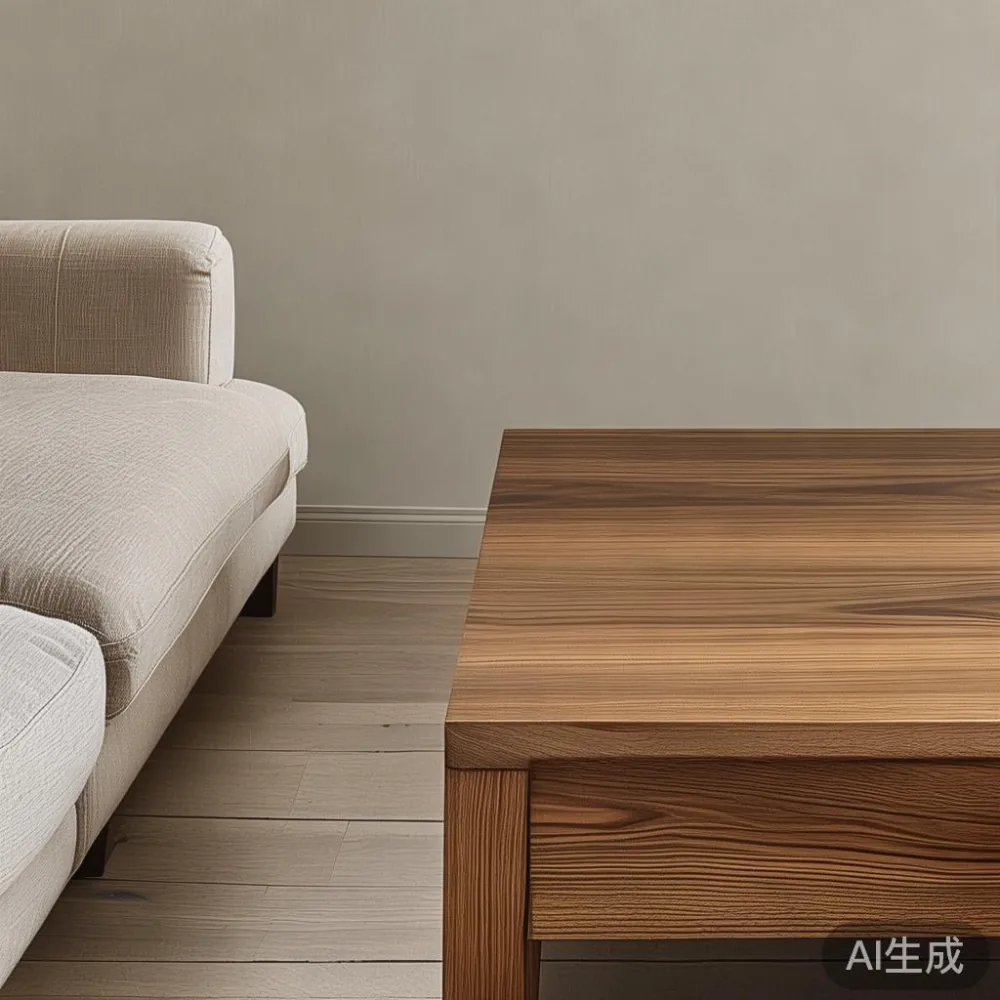
Walnut sits at the top of the everyday spectrum (US$3,000 to US$4,500 per cubic metre), which is why a solid walnut coffee table from a Foshan workshop like MIDHILL typically lands in the S$1,100 to S$1,800 range in Singapore, once shipping and 9% GST are layered on. Cheaper "walnut-look" pieces are usually poplar or ash with a stained finish. They look fine in a showroom photo, but the grain pattern under the stain reveals itself within six months of use.
One more detail that often gets missed: the thickness of the top. A 4 cm solid top uses roughly 2.5 times the timber of a 1.8 cm veneer-core panel with a 4 mm oak face. Furniture makers who quote aggressively usually shave the core down, so the piece feels lighter the moment you try to move it.
2. Joinery, Hardware, and the Hidden Engineering Under the Tabletop
Pick up any coffee table at a showroom and turn it over. What you see underneath tells you almost everything about price.
Through-tenons, mortise-and-loan, doweled corner blocks, and dovetailed drawers all add labour time. A craftsman might spend 40 to 60 minutes hand-fitting a single drawer dovetail joint, versus 90 seconds running a screw into a particleboard panel. That time gets baked into the price. On a S$640 coffee table, I would expect at least one drawer with dovetail joinery, corner braces glued and screwed, and a traditional sliding dovetail where the apron meets the leg.
Hardware is the smaller line item but it adds up. Soft-close drawer slides cost S$18 to S$35 per pair in commercial quantities. A standard side-mount slide costs S$4 to S$8. For a coffee table with one drawer, that is roughly a S$15 to S$30 difference on the final retail price. Multiplied across a full living-room set, including a solid wood sofa frame, a bed frame, and a dining table, the hardware budget for a home can quietly cross S$200.
For bed frames and wardrobes, the same logic applies. A solid wood bed frame with mortise-and-tenon rails and a central support beam rated for 250 kg will outlast a cam-lock MDF frame by a decade. I have seen a colleague's MIDHILL oak bed frame survive three Punggol condo moves over 11 years, with only a S$80 refinish in year nine. The cam-lock particleboard frame she had before lasted four years before the centre rail snapped.
3. Finishing: Lacquer, Oil, Wax, and What Each One Does Over Time
Finishing is where many buyers get confused, because two tables can look identical on day one and diverge sharply by month six. There are three common finishing families:
Conversion varnish / nitrocellulose lacquer. Sprayed in 3 to 5 coats, sanded between coats, and cured. Produces the deep, glassy look seen on most French light luxury pieces. Durable against ring marks and coffee spills. Difficult to repair at home; usually needs a workshop re-spray costing S$120 to S$220.
Hardwax oil (Osmo, Rubio Monocoat). Penetrates the wood fibre and cures inside it. Costs more in materials (about S$35 to S$55 per square metre of coverage) but can be spot-repaired by the owner with a S$45 maintenance tin. This is the finish most often used on Scandinavian fabric sofa production lines and on European-style solid wood dining tables, because it ages gracefully and accepts a re-coat every 18 to 24 months.
Beeswax or mineral oil. Cheapest, easiest to apply, but offers the least protection. Needs reapplication every 3 to 4 months. Common on rustic American light luxury pieces and on small nightstands where buyers want a natural matte look.
For Singapore's 80 to 90 percent average humidity, hardwax oil or conversion varnish is the safer bet. A poorly sealed piece will cup or check within one wet season if it has been stored in a non-air-conditioned space. Reputable Foshan makers, including MIDHILL, default to multi-coat finishes specifically because Singapore-bound containers sit through monsoon humidity at Jurong Port.
4. Where It Was Made and How It Gets to Your Door
Origin matters, but not always in the way people assume. A solid wood coffee table made in Foshan and shipped by sea to Singapore lands at a very different price than the same piece flown in from Europe. Sea freight for a 25 kg package from Shenzhen to Singapore runs roughly S$25 to S$55 per piece on a consolidated LCL (less-than-container-load) service, taking 7 to 12 days port-to-door including customs clearance and the last-mile HDB delivery slot booking.
Air freight on the same weight would be S$180 to S$280 and arrive in 3 to 5 days. Most premium Chinese furniture exporters use sea freight because the cost difference lets them offer free shipping over US$350 (around S$470), which several brands including MIDHILL extend as a baseline for Singapore orders.
European-made equivalents, even adjusting for the EUR-SGD rate, often land 2.2x to 2.8x higher because of labour rates, smaller batch sizes, and shorter kiln-drying cycles for European oak. American-made pieces can hit 3x to 4x once landed costs are added. Post-modern light luxury designs, with their cleaner lines and modular proportions, are often easier to produce efficiently in Foshan because the factories there have spent 15+ years specialising in this exact category.
There is also the small but real cost of getting the piece up to your floor. Most Tampines and Bedok HDB blocks have lift doors of about 80 cm and lift car interiors around 110 cm wide by 140 cm deep. A flat-packed 110 cm coffee table will fit. A fully assembled 140 cm marble table will not. That decision (flat-pack versus assembled) is itself a price driver, and one worth asking about before checkout.
5. How do I style a French dressing table in a small apartment?
In a small Singapore apartment, style a French dressing table by placing it against the brightest wall, choosing a 90 cm to 110 cm solid wood version with one drawer, and pairing it with a round mirror no wider than 60 cm to keep the floor visible and the room feeling larger.
That single sentence is the core answer; here is the reasoning behind it. French dressing tables look heavy because of their cabriole legs and curved aprons, but the visual weight can be neutralised in three ways: a wall-mounted mirror above instead of a free-standing one, a slim stool that tucks fully underneath, and a single decorative object (a tray, a vase, a stack of three books) rather than a clutter of products. In a 4-room HDB master bedroom of about 14 to 16 square metres, this keeps the dressing area under 1.2 metres of wall length.
For the surrounding furniture, pair the dressing table with a solid wood bed frame in the same species so the room reads as one set rather than three mismatched purchases. A neutral-toned Scandinavian fabric sofa in the adjoining living area carries the soft-luxury feeling through to the common space without competing visually. Keep the dressing table top within 90 cm of depth so it can sit 20 cm proud of any wardrobe doors behind it, which protects the table from being scratched during wardrobe access.
If the room has only one window, place the dressing table perpendicular to it so morning light hits the side of the face rather than the back, which is more flattering for grooming. For artificial light, a 3,000 K LED sconce on a swing arm (S$45 to S$90 from local lighting shops in Bras Basah) gives the right colour temperature without heat damage to the wood finish.
6. The Warranty, Refinishing, and Return Policies That Actually Matter
Two pieces of furniture that look identical on Instagram can have radically different after-sale support, and that gap is one of the most overlooked price factors. A 10-year structural warranty on a solid wood coffee table covers the kind of failure that matters: cracking through the top, joint separation, drawer failure. It does not cover finish wear, which is normal over 10 years of use.
Lifetime refinishing, offered by a handful of Foshan-based exporters including MIDHILL, means the maker will strip, sand, and re-finish the piece at cost for the lifetime of the original owner. Typical charges run S$120 to S$280 per coffee table depending on size, which is dramatically cheaper than buying new.
For Singapore specifically, free shipping over US$350 (about S$470) and a 14-day return window are practical because they remove the two biggest friction points: door-to-door logistics and the fear that the piece will not match the floor or wall colour in person. A S$640 coffee table with a S$90 return courier fee is functionally a S$730 piece if the customer changes their mind. A S$640 coffee table with a 14-day return shipping-covered policy is a S$640 piece with full optionality.
When comparing two quotes, always strip the headline price back to: timber cost, labour and joinery cost, finish cost, hardware cost, shipping cost, and warranty value. Add them up yourself. If the numbers do not reconcile to within 10 to 15 percent, something is being hidden in the small print, usually in the joinery or the finish.
7. A Quick Sanity Check Before You Pay
Before clicking checkout on a solid wood coffee table, nightstand, or dining table, run through this checklist:
Weight. A 110 cm x 60 cm oak coffee table should weigh 18 to 22 kg. If the listing says 9 kg, it is not solid.
Top thickness. At least 3 cm for a coffee table, 4 cm for a dining table, 2.5 cm for a nightstand. Anything thinner is veneer-core.
Drawer joinery. Look underneath. Dovetail or dowel is fine. Staples or glue-only is a red flag.
Finish type. Ask the seller directly. If they cannot name the finish, the piece is likely finished by an unsupervised junior sprayer.
Warranty specifics. 10 years on structural joints is the current benchmark from serious Foshan exporters. Anything less, or anything vague, means the maker is not betting on their own joinery.
Delivery scope. Free shipping over US$350 is the current industry standard for Singapore-bound sea freight from Guangdong. Confirm whether assembly and lift-access delivery are included.
A solid wood coffee table that costs S$640 to S$1,400 in Singapore is not expensive when you spread that cost across 15 to 25 years of daily use. That works out to roughly S$3 to S$8 per week, less than a single takeaway coffee at the Tampines Hub hawker centre. The cheap S$189 table, replaced every 5 to 7 years, actually costs more over the same window, once you add the repair bills, the replacement purchases, and the landfill.
Buy once, refinish when needed, pass it on. That is the only pricing logic that holds up in a small Singapore home with lifts that are 80 cm wide and humidity that never drops below 60 percent.