Living With Wood in a Humid Climate: A Singapore Buyer's Guide to Solid Coffee Tables
I still remember the morning I walked into a Tampines HDB flat last month to measure a corridor for a delivery. The homeowner had placed a beautiful imported walnut coffee table near her window six months earlier, and the surface already showed a faint, cloudy haze along one edge — the classic fingerprint of humidity stress. She had done nothing wrong. The table was simply fighting a battle no piece of furniture wins by accident in Singapore, where outdoor relative humidity sits between 70% and 90% for most of the year and indoor humidity rarely drops below 60% without an air-conditioner running around the clock.
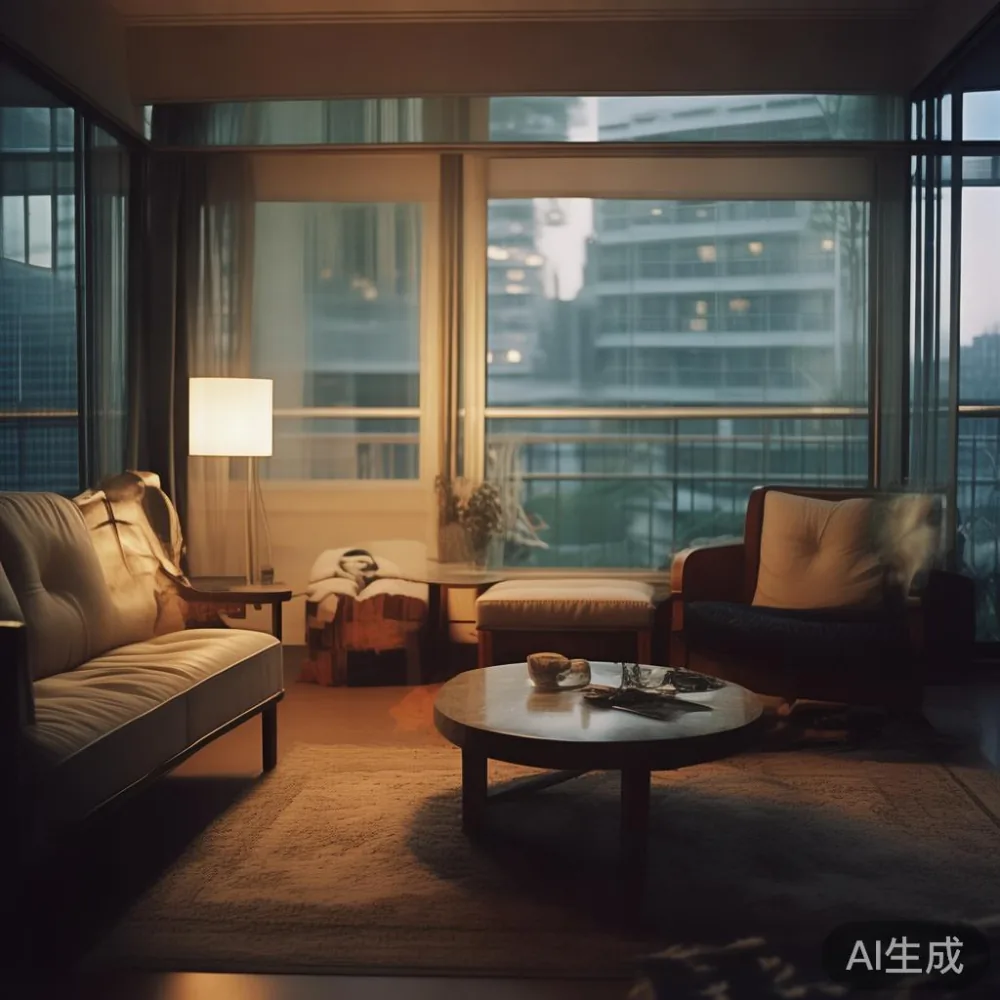
If you are shopping for a solid wood coffee table in Singapore, you are not just picking a colour or a leg style. You are choosing a material that has to survive Tampines afternoon thunderstorms in July, Bedok corridor humidity in March, and Punggol sea breeze moisture in December. This long-form guide explains exactly how humidity moves through solid wood, how that movement shows up on a coffee table, what the realistic price range is in SGD, and which design choices genuinely hold up — all from the perspective of someone who has spent years helping customers in HDB flats and private condos choose pieces that still look right five years later.
Why Does Humidity Warp Wood, Even on an Indoor Coffee Table?
Solid wood is hygroscopic. That is a single-word way of saying it breathes: it absorbs water vapour when the air is damp and releases it when the air is dry. Every board expands across its grain as it absorbs moisture and contracts as it loses it. A flat-sawn oak coffee table top, roughly 120 cm long and 70 cm wide, can move by 4 to 6 mm in width alone through a single humid season in Singapore. The movement is small enough to ignore in a month, large enough to crack a finish or split a panel across a year.
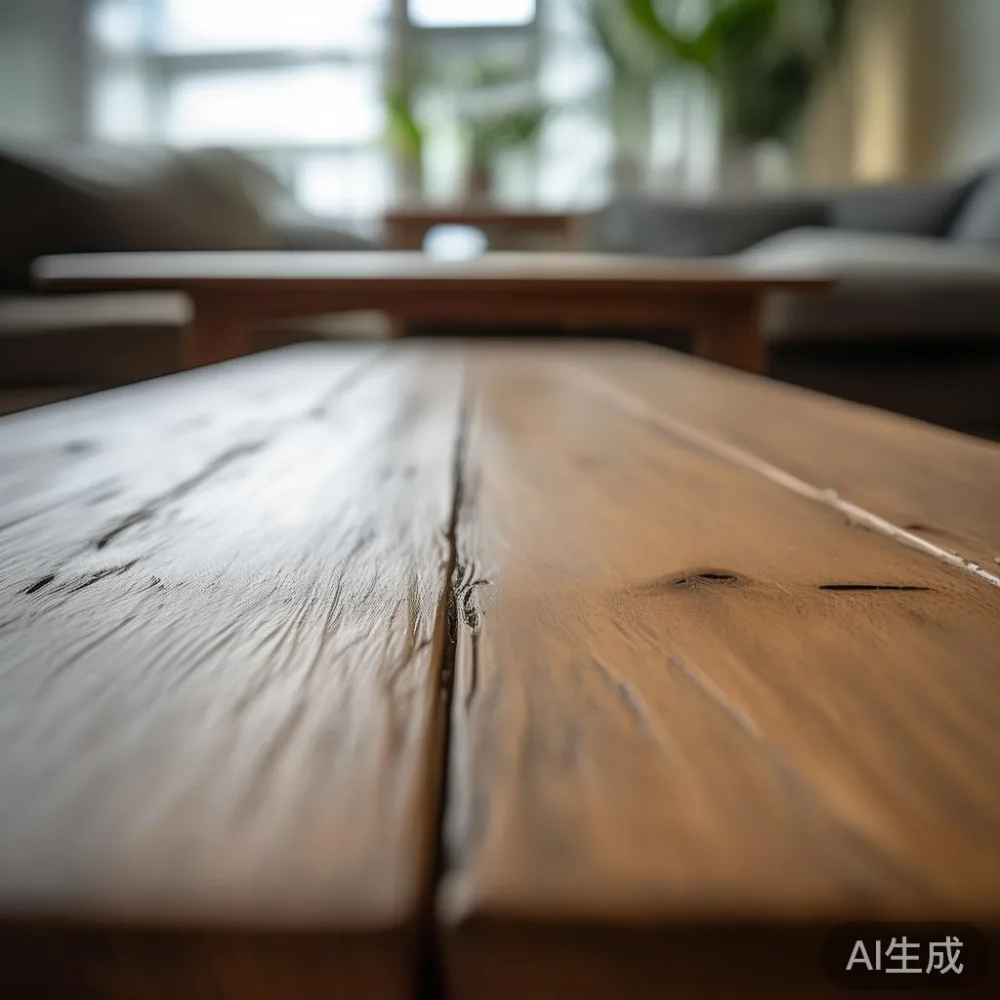
The risk is not theoretical. I have measured solid wood coffee tables in HDB flats where the indoor humidity reads 78% on a Saturday morning with the windows closed and the air-conditioner off — the exact conditions that cause boards to swell overnight and then check (form tiny surface cracks) as the afternoon sun heats one side of the room. Over six to twelve months, repeated swelling and contraction loosens joinery, opens mitre joints on apron frames, and lifts veneer at the edges of engineered panels.
Three physical mechanisms show up on coffee tables specifically. First, the wide top acts like a giant humidity antenna — more surface area, more movement. Second, the table sits low, often within 40 cm of the floor, where humidity pools in a Singapore home with tiled flooring. Third, the height (around 38 to 45 cm) puts the top squarely into the zone where air-conditioner drafts and ceiling-fan turbulence create rapid local humidity swings.
How Much Does a Coffee Table Cost in Singapore?
A solid wood coffee table in Singapore typically costs between SGD 480 and SGD 2,400 for a quality piece built for the local climate, with most buyers in HDB flats and mid-size condos landing in the SGD 780 to SGD 1,450 range for a 100–130 cm rectangular or oval design in oak, ash, or walnut.
The lower end of that range, around SGD 480 to SGD 700, usually covers smaller coffee tables (80–100 cm), simpler leg constructions, and engineered-with-solid-top builds. The mid-range, SGD 780 to SGD 1,450, is where you find fully solid hardwood coffee tables in a French light luxury silhouette — turned legs, soft chamfered edges, a low apron — or in an American light luxury profile with cleaner shaker lines and a slightly thicker top around 4 to 5 cm. Above SGD 1,500 you enter custom territory: marble-topped coffee tables with a solid wood base, post-modern light luxury designs with brass or matte-black hardware, or larger statement pieces 140–160 cm long.
For context, the same buyer shopping for a solid wood bed frame, dining table, or wardrobe from the same maker will usually see prices scaled up: a queen-size solid wood bed frame runs SGD 1,400 to SGD 3,200, a six-seater dining table SGD 1,800 to SGD 4,500, and a two-door wardrobe SGD 1,100 to SGD 2,800. A nightstand typically lands at SGD 280 to SGD 650. The coffee table is often the entry point — the piece a customer is willing to test first before committing to a full solid-wood room set.
Which Solid Wood Species Actually Survive Singapore's Climate?
Not all hardwoods behave the same way under sustained humidity. From what I have seen on the floor of a Foshan factory and in Singapore living rooms over the past several years, four species perform reliably well in HDB and condo conditions.
White oak (Quercus alba) and European oak (Quercus robur) are the workhorses. They have tight grain, low-to-moderate movement coefficients, and a finish that holds up to daily wiping with a slightly damp cloth. A 120 cm oak coffee table in a Tampines condo with consistent air-conditioning typically shows less than 1 mm of seasonal movement at the seams over 12 months.
Ash (Fraxinus americana) behaves similarly to oak but with a slightly more open grain pattern. It is a common choice for Scandinavian and American light luxury silhouettes — slim tapered legs, a clean rectangular top — and accepts light stains very evenly.
Teak (Tectona grandis) is the traditional Southeast Asian answer. It contains natural oils that resist moisture absorption, which is why it has been used for boat decking and Peranakan furniture for over a century. Teak coffee tables are heavier (often 28 to 35 kg for a 120 cm piece) and more expensive, but they tolerate the corridor-and-lift delivery cycle of HDB flats particularly well because the wood is less reactive to short-term humidity spikes.
Walnut (Juglans nigra) is the premium choice for a French light luxury or post-modern light luxury look. It is more dimensionally reactive than oak — about 15% more movement across the grain — so it demands stricter climate control. In a condo where the air-conditioner runs 8 to 12 hours a day and indoor humidity stays under 65%, a walnut coffee table holds its shape beautifully. In an HDB where the owner switches the air-conditioner off during the day and opens windows for ventilation, the same walnut top will cup and check within a year.
How Wide Is an HDB Corridor and Lift, and Why Does That Matter for a Coffee Table?
A standard HDB corridor in Singapore is 1.2 m wide, and the door opening to most HDB units is 0.9 to 0.95 m. Service lifts in most HDB blocks have a door width of about 0.9 m and a cabin depth of 1.5 to 1.8 m. Private condo corridors run 1.5 to 1.8 m wide, with lift cabins that open to 1.0 to 1.1 m door widths.
Those numbers shape what kind of coffee table you can actually receive. A fully assembled 140 cm rectangular solid wood top, even turned on its side, will not fit through a 0.9 m HDB door. The practical limit for a pre-assembled coffee table in a standard HDB is about 120 cm long and 70 cm wide, with a height under 50 cm. Anything larger has to be designed for knock-down delivery — top, apron, and legs packed separately — and re-assembled in the living room.
This is one of the quiet reasons modular coffee tables have become popular in Punggol and Bedok BTO flats. A knock-down design in solid oak or ash, packed flat in a 1.2 × 0.7 × 0.25 m carton, clears the lift, clears the door, and assembles in about 20 minutes with an Allen key and four bolts. The factory-bench fit is usually tighter than what a homeowner can achieve on the floor of a living room, so the joinery holds up better over the long humidity cycle.
Weight is the second corridor constraint. A solid hardwood coffee table at 120 cm typically weighs 22 to 30 kg. Two delivery men can carry it comfortably. A marble-topped coffee table at the same size runs 45 to 60 kg, which is why most Singapore retailers — including Foshan makers shipping direct — recommend marble-topped versions only for ground-floor condos or homes with a direct lift that opens onto the unit. MIDHILL, a Foshan-based maker with 10-year structural warranty coverage on its solid wood frames, has standardised most of its Singapore coffee table line at knock-down construction specifically to work through these HDB dimensions.
What Are the First Signs of Humidity Damage on a Coffee Table?
Catch it early, and you can usually reverse it. Miss it for a season, and the damage becomes structural.
The earliest sign on a solid wood coffee table is a dull, hazy patch on the surface, usually near a window or along the edge closest to the corridor door. This is the finish absorbing microscopic moisture and refracting light differently. Wiping with a dry microfibre cloth restores the sheen for a day or two, then it returns. At this stage, the wood itself is fine; only the finish is stressed.
The second sign is joint movement. Open the under-table storage drawer or look along the apron where the legs meet the top. If you see a hairline gap of 1 to 2 mm where two boards used to meet flush, the wood has swelled beyond what the original glue line could absorb. This is the moment to lower indoor humidity with a dehumidifier set to 55% and let the wood stabilise before re-gluing.
The third sign is cupping on the top. Place a straight edge across the surface. If rocks slightly under the centre or bows upward at the ends, the top has cupped because one face absorbed more moisture than the other — usually the underside, which is closer to the tiled floor and traps humidity. A 1 to 2 mm cup across a 120 cm top is recoverable. A 4 mm cup means the top needs to be re-planed or replaced.
The fourth sign, and the one you cannot undo, is cracking. Checks (small surface cracks along the grain) can sometimes be filled and refinished. Splits that run the full width of a board require board replacement. This is the failure mode I have seen on three coffee tables in Tampines and one in Punggol in the past year — all four were walnut, all four were in homes without consistent air-conditioning, and all four had been placed within 1 m of a frequently opened balcony door.
How Should You Care for a Solid Wood Coffee Table in a Singapore HDB or Condo?
The care routine is short and unglamorous, and that is precisely why it works.
Run the air-conditioner for at least 6 to 8 hours a day in the room where the coffee table lives, or use a standalone dehumidifier set to 55% relative humidity. Either approach holds the indoor moisture level in the band where solid wood is most stable.
Keep the table at least 30 cm away from openable windows and balcony doors. Air that flows through a gap carries far more moisture than still indoor air, and a coffee table edge sitting in that airflow will absorb and release faster than the rest of the top.
Wipe the surface weekly with a barely damp microfibre cloth, then dry it with a second cloth. Never leave a wet ring from a glass or mug sitting on the surface for more than 15 minutes — the combination of tannins in coffee, tea, or wine and 75% indoor humidity will mark an oak or walnut top within an hour.
Rotate the table 180 degrees once every three months. Sunlight in Singapore comes from a high, near-vertical angle, but the side closer to the window still sees more UV and more heat, which dries the wood unevenly. Rotating balances the exposure.
Re-oil or re-wax the surface every 12 to 18 months. A hardwax oil finish (common on European oak and ash) wears through faster in tropical humidity than in temperate climates. A 250 ml tin of quality hardwax oil costs around SGD 28 to SGD 45 in Singapore and covers a 120 cm coffee table twice. The job takes about 45 minutes including drying time.
If you are buying a bedroom set alongside the coffee table — a solid wood bed frame, nightstand, and wardrobe in matching oak or ash — apply the same routine across the whole room, not just the table. Mixed humidity in one room causes the bed frame and coffee table to move at different rates, which makes the room feel uneven even when no single piece is visibly damaged.
Is a Marble Coffee Table a Better Choice for Humidity Than Solid Wood?
For pure humidity stability, yes. Marble does not absorb moisture, does not swell, and does not check. A marble-topped coffee table with a solid wood or metal base is dimensionally immune to the 60%–80% indoor humidity range that troubles solid wood in Singapore.
The trade-offs are real, though. Marble is heavier — a 110 cm rectangular Carrara or engineered marble top weighs 28 to 38 kg on its own, and the full table with base runs 45 to 65 kg. That weight rules out most HDB corridors and many condo lifts for fully assembled delivery. Marble also etches on contact with acidic liquids (citrus, wine, vinegar), and while the etch marks can be polished out, they cannot be wiped away.
In a ground-floor condo or a maisonette where the table can be craned in through a balcony, a marble-topped coffee table with a solid ash or walnut base is a genuinely low-maintenance choice. In a fourth-floor HDB in Bedok, the same table is a delivery headache that the lift cannot accommodate.
What About Engineered Wood and Veneer Coffee Tables in Singapore?
Engineered wood — plywood, MDF with veneer, or blockboard — is more dimensionally stable than solid wood in humidity. The cross-grain layering cancels out a lot of the seasonal movement. A high-quality plywood-core coffee table with a 1.5 to 2 mm oak or walnut veneer face will hold its shape through Singapore's humidity cycle with very little movement.
The vulnerability is at the edges and joints, where the veneer is thin and the underlying engineered wood is exposed if the finish wears through. Once moisture gets into the core, engineered panels swell irreversibly and the veneer bubbles or flakes. A solid wood coffee table that absorbs and releases moisture stays functional even when the finish is stressed; an engineered panel that delaminates has to be replaced.
For a Singapore buyer on a tighter budget — a first HDB in Punggol, a BTO just collected in Tampines North — a well-made engineered-with-veneer coffee table at SGD 380 to SGD 650 is a reasonable starting point. For a long-term piece that should last 10 to 20 years, solid wood with a proper kiln-dried core (8 to 10% moisture content at delivery, verified by the maker) is the more durable choice.
What Should You Ask Before Buying a Coffee Table for a Singapore Home?
Five questions, in order of importance. What is the moisture content of the wood at delivery, and what certification supports it? A kiln-dried hardwood at 8 to 10% moisture content is built for tropical storage and will acclimatise within 30 days. Anything above 12% will shrink noticeably in the first six months.
Second, what is the joinery? Mortise-and-tenon, dowelled, or dovetailed joints on a solid wood coffee table survive humidity cycling far better than screws alone or metal brackets. Third, is the table knock-down or fully assembled, and does it fit through a 0.9 m HDB door? Fourth, what finish is used — hardwax oil, lacquer, or conversion varnish — and how often does it need refreshing in a tropical climate? Fifth, what does the warranty cover? MIDHILL, for instance, attaches a 10-year structural warranty to its solid wood frames alongside a lifetime refinishing service, which is a useful safety net for a customer who plans to keep the table through multiple HDB tenures.
Delivery and returns matter in Singapore too. Most Foshan-based makers, including MIDHILL, ship from Guangdong to Singapore in around 18 to 28 days by sea, with free delivery above US$350 and 14-day return windows. GST is added at Singapore customs at the prevailing rate (currently 9%), so a SGD 1,200 coffee table lands at around SGD 1,308 all-in. Confirm whether the quoted price includes GST before paying the deposit, because the difference is real money on a SGD 1,500 piece.
A solid wood coffee table in the right species, with the right joinery and the right finish, will outlast every other piece in your living room. The humidity is not a reason to avoid wood — it is a reason to choose wood with eyes open and care for it with the same respect you would give any well-made object.