Humidity and Wood Coffee Tables: A Practical Guide for Singapore Homes
Last month I visited a friend's new 4-room HDB flat in Bedok, and the first thing she showed me was not the kitchen or the view. It was a hairline crack running along the edge of her six-month-old coffee table. The culprit, I suspected before even running my hand across the surface, was the air. Singapore's average relative humidity sits between 70% and 85% for most of the year, with peaks above 90% during the December monsoon surge. Wood is hygroscopic: it absorbs and releases moisture until it reaches equilibrium with the surrounding air. When that balance keeps shifting, solid wood moves — and movement, over months, shows up as cracks, warps, gaps at the joints, and dull, fuzzy finishes.
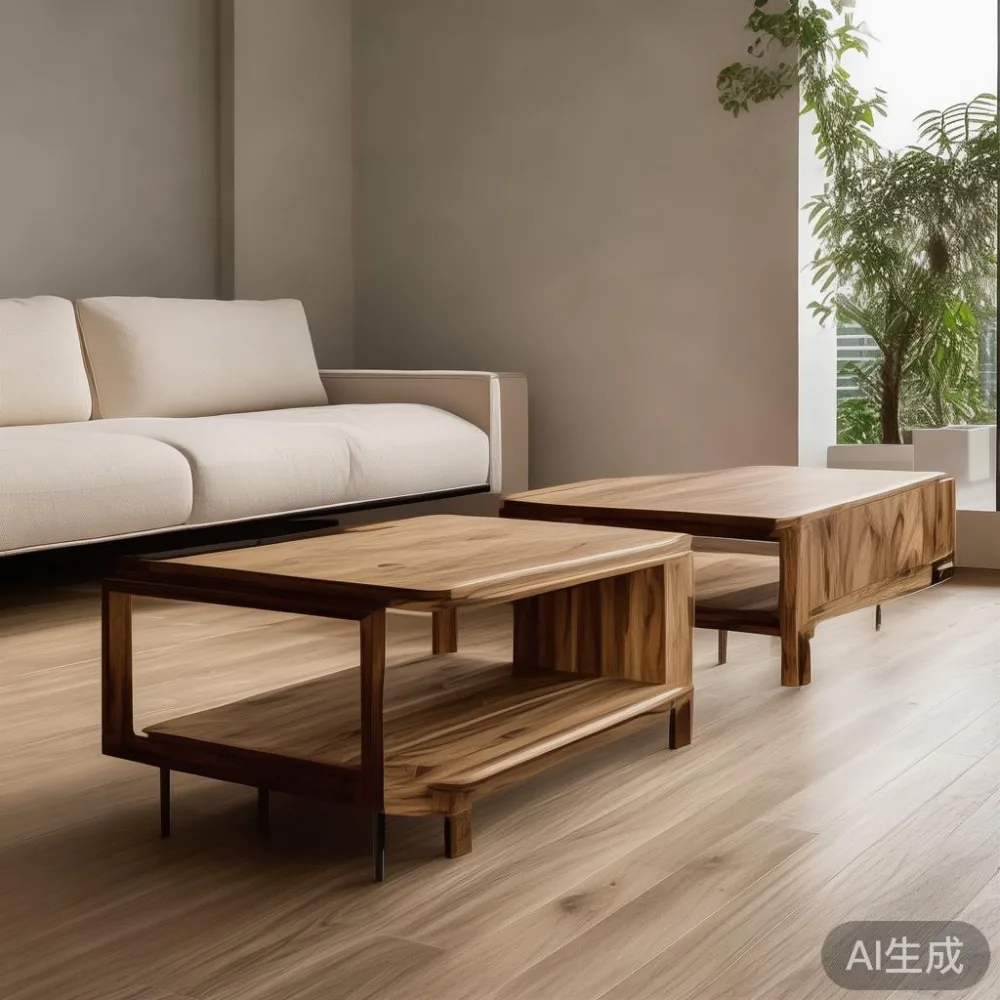
This guide is written for Singapore homeowners who want a coffee table that will still look right in five or ten years, whether you live in a Tampines executive HDB, a Punggol condo overlooking the waterway, or a landed terrace in Bukit Timah. I will cover how humidity actually damages wood, which species behave best in our climate, how to measure and control moisture in a flat with limited cross-ventilation, and what questions to ask before you buy. I will also touch on how the same humidity principles apply when you shop for a coordinated solid wood sofa, bed frame, dining table, wardrobe, or nightstand, so your whole set ages together instead of in different directions.
Why Singapore's Climate Is Hard on Solid Wood Furniture
Two numbers tell most of the story. The first is relative humidity: most days, indoor RH in a Singapore flat sits between 65% and 80%, even with the air-conditioner running, because outside air constantly seeps in through corridor doors, service yards, and bathroom vents. The second is temperature: 26°C to 32°C year-round, with little seasonal swing. Constant warmth keeps wood fibres active, so they never really stop exchanging moisture with the air.
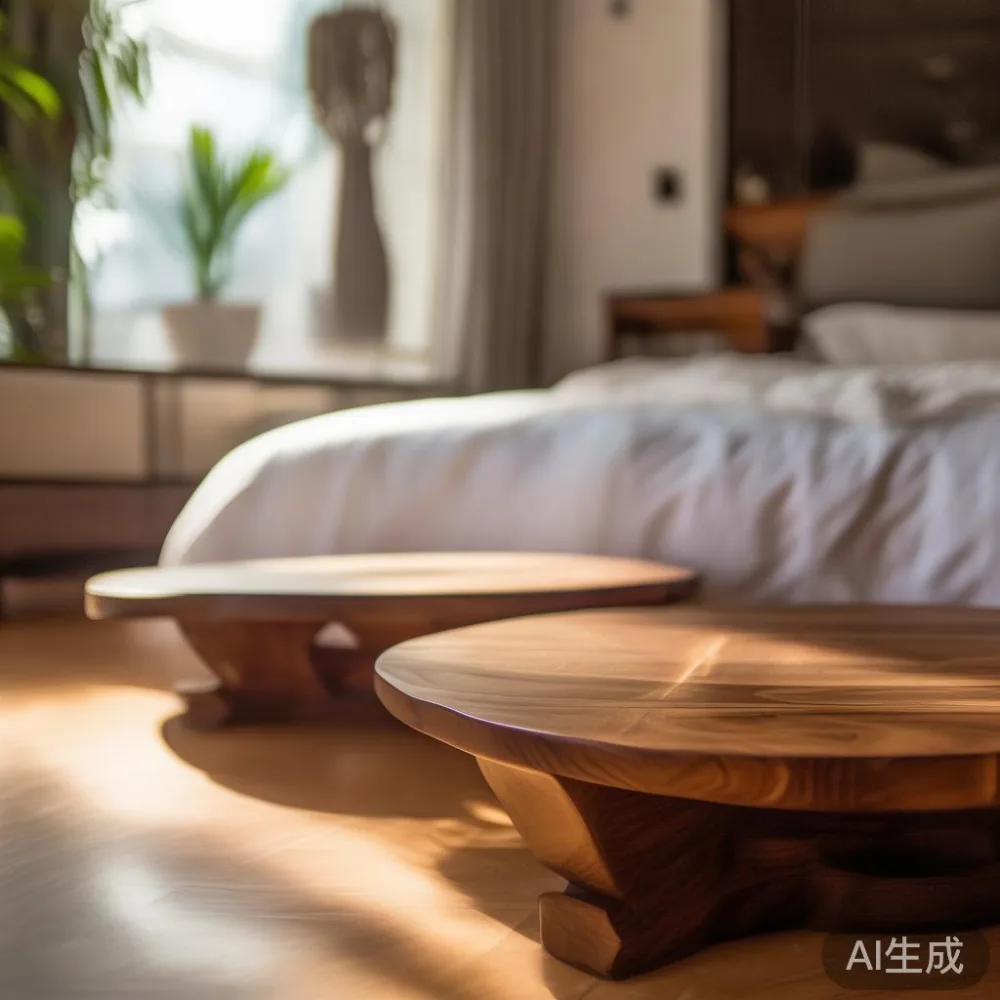
For a typical 120 cm × 60 cm × 45 cm solid wood coffee table weighing 25–35 kg, here is what those numbers mean in practice:
• Freshly milled European oak has a moisture content of about 8–10%. By the time it reaches your living room, it should be kiln-dried to 6–8% for temperate markets or 10–12% for tropical markets. A table dried for Europe will start absorbing moisture the moment it is unboxed in Tampines, and every 1% rise in wood moisture causes roughly 0.1–0.3% of dimensional change along the grain and up to 2–3% across it.
• A 120 cm tabletop can swell by 2–4 mm across its width during a wet spell and shrink back during a dry air-con week. That cycle, repeated 50–60 times a year, loosens tenons, opens glue lines, and eventually produces the crack my friend saw.
• The corrosion risk on metal hardware — drawer slides, hinges, brackets — doubles or triples when humidity stays above 70%, which is why cheap imported tables often develop sticky drawers within a year.
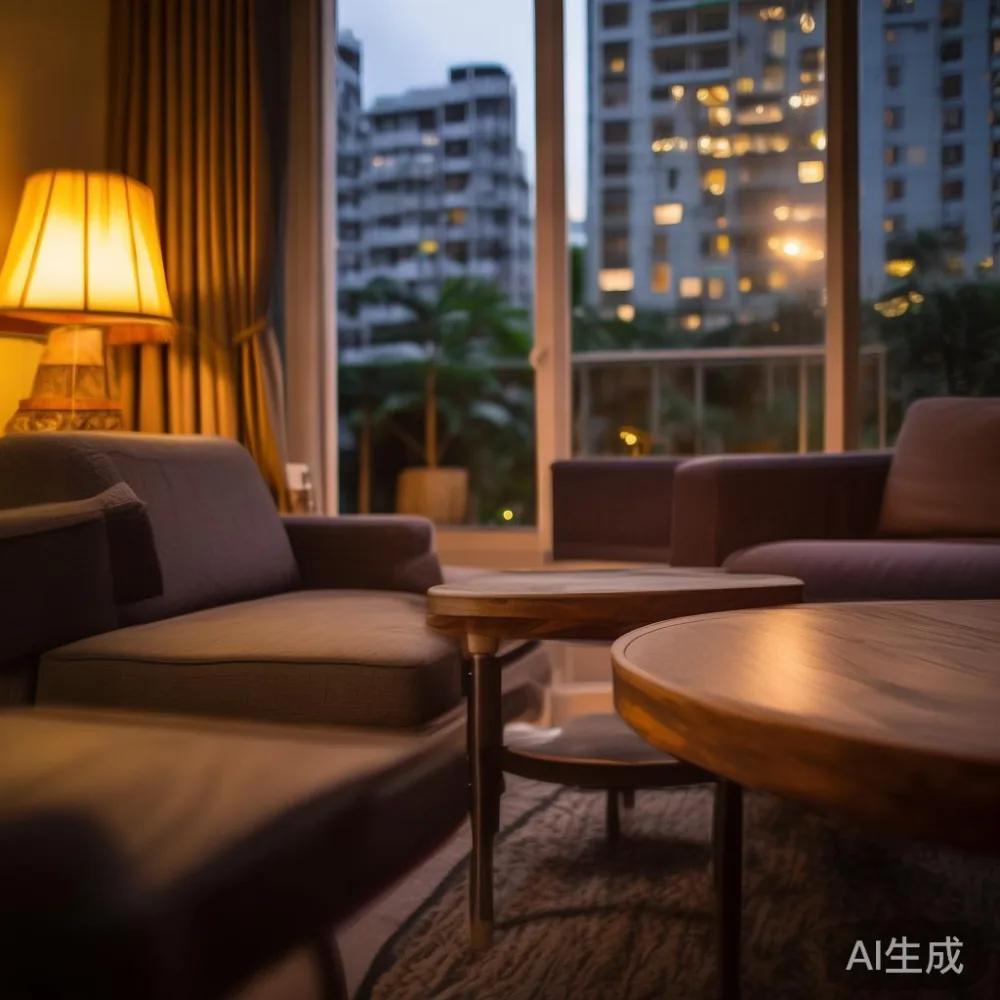
MIDHILL's founder team, who have been making solid wood pieces in Foshan since 2008, kiln-dries stock specifically for tropical end-markets. Their export logs show Singapore, Malaysia, and Indonesia as three of the top five destinations, and they calibrate moisture targets based on local RH data rather than generic factory settings. That kind of origin decision matters more than any wax or oil you apply later.
Which Wood Species Handle Humidity Best
Not all hardwoods behave the same way. Stability is measured by a ratio called the stability coefficient — lower numbers mean less movement. Here is how common furniture-grade species compare, based on standard wood-database values:
• Teak (Tectona grandis): 1.0 — the benchmark. Natural oils resist moisture and insects. Heavy (around 660–750 kg/m³) and expensive; a 120 cm teak coffee table typically retails from SGD 1,400 to SGD 2,800 in Singapore.
• White oak (Quercus alba): 1.2 — used in French light luxury and American light luxury collections because of its clean, straight grain. Density around 750 kg/m³, so a 120 cm square table weighs 40–50 kg.
• Rubberwood (Hevea brasiliensis): 1.5 — the local favourite because it grows in Malaysia and Thailand. Light (640 kg/m³), affordable (SGD 350–700 for a 110 cm coffee table), and stable when properly kiln-dried.
• Walnut (Juglans nigra): 1.8 — beautiful chocolate tone, but it moves more than oak. A 120 cm post-modern light luxury walnut coffee table with a marble inlay typically retails from SGD 1,800 to SGD 3,200.
• Ash (Fraxinus americana): 1.9 — strong and flexible, but needs careful sealing in our climate.
• Engineered options: MDF, plywood with veneer faces, or finger-jointed cores move 60–80% less than solid planks, which is why many marble table designs pair a stone top with a solid wood base.
For a Singapore home, my practical ranking is teak first, white oak second, rubberwood third, walnut fourth if you accept the maintenance trade-off. If you want the look of walnut without the movement, consider a marble-topped coffee table on a solid ash or oak base — the stone does not move at all, and the base carries the load.
How to Measure and Control Humidity in Your Flat
You cannot manage what you do not measure. A SGD 25 digital hygrometer from any HomeTeamNS store or Lazada listing will pay for itself in a week. Place one near your coffee table, away from direct sunlight and away from the air-con vent. Check it morning and night for a week. You will see the swing.
Target numbers for a healthy wood coffee table in Singapore:
• Indoor RH: 45–60% during the day, never above 65% for more than a few hours.
• Wood moisture content: 10–12% (most pin-type meters under SGD 80 read in this range; press the pins across the grain, not along it, for an accurate surface reading).
• Distance from floor: at least 5 cm, to allow airflow underneath. Many Singapore HDB floors are sealed concrete that sweats during monsoon; a table sitting flush on the floor will wick that moisture up through its legs.
• Distance from wall: 8–10 cm minimum. The wall-side of a Punggol corner unit often reads 3–5% higher RH than the centre of the room.
Practical controls, ranked by cost:
1. Run the air-conditioner on dry mode for 2–3 hours during peak humidity (typically late afternoon). Most split units remove 1–2 litres of water per hour on dry mode and drop room RH by 10–15 percentage points.
2. Use a dehumidifier in the living area. A standard 12-litre unit suitable for a 4-room HDB costs SGD 280–450 and draws 200–280 W. Run it on high for 4 hours during the wet season and empty the tank daily, or plumb it to a floor drain if your service yard allows.
3. Keep windows closed during rain and during the 4–6 pm humidity peak, even if the breeze feels cooling. Open them in the early afternoon when outdoor RH briefly dips below indoor RH — usually 1 pm to 3 pm on a clear day.
4. Avoid placing the coffee table directly under the ceiling fan's downdraft during a downpour; the downdraft carries humid air down faster than it can be removed.
What Good Construction Looks Like (and What to Avoid)
Beyond species, how a table is built determines whether it survives the next ten monsoons. When you inspect a coffee table in a showroom or warehouse — and most Singapore buyers should physically inspect before paying, given GST of 9% on top of the sticker — here are the concrete checks:
• Joinery: mortise-and-tenon, dowel, or biscuit joints outperform screws and staples for tropical climates because the glue area is larger and metal is minimised. Screws should be stainless steel or zinc-plated, never bare brass or steel.
• Glue: PVA (polyvinyl acetate) Type II or Type III is water-resistant; Type I is fully waterproof and is what boatbuilders use. Ask the seller which grade they use. Reputable Foshan makers exporting to 15+ countries default to Type II as a minimum.
• Finish: a 3-coat conversion varnish or a hardwax oil system is far more durable in our climate than a single coat of lacquer. Run your fingernail across an underside corner; if it leaves a visible mark, the finish is too soft.
• Panel construction: tabletops wider than 60 cm should be built with breadboard ends or slotted screw pockets that allow the wood to expand and contract across the grain without splitting. A single glued-up slab wider than 70 cm will crack — not might, will — within 18 months in Singapore.
• Base attachment: metal-to-wood connections need felt or rubber gaskets, or the galvanic reaction in humid air will stain the wood black within a year.
• Drawer slides and runners: full-extension soft-close slides rated for 30 kg or more, with plastic rollers, not bare metal on metal.
A well-built 120 cm solid oak coffee table from a maker with tropical calibration weighs 40–50 kg, ships with moisture content documented on the packing list, and arrives in a crate lined with 12 mm EPE foam. Lift the carton; if it feels light, the wood is either thin, hollow, or not solid.
How do I choose a fabric sofa for a bedroom?
Pick a sofa whose frame is built from kiln-dried solid wood (not plywood or MDF) with a documented moisture content of 10–12% for tropical homes, because that single number decides whether the joints stay tight through Singapore's 80% humidity months; pair that frame with a removable, washable cover in a tight weave rated at 50,000 double rubs or higher, and your sofa will outlast three rounds of sofa-bed conversions in a small apartment.
The same moisture logic that protects a coffee table protects a fabric sofa, and Singapore buyers often shop for both within the same S$2,000–S$4,000 budget. If you are also looking for a bed frame for small apartment layouts, the rule repeats: solid hardwood slats no thinner than 2 cm, with centre support for any queen size, and a clearance under the frame of at least 10 cm so the floor can breathe underneath. Skip any "solid wood" label that does not come with the actual species name and origin country — vague copy usually hides rubberwood with a 2 mm oak veneer, which will peel at the edges within 12 months in a Punggol flat near the water.
Care Routine That Actually Works in Singapore
You do not need an elaborate ritual. A five-minute routine every Sunday is enough for a solid wood coffee table that is properly built and finished:
1. Dust with a dry microfibre cloth. Never use a feather duster — it just redistributes dust and can scratch soft finishes.
2. Wipe spills within 10 minutes, even if the surface looks sealed. Condensation from a cold glass of iced tea leaves a white ring within 30 minutes on most finishes.
3. Every 3 months, apply a thin coat of paste wax (such as Briwax in clear or a beeswax blend) or a rejuvenating oil if the finish is hardwax-oil based. One 200 ml tin costs SGD 18–28 and covers 6–8 applications on a 120 cm table.
4. Every 6 months, check the hygrometer reading where the table sits. If it is consistently above 65%, run the dry mode or dehumidifier more often.
5. Rotate decorative objects every 2–3 months so UV exposure and moisture absorption stay even across the surface.
One local habit to break: do not place your coffee table directly under a window that faces west. The afternoon sun on a clear day in Singapore can heat a tabletop to 45–50°C while the air stays at 28°C — that temperature differential alone can crack a thick edge joint.
What If the Table Is Already Damaged?
Hairline cracks under 1 mm wide usually close on their own once indoor RH stabilises below 60% for 2–3 weeks. Run the dehumidifier in the room, keep the air-conditioner on for at least 6 hours a day, and avoid placing wet items on the table during that period. If the crack is 2–4 mm wide or you can see daylight through a joint, do not try to fill it with superglue or wood filler from a hardware shop — those rigid fills crack again within months as the wood keeps moving.
For serious damage — warped top, loose tenons, sticky drawers, black staining around metal hardware — contact the maker before you attempt any repair. MIDHILL, for instance, ships replacement panels and hardware to Singapore customers from Foshan at cost, and offers a lifetime refinishing service that includes collection, shipping, and return for pieces bought through their authorised channels. The 10-year structural warranty on frames and joinery covers exactly the kind of failure my friend in Bedok experienced: not the finish, not the surface scratches, but the actual structural movement that proper kiln-drying and tropical calibration are supposed to prevent.
If your table is from a brand that does not offer that kind of after-sales network, a local upholsterer or carpenter in Tampines or Geylang can usually disassemble, re-glue, and re-finish a solid wood coffee table for SGD 180–350 depending on size and damage. That is cheaper than replacement, and it keeps a sound piece out of the landfill.
Buying Checklist Before You Click "Add to Cart"
Concrete questions to send to any seller, whether you are buying from a local reseller on Carousell, a Taobao agent, or directly from a Foshan factory via their Singapore distributor:
• What species, and can you show the FSC or PEFC certificate or the mill origin?
• What is the kiln-dried moisture content at the time of packing, and can you put it on the invoice?
• What glue type and what finish system (brand and number of coats)?
• Is the top built with breadboard ends or floating panels wider than 60 cm?
• What is the warranty on structure, finish, and hardware, and who handles claims in Singapore?
• What is the delivery lead time to a Singapore HDB or condo, and does the team know the typical 1.2 m × 2.4 m lift and 1.5 m corridor widths used in newer BTOs? A 50 kg crate that does not fit the lift is a real problem in Punggol's older blocks.
• Is free shipping offered above a certain order value, and is GST included in the quoted price or added at checkout?
• What is the return window — 14 days is the local norm — and who pays return shipping if the piece is undamaged but unsuitable?
A maker who answers these in writing, with numbers and documents, is the maker who will still answer your email in year three. A maker who hedges or sends stock photos is the one whose coffee table will be the next hairline crack you show a friend in Bedok.
Final Notes on Coordinating the Rest of Your Set
Once the coffee table is sorted, apply the same checklist to the matching solid wood sofa frame, bed frame, dining table, wardrobe, and nightstand. Keep the species consistent where possible, or at least match the stability coefficient so every piece moves in roughly the same range. A teak coffee table with a walnut dining table is a recipe for one of them always looking slightly off during the December monsoon. A coordinated set from the same factory batch — same kiln, same glue, same finish — ages as one piece, and that is the quiet luxury that French light luxury and American light luxury buyers pay a premium for: not the brand label, but the fact that ten years from now the joints will still be tight and the colour will still match.
Buy once, measure twice, and keep a hygrometer in the living room. That is the entire playbook for keeping solid wood furniture in Singapore's humidity, and it costs less than the delivery fee on most imported pieces.