How Southeast Asian Humidity Affects Your Wood Coffee Table: A Singapore Owner's Field Guide
I still remember the afternoon my colleague Mei Lin sent me a voice note from her new 4-room HDB flat in Bedok. She had just unboxed a light-luxury American-style oak coffee table she bought online for SGD 1,290, and within eleven days one corner had begun to bow upward like the prow of a junk boat. The humidity reading on her Xiaomi sensor that day was 84%. In Singapore, where the average relative humidity hovers between 75% and 90% for most of the year, that is not an unusual reading. It is Tuesday.
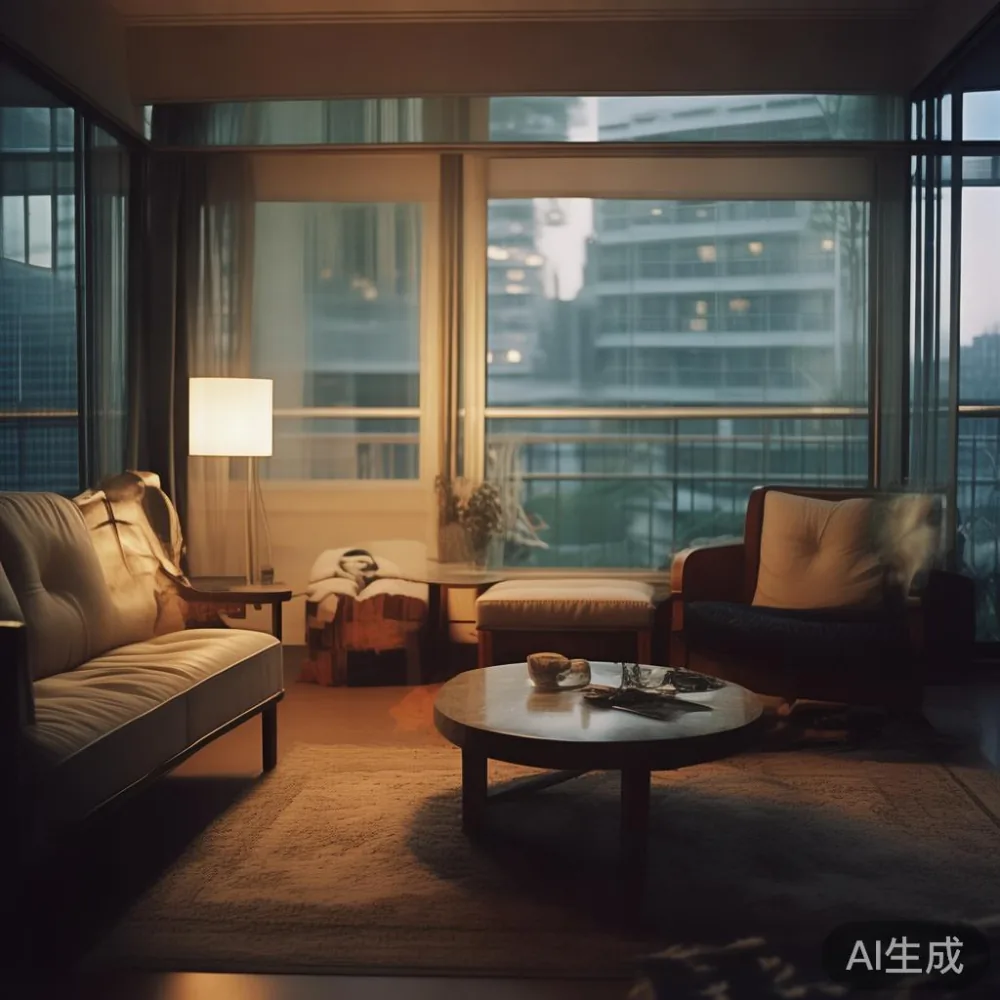
Anyone who owns a solid wood piece in a Tampines executive condo, a Punggol EC, or a landed patio in Bukit Timah learns the same lesson: wood is not static. A 120 cm x 60 cm coffee table made from kiln-dried ash will quietly drink moisture from the air, swell, and release it again, day after day, season after season. This guide walks through what humidity actually does to wood furniture in our climate, the warning signs to watch for on a coffee table specifically, and the habits that separate a piece that lasts fifteen years from one that cracks in fifteen months.
Why is humidity such a problem for solid wood coffee tables in Singapore?
Solid wood is hygroscopic, which is a polite way of saying it behaves like a slow sponge. When the relative humidity in your living room climbs from 70% to 88% during a December monsoon surge, a 4 cm thick oak tabletop can absorb enough water vapor to expand by roughly 1 to 2 mm across its width. Do that expansion cycle a few hundred times a year and the glue joints on a coffee table start to whisper, then groan, then let go. The problem is not the wood itself. The problem is furniture that was designed for a climate where indoor humidity stays between 40% and 55%.
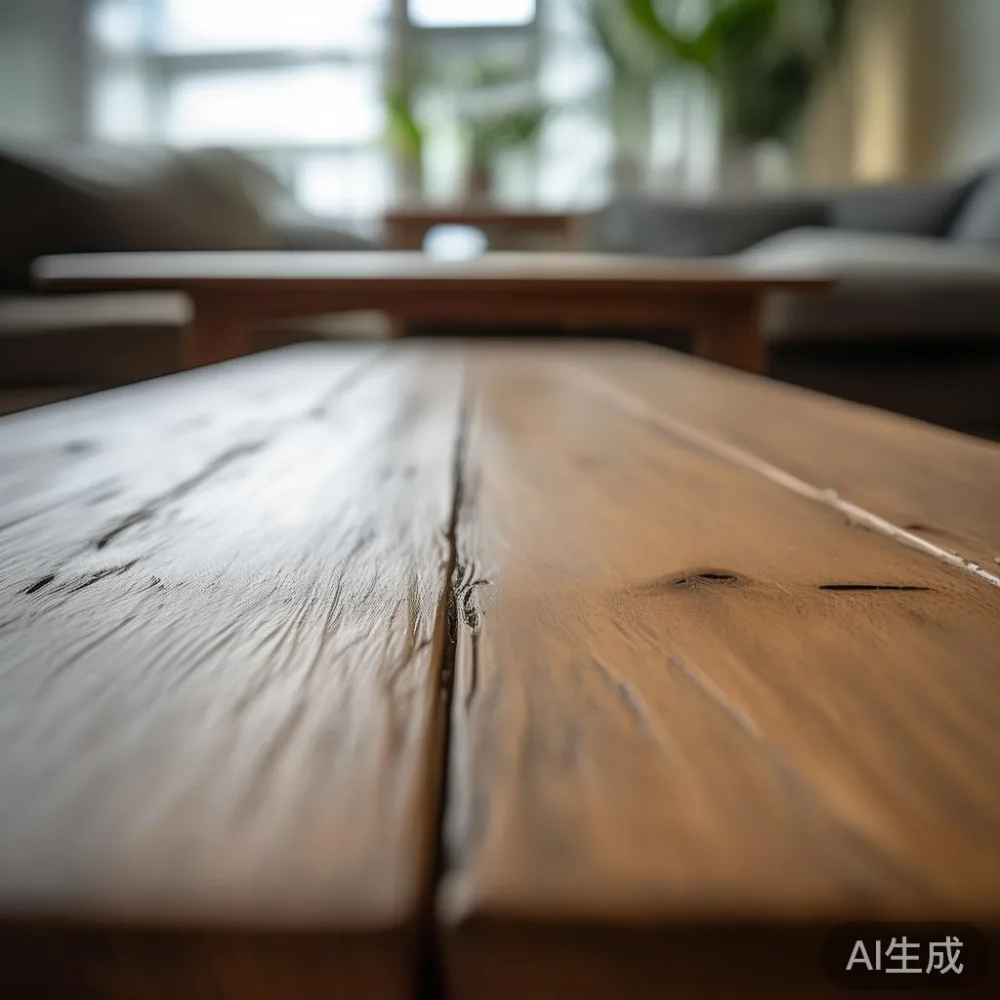
Most European and American workshops calibrate their kiln-dried stock to a 7% to 9% moisture content, which suits Milan or Minneapolis. Ship that same coffee table to a 1,000 sq ft condo in Clementi and the wood begins a long, silent negotiation with your air-con. A well-built piece from a maker like MIDHILL, who has been exporting solid wood furniture to more than fifteen countries from their Foshan base since 2008, accounts for this by leaving the kiln-dry target slightly higher and by using joinery that tolerates movement, such as floating tenons, breadboard ends with elongated pin holes, and Z-clips underneath the top.
What does humidity damage actually look like on a coffee table?
Last month I visited a customer's 5-room HDB in Punggol Waterway Woodcress to look at a two-year-old walnut coffee table that had started to cup. Cupping is the term for when the edges of a flat panel curl upward and the center sinks, the classic saddle shape you can see by laying a steel ruler across the top. In her case, the cup measured 4 mm over a 90 cm span, well past the 2 mm threshold most joiners consider acceptable. Three things had conspired against the table: the unit faced west with full afternoon sun, the family ran the air-con only at night, and a dehumidifier had never been plugged in.
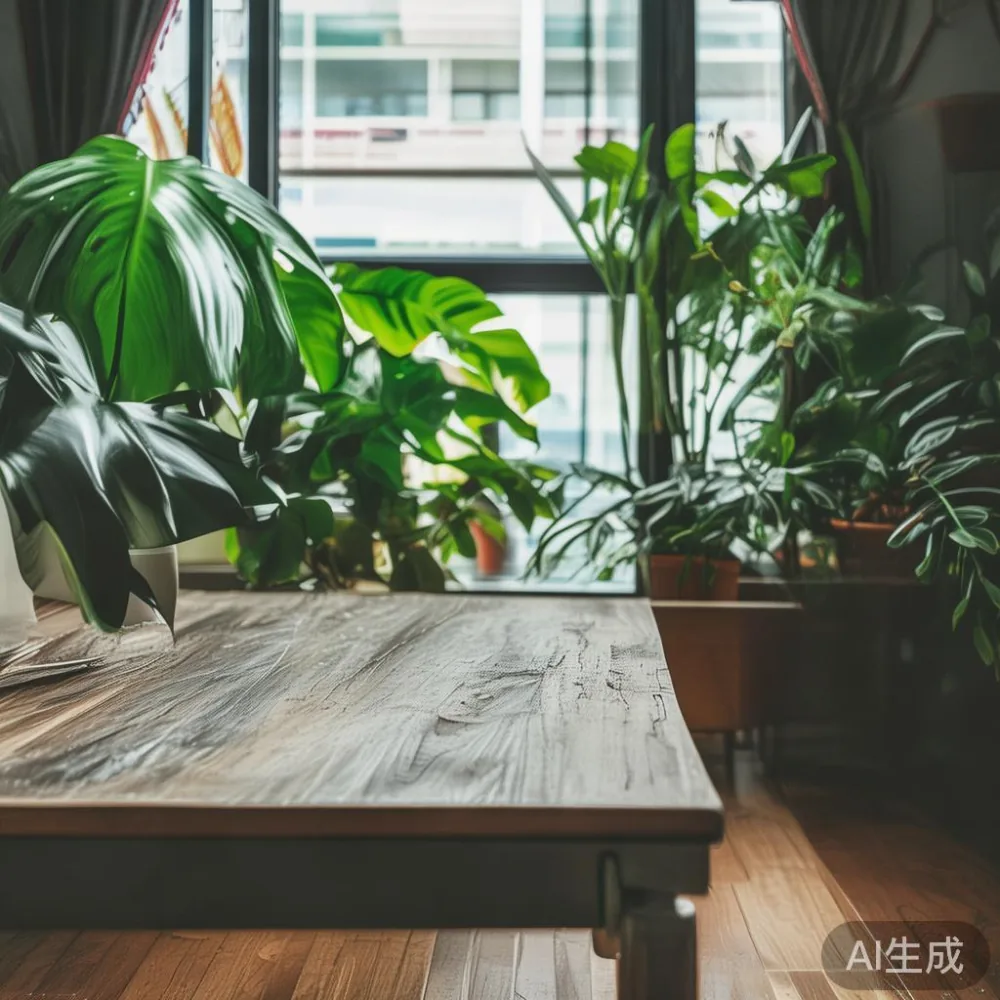
Other telltale signs to look for on your own coffee table: hairline checks along the grain, usually near knots; white haze or milk spots on the finish when humidity spikes then crashes; doors or drawers on storage coffee tables that swell shut in July and shrink loose in February; and a musty smell from the underside, which means moisture is pooling under the legs on cold tile. If you see any of these, do not panic. The piece is rarely ruined. It is asking for a steadier indoor environment.
How does Singapore's HDB architecture make this worse?
Singapore flats are built tight, and that is the core of the issue. A typical 4-room HDB has about 92 sq m of internal area, with ceiling heights of 2.6 m to 2.8 m. Concrete walls, single-glazed or laminated windows, and vinyl flooring mean there is little buffer between the 33°C outdoor air and the 24°C indoor air. Every time you slide open the balcony door for a breeze, you are letting a wallop of humid air into the room.
Then there is the layout problem. Coffee tables usually live in the living room, often within 2 m of a balcony access door or a kitchen service yard. Both zones are humidity hotspots. The service yard in particular runs a dryer vent or holds a drying rack, which pumps warm moist air straight into the adjacent living space. Move a coffee table 60 cm further from those zones and you immediately reduce its daily moisture load.
Finally, lift and corridor widths in many older Tampines and Bedok blocks run narrow, so delivery teams sometimes deliver pieces that have been partially uncrated in the corridor and dragged across tile. That rough handling combined with our 80% average humidity is a rough welcome for any newly kiln-dried board.
What humidity level should I keep my home at for solid wood furniture?
For a solid wood coffee table, a solid wood dining table, a solid wood bed frame, or a solid wood wardrobe, target a relative humidity range of 45% to 60%, with an ideal resting point near 55%. This matches the moisture content of wood that has been properly acclimatized to our region. Use a cheap thermo-hygrometer, the SGD 12 Xiaomi or the SGD 18 ThermoPro, placed on the same shelf as the piece, not on a wall.
If your reading climbs above 65% for more than a few days, run a dehumidifier. A standard 12 L/day Meaco or Mistral unit costs about SGD 280 to SGD 380 and pulls roughly 1.5 kWh per hour. Running it for six hours a day during a wet spell costs around SGD 0.18 per hour at today's regulated tariff, so budgeting SGD 30 to SGD 45 per month during the December and June monsoon windows is realistic for a 1,200 sq ft condo.
Keep the coffee table away from direct AC vents as well. Cold dry air blowing straight onto one side of a 120 cm slab creates a humidity gradient that can crack the finish in a single week. Aim the louver away, or place the piece at least 1.2 m from the vent cone.
Is Japandi bed frame furniture worth it?
Yes, a Japandi bed frame is worth it for Singapore owners because its low-platform design lifts the sleeping surface only 20 cm to 30 cm off the floor, which leaves more air volume above the mattress and reduces the moisture pocket that builds under a high-rim bed. The Japandi approach also tends to use the same honest solid wood species, white oak, ash, or walnut, that work well for a coffee table, so acclimatization habits transfer directly from your living room to your bedroom.
When a Japandi bed frame is built by a maker who understands kiln-drying for tropical climates, the low-slung silhouette becomes more than an aesthetic choice. It becomes a humidity-management choice. The slats sit further from the floor, the headboard is often an open grid rather than a sealed panel, and the air can move. That matters in a 1,000 sq ft Punggol flat where the bedroom door stays closed for eight hours of air-con every night.
What about other solid wood pieces in the same home?
A coffee table is usually the canary, not the only patient. The same humidity rules apply to a solid wood dining table, a solid wood nightstand, a wardrobe, and a marble table. Marble is the odd one out: it does not move with humidity the way wood does, but the wooden sub-frame underneath a marble-topped coffee table can still cup if the stone traps moisture against the wood plinth. Use coasters, keep the stone dry, and check the underside twice a year.
For a dining table, the rule is to leave at least 5 cm of breathing space between the table edge and the nearest wall. For a wardrobe, especially the 200 cm tall French light-luxury style with sliding doors, leave a 2 cm gap at the top and back for air to circulate, which most owners in HDB blocks forget because the unit is built into a drywall niche.
How do I acclimatize a new coffee table once it arrives?
When a flat-pack or crated coffee table reaches your home, do not unbox it in the corridor and do not place it in the living room on day one. Wipe the crate, leave it closed in the room where it will live for 72 hours, then open it, let the boards breathe for another 48 hours, and only then fit the legs. That 5-day stretch lets the wood equalize with the 24°C, 55% environment inside your flat.
During that window, keep the air-con running at 23°C to 25°C and check the room humidity twice a day. If your hygrometer reads 60% or higher, run the dehumidifier for four to six hours before the unboxing. Skipping this step is how Mei Lin ended up with a bowed corner in eleven days.
What does daily care look like for a wood coffee table in our climate?
Wipe the top with a barely damp microfiber cloth every other day, dry it immediately, and never use a wet rag. Once every quarter, treat the surface with a beeswax or hard wax oil, about a 50 g tin costing SGD 18 to SGD 25, applied with a lint-free cloth in the direction of the grain. Avoid silicone polishes, which seal the surface and trap moisture inside.
Rotate any decorative objects every two weeks so the same spot does not sit in shadow under a vase while the rest of the surface weathers evenly. Use felt pads under planters, drinks, and laptops. Felt pads cost about SGD 6 for a 24-pack and prevent the cup rings that often get mistaken for finish damage.
Does furniture warranty actually cover humidity damage?
Read the fine print. Most warranties, including the 10-year structural warranty offered by makers such as MIDHILL, cover joinery failure and cracking under normal indoor conditions. They do not cover damage caused by environments outside the recommended humidity range, by direct sunlight, or by water spills left to sit. Keep your hygrometer readings as a dated log, one screenshot per week, and you will always have proof that your home stayed inside the spec.
Lifetime refinishing services, where offered, are a smarter long-term hedge than a warranty alone. A coffee table that has been refinished once at year eight looks almost new again and costs a fraction of replacement, often around SGD 180 to SGD 260 for a tabletop sand and re-oil.
What about French light-luxury and post-modern light-luxury pieces in the same flat?
French light-luxury furniture leans on pale oak, brushed brass, and curved profiles. Post-modern light-luxury uses bolder geometry, often in walnut or ash, with a softer matte finish. Both styles are perfectly suited to Singapore interiors, but both rely on the same kiln-dried solid wood backbone. A French sintered stone sofa bed, for instance, combines a wooden inner frame with a sintered stone platform, and the frame will still move with humidity even though the stone top will not. Treat the frame the same way you treat a coffee table: 55% RH, no direct sun, six-month oil refresh.
Pick one climate-control habit, stick to it for a season, and your coffee table, dining table, bed frame, nightstand, and wardrobe will all outlast the next two renovation cycles. The piece of furniture that lasts fifteen years in a Tampines flat is rarely the most expensive one. It is the one whose owner watched the hygrometer.