What Actually Drives the Price of Solid Wood Furniture (and Why It Matters for Your HDB)
I still remember the Tuesday afternoon I spent at a showroom in Tampines, kneeling on the floor with a small torch and a tape measure. I was checking ten different coffee tables for a client whose Bedok maisonette had a 1.2 m lift door and a corridor narrow enough to make a chest of drawers feel like an Olympic obstacle. Within forty minutes, I had a price spread of nearly 70% between two tables that, at first glance, looked almost identical. Same rectangular top, same rounded edges, both marketed as solid wood. How? The answer is what this whole guide is about: the price of solid wood furniture is driven by a stack of specific, often invisible, decisions.
The wood species: where your money goes first
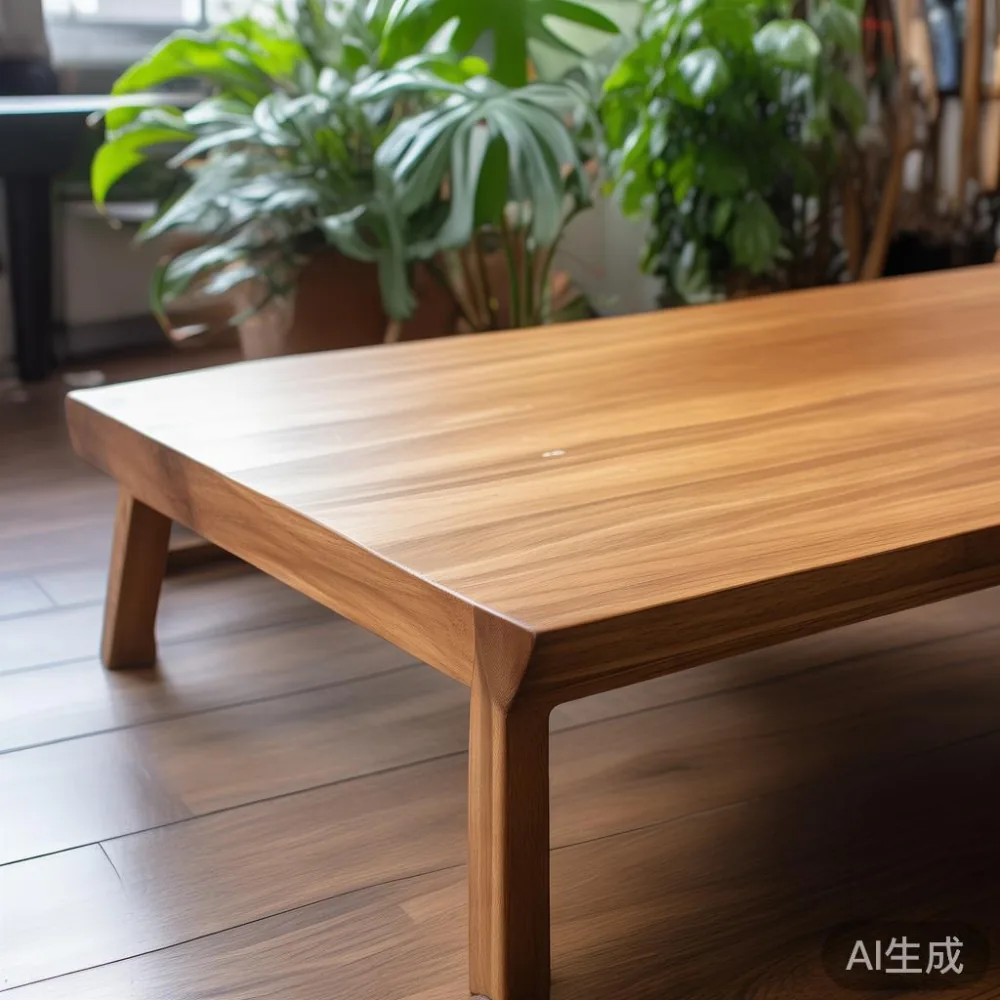
Spend most of your budget on the material itself. Ash, white oak, walnut, and teak cost roughly two to three times more per cubic metre than rubberwood or pine, simply because the trees grow slower, the trunks are straighter, or the forests are managed under tighter certification. A solid wood coffee table top in ash or oak running about 180 kg/m³ will feel dense and heavy in the lift; a comparable piece in pine will come in around 450-500 kg/m³ lighter even at the same dimensions. In our Tampines showroom, a 120 cm x 60 cm ash coffee table retails around SGD 1,650 before GST, while the same dimensions in rubberwood with an oak veneer can sit closer to SGD 720. Both look acceptable in a Punggol condo photo; only one will still look acceptable in eight years.
This is why MIDHILL prioritises species clarity on every spec sheet. When you know the species, you know the colour it will develop, the dents it will hide, and the refinishing options available ten years down the line.
How big is the trunk that became your table?
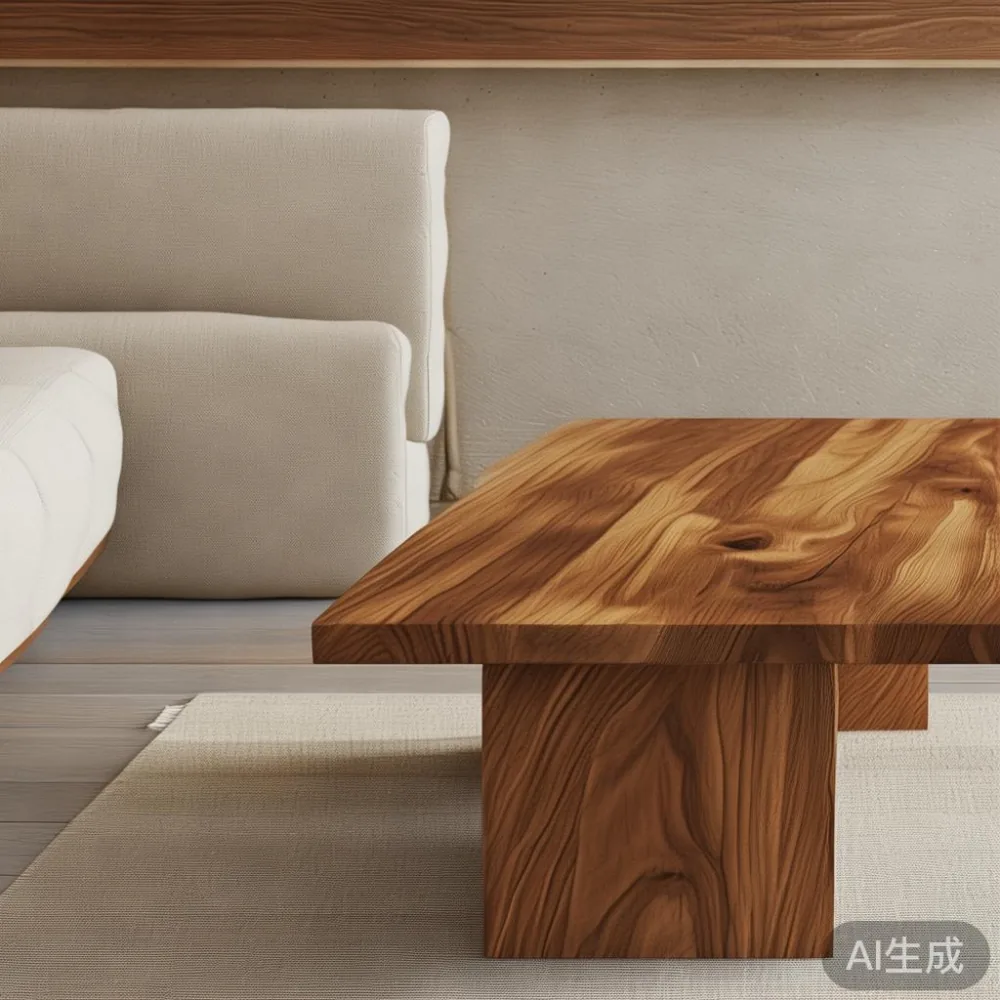
Another driver people underestimate: the dimensions of the original board. Solid wood tops are built from planks cut from a single tree. A single plank of walnut wide enough to cover a 100 cm dining table without a join is rare and commands a real premium. Most factory tables are joined boards, and the more joins, the more glue lines, the more chance of seasonal movement when your HDB air-con swings between 22°C and 27°C across a wet December and a dry March.
Look at the edges of the coffee table in front of you. If you can count three or four discrete boards glued together and still see a straight, continuous grain pattern across them, you are looking at skilled joinery that costs more per linear metre of labour. If the grain jumps every 15 cm, the manufacturer cut corners and saved on material sorting.
Joinery: the hidden craftsmanship tax
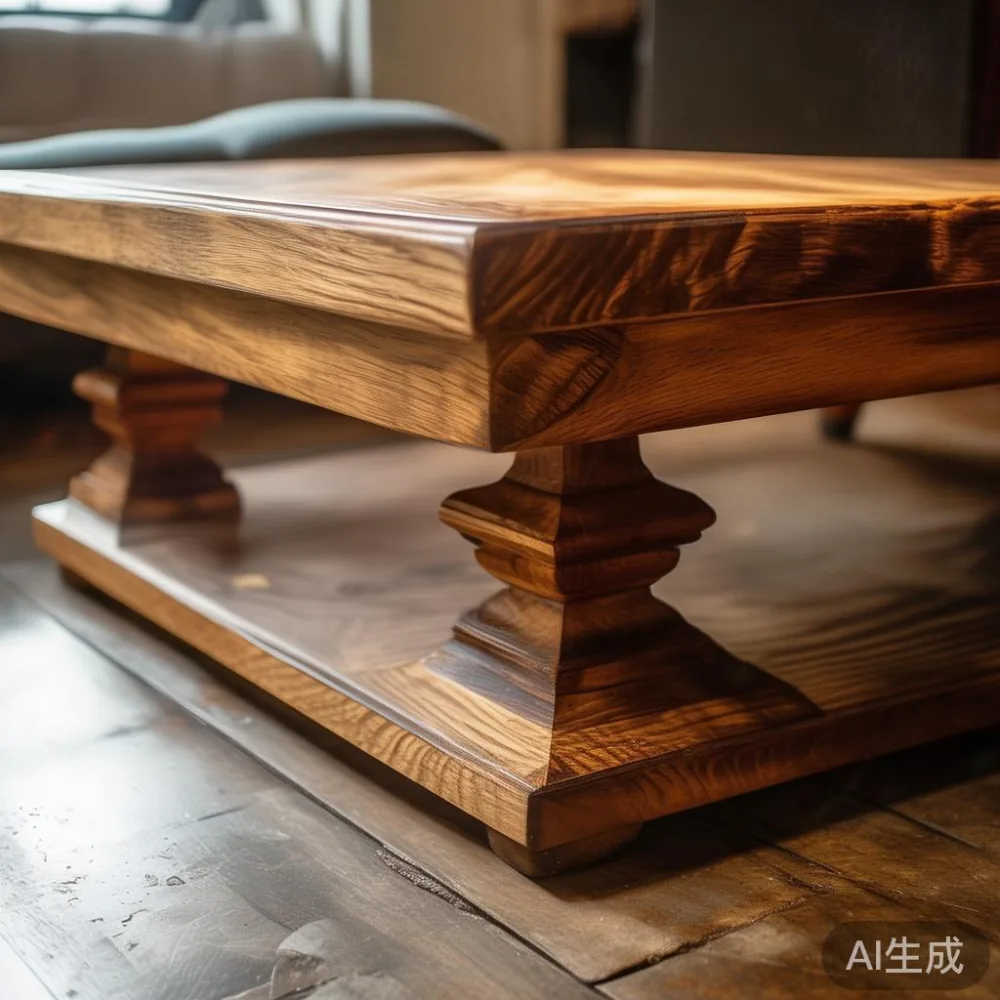
Most of the price gap between a SGD 600 flat-pack wardrobe and a SGD 2,400 built-in wardrobe lives in the joinery: dovetails, mortise-and-tenon, finger joints, biscuit, dowel, or just staples and glue? Each requires different tooling, skill, and time. In our Foshan workshop, a craftsman doing traditional mortise-and-tenon on a dining table base will produce around six to eight frames a day; switching to dowel-and-glue can push that to twenty. The labour-time difference directly multiplies into the price you pay.
I watched two nightstand frames being assembled side by side in our factory last month. Identical dimensions, both labelled solid wood. The cheaper one took 9 minutes with a nail gun; the more expensive one took 42 minutes with hand-cut box joints and a single wooden peg at each corner. Same species on the spec sheet. Different price tier.
Finish and surface treatment: what you are actually touching
Surface treatment is one of the more honest cost drivers because you can test it in the showroom. Press your thumbnail into an inconspicuous spot on a wardrobe door. If it leaves a faint white mark that disappears in seconds, the surface has been waxed or oiled, both of which cost more to apply than a closed-pore PU lacquer. Closed-pore finishes are cheaper, faster, and very common on bed frames and dining tables aimed at fast turnover.
French light luxury style leans into matte, hand-rubbed finishes that show the grain but feel almost powdery to the touch. American light luxury leans more towards a satin sheen that catches the morning light from a Punggol north-facing window. Post-modern light luxury often pairs a solid wood base with a sintered stone or marble table top. That combination alone can add SGD 400-900 to the price versus an all-wood top, because sintered stone is fired at 1200°C and machined to tolerances most carpenters never touch.
Speaking of which: one specific construction trend worth knowing is the American sintered stone rattan wicker pairing seen on contemporary outdoor-style coffee tables, where a sintered stone slab sits on a powder-coated aluminium-rattan base. Genuine rattan weave is hand-done and slow; printed resin rattan is sprayed and quick. Same visual; different labour cost, different life expectancy under Singapore humidity.
Hardware and structural fittings: the 10-year question
Soft-close drawer runners alone vary from SGD 4 to SGD 38 per pair in bulk. Multi-ply wooden drawer boxes with dovetail joints cost three times more to produce than melamine-fitted MDF drawers on metal runners. When a manufacturer offers a 10-year structural warranty, ask which parts it covers: the frame, the joints, the runners, the finish, the slats? A warranty that only covers the frame while the slats crack after three years is not really a 10-year warranty.
How do I choose a assembly difficulty for a home office?
Choose an assembly difficulty that matches who is actually doing the assembly, where the piece will live, and how long you expect to keep it: pick flat-pack (knocked-down) shipping if your HDB corridor is under 1.1 m wide and you move often, RTA (ready-to-assemble, mostly pre-built panels with a few bolts) for most wardrobes and bed frames, and fully assembled delivery only when you have a confirmed freight elevator wider than 2.0 m and a room larger than the unpacked dimensions by at least 20 cm on every side.
In a typical Singapore context, an HDB corridor sits around 1.05-1.20 m wide, and passenger lifts are about 1.0 m wide by 1.2 m deep with a 1.8 m door height. A flat-packed 1.6 m wardrobe in two cartons is realistic. A fully assembled 1.8 m solid wood wardrobe over 90 kg without a freight lift will simply not happen. Last year, a colleague in Punggol had to drive a fully assembled 2.0 m dining table back to the workshop because the lift door was 18 cm too narrow; the re-delivery added SGD 220 to a piece she thought had no extra charges.
For a home office, think in three tiers. Tier 1, easy: pieces under 35 kg, fewer than 8 bolts, single person, 30 minutes. Tier 2, medium: 35-65 kg, 8-25 bolts, two people, 1-2 hours. Tier 3, advanced: anything heavier, wall anchoring required, or components that must be fitted in a specific sequence. Match the tier to your patience and your toolkit. If you do not own a drill, do not buy tier 3 thinking you will save money.
Logistics to a Singapore HDB or condo: the SGD 200 ghost cost
Solid wood is heavy. A 120 cm x 60 cm solid wood coffee table weighs in the 28-45 kg range; a 1.8 m wardrobe can clear 95 kg. International shipping charges by volumetric weight as much as by actual weight, and on the last-mile side the surcharge for a two-man delivery with in-room placement in a Punggol walk-up can run SGD 80-160. Lift bookings in condos are scheduled in 90-minute slots; missed slots cost SGD 50-90 to rebook. These costs are usually folded into the retail price long before you see them.
Free shipping over a certain order value helps, but only when the order value itself is honest. A wardrobe listed at a low price with SGD 280 shipping usually carries the same number as a slightly higher price with free shipping, so read the small print.
GST, warranty, and the long tail of ownership
Singapore adds 9% GST on the landed price, which you cannot negotiate. After that, what you can negotiate is the afterlife of the piece. Refinishing a solid wood dining table top every 8-12 years in Singapore costs roughly SGD 280-450 depending on surface area and condition. Over a 30-year ownership window, that refinishing budget often exceeds the original purchase price gap between a cheaper piece and a better one. This is where lifelong refinishing support changes the real cost calculation.
14-day returns sound generous until you read the disassembly clause. A 90 kg wardrobe that you assembled is often not returnable at all. A coffee table still in its box, never opened: usually fine. Ask before you build, especially in a Bedok rental where the landlord's restoration clause might push the burden of disassembly back to you.
Putting it together: a Singapore-priced checklist
Here is how to actually compare two like-looking pieces sitting in your browser tab:
1. Check the species on the spec sheet, not the marketing name. "Solid wood" is legally vague; "ash" is not.
2. Measure the largest single board dimension on the top. Larger plank faces = higher material cost.
3. Open one drawer. Dovetail corners cost more and last longer than stapled MDF.
4. Press a thumbnail somewhere discreet. Waxed or oiled surfaces indicate a higher finishing budget.
5. Count the components and ask for the carton weight. Multiply by the shipping table to see the real landed SGD figure.
6. Read the warranty clauses the way you read tenancy clauses: list of parts, list of exclusions, list of remedies.
7. Ask about refinishing. If the answer is "buy a new one," you are looking at disposability dressed up as furniture.
8. Consider the lift corridor maths once more. Buying a coffee table you cannot physically deliver into your living room is more common than buyers admit.
The takeaway from a Tampines afternoon
Returning to that Tampines showroom floor: the 70% price spread between two coffee tables was never a mystery once I had the right checklist in hand. It was species, plank length, joinery, finish, hardware, logistics weight, and after-sales support, all stacked into a number most shoppers never decompose. MIDHILL's approach, with clear species labelling, careful plank matching, and a 10-year structural warranty backed by refinishing services, is a fair example of how those costs translate into a transparent retail price.
Solid wood furniture is one of the few purchases in a Singapore home that can outlive its mortgage. A bed frame that survives three children, a dining table that survives two renovations, a coffee table that survives every move from Tampines to Punggol to Bedok and back again, these are not luxuries, they are arithmetic done over decades. Spend the hour at the showroom. Bring a torch, bring a tape, bring this list. The price on the tag will start to make sense, and the right piece will start to feel obvious.